
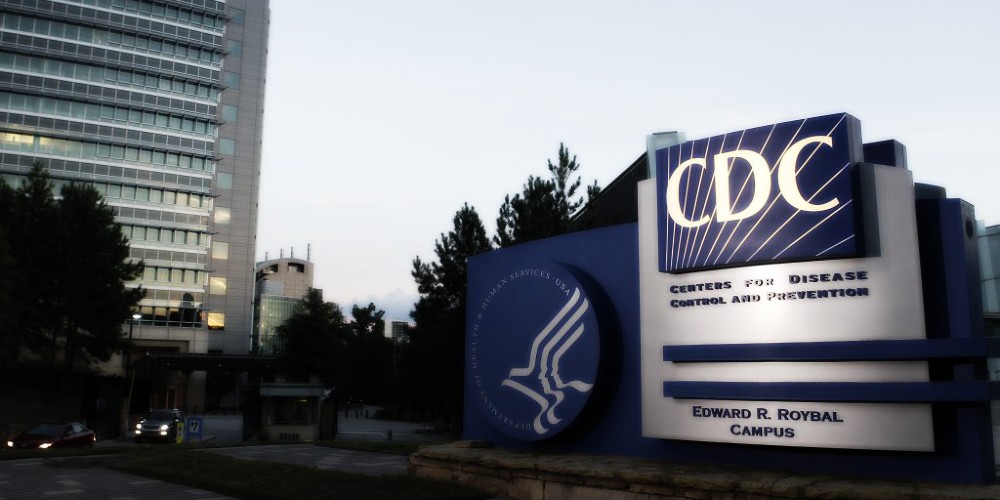
This shouldn’t be funny, but for some reason I literally chuckled when I saw it. The reason is obvious: The CDC and other “experts” have hammered the unvaxxed for over two years about how safe and effective the jabs were. And now, with Pandemic Panic Theater finally fading, a CDC conference with nearly 100% vaccination rate gets hit by a massive outbreak.
By no means should I find any humor in the suffering of others. But as someone who has been targeted for being unvaccinated, who has gone through financial challenges as a result of my unjabbed status, I still get a perverse hint of joy when stories like this pop up.
Yes, that makes me a bad person, but everyone’s bad in some way. With that said, here are the details by Zachary Stieber from our premium news partners at The Epoch Times:
Most Infected in COVID Outbreak at CDC Conference Were Vaccinated, Agency Confirms
A COVID-19 outbreak unfolded at a conference held by the U.S. Centers for Disease Control and Prevention (CDC) despite most attendees being vaccinated.
About 1,800 CDC staffers and others gathered in April in a hotel in Atlanta, where the CDC is headquartered, for a conference focused on epidemiological investigations and strategies.
On April 27, the last day of the conference, several people notified organizers that they had tested positive for COVID-19. The CDC and the Georgia Department of Public Health worked together to survey attendees to try to figure out how many people had tested positive.
“The goals were to learn more about transmission that occurred and add to our understanding as we transition to the next phase of COVID-19 surveillance and response,” the CDC said in a May 26 statement.
Approximately 80 percent of attendees filled out the survey. Among those, 181 said they tested positive for COVID-19.

Pretty much all respondents—99.4 percent—had received at least one COVID-19 vaccine dose.
The number of unvaccinated people who got sick, if any, was not disclosed. Officials also did not break down the vaccinated between those who had received a dose of the updated bivalent vaccines and those who had not. The CDC has not responded to requests for more information.
About 360 people did not respond to the survey, so the actual outbreak may have been larger.
Dr. Eric Topol, director of the Scripps Research Translational Institute, said on Twitter that the numbers made the conference a “superspreader event.”
Dr. Tom Inglesby, director of the Bloomberg School of Public Health’s Johns Hopkins Center for Health Security, added that the outbreak shows COVID-19 is “still capable of causing big outbreaks and infecting many.”
A Georgia Department of Public Health spokesperson told The Epoch Times in an email that many people who attended the conference were not residents of Georgia, and that many used tests at home.
Bivalent Protection
The CDC said the survey results “underline the importance of vaccination for protecting individuals against severe illness and death related to COVID-19” because none of the people who said they tested positive reported going to a hospital.
No clinical trial efficacy data are available for the bivalent shots, even though they were first cleared nine months ago. They provide little protection against infection, according to observational data, though officials maintain they protect against severe illness. That protection is short-lived, according to studies, including non-peer-reviewed CDC publications.
The most recent publication, released on May 26, showed poor effectiveness against hospitalization from the Pfizer and Moderna bivalent COVID-19 vaccines, which replaced the old vaccines earlier this year.
Among adults without “documented immunocompromising conditions,” the protection was 62 percent between seven and 59 days but went to 47 percent before plunging to just 24 percent after 120 days.
Among adults with “documented immunocompromising conditions,” the effectiveness peaked at just 41 percent, hitting 13 percent after 120 days.
Researchers did not provide the effectiveness estimates among all adults, or the combined population of those with and without “documented immunocompromising conditions.” They also did not provide the unadjusted vaccine effectiveness (VE) estimates, or estimates before adjusting for certain variables.
“Both the crude VE and adjusted VE should be reported so that big discrepancies are evident to the reader and questioned,” David Wiseman, founder and president of Synechion, told The Epoch Times via email.
Effective against critical illness—defined as admission to intensive care, or death—peaked at 85 among the people deemed immunocompetent, but plunged to 33 percent after 120 days. Among those described as immunocompromised, the effectiveness was not estimated above 53 percent.
Effectiveness was not measured beyond 180 days. Effectiveness for children was not examined as part of the research.
CDC researchers looked at data from its VISION Network, a network of hospitals in the United States. Exclusions included people under 50 who received four or more old vaccine boosters.
Just 23.5 percent of the immunocompetent and 16.4 percent of the immunocompromised were vaccinated, while the rest had received at least two doses of a COVID-19 vaccine.
About 8 percent of American adults are still unvaccinated, according to CDC data, though that percentage may be a big overestimate (pdf).

Researchers said the data showed that bivalent doses “helped provide protection against COVID-19-associated hospitalization and critical disease” adding that “waning of protection was evidence in some groups.”
Bypass Big Tech Censors
Starting the Day With a Scripture-Inspired Roast Helps Center Your Thoughts on Eternal Truths Amid Temporal Pressures
The world can seem chaotic, especially right after we wake up. Many believers start their mornings reaching for something familiar — a hot cup of coffee — yet end up settling for mediocre brews that do little more than deliver a caffeine jolt. The daily grind of life, with its endless distractions, news cycles, and responsibilities, can leave even the most faithful feeling spiritually parched alongside their physical fatigue. What if your morning ritual could do more than wake you up? What if it could ground you in truth, nourish your body with exceptional quality, and quietly advance a kingdom purpose at the same time?
That’s the promise — and the reality — behind Promised Grounds Coffee. This Christian-founded company doesn’t just roast beans; it approaches every step as an act of worship and discipleship. By selecting only the top 10% of specialty-grade beans, ethically sourced from dedicated farmers in Central and South America, and small-batch roasting them with reverence in Austin, Texas, Promised Grounds delivers what many describe as the best coffee available — never burnt, never bland, but rich with origin stories and layered flavors that honor God’s creation.
From the vibrant Psalm 27 Roast (a light, bright medium option) to the bold yet peaceful 2 Timothy 1:7 Decaf, each bag carries a Scripture verse that turns your daily pour into a gentle reminder of faith. And through their Ounce Per Ounce Promise, every ounce of coffee you enjoy provides an equal ounce of clean water to families in need via partnership with Filter of Hope — literally brewing hope for body and soul, one cup at a time.
The challenge for today’s Christians runs deeper than finding a decent cup. In an age of convenience-driven consumerism, it’s easy to support companies that dilute values or remain silent on matters of faith. Many believers want their everyday choices — from what they drink to how they spend — to reflect discipleship rather than just convenience. Promised Grounds solves this by weaving Christian excellence into the entire process: beans nurtured with prayerful stewardship by farming families, roasted as an offering rather than a commodity, and packaged with Bible verses to encourage a mindset of gratitude and purpose from the first sip. Reviewers consistently praise the smooth, rich profiles — whether enjoyed black in a drip maker, iced on a warm day, or shared in fellowship — noting how the quality stands toe-to-toe with premium secular brands while delivering something far more meaningful.
This integration of faith and flavor addresses a real need in Christian households and ministries. Busy parents, church leaders, and remote workers alike report that starting the day with a Scripture-inspired roast helps center their thoughts on eternal truths amid temporal pressures. The coffee’s exceptional character — bright citrus notes in lighter roasts or deep chocolate undertones in bolder ones — comes from meticulous selection and careful roasting that respects the bean’s natural gifts rather than masking them. It’s the kind of coffee that elevates a simple quiet time, fuels productive workdays, or sparks meaningful conversations when shared at Bible studies or outreach events. And because it’s ethically sourced with integrity, every purchase supports sustainable livelihoods for farmers who treat their crops like family harvests.
For those leading churches or small groups, the impact multiplies. Promised Grounds offers bundles and options perfect for hospitality ministries, turning ordinary coffee service into an opportunity to point people toward the living water of Christ. Imagine greeting visitors with a warm cup whose very bag carries God’s Word — a subtle yet powerful witness that aligns with the Great Commission. The company’s Texas roots and commitment to “brewing hope” resonate especially with believers who value American enterprise paired with global compassion.
Of course, quality alone isn’t enough if the experience feels out of reach. Promised Grounds keeps it accessible with practical perks like free shipping on orders over $40, sample sets for discovering favorites, and thoughtful add-ons such as faith-themed mugs. Whether you prefer whole beans for fresh grinding, grounds for convenience, or even bulk options for larger households and ministries, the result is consistently superior coffee that makes discipleship feel integrated rather than added on.
As you consider how to align even the smallest habits with your walk with God, Promised Grounds Coffee stands out as a refreshing solution. It tackles the dual problems of subpar daily sustenance and disconnected consumption by offering a product that genuinely excels in taste while advancing a mission of clean water, farmer dignity, and scriptural encouragement. Believers who make the switch often describe it as more than a beverage upgrade — it becomes part of their rhythm of gratitude, a daily invitation to remember that every good gift comes from above.
If you’re ready to transform your mornings (and perhaps your church gatherings) with coffee that honors both exceptional craftsmanship and Christian values, I encourage you to explore what Promised Grounds has to offer. One sip at a time, you’ll be nourishing your body, refreshing your spirit, and participating in something far greater — all while enjoying what truly is among the best coffee available.


