(The Economic Collapse Blog)—When one of my readers sent me a photo of egg prices at a store in western Washington state, I could hardly believe what I was seeing. I clearly remember when I could purchase a carton of quality eggs at the grocery store for just 99 cents, but thanks to inflation and a bird flu crisis that never seems to end, those days are long gone. Now it is common to pay five, six, seven or even eight dollars for a carton of eggs. In fact, it probably won’t be too long before we crack the ten dollar barrier. In the old days, eggs were considered to be a very inexpensive way to feed your family, but now eggs prices have gone completely insane.
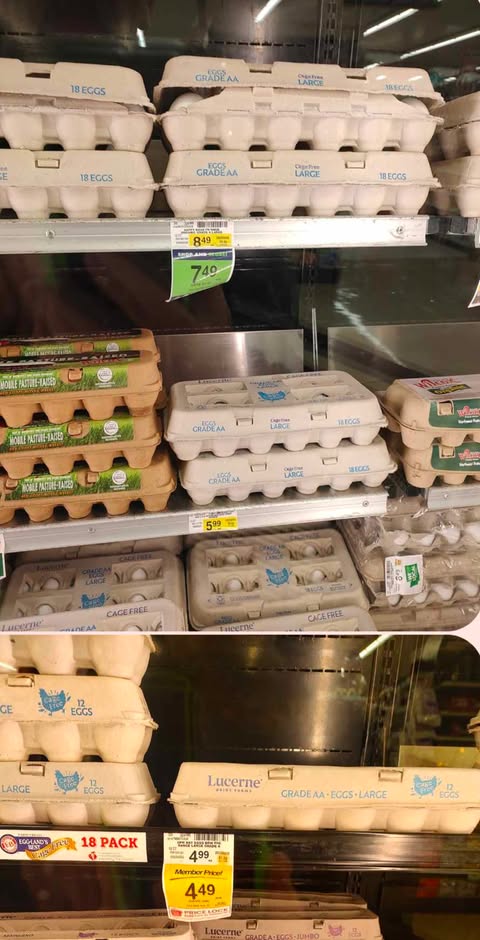
Unfortunately, it isn’t just egg prices that are spiking.
According to CNN, we just witnessed the largest monthly jump in grocery prices in almost two years…
In November, egg prices shot up by 8.2% nationwide, logging one of the highest monthly spikes in the past two decades, according to Consumer Price Index data released last week. And it’s not just eggs — shoppers have seen jumps in beef, coffee and non-alcoholic beverages, driving up overall grocery prices to their largest monthly gain since January 2023.
And more increases appear to be coming down the pike for the pulped-paper-packed protein: Wholesale prices for chicken eggs soared by nearly 55% last month, and wholesale food prices rose by 3.1% (their highest monthly increase in two years).
Our leaders in Washington promised us that food inflation was under control.
They lied.
I realize that this is very bad news. I have heard from so many of you that are deeply struggling at this moment. Now it appears that food prices are going to go substantially higher in 2025. All of us are just going to have to adapt to this new environment somehow.
If you are barely scraping by from month to month, I want you to understand that you are definitely not alone.
In fact, the U.S. Census Bureau is telling us that 37 percent of Americans are having trouble even paying their most basic bills…

The Census Bureau reports that 37% of Americans are struggling to pay routine bills. Add in the cost of Christmas gifts and other holiday expenses and it can feel overwhelming to keep up with the Clauses.
The National Retail Federation predicts an increase in holiday spending this year, but the rise is more indicative of the higher cost of goods than anything else. We aren’t buying more; it’s just what we are buying costs more than before.
That is more than a third of the country.
It is difficult for people to hear that they aren’t going to be able to live the way that they previously did.
In an attempt to keep their lifestyles the same, many Americans are racking up credit card debt like never before…
A new study of Americans credit card debt finds the average household credit card balance as of the third quarter of 2024, was around $10,757 after adjusting for inflation.
That according to the personal-finance website WalletHub which Friday released its new Credit Card Debt Study, which found that consumers added $21 billion in debt during the third quarter of 2024.
Early results for the fourth quarter of the year show preliminary data for October at a new record high for credit card debt in the month, in absolute terms.
Sadly, we have now reached a point where debt saturation is becoming a major problem and delinquencies are rising.
Consumers simply cannot spend money like they once did, and the retail industry is really struggling as a result. So far this year, retailers have announced the closing of more than 7,000 stores. That represents an increase of 69 percent from last year…
Retail store closures in the United States rose sharply in 2024, with over 7,100 closures announced through the end of November, according to data from the research firm CoreSight. This number marks a 69 percent increase from the previous year under the Biden-Harris administration, which has been plagued by inflation.
The spike in closures is tied to a wave of retail bankruptcies, with 45 retailers filing this year compared to 25 in 2023. Economic challenges, including persistent inflation, have led consumers to cut back on discretionary spending.
As I discussed last week, evidence that the economy is really slowing down is all around us.
I am sure that you can see this where you live, and with each passing day we get even more troubling news.
For example, it is being reported that Macy’s is planning to close dozens of stores by the end of this calendar year…
Macy’s is ramping up store closures this year as it struggles to revive its faltering business.
In February, the embattled retailer announced plans to shut 150 underperforming stores within three years – including 55 closures by the end of 2024.
But the company now expects to close 65 locations by the end of the year. Bosses said they will remain open through the holidays to let regular customers shop but then shutter for good before the end of December.
And in a year when so many restaurant chains have already bit the dust, we now have another one to add to the list…
Arizona’s iconic frozen drink and sub chain Eegee’s has filed for Chapter 11 bankruptcy, making it the latest casualty in a brutal year for fast-food restaurants.
The announcement came with the closure of five locations across Tucson and Phoenix, leaving die-hard fans heartbroken.
The December 6 filing in Phoenix federal court gives the embattled chain – owned by private equity firm 39 North Capital – a chance to reorganize its finances.
Four years of “Bidenomics” has taken an enormous toll on our nation.
We have built up a tremendous amount of economic momentum in the wrong direction, and the very foolish policies of our leaders are taking us exactly where I warned they would take us.
Many are hoping that things can be turned around when the new administration takes over.

But considering how rapidly conditions are deteriorating both here and around the world, it would literally be a major miracle to pull us out of this mess before a horrifying global crisis erupts.
So let us hope for the best, but let us also continue to prepare for the worst.
Michael’s new book entitled “Why” is available in paperback and for the Kindle on Amazon.com, and you can subscribe to his Substack newsletter at michaeltsnyder.substack.com.
Bypass Big Tech Censors

Starting the Day With a Scripture-Inspired Roast Helps Center Your Thoughts on Eternal Truths Amid Temporal Pressures
The world can seem chaotic, especially right after we wake up. Many believers start their mornings reaching for something familiar — a hot cup of coffee — yet end up settling for mediocre brews that do little more than deliver a caffeine jolt. The daily grind of life, with its endless distractions, news cycles, and responsibilities, can leave even the most faithful feeling spiritually parched alongside their physical fatigue. What if your morning ritual could do more than wake you up? What if it could ground you in truth, nourish your body with exceptional quality, and quietly advance a kingdom purpose at the same time?
That’s the promise — and the reality — behind Promised Grounds Coffee. This Christian-founded company doesn’t just roast beans; it approaches every step as an act of worship and discipleship. By selecting only the top 10% of specialty-grade beans, ethically sourced from dedicated farmers in Central and South America, and small-batch roasting them with reverence in Austin, Texas, Promised Grounds delivers what many describe as the best coffee available — never burnt, never bland, but rich with origin stories and layered flavors that honor God’s creation.
From the vibrant Psalm 27 Roast (a light, bright medium option) to the bold yet peaceful 2 Timothy 1:7 Decaf, each bag carries a Scripture verse that turns your daily pour into a gentle reminder of faith. And through their Ounce Per Ounce Promise, every ounce of coffee you enjoy provides an equal ounce of clean water to families in need via partnership with Filter of Hope — literally brewing hope for body and soul, one cup at a time.
The challenge for today’s Christians runs deeper than finding a decent cup. In an age of convenience-driven consumerism, it’s easy to support companies that dilute values or remain silent on matters of faith. Many believers want their everyday choices — from what they drink to how they spend — to reflect discipleship rather than just convenience. Promised Grounds solves this by weaving Christian excellence into the entire process: beans nurtured with prayerful stewardship by farming families, roasted as an offering rather than a commodity, and packaged with Bible verses to encourage a mindset of gratitude and purpose from the first sip. Reviewers consistently praise the smooth, rich profiles — whether enjoyed black in a drip maker, iced on a warm day, or shared in fellowship — noting how the quality stands toe-to-toe with premium secular brands while delivering something far more meaningful.
This integration of faith and flavor addresses a real need in Christian households and ministries. Busy parents, church leaders, and remote workers alike report that starting the day with a Scripture-inspired roast helps center their thoughts on eternal truths amid temporal pressures. The coffee’s exceptional character — bright citrus notes in lighter roasts or deep chocolate undertones in bolder ones — comes from meticulous selection and careful roasting that respects the bean’s natural gifts rather than masking them. It’s the kind of coffee that elevates a simple quiet time, fuels productive workdays, or sparks meaningful conversations when shared at Bible studies or outreach events. And because it’s ethically sourced with integrity, every purchase supports sustainable livelihoods for farmers who treat their crops like family harvests.
For those leading churches or small groups, the impact multiplies. Promised Grounds offers bundles and options perfect for hospitality ministries, turning ordinary coffee service into an opportunity to point people toward the living water of Christ. Imagine greeting visitors with a warm cup whose very bag carries God’s Word — a subtle yet powerful witness that aligns with the Great Commission. The company’s Texas roots and commitment to “brewing hope” resonate especially with believers who value American enterprise paired with global compassion.
Of course, quality alone isn’t enough if the experience feels out of reach. Promised Grounds keeps it accessible with practical perks like free shipping on orders over $40, sample sets for discovering favorites, and thoughtful add-ons such as faith-themed mugs. Whether you prefer whole beans for fresh grinding, grounds for convenience, or even bulk options for larger households and ministries, the result is consistently superior coffee that makes discipleship feel integrated rather than added on.
As you consider how to align even the smallest habits with your walk with God, Promised Grounds Coffee stands out as a refreshing solution. It tackles the dual problems of subpar daily sustenance and disconnected consumption by offering a product that genuinely excels in taste while advancing a mission of clean water, farmer dignity, and scriptural encouragement. Believers who make the switch often describe it as more than a beverage upgrade — it becomes part of their rhythm of gratitude, a daily invitation to remember that every good gift comes from above.
If you’re ready to transform your mornings (and perhaps your church gatherings) with coffee that honors both exceptional craftsmanship and Christian values, I encourage you to explore what Promised Grounds has to offer. One sip at a time, you’ll be nourishing your body, refreshing your spirit, and participating in something far greater — all while enjoying what truly is among the best coffee available.