The recent fires in Los Angeles have raised more questions than answers. Theories about their origin and purpose are swirling—from isolated arson incidents to grander plans tied to the upcoming LA 2028 Olympics. While some explanations might seem far-fetched, others are harder to dismiss entirely. Could these fires pave the way for transforming Los Angeles into a “smart city”? Let’s explore the possibilities.
Theories Behind the LA Fires
Accidental or Random Acts of Chaos?
One of the more mainstream explanations suggests the fires began through accidents or natural causes—downed power lines, fireworks, or similar mishaps. From there, individuals in the city may have intentionally started additional fires, contributing to the chaos. Could mental health issues or opportunism explain this? Perhaps. But when you look at fire patterns and the sheer scale of destruction, randomness feels less convincing.
Los Angeles isn’t new to dealing with unpredictable behavior. But does this theory adequately capture the situation? Or is it a convenient narrative to sidestep tougher questions?
Guerilla Warfare: Quiet Chaos
Another possibility being discussed is that these fires could be part of a guerilla warfare tactic. Unlike terrorism, which seeks mass casualties and public credit for violence, guerilla warfare thrives on subtlety. The goal isn’t to make grand announcements but to destabilize a region over time.
Massive fires disrupt lives, strain resources, and create anxiety, all while leaving people asking “why?” Those behind such acts aim to weaken a city’s systems without drawing attention to the bigger picture.
Could these fires be part of an organized yet understated attack meant to fracture essential infrastructure? It may sound like a spy novel, but in today’s world, nothing seems entirely impossible.
Climate Change Narrative or Coordinated Agenda?
Blaming Climate Change
Whenever disaster strikes in California, the climate change narrative often takes center stage. It’s an easy backdrop for pushing legislation or targeting political opponents. Fires allow certain factions to highlight environmental concerns, propose aggressive policies, and point fingers at figures like Donald Trump or other political adversaries.
But here’s a provocative idea: what if the fires aren’t an unintended consequence of climate-related factors? What if they’re being used to steer the conversation and push for specific policies that align with larger agendas?

Clearing the Way for SmartLA 2028
The darkest—and perhaps most interesting—theory centers around transforming Los Angeles into the smart city of the future. By clearing away older infrastructure and “starting fresh,” planners could have a blank canvas to implement their vision of SmartLA 2028. This concept fits with trends we’ve seen in other locations, like Lahaina, Hawaii, which was rumored for smart city development after devastating fires.
Rebuilding after such devastation allows governments and developers to sidestep the usual red tape. Instead of going through years or decades of zoning battles and negotiations, the fires may provide an excuse to rebuild entire areas to fit futuristic goals. Los Angeles has already been a testing ground for innovation. Could the push for a connected, high-tech city tied to the Olympics explain why these fires seem oddly… convenient?
Gavin Newsom’s Role in the Rebuilding Effort
California Governor Gavin Newsom has been at the center of attention during this crisis. While many are critiquing his response, others see an opportunity for him to reshape his narrative. Newsom has already discussed working with Hawaii’s governor regarding land use after their own fires. Could his conversations about rebuilding and “improving” Los Angeles be a sign of plans already in motion?
At the same time, speculation about Newsom’s political ambitions highlights another angle. Many believe he’s positioning himself for a future presidential run, possibly after his term limit as governor ends in 2026. This crisis could be leveraged as a way to demonstrate his “leadership” amid adversity, turning public opinion in his favor over time.
While critics doubt Newsom’s sincerity, his ability to control narratives remains a strength. If the coming months focus on his efforts to “rebuild better,” his political career might gain, not suffer.
Why These Stories Disappear
Think about how quickly we move from one headline to the next. Just weeks ago, other incidents dominated discussion—New Year’s Day attacks, mystery fog sightings, or drone activity over New Jersey. Yet, those stories faded almost instantly as fresh crises emerged. The same may happen with the LA fires.
When combined with short public memory, shifting news cycles make long-term accountability difficult. Events like these often vanish from public discourse, leaving only the aftermath. Are we being conditioned to forget, or is this just a natural byproduct of today’s fast-moving media landscape?
What Comes Next?
Whether intentional or not, events like fires, disasters, or crises have lasting consequences. The idea of Los Angeles being cleared for smart city development isn’t definitive—yet. Still, the timing raises legitimate questions about what’s being planned behind the scenes.
We must stay vigilant and question how events align with broader agendas. Is SmartLA 2028 just a coincidence? Or, are we witnessing a carefully orchestrated transformation of one of America’s most recognized cities?
What do you think? Share your thoughts or join the discussion on platforms like X or Rumble. Let’s keep the conversation going!
Bypass Big Tech Censors
- Hand-curated links from conservative and Christian sites — NO legacy media garbage links. Patriots get their news every day at JDRucker.com
Two Storms, One Harvest

Every food crisis in living memory has been a one-shock event. The 2008 price spike was a commodity bubble. The 2020 shortages were a logistics failure. The 2022 grain scare was a war on one exporter’s ports. Each time, the system bent, adjusted, and recovered, and each time the experts assured us afterward that global markets are simply too big and too diversified to fail.
What nobody in Washington seems eager to discuss is that 2026 is shaping up to be something the modern food system has never actually faced. Two independent shocks, one climatic and one geopolitical, are converging on the same harvest cycle at the same time. Not sequentially. Simultaneously.
Start with the weather. The Pacific Ocean is currently building toward what forecasters now openly call a record event. NOAA’s Climate Prediction Center puts the odds of at least a strong El Niño near 88 percent, with roughly two in three odds it reaches “very strong” status, the tier reserved for perhaps three or four events in the entire satellite era. Every major global model now projects a median peak in Super El Niño territory, and most of them project it exceeding the 2015-16 event, which until now held the modern record. Sea surface anomalies were already brushing the super threshold in mid-July, months before these events normally peak. The atmosphere has already shifted into El Niño mode, and the event is forecast to crest in late fall and early winter.
This is not about “climate change.” It’s about the standard cycles of weather, and the cycle we’re currently in is one that has likely devastated societies in the past. We’re better prepared as a society today, but not all Americans are equally prepared.
Serious households have started doing the quiet math on their own. Grocery bills tell part of the story, and the forecast maps tell the rest, which is why long-term food storage has moved from fringe hobby to mainstream line item in the family budget, with established suppliers like Heaven’s Harvest seeing demand from people who five years ago would have rolled their eyes at the idea. That instinct is not paranoia. It is pattern recognition, and the pattern is worth walking through carefully.
Editor’s Note: Heaven’s Harvest IS a sponsor, but the warnings of this article are real and would be written even if we didn’t have a survival food sponsor. With that said, those who take advantage of what they offer can use promo code “Patriot” for 15% off.
The Fertilizer Clock Is Already Running
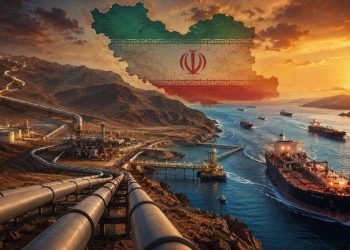
While the Pacific warms, the second shock has been unfolding in the Strait of Hormuz. The conflict with Iran turned the world’s most important energy chokepoint into a contested waterway, and the consequences reach far beyond the gas pump. Roughly a third of global fertilizer trade moves through Hormuz, and the disruption sent urea prices up 86 percent year over year by March, with a 53 percent jump in a single month.
The World Bank projects energy prices rising about 24 percent in 2026 and fertilizer about 31 percent. By its own accounting, fertilizer prices ran 35 percent higher in the first five months of this year than the same period last year.
Here is the mechanism the nightly news will not explain. Fertilizer is not a grocery item. It is a time-delayed input. The nitrogen a farmer in Iowa or Punjab could not afford to apply this spring does not show up as a problem this spring. It shows up as a thinner harvest six to twelve months later.
The World Bank’s own food security brief concedes that the effects of reduced applications earlier this season “are likely to become visible only later in harvest outcomes.” Translate that from institutional language into plain English and it means this. The damage is already done, it is already in the ground, and we are simply waiting for it to arrive on the shelf.
Now check the calendar. Six to twelve months from the spring planting season lands us squarely in late 2026 and early 2027. Which is precisely when the strongest El Niño in the instrumental record is forecast to peak, bringing its signature droughts to Southeast Asia, Australia, southern Africa, northern Brazil, and South Asia, the very regions that grow the world’s rice, sugar, and oilseeds.
The World Bank warns openly that a strong El Niño “could disrupt multiple crop belts simultaneously” on top of the conflict-driven input costs. Their baseline projection assumes the Middle East disruptions ease by autumn. What in the last two years of Middle East history suggests that assumption is safe?
The System Has No Slack Left
The comfortable answer is that global markets always adjust. But adjustment requires slack, and the slack is gone. Global cereal production is expected to decline from last year’s records even before El Niño does its work. The UN World Food Programme, hardly a den of right-wing preppers, is calling this the most significant disruption to its supply chains since Covid and the invasion of Ukraine, and its supply chain director put the stakes bluntly.
Today’s supply chain challenges are tomorrow’s hunger crisis.
There is also a political dimension that markets cannot price. When food gets scarce, governments do not behave like economists. They behave like politicians. Export bans, hoarding mandates, and panic buying at the national level turned the modest rice shortfall of 2008 into a global crisis, and analysts are already warning that import-dependent nations are the first dominoes.
The 2015-16 Super El Niño, a far weaker event than what is now forecast, threw tens of millions into food stress across Africa and Asia. This one is projected to be stronger, and it arrives with fertilizer already rationed by price and shipping lanes already contested by missiles.
What Joseph Knew
Scripture does not treat preparation for lean years as faithlessness. It treats it as wisdom delivered in advance to those willing to act on it.
Behold, there come seven years of great plenty throughout all the land of Egypt: And there shall arise after them seven years of famine; and all the plenty shall be forgotten in the land of Egypt.
Joseph did not respond to that warning with a hashtag or a committee. He stored grain during the years of abundance, and when the famine came, Egypt stood while its neighbors begged. The lesson is not that famine is certain. It is that the time to prepare is precisely when preparation still looks optional.
Nobody who filled a pantry in a year of plenty has ever regretted it, and nobody standing in an empty aisle has ever been glad he waited for certainty.
None of this calls for panic, and panic is the enemy of sound judgment anyway. It calls for the same unglamorous prudence our grandparents considered ordinary. Keep some cash margin, know your local growers, and put real food in deep storage while it is cheap and available, because the entire arc of this story is that cheap and available is a closing window.
Families looking for a straightforward place to start can visit Heaven’s Harvest and use promo code Patriot for 15 percent off long-term storable food. The forecasts may yet soften, the strait may yet reopen, and we should pray they do. But hope is a fine thing to hold and a foolish thing to eat.