(The Economic Collapse Blog)—We live at a time when global events are moving at a blistering pace. As Donald Trump and Elon Musk shake the very foundations of Washington D.C.’s giant bureaucracy, very alarming things are starting to happen all over the world. Chaos is erupting all around us, and I am entirely convinced that it is only going to intensify during the months ahead.
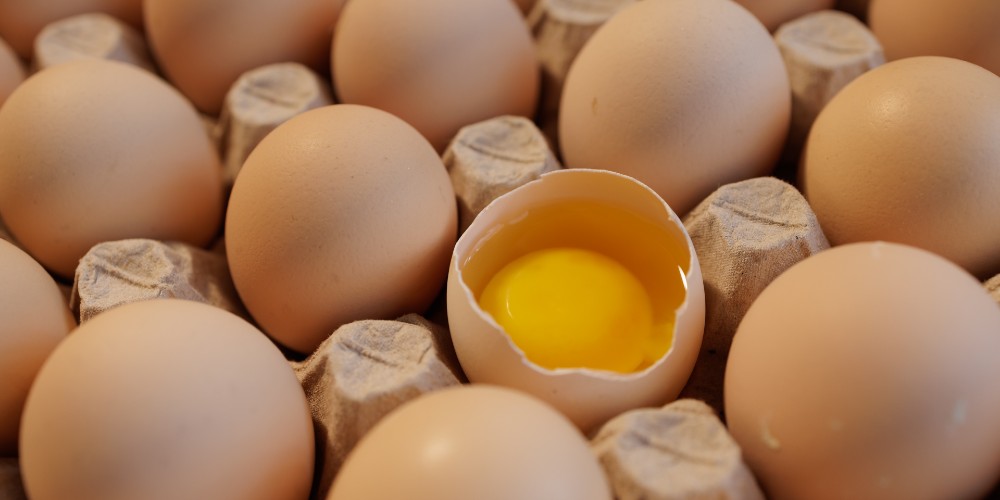
Let me start by discussing the worst egg shortage in U.S. history.
All over the country, grocery stores and restaurants are having a really difficult time finding enough eggs right now…
American restaurants are falling victim to a national egg shortage that has already plagued grocery stores from New York City to San Francisco and sent prices to $7 a carton.
I never imagined that egg prices would reach such dizzying heights in 2025, and the year has just begun.
In the Big Apple, a dozen cage-free eggs will set you back $11.99…
In New York City, prices reached as high as $11.99 for a dozen cage-free eggs at Whole Foods Inc. The national retailer placed a three-carton purchase limit on customers at some locations in the city. Customers in Nassau County on Long Island found supplies of Vital Farms pasture-raised eggs and Nellie’s free range ones sold out at Whole Foods online in the past week.
Organic eggs have been in short supply too. Over the weekend, refrigerated shelves were almost completely bare at a ShopRite in Brooklyn. The few crates left were priced at about $1 per egg. A nearby Costco was out of everything except quail eggs, according to grocery delivery app Instacart, and a Wegmans had run out of some of its store brands.
This is nuts. A dozen eggs should be less than a dollar.
Or at least that was what life in America was like during the “good old days” prior to the pandemic.
But now it appears that those days are gone for good.

In fact, things are so bad that the Waffle House has decided to implement a “50 cent per egg surcharge”…
The Waffle House restaurant chain is putting a 50 cent per egg surcharge in place due to the biggest bird flu outbreak in a decade.
The 24-7 restaurant said that the resulting egg shortage has led to a dramatic increase in its costs.
Bird flu is forcing farmers to slaughter millions of chickens a month, pushing U.S. egg prices to more than double their cost in the summer of 2023. And it appears there may be no relief in sight with Easter approaching.
Once upon a time, the two egg breakfast at the Waffle House was one of the most affordable breakfast meals in America.
But now you will have to shell out $7.75 for it…
The Waffle House, a reliable source of a cheap breakfast, said that its egg surcharge became effective this week and that it applies to all of its menus. The restaurant’s two-egg breakfast, which comes with toast and a side, was listed at $7.75 on Tuesday.
“While we hope these price fluctuations will be short-lived we cannot predict how long this shortage will last,” the company said.
The bird flu pandemic that has been raging all over the world since early 2022 has not gone away.
In fact, over the last eight weeks it has been worse then ever…
“If you look at what’s happened the last eight weeks, the number of poultry operations that have gone down — and more recently, the duck operations — is absolutely stunning,” Michael Osterholm, director of the Center for Infectious Disease Research and Policy at the University of Minnesota told Axios.
Unfortunately, some experts are warning us that it is just a matter of time before the bird flu starts spreading among humans on a widespread basis.
When that happens, the panic that we will witness will be off the charts.
Are you ready for that?
Meanwhile, there is news that a different deadly virus has been discovered in the U.S. “for the first time ever”…
A potentially deadly virus has been detected in the United States for the first time ever.
Scientists identified the Camp Hill virus in shrews in Alabama, sparking fears it could find its way through animal reservoirs to humans and cause a potentially wide-reaching outbreak.
The Camp Hill virus belongs to a family of pathogens called henipaviruses, including the Nipah virus, a bat-borne virus that kills up to 70 percent of people it infects. The Camp Hill virus, however, has never been recorded in humans and scientists don’t know what symptoms are or the death rate.
That is certainly alarming.
And let us not forget about the outbreaks of Ebola, the Marburg virus, and a new strain of the monkeypox that are causing so much alarm in central Africa.
Yes, pestilences are certainly shaping up to be one of the major themes of 2025.

In Europe, another sort of a threat is making headlines.
Over the past week, more than 500 earthquakes have shaken the Santorini area…
Starting on January 28, the islands of Santorini and Amorgos have been rocked by near-constant tremors of magnitudes three to four.
According to the University of Athens’ earthquake monitoring tool, more than 555 earthquakes have hit the area since then.
Needless to say, these quakes have created quite a stir, and people have been evacuating from Santorini in droves…
Hundreds of people left Santorini on ferries and planes on Tuesday to reach safety in Athens as a series of quakes kept shaking the famous Greek tourist island.
Hundreds of quakes have been registered every few minutes in the sea between the volcanic islands of Santorini and Amorgos, in the Aegean Sea, in recent days, prompting authorities to shut schools in Santorini and the small nearby islands of Ios, Amorgos and Anafi until Friday.
Scientists are trying to assure us that everything is just fine and that a full-blown eruption of Santorini is not likely to happen.
Hopefully they are correct about that, because an enormous eruption of Santorini that occurred many centuries ago was absolutely catastrophic…
However, geologists believe a vastly more powerful eruption occurred around 1620 BC which destroyed a large part of the island, blanketed the region with ash, and is even believed to have contributed to the downfall of the mighty Minoan civilisation.
We have been witnessing unusual seismic activity here in the United States as well.

In fact, during the month of December there was a very alarming swarm of earthquakes along the New Madrid fault zone…
It has been an active week on the New Madrid fault line.
There have been ten small earthquakes in the Bootheel this week alone, with magnitudes ranging from 1.8 to 3.0.
I don’t think that a major quake is going to hit the region immediately.
But it is interesting to note that officials do intend to update the emergency plan for that area of the country…
State officials are teaming up with federal offices to plan for one of the most unpredictable disasters, earthquakes.
The Arkansas Department of Emergency Management along with FEMA, Region 6, and 30 counties have teamed up to update the New Madrid Seismic Zone plan.
Before I end this piece, there are two more things that I wanted to mention.
First of all, the Chinese have just announced that they will be imposing retaliatory tariffs on U.S. imports…
China unveiled a series of retaliatory measures against the U.S. on Tuesday, shortly after U.S. tariffs on Chinese goods took effect, raising concerns of a broader trade war between the world’s two largest economies.
China’s Finance Ministry said Tuesday it will impose additional tariffs of 15% on coal and liquefied natural gas imports from the U.S. and 10% higher duties on American crude oil, agricultural machinery and certain cars, starting Feb. 10.
U.S. relations with China are heading downhill very fast.

This will be something to watch very closely in the months ahead.
Also on Tuesday, Donald Trump signed an executive order that is intended to exert “maximum pressure” on Iran…
President Donald Trump will sign executive order on Tuesday restoring “maximum pressure” on Iran, Reuters is reporting, citing a US official. This is with the intended aim of thwarting all paths of the Islamic Republic toward a nuclear weapon.
The US official also cited Iran’s “malign influence” in the Mideast region and de facto state of war with Israel, including support for regional militants who attack Israeli territory and interests.
“The official told Reuters that Trump’s directive orders the US Treasury Secretary to impose ‘maximum economic pressure’ on Iran, including sanctions and enforcement mechanisms on those violating existing sanctions. The directive is aimed at denying Iran ‘all paths to a nuclear weapon’ and countering ‘Iran’s malign influence’ according to the official.”
Of course economic pressure alone is not going to stop Iran from developing nuclear weapons.
In recent months they have really been ramping up their program, and it is being reported that they have actually been working on delivery systems “with a 1,800‑mile range that could reach Europe”…
Iran has allegedly been covertly developing nuclear weapons with a 1,800‑mile range that could reach Europe using North Korean designs, according to the National Council of Resistance of Iran (NCRI).
The Telegraph in Britain reported Sunday that details provided by the NCRI indicate that the Islamic Revolutionary Guard Corps (IRGC) is expanding its warhead program at two sites disguised as communication satellite launch facilities. The facilities, controlled by Iran’s nuclear weapons division – the Organisation for Advanced Defence Research (SPND) – are reportedly expediting missile production.
The Trump administration is not going to allow Iran to produce nuclear weapons.
Likewise, the Israeli government is not going to allow Iran to produce nuclear weapons.
But Iran has already almost reached a point of no return.
So I am expecting to see military action against Iran in the not too distant future.
When that happens, the Iranians will go absolutely ballistic, the price of oil will go through the roof, and the entire region will be thrown into a state of chaos.
At this moment, the media is focusing on so many other things.
But it won’t be too long before war with Iran makes really big news, and once we reach that stage everything will change.
Michael’s new book entitled “Why” is available in paperback and for the Kindle on Amazon.com, and you can subscribe to his Substack newsletter at michaeltsnyder.substack.com.
Bypass Big Tech Censors
Bypass Big Tech Censors

Two Storms, One Harvest

Every food crisis in living memory has been a one-shock event. The 2008 price spike was a commodity bubble. The 2020 shortages were a logistics failure. The 2022 grain scare was a war on one exporter’s ports. Each time, the system bent, adjusted, and recovered, and each time the experts assured us afterward that global markets are simply too big and too diversified to fail.
What nobody in Washington seems eager to discuss is that 2026 is shaping up to be something the modern food system has never actually faced. Two independent shocks, one climatic and one geopolitical, are converging on the same harvest cycle at the same time. Not sequentially. Simultaneously.
Start with the weather. The Pacific Ocean is currently building toward what forecasters now openly call a record event. NOAA’s Climate Prediction Center puts the odds of at least a strong El Niño near 88 percent, with roughly two in three odds it reaches “very strong” status, the tier reserved for perhaps three or four events in the entire satellite era. Every major global model now projects a median peak in Super El Niño territory, and most of them project it exceeding the 2015-16 event, which until now held the modern record. Sea surface anomalies were already brushing the super threshold in mid-July, months before these events normally peak. The atmosphere has already shifted into El Niño mode, and the event is forecast to crest in late fall and early winter.
This is not about “climate change.” It’s about the standard cycles of weather, and the cycle we’re currently in is one that has likely devastated societies in the past. We’re better prepared as a society today, but not all Americans are equally prepared.
Serious households have started doing the quiet math on their own. Grocery bills tell part of the story, and the forecast maps tell the rest, which is why long-term food storage has moved from fringe hobby to mainstream line item in the family budget, with established suppliers like Heaven’s Harvest seeing demand from people who five years ago would have rolled their eyes at the idea. That instinct is not paranoia. It is pattern recognition, and the pattern is worth walking through carefully.
Editor’s Note: Heaven’s Harvest IS a sponsor, but the warnings of this article are real and would be written even if we didn’t have a survival food sponsor. With that said, those who take advantage of what they offer can use promo code “Patriot” for 15% off.
The Fertilizer Clock Is Already Running
While the Pacific warms, the second shock has been unfolding in the Strait of Hormuz. The conflict with Iran turned the world’s most important energy chokepoint into a contested waterway, and the consequences reach far beyond the gas pump. Roughly a third of global fertilizer trade moves through Hormuz, and the disruption sent urea prices up 86 percent year over year by March, with a 53 percent jump in a single month.
The World Bank projects energy prices rising about 24 percent in 2026 and fertilizer about 31 percent. By its own accounting, fertilizer prices ran 35 percent higher in the first five months of this year than the same period last year.
Here is the mechanism the nightly news will not explain. Fertilizer is not a grocery item. It is a time-delayed input. The nitrogen a farmer in Iowa or Punjab could not afford to apply this spring does not show up as a problem this spring. It shows up as a thinner harvest six to twelve months later.
The World Bank’s own food security brief concedes that the effects of reduced applications earlier this season “are likely to become visible only later in harvest outcomes.” Translate that from institutional language into plain English and it means this. The damage is already done, it is already in the ground, and we are simply waiting for it to arrive on the shelf.
Now check the calendar. Six to twelve months from the spring planting season lands us squarely in late 2026 and early 2027. Which is precisely when the strongest El Niño in the instrumental record is forecast to peak, bringing its signature droughts to Southeast Asia, Australia, southern Africa, northern Brazil, and South Asia, the very regions that grow the world’s rice, sugar, and oilseeds.
The World Bank warns openly that a strong El Niño “could disrupt multiple crop belts simultaneously” on top of the conflict-driven input costs. Their baseline projection assumes the Middle East disruptions ease by autumn. What in the last two years of Middle East history suggests that assumption is safe?
The System Has No Slack Left
The comfortable answer is that global markets always adjust. But adjustment requires slack, and the slack is gone. Global cereal production is expected to decline from last year’s records even before El Niño does its work. The UN World Food Programme, hardly a den of right-wing preppers, is calling this the most significant disruption to its supply chains since Covid and the invasion of Ukraine, and its supply chain director put the stakes bluntly.
Today’s supply chain challenges are tomorrow’s hunger crisis.
There is also a political dimension that markets cannot price. When food gets scarce, governments do not behave like economists. They behave like politicians. Export bans, hoarding mandates, and panic buying at the national level turned the modest rice shortfall of 2008 into a global crisis, and analysts are already warning that import-dependent nations are the first dominoes.
The 2015-16 Super El Niño, a far weaker event than what is now forecast, threw tens of millions into food stress across Africa and Asia. This one is projected to be stronger, and it arrives with fertilizer already rationed by price and shipping lanes already contested by missiles.
What Joseph Knew
Scripture does not treat preparation for lean years as faithlessness. It treats it as wisdom delivered in advance to those willing to act on it.
Behold, there come seven years of great plenty throughout all the land of Egypt: And there shall arise after them seven years of famine; and all the plenty shall be forgotten in the land of Egypt.
Joseph did not respond to that warning with a hashtag or a committee. He stored grain during the years of abundance, and when the famine came, Egypt stood while its neighbors begged. The lesson is not that famine is certain. It is that the time to prepare is precisely when preparation still looks optional.
Nobody who filled a pantry in a year of plenty has ever regretted it, and nobody standing in an empty aisle has ever been glad he waited for certainty.
None of this calls for panic, and panic is the enemy of sound judgment anyway. It calls for the same unglamorous prudence our grandparents considered ordinary. Keep some cash margin, know your local growers, and put real food in deep storage while it is cheap and available, because the entire arc of this story is that cheap and available is a closing window.
Families looking for a straightforward place to start can visit Heaven’s Harvest and use promo code Patriot for 15 percent off long-term storable food. The forecasts may yet soften, the strait may yet reopen, and we should pray they do. But hope is a fine thing to hold and a foolish thing to eat.