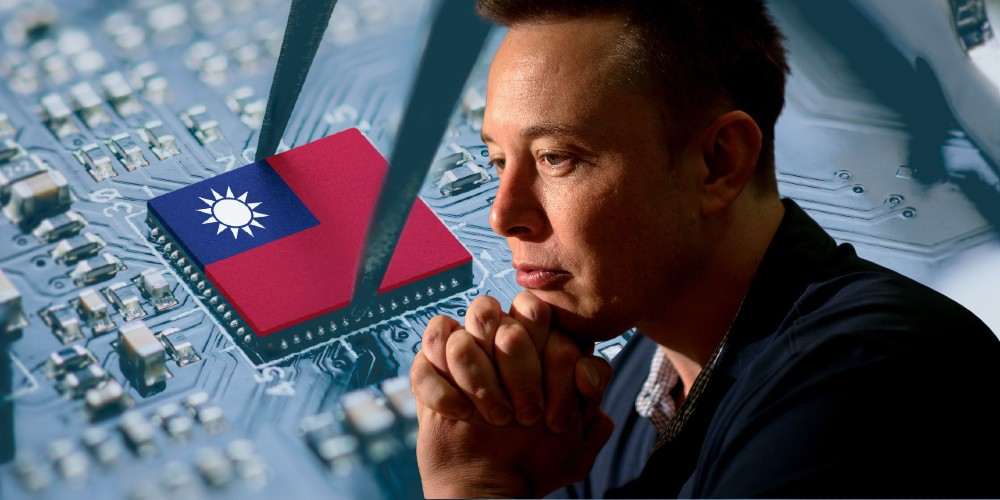
(Substack)—Without Taiwan, Artificial Intelligence research comes to a screeching halt in America. That is neither hyperbole nor fearmongering. Nearly every technological aspect of Artificial Intelligence used in the United States today originates in Taiwan or through Taiwanese companies.
If Taiwan were to align with China, whether by choice or by force, the infrastructure for Artificial Intelligence would become instantly scarce. It would be like a family no longer being able to go to the grocery store. Whatever is in the house at the time is all the food they’d have left. Their only option would be to start growing their own food, and just like trying to build our own AI component infrastructure in America, the food rations would run out before the first fruit or vegetable was grown.
On today’s episode of The JD Rucker Show, I discussed a warning by Elon Musk to Senator Ted Cruz about our reliance on Taiwan and the need to start producing our own computer components in the United States.
Below is an article and video that details the world’s reliance on Taiwan for AI infrastructure today…
Taiwan: The Linchpin Holding Up the AI Revolution
Ever wonder where the brains of artificial intelligence are born? The answer might surprise you: it’s Taiwan. This island nation produces a staggering 90% of the world’s most advanced semiconductors – the chips that power everything from your smartphone to cutting-edge AI. So, why is this relatively small island so crucial, and what happens if its dominance is threatened?
Taiwan isn’t just a microchip factory; it’s the beating heart of the entire AI ecosystem. Beyond semiconductors, Taiwanese companies are estimated to manufacture 90% of the AI servers that keep the digital world humming. Think about that for a moment. All of Nvidia’s AI chips, the very foundation of many AI applications, are made there. Without Taiwan, the AI revolution as we know it would stall.
But this dominance faces a looming threat. China considers Taiwan part of its territory and has become increasingly assertive in its claims. The future of AI is now intertwined with the security and stability of Taiwan. Can Taiwan stay safe and continue driving AI forward?
From Toys to Tech Titan: Taiwan’s Rise in the Semiconductor Industry
It wasn’t always this way. Back in the 1970s, Taiwan was known for producing cheap toys and low-quality goods. But the government had a vision: to transform the island into a high-tech powerhouse. They saw the potential in chip technology and began investing heavily in the 1980s.

This investment wasn’t just about money. It was about building a world-class talent pool. STEM degrees (science, technology, engineering, and mathematics) became highly valued, attracting bright minds and fostering a culture of innovation. With a large pool of engineers, entrepreneurship flourished. Taiwan became a global leader in efficient mass manufacturing, with factories both at home and in China.
Out of this environment, the Taiwan Semiconductor Manufacturing Company (TSMC) was born. Today, TSMC’s scale and technology are unmatched. It’s been a partner to Nvidia since the beginning, helping to fuel the growth of AI.
As Nvidia founder and CEO Jensen Huang put it, “Taiwan is the home of our treasured partners, and our partnership has created the world’s AI infrastructure.”
Inside an AI Server: Taiwan’s Hardware Gems
Taiwan’s role goes far beyond just making chips. The island produces almost every vital hardware component needed to build an AI server. What exactly goes into one of these servers?
- Chip: The brains of the operation.
- Motherboard: Connects all the components.
- Power Modules: Provide the necessary electricity.
- Liquid Cooling Systems: Keep everything from overheating.
- Server Rack: Houses multiple servers.
Taiwan makes it all. According to experts, if “you want to do the shopping in Taiwan you can shop pretty much every product every component.”
Asia Vital Components, or ABC, is a prime example of a Taiwanese company playing a crucial role in the AI supply chain. They’ve worked with Nvidia for over two decades, specializing in heat dissipation.
As AI servers become more powerful, they generate more heat. Traditional cooling solutions, like fans, are no longer sufficient. That’s where liquid cooling comes in.
ABC has pivoted its research and development to focus on liquid cooling systems. These systems use water or coolants to efficiently conduct heat away from critical components.
Currently, air cooling dominates the data center market, accounting for 90% of thermal-related spending. Liquid cooling makes up just 10%. However, as AI servers continue to evolve, liquid cooling could soar to 30% by 2028.
An Nvidia NVL72 server, which represents the cutting edge of AI tech, can cost between $3 and $4 million. But even a small, inexpensive cooling component can prevent that server from shipping if it fails. Without proper cooling, these servers would simply melt down. This highlights the importance of these often-unseen companies in the AI revolution.
Taiwan’s Competitive Edge: Why Tech Giants Flock to the Island
What makes Taiwan such a hub for AI hardware? Part of it is the innovative spirit that drives Taiwanese companies. ABC, for instance, relentlessly pursued Amazon as a customer, even setting up shop near their Seattle office. Their persistence paid off, and soon after landing Amazon, Microsoft followed suit.
Taiwan’s small size and efficient infrastructure also give it a competitive edge. Major tech companies like Google, Amazon, and Microsoft come to Taiwan because they can quickly and easily meet with all their partners.

Since 2023, Taiwan’s AI-related exports have surpassed China’s, reflecting its growing importance in the world of AI and the shifting geopolitical landscape. This shift is partly due to the tech war between the US and China. The US has banned the export of certain AI chips to China, leading companies to build their AI servers elsewhere, often in Taiwan or in manufacturing facilities owned by Taiwanese companies in other countries.
With so much AI technology concentrated on one island, the ever-present risk from neighboring China is a major concern. China views Taiwan as part of its territory and hasn’t ruled out using force to bring it under its control.
China has carried out what it calls mock air blockades of Taiwan, using jets carrying live ammunition. They are determined to bring Taiwan into the People’s Republic of China, no matter how long it takes.
To deter a potential invasion, TSMC and Dutch company ASML have developed a “kill switch” that can render their manufacturing plants inoperable. This underscores the deep concern about China potentially gaining control of these sophisticated machines.
Even if an invasion is unlikely, a war could severely damage the global economy. Bloomberg Economics estimates that it would knock out the semiconductor supply chain, delaying AI advancements and causing a $10 trillion hit to global GDP. That’s far greater than the economic impact of the war in Ukraine, the COVID pandemic, and the global financial crisis.
Mitigating the Risks: Diversification and the Future of AI
To reduce these risks, Taiwanese companies have begun diversifying their manufacturing operations. They’re expanding into countries like Mexico and Southeast Asia. TSMC has also broken ground on new facilities in Arizona, Japan, and Germany.

The US government is also encouraging this trend through the CHIPS Act, which offers incentives to bring semiconductor manufacturing back to the United States.
Many clients want to reduce their reliance on Taiwan, but building up manufacturing capabilities in other regions will take time. Replicating Taiwan’s expertise and infrastructure in the short term is simply impossible.
As we move into an AI-powered future, the technology and global stability remain tied to Taiwan. While manufacturing may eventually expand to other regions, Taiwan’s importance will endure for years to come.
Bypass Big Tech Censors

Starting the Day With a Scripture-Inspired Roast Helps Center Your Thoughts on Eternal Truths Amid Temporal Pressures
The world can seem chaotic, especially right after we wake up. Many believers start their mornings reaching for something familiar — a hot cup of coffee — yet end up settling for mediocre brews that do little more than deliver a caffeine jolt. The daily grind of life, with its endless distractions, news cycles, and responsibilities, can leave even the most faithful feeling spiritually parched alongside their physical fatigue. What if your morning ritual could do more than wake you up? What if it could ground you in truth, nourish your body with exceptional quality, and quietly advance a kingdom purpose at the same time?
That’s the promise — and the reality — behind Promised Grounds Coffee. This Christian-founded company doesn’t just roast beans; it approaches every step as an act of worship and discipleship. By selecting only the top 10% of specialty-grade beans, ethically sourced from dedicated farmers in Central and South America, and small-batch roasting them with reverence in Austin, Texas, Promised Grounds delivers what many describe as the best coffee available — never burnt, never bland, but rich with origin stories and layered flavors that honor God’s creation.
From the vibrant Psalm 27 Roast (a light, bright medium option) to the bold yet peaceful 2 Timothy 1:7 Decaf, each bag carries a Scripture verse that turns your daily pour into a gentle reminder of faith. And through their Ounce Per Ounce Promise, every ounce of coffee you enjoy provides an equal ounce of clean water to families in need via partnership with Filter of Hope — literally brewing hope for body and soul, one cup at a time.
The challenge for today’s Christians runs deeper than finding a decent cup. In an age of convenience-driven consumerism, it’s easy to support companies that dilute values or remain silent on matters of faith. Many believers want their everyday choices — from what they drink to how they spend — to reflect discipleship rather than just convenience. Promised Grounds solves this by weaving Christian excellence into the entire process: beans nurtured with prayerful stewardship by farming families, roasted as an offering rather than a commodity, and packaged with Bible verses to encourage a mindset of gratitude and purpose from the first sip. Reviewers consistently praise the smooth, rich profiles — whether enjoyed black in a drip maker, iced on a warm day, or shared in fellowship — noting how the quality stands toe-to-toe with premium secular brands while delivering something far more meaningful.
This integration of faith and flavor addresses a real need in Christian households and ministries. Busy parents, church leaders, and remote workers alike report that starting the day with a Scripture-inspired roast helps center their thoughts on eternal truths amid temporal pressures. The coffee’s exceptional character — bright citrus notes in lighter roasts or deep chocolate undertones in bolder ones — comes from meticulous selection and careful roasting that respects the bean’s natural gifts rather than masking them. It’s the kind of coffee that elevates a simple quiet time, fuels productive workdays, or sparks meaningful conversations when shared at Bible studies or outreach events. And because it’s ethically sourced with integrity, every purchase supports sustainable livelihoods for farmers who treat their crops like family harvests.
For those leading churches or small groups, the impact multiplies. Promised Grounds offers bundles and options perfect for hospitality ministries, turning ordinary coffee service into an opportunity to point people toward the living water of Christ. Imagine greeting visitors with a warm cup whose very bag carries God’s Word — a subtle yet powerful witness that aligns with the Great Commission. The company’s Texas roots and commitment to “brewing hope” resonate especially with believers who value American enterprise paired with global compassion.
Of course, quality alone isn’t enough if the experience feels out of reach. Promised Grounds keeps it accessible with practical perks like free shipping on orders over $40, sample sets for discovering favorites, and thoughtful add-ons such as faith-themed mugs. Whether you prefer whole beans for fresh grinding, grounds for convenience, or even bulk options for larger households and ministries, the result is consistently superior coffee that makes discipleship feel integrated rather than added on.
As you consider how to align even the smallest habits with your walk with God, Promised Grounds Coffee stands out as a refreshing solution. It tackles the dual problems of subpar daily sustenance and disconnected consumption by offering a product that genuinely excels in taste while advancing a mission of clean water, farmer dignity, and scriptural encouragement. Believers who make the switch often describe it as more than a beverage upgrade — it becomes part of their rhythm of gratitude, a daily invitation to remember that every good gift comes from above.
If you’re ready to transform your mornings (and perhaps your church gatherings) with coffee that honors both exceptional craftsmanship and Christian values, I encourage you to explore what Promised Grounds has to offer. One sip at a time, you’ll be nourishing your body, refreshing your spirit, and participating in something far greater — all while enjoying what truly is among the best coffee available.