(End of the American Dream)—The Chinese have made enormous mountains of money by exporting cheap goods to the rest of the world, and this has given them a tremendous amount of economic power. Now they are attempting to extend their economic domination by constructing hundreds of very large self-sustaining “special economic zones” in other countries. These “special economic zones” are established in key strategic locations, and they are often exempt from many of the laws and regulations of the host nation.
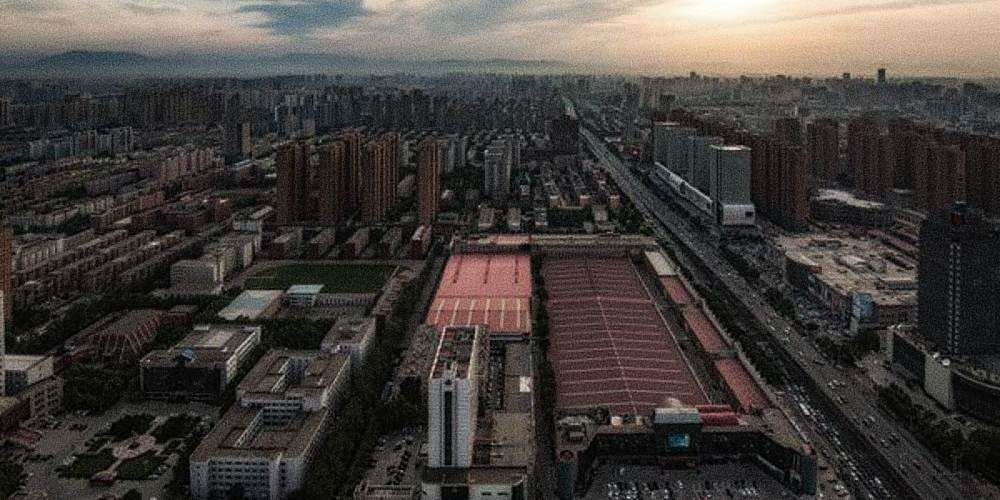
The most famous “special economic zone” in the world is the Chinese city of Shenzhen.
Back in the 1970s, Shenzhen was just a very small fishing village. Today, it is help up as a shining example of China’s economic miracle…
The most successful SEZ in China was Shenzhen, one of the original pilot zones created by Deng Xiaoping. Shenzhen went from a population of 314,000 to 12.5 million over the span of 40 years. By 1992, within 12 years of its designation as a SEZ, Shenzhen attracted $4.3 billion USD in FDI annually, or 14% of China’s total FDI. Now Shenzhen is known as the Silicon Valley of hardware, because it is home to the world’s largest electronics factories.
China is now home to more than 2,500 SEZs. They range from small business parks to full fledged cities with populations in the millions. The World Bank estimates that China’s SEZs contribute 22% GDP, 45% of its FDI, and 60% of its exports.
After having so much success with special economic zones domestically, the Chinese started implementing this concept elsewhere.
A little over a decade ago, China unveiled the global Belt and Road Initiative. The goal was to create a worldwide network of special economic zones that would be connected by “highways, fiber optic cables, railroads, oil pipelines, ports, and airports”…
In 2013, the Chinese government announced the creation of the global Belt and Road Initiative (BRI). This plan would revive the silk road by financing the creation of connective infrastructure throughout Eurasia and Africa. The connective infrastructure to be built includes highways, fiber optic cables, railroads, oil pipelines, ports, and airports. This infrastructure would be connected by hubs made up of Chinese SEZs. The Chinese government expects to spend $2 trillion USD by 2030 developing the program.
Today, there are approximately 500 Chinese special economic zones outside of the nation of China, and some of them are the size of “full fledged new cities”…
There are now roughly 500 Chinese funded SEZs outside of China, mostly created as part of the BRI. As hubs of connective infrastructure, SEZs play a critical role in the success of the BRI.
BRI SEZs differ immensely from one another. Most are industrial parks, but some are full fledged new cities. Many are designed from the ground up by Chinese companies, while others are initiated by their home countries and later funded by Chinese interests. Some have budgets in the tens of millions, while others have budgets in the tens of billions.
CBS News recently visited one of these special economic zones in Cambodia.
When the CBS News team arrived, there was “no mistake about who’s in charge”…

A convoy of semi-trucks passed by as our CBS News team drove about two hours south of Cambodia’s capital, Phnom Penh. Moments later we were greeted by an enormous arch with signage in two languages — the local Khmer and, beneath it, Chinese.
There could be no mistake about who’s in charge of the “Special Economic Zone” rising from the dirt. We approached a furniture factory, where the Chinese manager invited us in to shoot some video.
Right now, a lot of Chinese companies are moving into that particular special economic zone in an attempt to avoid the tariffs that President Trump has imposed on China.
So the next time you go to Walmart or Target you may see that a lot more products now say that they are made in Cambodia.
Interestingly, CBS News is telling us that construction at that particular special economic zone “goes on for miles”…
We asked the manager about his neighbors in the economic zone and he said most of the companies moving in are Chinese. A driving incentive behind the relocation of those manufacturing operations is avoiding U.S. tariffs on Chinese goods, and there are a lot of companies choosing to make the investment.
The scale of the industrial park growing in the south of Cambodia is hard to fathom. Construction goes on for miles.
Pakistan is another nation that has really embraced Chinese special economic zones.
In fact, one that was recently announced is expected to create more than 100,000 jobs…
The provincial administration of Sindh on Saturday announced the establishment of a special economic zone after the signing of a memorandum of understanding supported by Chinese authorities, projecting the initiative to transform Pakistan’s economy by attracting $3 billion in investment and creating over 100,000 jobs.
The announcement is part of the second phase of the China-Pakistan Economic Corridor (CPEC), which aims to enhance industrial development by setting up such economic zones. The first CPEC phase focused on infrastructure and energy projects, while the second phase emphasizes industrial collaboration between the two countries.
An even larger “special economic zone” is planned for Saudi Arabia.
It is being reported that it will be located “at the King Salman International Airport in Riyadh” and will be home to thousands of companies…
The KSA-Sino Logistics Zone will be located at the King Salman International Airport in Riyadh, which is expected to be one of the largest airports in the world when completed by 2030.
The project is expected to attract more than 3,000 wholesalers and retailers and about 200 light industrial manufacturers from China and Asia.
The new development aims to improve logistical connections between China and Saudi Arabia and help establish the kingdom as a base for air cargo movement in the region.
I was quite surprised to learn that the Chinese are moving so rapidly in the Middle East.
But they have been even more active in Africa.
There are 15 Chinese special economic zones in the nation of Kenya, and some of them are absolutely huge. Here is just one example…
The project will be undertaken in three phases and is expected to be one of Africa’s tech hub offering employment and propelling economic growth and development of Uasin Gishu County and the country at large.
In the first phase of AEZ Pearl River project, the Chinese firm will supervise the construction of an industrial park that will cover 700 acres.
It will consist of various industries in agro-processing, energy, machinery, engineering, construction, electronic, ICT, chemical and pharmaceutical sectors.
The second phase will consist of a science and technology hub on an 86-acre piece of land.
And a Chinese special economic zone in Ethiopia is being constructed right in the heart of Addis Ababa…
Ethiopian Prime Minister Abiy Ahmed on Wednesday launched the construction of Chinese-contracted “Addis Tomorrow Special Economic Zone” at the heart of Addis Ababa, the country’s capital.
The launching ceremony came a year after the Addis Ababa City Administration and China Communications Construction Company (CCCC) inked a deal to build the economic zone, with a planned area of 35 hectares, at an estimated cost of 700 million U.S. dollars.
Speaking at the event, Abiy said the economic zone is part of the government’s commitment to transforming Addis Ababa into one of the most beautiful cities in the world by building smart communities with various facilities, including residential houses, shopping malls, hotels, and recreational centers.
Constructing a vast network of major trade hubs all over the globe could help China become the number one economic superpower in the years ahead.
But is there another motive for what they are doing?
These special economic zones are allowing the Chinese to have a presence in key strategic locations throughout the world.
And once they are there, it will be nearly impossible to remove them.
It appears that the Chinese have been playing chess while we have been playing checkers.
Hopefully we will wake up while we still can.
Michael’s new book entitled “Why” is available in paperback and for the Kindle on Amazon.com, and you can subscribe to his Substack newsletter at michaeltsnyder.substack.com.

Bypass Big Tech Censors
Starting the Day With a Scripture-Inspired Roast Helps Center Your Thoughts on Eternal Truths Amid Temporal Pressures
The world can seem chaotic, especially right after we wake up. Many believers start their mornings reaching for something familiar — a hot cup of coffee — yet end up settling for mediocre brews that do little more than deliver a caffeine jolt. The daily grind of life, with its endless distractions, news cycles, and responsibilities, can leave even the most faithful feeling spiritually parched alongside their physical fatigue. What if your morning ritual could do more than wake you up? What if it could ground you in truth, nourish your body with exceptional quality, and quietly advance a kingdom purpose at the same time?
That’s the promise — and the reality — behind Promised Grounds Coffee. This Christian-founded company doesn’t just roast beans; it approaches every step as an act of worship and discipleship. By selecting only the top 10% of specialty-grade beans, ethically sourced from dedicated farmers in Central and South America, and small-batch roasting them with reverence in Austin, Texas, Promised Grounds delivers what many describe as the best coffee available — never burnt, never bland, but rich with origin stories and layered flavors that honor God’s creation.
From the vibrant Psalm 27 Roast (a light, bright medium option) to the bold yet peaceful 2 Timothy 1:7 Decaf, each bag carries a Scripture verse that turns your daily pour into a gentle reminder of faith. And through their Ounce Per Ounce Promise, every ounce of coffee you enjoy provides an equal ounce of clean water to families in need via partnership with Filter of Hope — literally brewing hope for body and soul, one cup at a time.
The challenge for today’s Christians runs deeper than finding a decent cup. In an age of convenience-driven consumerism, it’s easy to support companies that dilute values or remain silent on matters of faith. Many believers want their everyday choices — from what they drink to how they spend — to reflect discipleship rather than just convenience. Promised Grounds solves this by weaving Christian excellence into the entire process: beans nurtured with prayerful stewardship by farming families, roasted as an offering rather than a commodity, and packaged with Bible verses to encourage a mindset of gratitude and purpose from the first sip. Reviewers consistently praise the smooth, rich profiles — whether enjoyed black in a drip maker, iced on a warm day, or shared in fellowship — noting how the quality stands toe-to-toe with premium secular brands while delivering something far more meaningful.
This integration of faith and flavor addresses a real need in Christian households and ministries. Busy parents, church leaders, and remote workers alike report that starting the day with a Scripture-inspired roast helps center their thoughts on eternal truths amid temporal pressures. The coffee’s exceptional character — bright citrus notes in lighter roasts or deep chocolate undertones in bolder ones — comes from meticulous selection and careful roasting that respects the bean’s natural gifts rather than masking them. It’s the kind of coffee that elevates a simple quiet time, fuels productive workdays, or sparks meaningful conversations when shared at Bible studies or outreach events. And because it’s ethically sourced with integrity, every purchase supports sustainable livelihoods for farmers who treat their crops like family harvests.
For those leading churches or small groups, the impact multiplies. Promised Grounds offers bundles and options perfect for hospitality ministries, turning ordinary coffee service into an opportunity to point people toward the living water of Christ. Imagine greeting visitors with a warm cup whose very bag carries God’s Word — a subtle yet powerful witness that aligns with the Great Commission. The company’s Texas roots and commitment to “brewing hope” resonate especially with believers who value American enterprise paired with global compassion.
Of course, quality alone isn’t enough if the experience feels out of reach. Promised Grounds keeps it accessible with practical perks like free shipping on orders over $40, sample sets for discovering favorites, and thoughtful add-ons such as faith-themed mugs. Whether you prefer whole beans for fresh grinding, grounds for convenience, or even bulk options for larger households and ministries, the result is consistently superior coffee that makes discipleship feel integrated rather than added on.
As you consider how to align even the smallest habits with your walk with God, Promised Grounds Coffee stands out as a refreshing solution. It tackles the dual problems of subpar daily sustenance and disconnected consumption by offering a product that genuinely excels in taste while advancing a mission of clean water, farmer dignity, and scriptural encouragement. Believers who make the switch often describe it as more than a beverage upgrade — it becomes part of their rhythm of gratitude, a daily invitation to remember that every good gift comes from above.
If you’re ready to transform your mornings (and perhaps your church gatherings) with coffee that honors both exceptional craftsmanship and Christian values, I encourage you to explore what Promised Grounds has to offer. One sip at a time, you’ll be nourishing your body, refreshing your spirit, and participating in something far greater — all while enjoying what truly is among the best coffee available.