The same Western leaders who speak endlessly about “protecting Democracy” continue to rig elections, outlaw political parties, and prosecute candidates. Germany has declared Alternative for Germany — now the country’s most popular party — an “extremist group” on par with domestic terror organizations. The European Union helped Marxist globalists in Romania invalidate a presidential election and ban the winner from office. France and Brazil have followed the U.S. example of bringing ludicrous criminal charges against popular anti-Establishment politicians, and while President Trump overcame the sham prosecutions targeting him, Marine Le Pen and Jair Bolsonaro are fighting just to survive.
Let’s not forget either that the Ukraine-Russia War drags on today only because U.S. and European forces helped overthrow the legitimately elected Ukrainian president, Viktor Yanukovych, back in 2014. His transgression? Yanukovych’s government was pushing back against the EU’s efforts to absorb Ukraine into its continental empire. The same NATO and EU talking-heads who denounce Russia’s conquest of its neighbor are mostly mad because they hoped to conquer Ukraine first.
It’s a disorienting time for Westerners who once respected their civic institutions. The Cold War mentality of the twentieth century created clear distinctions between closed, communist systems and rights-based, free societies. In the West, people could freely practice the religious tenets of their respective faiths; in communist societies, people were expected to obey the quasi-divine strictures of the State.
In the West, people could own property and freely exchange goods and services; in communist societies, people owned nothing and received only what the State gave them. In the West, people could speak their minds and publicly debate new ideas; in communist societies, people adhered to politically correct ideology under the constant threat of arrest, torture, and even death. The West was supposed to err on the side of individual freedoms, even when those freedoms permitted awful people to say awful things.
Western societies did not always live up to the principles that distinguished them from totalitarian regimes, but respect for personal freedom did serve as an effective guardrail that kept Western governments from careening toward totalitarianism, too.
What’s going on today is entirely different.
Western governments treat religious faith as a disease that must be cured. The faithful (particularly Christians and Jews) are quarantined from the rest of society and expected to hide their beliefs in public spaces. Law enforcement agencies in the U.S., U.K., and continental Europe arrest Christians praying silently outside of abortion facilities. When churches and synagogues are vandalized or burned down, those crimes are often excused and rarely solved. In Canada, arsonists have largely been given a free pass due to the government’s borderline hatred for the Catholic Church. During purported Catholic Joe Biden’s presidency, the FBI spied on Americans who celebrate the Traditional Latin Mass. Politicians casually blame Jews for genocide (a slander that is sickeningly ironic) and speak of Christians as “nationalists,” “fundamentalists,” “far-right extremists,” “fascists,” and “Nazis.”
The combined effect of these government-sanctioned attacks against people of faith is threefold: (1) religious freedom is undermined; (2) the State’s worldview is elevated over all others; and (3) religions not explicitly partnering with the State are deemed national security threats. These characteristics aptly describe the former Soviet Union’s hostility toward religion. They aptly describe the Chinese Communist Party’s hostility toward religion. And they aptly describe the West’s hostility toward religion today.

What about property and free markets? Most Westerners are in debt. They rent apartments or live in bank-owned homes. They make just enough to pay for their expenses each month and have no real savings. A substantial portion of their income is confiscated indirectly through government regulations or directly through a panoply of government taxes. Most Westerners receive some kind of government welfare in the form of subsidies, entitlements, healthcare, or retirement income. An ever-increasing share of the Western population depends almost entirely upon the State.
Even those with assets are kept under the government’s thumb. Fiat money (government-issued currency not backed by a physical commodity such as gold) and central banks are antithetical to truly free markets. By threat of violence, governments force citizens to buy and sell goods and services using innately worthless paper bills (or digital ones and zeroes) as a medium of exchange. Those currencies retain value only so long as a government’s threat of force maintains the State’s monopoly over legal tender.
Gold doesn’t require a government agent with a gun to establish its value. When central banks manipulate the money supply, they effectively distort all markets. They create economic “winners” and “losers” by decree. That’s a hallmark of a State-controlled economy, not a free market. By increasing the money supply over time, central banks decrease the value of State-enforced currencies. Conversely, they artificially raise the currency-denominated valuation of homes, stocks, and other real assets.
What is the end result? Personal savings rates decrease because fiat currencies kept under a mattress depreciate over time. Instead, consumers spend their money or invest it in assets that are artificially juiced. People with retirement investments become dependent upon the government’s money-printing because without such blatant market manipulation, the artificially-created value of their homes and investment portfolios would disappear. Western governments have effectively enslaved citizens to central banks and set in motion a financial doom loop that requires new government spending, cyclical bank and industry bailouts, and regular intervention in consumer markets. There’s nothing “free” about that.
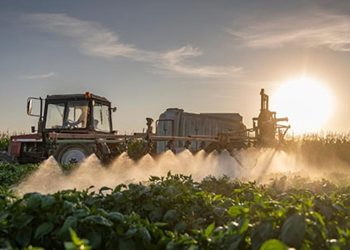
Whereas the majority of Americans in 1900 lived in rural areas and small towns, the twentieth-century push toward urbanization has forced most people into ever-smaller spaces. Rising property and inheritance taxes and costly government regulations have crushed most small farms. Those family farms still struggling to survive must constantly fend off attacks from agricultural conglomerates, domestic and foreign saboteurs, Chinese shell companies, and land baron billionaires such as Bill Gates. Similarly, the European Union’s ridiculous “net-zero” carbon regulations and destructive obsession with “climate change” socialism are bankrupting private farmers on the other side of the Atlantic.
Western governments don’t want private citizens to own land. They don’t want private citizens to grow food or to be self-sufficient. They have been actively cultivating a future in which government bureaucrats and a small number of multinational corporations will control every acre. That kind of world embraces collectivism. Nothing about it encourages citizens to be free.
What about free speech? It turns out that Western governments’ commitments to free speech were only as strong as their relative control over the principal sources of the public’s information. When a small number of national publications, radio stations, and television news studios maintained undue influence over public opinion, governments could indirectly shape society by discreetly controlling the content of mass communication. They did this by regulating broadcasts over the “public’s airwaves,” pressuring news publications to self-censor, intervening in matters involving “national security,” and outright funding the very news institutions that falsely portray themselves as independent guardians of the free press.
As this institutional monopoly has come crashing down with the advent of the Internet and the rise of social media, Western governments have become openly hostile to forms of mass communication that empower the broader public. Since the ‘90s, we have seen the steady criminalization of speech. “Hate speech” laws have proliferated. Government agencies dedicated to fighting so-called “disinformation” have taken form. Police forces in the U.K., Germany, and elsewhere arrest citizens for expressing unapproved opinions online. Effectively, Western governments are targeting any information that threatens their monopoly over official “narratives.” The most effective way to do so is to intimidate and silence prospective speakers. No country that criminalizes thoughts and words is a friend to free speech.
In the West, the masks have come off.
Bypass Big Tech Censors

Two Storms, One Harvest

Every food crisis in living memory has been a one-shock event. The 2008 price spike was a commodity bubble. The 2020 shortages were a logistics failure. The 2022 grain scare was a war on one exporter’s ports. Each time, the system bent, adjusted, and recovered, and each time the experts assured us afterward that global markets are simply too big and too diversified to fail.
What nobody in Washington seems eager to discuss is that 2026 is shaping up to be something the modern food system has never actually faced. Two independent shocks, one climatic and one geopolitical, are converging on the same harvest cycle at the same time. Not sequentially. Simultaneously.
Start with the weather. The Pacific Ocean is currently building toward what forecasters now openly call a record event. NOAA’s Climate Prediction Center puts the odds of at least a strong El Niño near 88 percent, with roughly two in three odds it reaches “very strong” status, the tier reserved for perhaps three or four events in the entire satellite era. Every major global model now projects a median peak in Super El Niño territory, and most of them project it exceeding the 2015-16 event, which until now held the modern record. Sea surface anomalies were already brushing the super threshold in mid-July, months before these events normally peak. The atmosphere has already shifted into El Niño mode, and the event is forecast to crest in late fall and early winter.
This is not about “climate change.” It’s about the standard cycles of weather, and the cycle we’re currently in is one that has likely devastated societies in the past. We’re better prepared as a society today, but not all Americans are equally prepared.
Serious households have started doing the quiet math on their own. Grocery bills tell part of the story, and the forecast maps tell the rest, which is why long-term food storage has moved from fringe hobby to mainstream line item in the family budget, with established suppliers like Heaven’s Harvest seeing demand from people who five years ago would have rolled their eyes at the idea. That instinct is not paranoia. It is pattern recognition, and the pattern is worth walking through carefully.
Editor’s Note: Heaven’s Harvest IS a sponsor, but the warnings of this article are real and would be written even if we didn’t have a survival food sponsor. With that said, those who take advantage of what they offer can use promo code “Patriot” for 15% off.
The Fertilizer Clock Is Already Running
While the Pacific warms, the second shock has been unfolding in the Strait of Hormuz. The conflict with Iran turned the world’s most important energy chokepoint into a contested waterway, and the consequences reach far beyond the gas pump. Roughly a third of global fertilizer trade moves through Hormuz, and the disruption sent urea prices up 86 percent year over year by March, with a 53 percent jump in a single month.
The World Bank projects energy prices rising about 24 percent in 2026 and fertilizer about 31 percent. By its own accounting, fertilizer prices ran 35 percent higher in the first five months of this year than the same period last year.
Here is the mechanism the nightly news will not explain. Fertilizer is not a grocery item. It is a time-delayed input. The nitrogen a farmer in Iowa or Punjab could not afford to apply this spring does not show up as a problem this spring. It shows up as a thinner harvest six to twelve months later.
The World Bank’s own food security brief concedes that the effects of reduced applications earlier this season “are likely to become visible only later in harvest outcomes.” Translate that from institutional language into plain English and it means this. The damage is already done, it is already in the ground, and we are simply waiting for it to arrive on the shelf.
Now check the calendar. Six to twelve months from the spring planting season lands us squarely in late 2026 and early 2027. Which is precisely when the strongest El Niño in the instrumental record is forecast to peak, bringing its signature droughts to Southeast Asia, Australia, southern Africa, northern Brazil, and South Asia, the very regions that grow the world’s rice, sugar, and oilseeds.
The World Bank warns openly that a strong El Niño “could disrupt multiple crop belts simultaneously” on top of the conflict-driven input costs. Their baseline projection assumes the Middle East disruptions ease by autumn. What in the last two years of Middle East history suggests that assumption is safe?
The System Has No Slack Left
The comfortable answer is that global markets always adjust. But adjustment requires slack, and the slack is gone. Global cereal production is expected to decline from last year’s records even before El Niño does its work. The UN World Food Programme, hardly a den of right-wing preppers, is calling this the most significant disruption to its supply chains since Covid and the invasion of Ukraine, and its supply chain director put the stakes bluntly.
Today’s supply chain challenges are tomorrow’s hunger crisis.
There is also a political dimension that markets cannot price. When food gets scarce, governments do not behave like economists. They behave like politicians. Export bans, hoarding mandates, and panic buying at the national level turned the modest rice shortfall of 2008 into a global crisis, and analysts are already warning that import-dependent nations are the first dominoes.
The 2015-16 Super El Niño, a far weaker event than what is now forecast, threw tens of millions into food stress across Africa and Asia. This one is projected to be stronger, and it arrives with fertilizer already rationed by price and shipping lanes already contested by missiles.
What Joseph Knew
Scripture does not treat preparation for lean years as faithlessness. It treats it as wisdom delivered in advance to those willing to act on it.
Behold, there come seven years of great plenty throughout all the land of Egypt: And there shall arise after them seven years of famine; and all the plenty shall be forgotten in the land of Egypt.
Joseph did not respond to that warning with a hashtag or a committee. He stored grain during the years of abundance, and when the famine came, Egypt stood while its neighbors begged. The lesson is not that famine is certain. It is that the time to prepare is precisely when preparation still looks optional.
Nobody who filled a pantry in a year of plenty has ever regretted it, and nobody standing in an empty aisle has ever been glad he waited for certainty.
None of this calls for panic, and panic is the enemy of sound judgment anyway. It calls for the same unglamorous prudence our grandparents considered ordinary. Keep some cash margin, know your local growers, and put real food in deep storage while it is cheap and available, because the entire arc of this story is that cheap and available is a closing window.
Families looking for a straightforward place to start can visit Heaven’s Harvest and use promo code Patriot for 15 percent off long-term storable food. The forecasts may yet soften, the strait may yet reopen, and we should pray they do. But hope is a fine thing to hold and a foolish thing to eat.