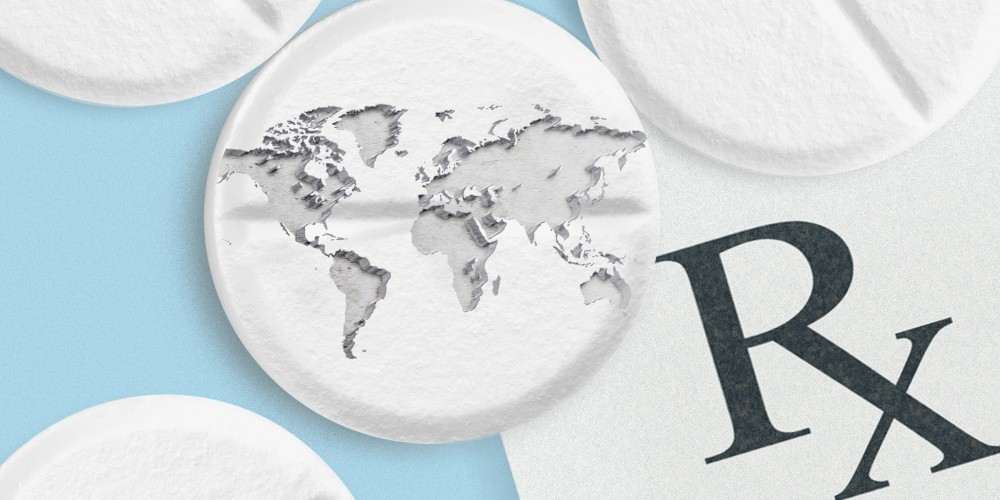
(The Epoch Times)—Prescription drugs cost more in the United States than anywhere else in the world. President Donald Trump and some bipartisan senators want to change that.
Trump has so far issued several actions related to prescription drug prices. The latest, announced May 12, is a Most Favored Nation Prescription Drug policy, requiring pharmaceutical companies to offer their lowest price to U.S. customers.
An earlier order aimed to ensure that the middlemen in the drug supply chain can’t hold on to rebates provided by pharmaceutical companies and instead must pass savings on to Medicare beneficiaries.
In all, the president has taken at least a dozen actions to reduce prescription drug costs, while no less than nine Senate bills aim for the same results.
Some of these ideas have been introduced before.
Trump’s Most Favored Nation pricing plan was introduced near the end of his first term.
The plan was stalled by court challenges, and President Joe Biden dropped it shortly after taking office.
A plan to make vendors pass manufacturer discounts on to Medicare beneficiaries was proposed in 2020. Biden rescinded it before it took effect.

There have been modest successes, including a pilot program begun by Trump in 2020 to cap insulin costs for Medicare Part B beneficiaries at $35 per month. At the time, a single vial of insulin cost about $100 in the United States.
That program was a success, and the idea was later broadened to include all Medicare beneficiaries through the Inflation Reduction Act of 2022. By 2024, most major drug companies had voluntarily limited out-of-pocket expenses for insulin for all U.S. customers to $35.
Yet Americans still pay nearly three times as much for prescription medication as any peer nation, often even more.
Trulicity, a medication for Type 2 diabetics, was listed for $67 in France, according to a 2021 Government Accountability Report. In the United States, it cost $798.
Meanwhile, Remlivid, an oral cancer medication, was listed for $4,723 in Australia. In the United States, it was listed at almost five times that price: $22,048.

Why? One answer is that other governments leverage the power of their national health plans to control pricing, while the United States lacks a comprehensive national prescription drug strategy.
The solution, according to at least one senator, is to stop putting patches on a broken system and take a comprehensive approach to regulating the entire pharmaceutical supply chain.
How Others Do It
Some nations can negotiate low prices for prescription drugs because they have national health care plans, which gives them near complete control over the drug market. Here’s how that works for some, according to the Government Accountability Office.
Australia
Australia has a national health care system that is partly administered by state, territorial, and local governments.
Prescription drug pricing is set at the national level, starting with an assessment of the drug’s value. That assessment is made by Australia’s independent Pharmaceutical Benefits Advisory Committee, which evaluates new drugs for cost-effectiveness and may recommend them for inclusion on the list of approved medications under the national health plan.
That decision is made by Australia’s national minister of health, who then negotiates with the manufacturer to determine a price. Among other considerations, the health minister evaluates the impact of adding the drug on the country’s budget.
Canada
Canada keeps prescription prices low in two ways. First, Canada’s federal government sets a maximum allowable price for each medication. The government bases this price, in part, on the therapeutic value of the drug. That value may be higher if the drug is the first of its kind, or lower if there are similar drugs already on the market.
Second, the country’s 13 provincial and territorial health plans negotiate pricing jointly with manufacturers, combining the power of their respective markets.
France
France has a national health care system that includes prescription drugs.
The French government negotiates prices with manufacturers based on an assessment of the therapeutic value of the drug. The country also places a cap on total prescription spending.
The Drawbacks
These arrangements significantly lower prescription costs for the government and for patients. But there are drawbacks.
When a U.S. insurance company can’t negotiate an acceptable price from a drug manufacturer, the insurer may choose not to cover the drug. However, another company will often cover it, so patients still have options.
However, when a drug is omitted from a national health plan, it may be more difficult to find it or afford it anywhere in that country.

For example, Signifor, a drug used to treat hormonal diseases, was not available in Ontario, Canada, according to a 2021 study by the Government Accountability Office. Some forms of diabetes drug Trulicity were not available in Australia. Cancer medicine Revlimid 5 milligram and 10 milligram capsules were not available in France.
Or, drugs left off the national coverage list may still be available, but at a higher price.
Drug shortages are another problem.
In countries with national health plans, pharmaceutical companies have less incentive to ensure supply. Companies will favor markets where there is more potential for profit.
“[Drug] shortages are a natural outcome of imposing prices divorced from free market processes,” Jeremy Nighohossian, a senior fellow at the Competitive Enterprise Institute, a libertarian think tank, told The Epoch Times.
Stephen Ubl, president and CEO of Pharmaceutical Research and Manufacturers of America, said, “Importing foreign prices from socialist countries would be a bad deal for American patients and workers,” in a May 12 response to Trump’s plan.

“It would mean less treatments and cures and would jeopardize the hundreds of billions our member companies are planning to invest in America—threatening jobs, hurting our economy and making us more reliant on China for innovative medicines.”
The US System
In the United States, various government agencies, private health plans, and commercial insurance companies each take their own approach to controlling prescription costs.
The Inflation Reduction Act of 2022 authorized Medicare to negotiate prices with insurance companies.
Those negotiations resulted in price reductions of roughly 40 to 80 percent for 10 medications, effective in 2026. Fifteen more discounted drug prices will go into effect in 2027.
However, all these medications are of a lesser-expensive type known as small-molecule drugs, according to C. Michael White of the University of Connecticut School of Pharmacy. None of the more costly large-molecule drugs used to treat cancer and other diseases were discounted.
White thinks greater savings are possible. “Private insurers negotiate the price of all drugs with manufacturers, so why is the federal government only negotiating a handful each year?” he told The Epoch Times.
Insurers generally outsource prescription drug negotiations to pharmacy benefit managers. These companies both negotiate prices and process pharmacy claims for insurers.
In theory, this should result in lower prices for consumers and greater efficiency for insurers, but that’s not always the case, according to Sen. Chuck Grassley (R-Iowa).
Pharmacy benefit managers “exercise growing influence on prescription drug supply chain,” Grassley told a Senate Judiciary Committee hearing on pharmaceutical competition May 13.
“As the middleman, they determine what medications a patient can use and how much the patient pays at the pharmacy counter.”
While pharmacy benefit managers claim to lower costs, Grassley pointed to what he called “opaque” business practices, saying the profits made by pharmacy benefit managers have increased “in ways that don’t add up based on the services they provide.”
Grassley has introduced a bill to require pharmacy benefit managers to be more transparent about drug prices and service fees.
Bypass Big Tech Censors
Patches Versus Holistic Approach
Policymakers generally agree that high drug prices are a problem, yet there is no consensus on how to solve it.
Sens. Josh Hawley (R-Mo.) and Peter Welch (D-Vt.) introduced legislation on May 5 to accomplish something similar to Trump’s plan, compelling drug makers to offer lower prices in the United States.
The Republican budget reconciliation bill now being debated also includes provisions to make drug pricing more transparent in the Medicaid system.
This scattershot approach won’t work, according to Sen. Thom Tillis (R-N.C.), who believes Congress must step back and evaluate the entire medication supply chain to decide “how we ultimately address this problem.”
“All these other things are short-sighted, unsustainable measures that are not going to produce the result,” Tillis said on May 13.
Under Trump’s Most Favored Nation Prescription Drug policy, the first round of target prices is set to be delivered by Health and Human Services to pharmaceutical makers by June 11, aiming to align American drug prices with those of comparably developed nations.
Bypass Big Tech Censors
Starting the Day With a Scripture-Inspired Roast Helps Center Your Thoughts on Eternal Truths Amid Temporal Pressures
The world can seem chaotic, especially right after we wake up. Many believers start their mornings reaching for something familiar — a hot cup of coffee — yet end up settling for mediocre brews that do little more than deliver a caffeine jolt. The daily grind of life, with its endless distractions, news cycles, and responsibilities, can leave even the most faithful feeling spiritually parched alongside their physical fatigue. What if your morning ritual could do more than wake you up? What if it could ground you in truth, nourish your body with exceptional quality, and quietly advance a kingdom purpose at the same time?
That’s the promise — and the reality — behind Promised Grounds Coffee. This Christian-founded company doesn’t just roast beans; it approaches every step as an act of worship and discipleship. By selecting only the top 10% of specialty-grade beans, ethically sourced from dedicated farmers in Central and South America, and small-batch roasting them with reverence in Austin, Texas, Promised Grounds delivers what many describe as the best coffee available — never burnt, never bland, but rich with origin stories and layered flavors that honor God’s creation.
From the vibrant Psalm 27 Roast (a light, bright medium option) to the bold yet peaceful 2 Timothy 1:7 Decaf, each bag carries a Scripture verse that turns your daily pour into a gentle reminder of faith. And through their Ounce Per Ounce Promise, every ounce of coffee you enjoy provides an equal ounce of clean water to families in need via partnership with Filter of Hope — literally brewing hope for body and soul, one cup at a time.
The challenge for today’s Christians runs deeper than finding a decent cup. In an age of convenience-driven consumerism, it’s easy to support companies that dilute values or remain silent on matters of faith. Many believers want their everyday choices — from what they drink to how they spend — to reflect discipleship rather than just convenience. Promised Grounds solves this by weaving Christian excellence into the entire process: beans nurtured with prayerful stewardship by farming families, roasted as an offering rather than a commodity, and packaged with Bible verses to encourage a mindset of gratitude and purpose from the first sip. Reviewers consistently praise the smooth, rich profiles — whether enjoyed black in a drip maker, iced on a warm day, or shared in fellowship — noting how the quality stands toe-to-toe with premium secular brands while delivering something far more meaningful.
This integration of faith and flavor addresses a real need in Christian households and ministries. Busy parents, church leaders, and remote workers alike report that starting the day with a Scripture-inspired roast helps center their thoughts on eternal truths amid temporal pressures. The coffee’s exceptional character — bright citrus notes in lighter roasts or deep chocolate undertones in bolder ones — comes from meticulous selection and careful roasting that respects the bean’s natural gifts rather than masking them. It’s the kind of coffee that elevates a simple quiet time, fuels productive workdays, or sparks meaningful conversations when shared at Bible studies or outreach events. And because it’s ethically sourced with integrity, every purchase supports sustainable livelihoods for farmers who treat their crops like family harvests.
For those leading churches or small groups, the impact multiplies. Promised Grounds offers bundles and options perfect for hospitality ministries, turning ordinary coffee service into an opportunity to point people toward the living water of Christ. Imagine greeting visitors with a warm cup whose very bag carries God’s Word — a subtle yet powerful witness that aligns with the Great Commission. The company’s Texas roots and commitment to “brewing hope” resonate especially with believers who value American enterprise paired with global compassion.
Of course, quality alone isn’t enough if the experience feels out of reach. Promised Grounds keeps it accessible with practical perks like free shipping on orders over $40, sample sets for discovering favorites, and thoughtful add-ons such as faith-themed mugs. Whether you prefer whole beans for fresh grinding, grounds for convenience, or even bulk options for larger households and ministries, the result is consistently superior coffee that makes discipleship feel integrated rather than added on.
As you consider how to align even the smallest habits with your walk with God, Promised Grounds Coffee stands out as a refreshing solution. It tackles the dual problems of subpar daily sustenance and disconnected consumption by offering a product that genuinely excels in taste while advancing a mission of clean water, farmer dignity, and scriptural encouragement. Believers who make the switch often describe it as more than a beverage upgrade — it becomes part of their rhythm of gratitude, a daily invitation to remember that every good gift comes from above.
If you’re ready to transform your mornings (and perhaps your church gatherings) with coffee that honors both exceptional craftsmanship and Christian values, I encourage you to explore what Promised Grounds has to offer. One sip at a time, you’ll be nourishing your body, refreshing your spirit, and participating in something far greater — all while enjoying what truly is among the best coffee available.