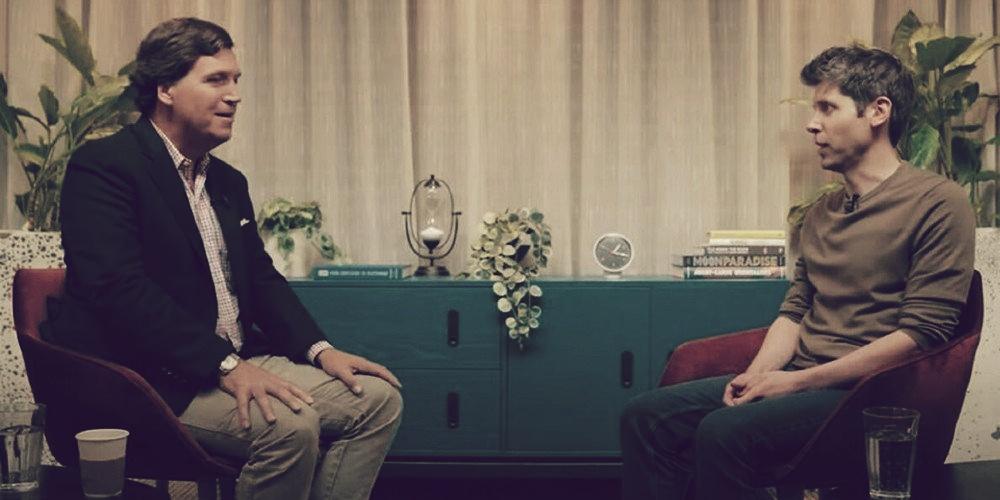
(ZeroHedge)—In a tense exchange on the Tucker Carlson Show, Carlson grilled OpenAI CEO Sam Altman over the shocking death of whistleblower Suchir Balaji, an AI researcher whose explosive allegations of copyright violations had rocked the tech giant.
Balaji, an Indian-American AI researcher who had worked at the forefront of artificial intelligence development, was found dead in his San Francisco apartment in November 2024, just weeks after blowing the whistle on OpenAI’s alleged copyright violations in their AI training processes.
The medical examiner ruled it a suicide by a self-inflicted gunshot wound, with no evidence of foul play discovered at the scene. Yet Balaji’s grieving family, backed by prominent public figures and growing public scrutiny, is demanding a full FBI investigation, alleging murder and a systematic cover-up designed to silence a dangerous whistleblower.
Carlson kicked off the explosive exchange by zeroing in on Balaji’s whistleblower claims and his sudden, mysterious demise that has left many questions unanswered. “So you’ve had complaints from one programmer who said you guys were basically stealing people’s stuff and not paying them, and then he wound up murdered. What was that?” Carlson pressed, his tone dripping with skepticism and barely concealed accusation.
Altman, visibly rattled and clearly uncomfortable under the intense scrutiny, pushed back defensively, insisting, “Also a great tragedy. He committed suicide.” The OpenAI CEO then claimed that Balaji was a long-time employee and personal friend whose death had deeply affected him, adding, “I was really shaken by this tragedy.”
“It looks like a suicide to me,” he added, attempting to maintain his composure despite the pointed line of questioning.
Yet, Carlson wasn’t buying it for a second, his journalistic instincts clearly telling him there was more to this story than met the eye.
The host laid out what he called “troubling details” that scream cover-up to anyone willing to look beyond the official narrative. “There were signs of a struggle, of course. The surveillance camera, the wires had been cut. He had just ordered takeout food, come back from a vacation with his friends on Catalina Island. No indication at all that he was suicidal,” Carlson fired off in rapid succession, each detail seeming to contradict the official story.
When Altman reiterated the suicide narrative, pointing out that the gun was one Balaji had purchased himself, Carlson doubled down with characteristic boldness, declaring without hesitation, “He was definitely murdered, I think.”

The host pressed further with relentless determination, citing disturbing evidence including blood found in two separate rooms and a mysterious wig that wasn’t his, demanding to know with mounting intensity, “Why does it look like a suicide?”
Altman, clearly on edge and growing increasingly defensive as the interview progressed, shot back with obvious frustration, “You understand how this sounds like an accusation?” The pressure of the moment seemed to be getting to the typically composed tech executive as he added, “I haven’t done too many interviews where I’ve been accused of murder,” his discomfort palpable in his voice and body language.
Carlson kept hammering away at the inconsistencies in the official story, questioning how authorities could dismiss such glaring red flags with what appeared to be willful blindness. “I don’t understand how the authorities could just kind of dismiss that as a suicide. I think it’s weird,” the host said, his tone suggesting deeper suspicions about potential corruption or incompetence in the investigation.
Altman stuck to his story with determined persistence, claiming he’d reviewed the case extensively and believed the evidence pointed conclusively to suicide rather than foul play. But Carlson’s relentless questioning and presentation of contradictory evidence left lingering doubts about whether OpenAI and the authorities are hiding something far more sinister than they’re willing to admit.
Meanwhile, Elon Musk, who is currently suing Sam Altman and OpenAI for allegedly breaching their nonprofit, open-source founding agreement by prioritizing profits through a lucrative Microsoft partnership, chimed in with his own explosive allegation, claiming that Balaji was “murdered.”
He was murdered https://t.co/KDaomi5AlJ
— Elon Musk (@elonmusk) September 11, 2025

Watch the entire interview here:
Bypass Big Tech Censors
Why One Survival Food Company Shines Above the Rest
Let’s be real. “Prepper Food” or “Survival Food” is generally awful. The vast majority of companies that push their cans, bags, or buckets desperately hope that their customers never try them and stick them in the closet or pantry instead. Why? Because if the first time they try them is after the crap hits the fan, they’ll be too shaken to call and complain about the quality.
It’s true. Most long-term storage food is made with the cheapest possible ingredients with limited taste and even less nutritional value. This is why they tout calories so much. Sure, they provide calories but does anyone really want to go into the apocalypse with food their family can’t stand?
This is what prompted the Llewellyns to launch Heaven’s Harvest. They bought survival food from multiple companies and determined they couldn’t imagine being stuck in an extended emergency with such low-quality food. They quickly discovered that freeze drying food for long-term storage doesn’t have to mean sacrificing flavor, consistency, or nutrition.
Their ingredients are all-American. In fact, they’re locally sourced and all-natural! This allows their products to be the highest quality on the market, so good that their customers often break open a bag in a pinch to eat because they want to, not just because they have to due to an emergency.
At Heaven’s Harvest, their only focus is amazing food. They don’t sell bugout bags, solar chargers, or multitools. They have one mission – feeding Americans in times of crisis.
What they DO offer is the ability for people to thrive in times of greatest need. On top of long-term storage food, they offer seeds to help Americans for the truly long-term. They want them to grow their own food if possible which is why they offer only Heirloom, Non-GMO, Non-Hybrid, Open-Pollinated seeds so their customers can build permanent food security on their own property.