(End of the American Dream)—There are about 8 billion people living in our world today, and well over half of them live in a country where Christians are being persecuted. Of course that would come as quite a shock to the vast majority of the Christians that are living in the western world, because they never hear much about the nightmarish things that are being done to Christians in nations such as China, India, Nigeria, Pakistan and North Korea.
Globally, the persecution of Christians is getting worse with each passing year, but since the mainstream media mostly ignores what is going on most of us just assume that it really isn’t a big deal. But the truth is that what is being done to our brothers and sisters all over the world is absolutely horrifying.
There are 1.4 billion people living in China today. Children under 18 are constitutionally prohibited from attending church, and adults are only allowed to attend state-controlled churches that are very tightly restricted.
Underground churches are very popular, but those that lead those underground churches can be grabbed by the government at any time. In fact, dozens of Chinese pastors were just rounded up…
Police in China detained dozens of pastors of one of its largest underground churches over the weekend, a church spokesperson and relatives said, in the biggest crackdown on Christians since 2018.
The detentions, which come amid renewed China-U.S. tensions after Beijing dramatically expanded rare earth export controls last week, drew condemnation from Secretary of State Marco Rubio, who called on Sunday for the pastors’ immediate release.
Pastor Jin Mingri, the founder of Zion Church, an unofficial “house church” not sanctioned by the government, was detained at his home in the southern city of Beihai on Friday evening, said his daughter, Grace Jin, and a church spokesperson, Sean Long.
Sharing the gospel on the Internet is a crime in China, and that is apparently what these pastors are being charged with…
Under the Chinese Communist Party’s absolutist Code of Conduct for Religious Clergy on the Internet, Jin & Co. stand accused of “suspicion of the illegal use of information networks” for the “illegal dissemination of religion information.”
That is, preaching the Gospel online is a crime in Xi’s China; these pastors are now at risk of years-long detention, often without charge or trial, and likely abuse if not torture while locked up.
India also has a population of 1.4 billion, and Christianity has become very popular there in recent decades.
Unfortunately, those that do choose to go to church in India do so with the realization that they could be attacked by Hindu extremists at any moment…
Hindu extremists in central India ransacked a church’s worship building, burned Bibles and assaulted every member, causing one to lose consciousness, sources said.
In Chhattisgarh state’s Dhamtari District, the Hindu nationalists attacked during the independent Penial Prayer Fellowship’s worship service in Borsi village, said Pastor Wakish Sahu, who leads the church along with his 57-year-old father, Mannohan Sahu.
“They forcibly entered the church, disrupted the worship service and were carrying wooden rods and shouting slogans like ‘Jai Shri Ram’ [Hail lord Rama],” Pastor Wakish Sahu told Morning Star News.
Threatening the Christians, the attackers told them to stop gathering for worship, he said. They broke all the chairs, fans and musical instruments, then collected all of the Christian literature along with the Bibles and burned them.
Sadly, this was not an isolated incident.

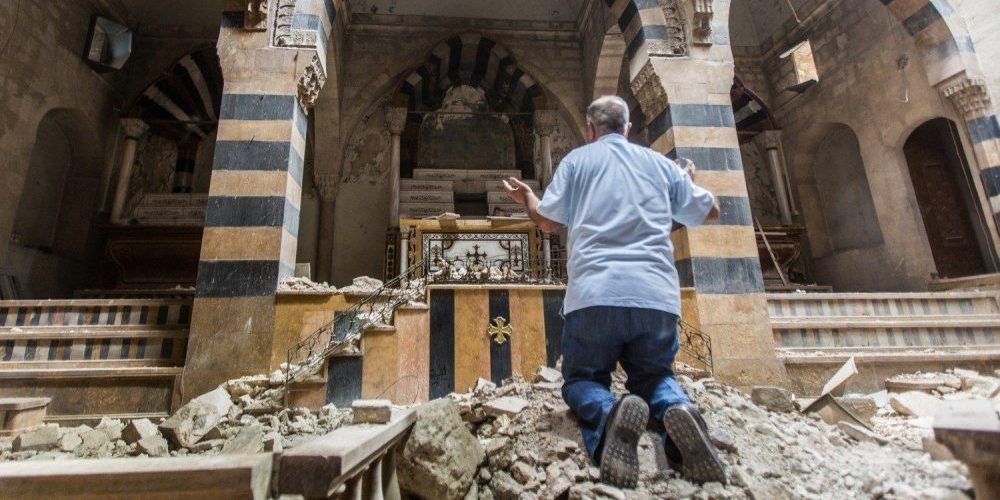
In the state of Manipur alone, literally hundreds of churches have been burned to the ground during the past couple of years…
Tomas (not his real name) is a church minister in Manipur, Northeast India. He had teary eyes when he recalled what happened on May 3, 2023.
“I have never seen such violence in my lifetime,” he said. “They systematically ransacked our places. That first night, they burnt down a church nearby. The sky turned red by flames.”
A few months later, it was reported that 250 churches of different denominations had been burnt. For several weeks, the manhunt continued.
Over 100 people died. The trauma is unimaginable, especially among women and children.
Indonesia has a total population of 283 million people, and 220 million of them are Muslims.
Christians are very much in the minority, and Islamic extremist groups “have encouraged and engaged in violence against Christians”…
Indonesia has the largest Muslim population in the world, with a total of more than 220 million Muslims, or about 13 percent of the world’s Muslim population. While most Indonesian Muslims practice an animistic and superstitious version of Islam known as “folk” Islam, proponents of Islamic extremism have encouraged and engaged in violence against Christians. The wickedness of these attacks has led many Muslims to question Islam and to be more open to the gospel.
There are 232 million precious people that live in Nigeria, and I recently wrote an entire article about the genocide of Christians that is currently taking place in that nation.
Radical Islamists regularly attack Christian communities, and the death toll has been catastrophic…
According to a report issued in August by the International Society for Civil Liberties and the Rule of Law (Intersociety), an African nongovernmental group that documents human rights violations, in the first seven months of this year alone, more than 7,000 Christians were killed in Nigeria.
Christians of various denominations and moderate Muslims regularly die at the hands of Boko Haram, Fulani militants and other violent actors.
Numbers vary and are difficult to verify, but between 2009 and 2023 in Nigeria, Intersociety reports at least 52,000 Christians killed, 18,500 abducted and unlikely to have survived, and more than 20,000 churches and Christian schools attacked.
Throughout the Middle East, if a Muslim converts to Christianity it can be considered blasphemy.
One of the countries where blasphemy can result in a death sentence is Pakistan. 251 million people live in that nation, and those that are already Christians are often given the most degrading jobs…
In predominantly Muslim Pakistan, blasphemy laws are egregiously used to target and punish Christians for following Jesus. Christ followers are often discriminated against and not given equal opportunities in employment. Jobs like sewer maintenance and street sweepers are typically reserved for Christians, and believers are jailed for their faith if they are found to have violated the nation’s strict blasphemy laws.
Afghanistan has a population of 42 million, and it is right next door to Pakistan.
Ever since the Taliban took control again, things have gotten much worse for Afghan believers…
For Christians who converted from Islam, publicly affirming their faith in Afghanistan has always been in danger. Since the return of the Taliban on August 15, 2021, it is even more dangerous. The Taliban regime believes that formally converting from Islam to Christianity deserves the death penalty.
Their threats are fierce. Christians in Afghanistan are forced to keep their faith underground. They fear detention, torture or even a death sentence.
Iran borders both Afghanistan and Pakistan.
It has a population of 91 million, and converting to Christianity is strictly forbidden…
In Iran, the Christian faith is tolerated only to a certain extent, primarily among historical Armenian and Assyrian communities. However, converting to Christianity from Islam is considered apostasy and can lead to severe punishment, including death. Christians often face arbitrary arrests and are prohibited from sharing their faith with Muslims.
I couldn’t conclude this article without including North Korea. It has a population of 26 million, and the Christian faith is not tolerated at all.

In fact, if you are discovered to be a Christian, you and your entire family could be shipped off to a concentration camp where you will be worked until you drop dead…
If your Christian faith is discovered in North Korea, you could be killed on the spot. If you aren’t killed, you will be deported to a labour camp and treated as a political criminal. You will be punished with years of hard labour that few survive. And it’s not only you who will be punished: North Korean authorities are likely to round up your extended family and punish them too, even if your family members aren’t Christians.
There is no church life in North Korea. It’s impossible to gather for worship or prayer, and even secret worship and prayer is at great risk. Official spies could inform on you, if they have any indication that you are a Christian, and so could your neighbours or teachers.
So far in this article I have discussed 8 countries that have a total population of 3.7 billion, and I haven’t even mentioned dozens of other countries where Christianity is either illegal or very highly restricted.
Here in the United States, we are still free to worship as we please, but our moral standards are eroding at a very rapid pace…
Only 43% of these churchgoers now call themselves “pro-life,” down sharply from 63% in 2023. When it came to the traditional (biblical) view of family, 46% believe it is a marriage between one man and one woman with children. However, that number is even lower (34%) among Gen Z.
The three groups with the strongest support for the biblical idea of family were Asian believers (55%), Pentecostal members (56%), and born-again Christians (59%).
The study also found that about 51% believe the Bible’s message on abortion is straightforward, a drop from 65% in 2023.
If we are willing to compromise this much now, how will we fare when we are faced with real persecution during the years ahead?
As I have repeatedly warned my readers, we need to be preparing believers in the western world for what is coming.
The persecution that Christians in other countries must endure has made them strong.

Meanwhile, western believers have gotten very soft.
We better toughen up fast, because perilous times are rapidly approaching.
Michael’s new book entitled “10 Prophetic Events That Are Coming Next” is available in paperback and for the Kindle on Amazon.com, and you can subscribe to his Substack newsletter at michaeltsnyder.substack.com.
Bypass Big Tech Censors
Starting the Day With a Scripture-Inspired Roast Helps Center Your Thoughts on Eternal Truths Amid Temporal Pressures
The world can seem chaotic, especially right after we wake up. Many believers start their mornings reaching for something familiar — a hot cup of coffee — yet end up settling for mediocre brews that do little more than deliver a caffeine jolt. The daily grind of life, with its endless distractions, news cycles, and responsibilities, can leave even the most faithful feeling spiritually parched alongside their physical fatigue. What if your morning ritual could do more than wake you up? What if it could ground you in truth, nourish your body with exceptional quality, and quietly advance a kingdom purpose at the same time?
That’s the promise — and the reality — behind Promised Grounds Coffee. This Christian-founded company doesn’t just roast beans; it approaches every step as an act of worship and discipleship. By selecting only the top 10% of specialty-grade beans, ethically sourced from dedicated farmers in Central and South America, and small-batch roasting them with reverence in Austin, Texas, Promised Grounds delivers what many describe as the best coffee available — never burnt, never bland, but rich with origin stories and layered flavors that honor God’s creation.
From the vibrant Psalm 27 Roast (a light, bright medium option) to the bold yet peaceful 2 Timothy 1:7 Decaf, each bag carries a Scripture verse that turns your daily pour into a gentle reminder of faith. And through their Ounce Per Ounce Promise, every ounce of coffee you enjoy provides an equal ounce of clean water to families in need via partnership with Filter of Hope — literally brewing hope for body and soul, one cup at a time.
The challenge for today’s Christians runs deeper than finding a decent cup. In an age of convenience-driven consumerism, it’s easy to support companies that dilute values or remain silent on matters of faith. Many believers want their everyday choices — from what they drink to how they spend — to reflect discipleship rather than just convenience. Promised Grounds solves this by weaving Christian excellence into the entire process: beans nurtured with prayerful stewardship by farming families, roasted as an offering rather than a commodity, and packaged with Bible verses to encourage a mindset of gratitude and purpose from the first sip. Reviewers consistently praise the smooth, rich profiles — whether enjoyed black in a drip maker, iced on a warm day, or shared in fellowship — noting how the quality stands toe-to-toe with premium secular brands while delivering something far more meaningful.
This integration of faith and flavor addresses a real need in Christian households and ministries. Busy parents, church leaders, and remote workers alike report that starting the day with a Scripture-inspired roast helps center their thoughts on eternal truths amid temporal pressures. The coffee’s exceptional character — bright citrus notes in lighter roasts or deep chocolate undertones in bolder ones — comes from meticulous selection and careful roasting that respects the bean’s natural gifts rather than masking them. It’s the kind of coffee that elevates a simple quiet time, fuels productive workdays, or sparks meaningful conversations when shared at Bible studies or outreach events. And because it’s ethically sourced with integrity, every purchase supports sustainable livelihoods for farmers who treat their crops like family harvests.
For those leading churches or small groups, the impact multiplies. Promised Grounds offers bundles and options perfect for hospitality ministries, turning ordinary coffee service into an opportunity to point people toward the living water of Christ. Imagine greeting visitors with a warm cup whose very bag carries God’s Word — a subtle yet powerful witness that aligns with the Great Commission. The company’s Texas roots and commitment to “brewing hope” resonate especially with believers who value American enterprise paired with global compassion.
Of course, quality alone isn’t enough if the experience feels out of reach. Promised Grounds keeps it accessible with practical perks like free shipping on orders over $40, sample sets for discovering favorites, and thoughtful add-ons such as faith-themed mugs. Whether you prefer whole beans for fresh grinding, grounds for convenience, or even bulk options for larger households and ministries, the result is consistently superior coffee that makes discipleship feel integrated rather than added on.
As you consider how to align even the smallest habits with your walk with God, Promised Grounds Coffee stands out as a refreshing solution. It tackles the dual problems of subpar daily sustenance and disconnected consumption by offering a product that genuinely excels in taste while advancing a mission of clean water, farmer dignity, and scriptural encouragement. Believers who make the switch often describe it as more than a beverage upgrade — it becomes part of their rhythm of gratitude, a daily invitation to remember that every good gift comes from above.
If you’re ready to transform your mornings (and perhaps your church gatherings) with coffee that honors both exceptional craftsmanship and Christian values, I encourage you to explore what Promised Grounds has to offer. One sip at a time, you’ll be nourishing your body, refreshing your spirit, and participating in something far greater — all while enjoying what truly is among the best coffee available.