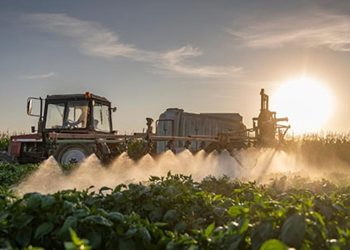
(Zero Hedge)—For much of the past year, America’s largest food manufacturers haven’t been able to rebut Robert F. Kennedy Jr.’s repeated claims that ultraprocessed foods are making Americans sick – something most Americans believe.
So instead of even trying to pretend their products are even the slightest bit healthy, the industry appears to have settled on a narrower counterargument; Yes, the food may be bad for you, but it’s CHEAP! And in an era when grocery bills have become a political liability (and who cares about the long-term drag on the healthcare system), that may be defense enough.
Food companies are making the case as they seek to blunt a growing wave of state-level efforts to regulate ingredients commonly found in ultraprocessed products. Those efforts, encouraged by Kennedy’s “Make America Healthy Again” (MAHA) movement, range from restrictions on synthetic dyes to warning labels for chemical additives. Industry executives and lobbyists argue that such measures, taken state by state, will drive up costs for consumers already struggling with inflation.
“The dynamic here is affordability,” Sam Geduldig, a managing partner at the Republican lobbying firm CGCN, which represents Kraft Heinz, told Politico. “You have a MAHA movement that would like to accomplish one goal, and then you have an inflation, economic affordability issue on the other side that runs counter.”
The argument has been sharpened for political effect. In late October, major food companies and trade groups – including Kraft Heinz, Nestlé and PepsiCo – launched a coalition called Americans for Ingredient Transparency. The group has begun a six-figure advertising campaign warning that a patchwork of state regulations would raise grocery prices and urging Congress to establish a single federal standard that would override state rules.
Businesses have long preferred federal preemption when faced with divergent state requirements, and the food industry is no exception. What is new is the framing. The coalition’s message is calibrated to appeal to Republican lawmakers uneasy about rising costs and skeptical of regulations that might be blamed for them.
“President Trump is cutting costs and delivering real relief for working families,” Andy Koenig, a senior adviser to the coalition and a former Trump administration official, said in a statement, “but these well-intentioned state bills are creating a patchwork of labeling regulations that could undermine his goal to lower costs for Americans.”
The industry’s push comes amid record lobbying spending in Washington. Trade groups and major manufacturers have poured millions into K Street as the Trump administration – more insular and more openly skeptical of corporate influence than in its first term – has proved harder to access. Polling commissioned by the industry underscores why affordability has become its chosen refrain: A recent POLITICO survey found that nearly half of Americans now consider grocery prices the “most challenging” household expense, outranking housing and health care.

Yet the industry’s economic argument runs alongside another political reality. Polls also show broad agreement with Mr. Kennedy’s view that ultraprocessed foods are damaging public health, particularly for children. In October, a survey by KFF and The Washington Post found that large majorities of Americans see highly processed foods as a major health threat.
Kennedy has leaned into that sentiment, often naming familiar brands. At his confirmation hearing, he contrasted the ingredient lists of American products with their counterparts abroad. “If you buy McDonald’s french fries in our country, there’s 11 ingredients,” he said. “If you buy Froot Loops in our country, they’re loaded with food dyes—yellow dye, red dye, blue dye.”
At the federal level, Kennedy is pursuing a rule change that would require additional scrutiny when food companies alter recipes or introduce new ingredients. At the same time, he has encouraged states, including Texas, Louisiana and Oklahoma, to move ahead on their own. Legislatures across the country have responded. More than a hundred bills targeting sugar, synthetic dyes and chemical additives have been introduced this year, nearly five times as many as last year, according to a POLITICO analysis.
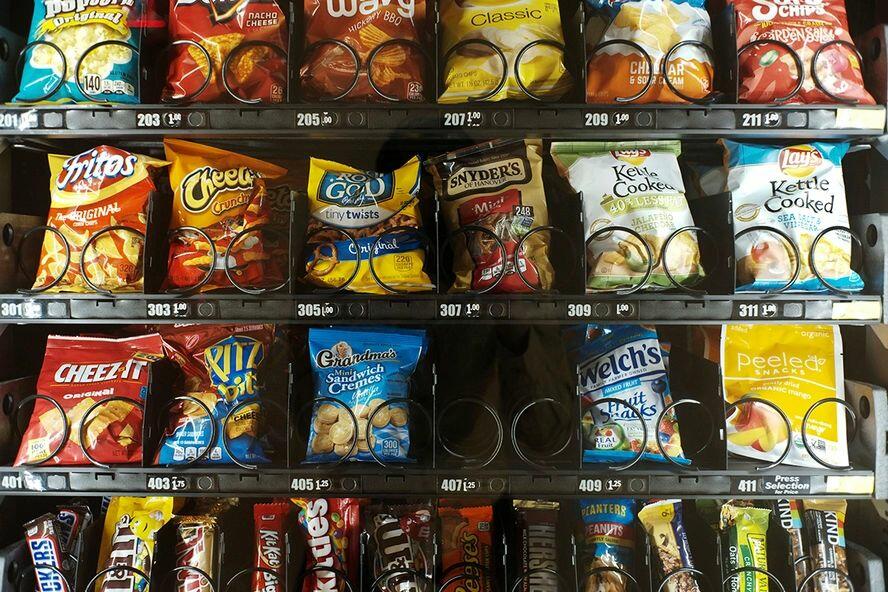
Some measures have already passed. California enacted the nation’s first ban on ultraprocessed foods in public schools. Texas approved a law requiring warning labels on products containing any of 44 additives—a statute the food industry is now challenging in court.
“These state laws are ultimately going to lead to increased cost,” said Charles Leftwich, vice president for food safety and quality assurance at Sysco, the country’s largest food distributor. “Those costs are ultimately going to get passed down to consumers.” (or not?)
Consumer advocates and MAHA supporters dispute that framing. They argue that federal preemption would weaken standards rather than harmonize them, particularly given the industry’s influence in Washington.
“A federal standard favors large multinational companies with a lot of money to lobby for less restrictive standards,” said Jennifer Galardi, a senior policy analyst at the Heritage Foundation who focuses on MAHA-aligned issues. “We see a state-by-state approach as emulating the checks and balances that our federalist system was designed to produce.”
The tension is already visible inside the administration. The final version of a Kennedy-backed report on childhood chronic disease released in September softened language from an earlier draft that had described ultraprocessed foods as “detrimental” to children’s health. The revised document instead called for a federal definition of ultraprocessed foods—a shift some advocates attribute to industry pressure.
Earlier this year, companies including Kraft Heinz and Nestlé pledged to voluntarily phase out artificial dyes. But those gestures have not slowed a lobbying counteroffensive aimed at stopping state laws before they spread.
“It is one of the top things we are planning around,” said one lobbyist for a beverage company, speaking on condition of anonymity.
The strategy mirrors tactics used by other industries navigating the Trump administration. In November, a coalition backed by artificial intelligence companies launched a $10 million advertising campaign urging federal standards for AI regulation. The president signed an executive order weeks later. Health insurers and hospital groups have deployed similar campaigns to preserve Obamacare subsidies.
For MAHA advocates, the pattern is familiar – and troubling. States, they note, have often led the federal government on public health, from trans fat bans to chemical warning labels.
“This isn’t about affordability,” said Melanie Benesh of the Environmental Working Group. “This is about maintaining the status quo.”
Whether Congress embraces a federal food standard will test an open question in Republican politics: whether the party remains reflexively aligned with business interests, or whether Mr. Kennedy’s populist critique of corporate power has lasting influence.
For now, the industry’s most persuasive response to being accused of poisoning Americans is not a denial. It is a reminder that the poison, at least, is cheap.
Bypass Big Tech Censors

Two Storms, One Harvest

Every food crisis in living memory has been a one-shock event. The 2008 price spike was a commodity bubble. The 2020 shortages were a logistics failure. The 2022 grain scare was a war on one exporter’s ports. Each time, the system bent, adjusted, and recovered, and each time the experts assured us afterward that global markets are simply too big and too diversified to fail.
What nobody in Washington seems eager to discuss is that 2026 is shaping up to be something the modern food system has never actually faced. Two independent shocks, one climatic and one geopolitical, are converging on the same harvest cycle at the same time. Not sequentially. Simultaneously.
Start with the weather. The Pacific Ocean is currently building toward what forecasters now openly call a record event. NOAA’s Climate Prediction Center puts the odds of at least a strong El Niño near 88 percent, with roughly two in three odds it reaches “very strong” status, the tier reserved for perhaps three or four events in the entire satellite era. Every major global model now projects a median peak in Super El Niño territory, and most of them project it exceeding the 2015-16 event, which until now held the modern record. Sea surface anomalies were already brushing the super threshold in mid-July, months before these events normally peak. The atmosphere has already shifted into El Niño mode, and the event is forecast to crest in late fall and early winter.
This is not about “climate change.” It’s about the standard cycles of weather, and the cycle we’re currently in is one that has likely devastated societies in the past. We’re better prepared as a society today, but not all Americans are equally prepared.
Serious households have started doing the quiet math on their own. Grocery bills tell part of the story, and the forecast maps tell the rest, which is why long-term food storage has moved from fringe hobby to mainstream line item in the family budget, with established suppliers like Heaven’s Harvest seeing demand from people who five years ago would have rolled their eyes at the idea. That instinct is not paranoia. It is pattern recognition, and the pattern is worth walking through carefully.
Editor’s Note: Heaven’s Harvest IS a sponsor, but the warnings of this article are real and would be written even if we didn’t have a survival food sponsor. With that said, those who take advantage of what they offer can use promo code “Patriot” for 15% off.
The Fertilizer Clock Is Already Running
While the Pacific warms, the second shock has been unfolding in the Strait of Hormuz. The conflict with Iran turned the world’s most important energy chokepoint into a contested waterway, and the consequences reach far beyond the gas pump. Roughly a third of global fertilizer trade moves through Hormuz, and the disruption sent urea prices up 86 percent year over year by March, with a 53 percent jump in a single month.
The World Bank projects energy prices rising about 24 percent in 2026 and fertilizer about 31 percent. By its own accounting, fertilizer prices ran 35 percent higher in the first five months of this year than the same period last year.
Here is the mechanism the nightly news will not explain. Fertilizer is not a grocery item. It is a time-delayed input. The nitrogen a farmer in Iowa or Punjab could not afford to apply this spring does not show up as a problem this spring. It shows up as a thinner harvest six to twelve months later.
The World Bank’s own food security brief concedes that the effects of reduced applications earlier this season “are likely to become visible only later in harvest outcomes.” Translate that from institutional language into plain English and it means this. The damage is already done, it is already in the ground, and we are simply waiting for it to arrive on the shelf.
Now check the calendar. Six to twelve months from the spring planting season lands us squarely in late 2026 and early 2027. Which is precisely when the strongest El Niño in the instrumental record is forecast to peak, bringing its signature droughts to Southeast Asia, Australia, southern Africa, northern Brazil, and South Asia, the very regions that grow the world’s rice, sugar, and oilseeds.
The World Bank warns openly that a strong El Niño “could disrupt multiple crop belts simultaneously” on top of the conflict-driven input costs. Their baseline projection assumes the Middle East disruptions ease by autumn. What in the last two years of Middle East history suggests that assumption is safe?
The System Has No Slack Left
The comfortable answer is that global markets always adjust. But adjustment requires slack, and the slack is gone. Global cereal production is expected to decline from last year’s records even before El Niño does its work. The UN World Food Programme, hardly a den of right-wing preppers, is calling this the most significant disruption to its supply chains since Covid and the invasion of Ukraine, and its supply chain director put the stakes bluntly.
Today’s supply chain challenges are tomorrow’s hunger crisis.
There is also a political dimension that markets cannot price. When food gets scarce, governments do not behave like economists. They behave like politicians. Export bans, hoarding mandates, and panic buying at the national level turned the modest rice shortfall of 2008 into a global crisis, and analysts are already warning that import-dependent nations are the first dominoes.
The 2015-16 Super El Niño, a far weaker event than what is now forecast, threw tens of millions into food stress across Africa and Asia. This one is projected to be stronger, and it arrives with fertilizer already rationed by price and shipping lanes already contested by missiles.
What Joseph Knew
Scripture does not treat preparation for lean years as faithlessness. It treats it as wisdom delivered in advance to those willing to act on it.
Behold, there come seven years of great plenty throughout all the land of Egypt: And there shall arise after them seven years of famine; and all the plenty shall be forgotten in the land of Egypt.
Joseph did not respond to that warning with a hashtag or a committee. He stored grain during the years of abundance, and when the famine came, Egypt stood while its neighbors begged. The lesson is not that famine is certain. It is that the time to prepare is precisely when preparation still looks optional.
Nobody who filled a pantry in a year of plenty has ever regretted it, and nobody standing in an empty aisle has ever been glad he waited for certainty.
None of this calls for panic, and panic is the enemy of sound judgment anyway. It calls for the same unglamorous prudence our grandparents considered ordinary. Keep some cash margin, know your local growers, and put real food in deep storage while it is cheap and available, because the entire arc of this story is that cheap and available is a closing window.
Families looking for a straightforward place to start can visit Heaven’s Harvest and use promo code Patriot for 15 percent off long-term storable food. The forecasts may yet soften, the strait may yet reopen, and we should pray they do. But hope is a fine thing to hold and a foolish thing to eat.