(Alt-Market)—The fall of the Roman Empire is often presented as symbolic of the slow but steady decline of the western world today, and it’s true, this comparison might be more accurate than many people realize. The disastrous collapse which escalated over the course of the 5th century was driven by economic crisis, a split of the empire into eastern and western halves, government reliance on foreign mercenaries for security, uncontrolled mass immigration, and ultimately, barbarian invasion.
When the western empire failed, Rome was plundered and centuries of human innovation and progress were lost in the flames. It’s an element that modern historians often gloss over – Each time the west has fallen, incredible knowledge that took generations to discover was dispersed into the ether. Each time, the human species was set back for centuries.
Many lives were sacrificed and ancient cities were destroyed, but the loss of time is perhaps the greatest tragedy of all. It took another 400 years for the western world to reconstitute under Christian rule, but barbarians attacked again in the form of Muslim hordes in the 9th century. It’s almost as if the grasping, predatory hands of useless ravagers are always lurking in the shadows, waiting for the west to rise from the ashes.
History is, of course, nuanced and complex, but some patterns are patently obvious and the attempts to sack Rome, Europe and greater Christendom repeated regularly over the course of a thousand years. Western civilization endures, succeeds, creates wonders, creates wealth and advances human invention. Then, the third world invades in an effort to strip whatever wealth was amassed.
There have been other civilizations, or attempts at civilizations beyond the west which suffered similar fates. The fall of the Bronze Age empires is a perfect example; a calamity of human history very similar to the fall of Rome, if not more mysterious. There was the collapse of China’s Han Dynasty in the 3rd century due to corruption, rebellion and foreign invasion by Mongolian tribes. The collapse of the Gupta Empire in India, triggered by Hunnic barbarian incursions, etc.
However, only the west survived in the long run and only the west is still targeted for demolition in the modern era. I would break this pattern down into two distinct forms of human endeavor or states of existence…
- The Tribes Of Order: People who build, invent, create, persevere, maintain and seek to survive through merit, self discipline and industry. (Ayn Rand might refer to this group as the “producers”).
- The Tribes Of Chaos (Barbarians): People who survive through brutality, piracy and deceit; those who live by stealing from the tribes of order. They wait until wealth and abundance is accumulated by others and then strip it away when given an opportunity.
Why do barbarians do this? Well, because it’s far easier to smash and steal than it is to plan and innovate. Some might argue that the mentality is genetic. Some would argue it’s a product of culture. Others assert it’s a product of low IQ or low capacity for creative thinking. I’m inclined to believe that it’s a mix of all of these things.
How The West First Solved The Barbarian Problem
I believe there is a distinct and identifiable moment in history when the barbarian plunder of the west went into decline, and that was the First Christian Crusade in 1096 AD.

This was, in a way, the act of self defense through “colonization”. That is to say, the pattern of pillaging stops whenever the west takes forceful action to colonize the third world. In terms of the crusades, instead of allowing the barbarians to loiter on the doorstep of Europe and take territory whenever they pleased, the Holy Crusades sought to push them back and defeat them on their home turf.
Centuries later after the Muslims were mostly contained, European exploration led to colonies across Asia and Africa, civilizing cultures with the barbarian mindset. The insatiable desire to hijack the accomplishments of the Tribes of Order was countered by simply GIVING these people western accomplishments…and taking by away their ability to project power.
When the west expanded to take over management of the third world, the invasions ceased and the third world was introduced to the wealth of modernization without having to steal it. One could easily argue that western colonization was a net positive for the world. It’s not a coincidence that far-left ideologues and communists demonize it so frequently; they do this because they know colonization works. They use it themselves.
The Return Of The Barbarian Hordes
It is entirely predictable that, as the west embraces liberalism and socialism, the third world invasions have returned. We are the only culture that feels “shame” over our historic successes, so much so that many people are convinced we deserve punishment for the colonies of the past.
The biggest factor in this program of shame is the globalist agenda to erase national borders and identity through multiculturalism. However, I think it’s important to understand that the globalists are not forcing third worlders to immigrate to the west; these people WANT to come here and the globalists are simply opening the gates to let them in.
Why do they travel from countries where their culture is dominant? Why come to Europe or the US where their values are not aligned, their languages do not function and their tribal thinking is incongruent? Again, you can take the man out of barbarism, but you can’t take the barbarism out of the man. They come here because they see an opportunity to plunder the west after centuries of being thwarted. It’s a behavior that’s hard-wired into their gray matter.
I outlined this dynamic in my article “The Third World Is Forever Chasing The White Man”, in which I examined the habit of third world populations to constantly scratch for a piece of the first world instead of improving their own conditions at home. I also touched on the habit of leftist minorities to appropriate western culture and pretend they built it first (How often, for example, has Somalian Democrat Ilhan Omar falsely claimed that America was built by Muslims?).
These people do not want to develop their own accomplishments, their own stories, their own discoveries – they want ours. It’s the barbarian mindset.
I am reminded of a fascinating discussion by African commentator Frank Zanu, who presented his theory on why he believes African societies will “never develop” without the aid of western colonization. He noted that African languages have no word for “maintenance” – The concept simply does not exist in their vernacular.
It’s a deeply profound observation on the difference between the third-world and the west. The act of maintenance is a key element that defines the Tribes of Order. Without maintenance, no civilizational legacy can be constructed. Instead, human beings continue to clamor in the dirt, or wait around for someone else to build and maintain a system that they can latch onto and feed off of.
This problem is the underlying lesson in the documentary “Empire of Dust”, in which Chinese engineers travel to Africa to build roads and infrastructure, only to be consistently thwarted by a lazy population that seeks only to get paid for doing as little as possible. In many cases, they sabotage their own construction efforts to drag out the process. As a culture, they see no value in working to build something of lasting importance, and the Chinese engineers are left bewildered.
The evidence is endless within the very African nations that were once colonized. Billions upon billions of dollars in infrastructure was handed over to them, and in countries like South Africa and Zimbabwe (formerly Rhodesia), they let it all rot instead of maintaining it. They don’t understand the riches that follow an ordered nation, they think only in terms of wealth that can be looted in the midst of chaos.

But what does any of this have to do with the leftist movements plaguing the west today?
Communism/Marxism Is Organized Chaos
It sounds contradictory, but the philosophy of communism is a form of “organized chaos”, or engineered chaos to achieve a particular agenda. I would attach globalism to this equation because globalism is, ultimately, a desire for a globally centralized form of communism that operates on similar mechanics.
And who does this philosophy most appeal to in the west? Usually it’s the aimless ideologues with little or no ability to survive in a world where merit and strength are valued (woke activists, feminists, DEI advocates, etc.). And, people who consider themselves the “have-nots”. Useful idiots and emotional spastics who have been convinced that all the failings of their miserable lives are the fault of a rigged system.
They’re convinced that society has stolen achievements away from them, that the cards are stacked against them, that the shining city on the hill is laughing at them. If only the system was forced to be “more equitable”, if only wealth was properly redistributed, they would be rich, famous and successful.
So, the political left taps into this narcissistic desire for unearned distinction. It tells people, for the good of humanity, they must burn everything to the ground to get what they want. They are barbarians in first-world clothing; born within the gates, but barbarians all the same.
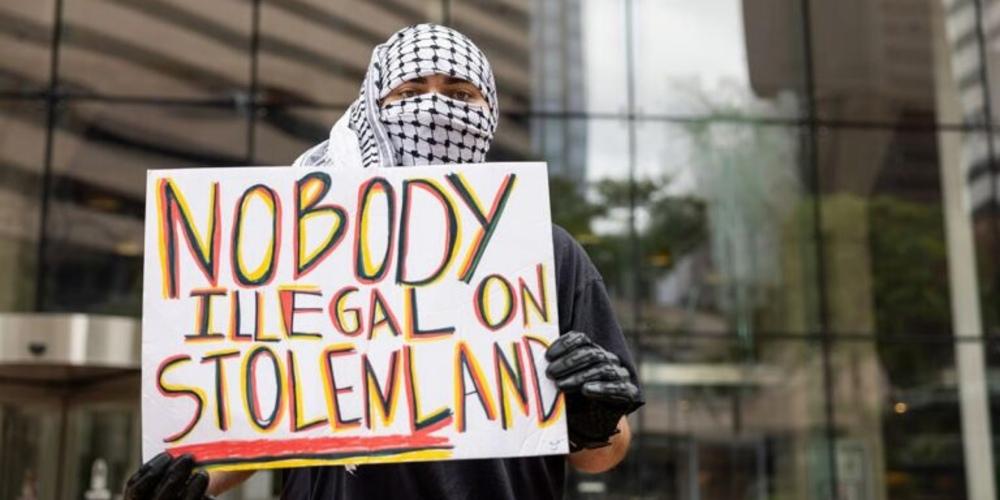
This is where communists and third worlders seem to intersect. They are part of the same “Tribe of Chaos.” This is why leftists are so desperate to open borders to mass immigration. This is why the policies of far-left Democrats seem to aid plunder by migrants (like Somalian scammers in Minnesota or California). This is why leftists seem to be obsessed with enabling the Islamic invasion of Europe.

It’s all about chaos and the fleecing of societies that value order. The globalists are also members of the chaos tribe, but they think of themselves as straddling the line between. Their vision of a “new world order” can only be achieved through the destruction of the old world, the erasure of the past, the rewriting of history and memory and morality. They are grotesque pillagers of time.
If they get their way, the barbarian mindset will become the norm. People of order and merit (the producers) will be perpetually enslaved to the whims of parasites. It will be a never-ending cycle of struggling industry followed by collapse, back to the dark ages but condensed down to a terrible science. We will work to build and build again while the hands of the horde rush in to knock it all down and pick the bones clean.
Without aggressive action to safeguard our own tribe, nothing we create will ever belong to us.
If you would like to support the work that Alt-Market does while also receiving content on advanced tactics for defeating the globalist agenda, subscribe to our exclusive newsletter The Wild Bunch Dispatch. Learn more about it HERE.
Bypass Big Tech Censors
Two Storms, One Harvest

Every food crisis in living memory has been a one-shock event. The 2008 price spike was a commodity bubble. The 2020 shortages were a logistics failure. The 2022 grain scare was a war on one exporter’s ports. Each time, the system bent, adjusted, and recovered, and each time the experts assured us afterward that global markets are simply too big and too diversified to fail.
What nobody in Washington seems eager to discuss is that 2026 is shaping up to be something the modern food system has never actually faced. Two independent shocks, one climatic and one geopolitical, are converging on the same harvest cycle at the same time. Not sequentially. Simultaneously.
Start with the weather. The Pacific Ocean is currently building toward what forecasters now openly call a record event. NOAA’s Climate Prediction Center puts the odds of at least a strong El Niño near 88 percent, with roughly two in three odds it reaches “very strong” status, the tier reserved for perhaps three or four events in the entire satellite era. Every major global model now projects a median peak in Super El Niño territory, and most of them project it exceeding the 2015-16 event, which until now held the modern record. Sea surface anomalies were already brushing the super threshold in mid-July, months before these events normally peak. The atmosphere has already shifted into El Niño mode, and the event is forecast to crest in late fall and early winter.
This is not about “climate change.” It’s about the standard cycles of weather, and the cycle we’re currently in is one that has likely devastated societies in the past. We’re better prepared as a society today, but not all Americans are equally prepared.
Serious households have started doing the quiet math on their own. Grocery bills tell part of the story, and the forecast maps tell the rest, which is why long-term food storage has moved from fringe hobby to mainstream line item in the family budget, with established suppliers like Heaven’s Harvest seeing demand from people who five years ago would have rolled their eyes at the idea. That instinct is not paranoia. It is pattern recognition, and the pattern is worth walking through carefully.
Editor’s Note: Heaven’s Harvest IS a sponsor, but the warnings of this article are real and would be written even if we didn’t have a survival food sponsor. With that said, those who take advantage of what they offer can use promo code “Patriot” for 15% off.
The Fertilizer Clock Is Already Running
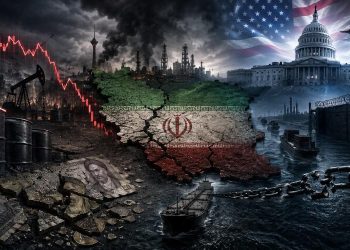
While the Pacific warms, the second shock has been unfolding in the Strait of Hormuz. The conflict with Iran turned the world’s most important energy chokepoint into a contested waterway, and the consequences reach far beyond the gas pump. Roughly a third of global fertilizer trade moves through Hormuz, and the disruption sent urea prices up 86 percent year over year by March, with a 53 percent jump in a single month.
The World Bank projects energy prices rising about 24 percent in 2026 and fertilizer about 31 percent. By its own accounting, fertilizer prices ran 35 percent higher in the first five months of this year than the same period last year.
Here is the mechanism the nightly news will not explain. Fertilizer is not a grocery item. It is a time-delayed input. The nitrogen a farmer in Iowa or Punjab could not afford to apply this spring does not show up as a problem this spring. It shows up as a thinner harvest six to twelve months later.
The World Bank’s own food security brief concedes that the effects of reduced applications earlier this season “are likely to become visible only later in harvest outcomes.” Translate that from institutional language into plain English and it means this. The damage is already done, it is already in the ground, and we are simply waiting for it to arrive on the shelf.
Now check the calendar. Six to twelve months from the spring planting season lands us squarely in late 2026 and early 2027. Which is precisely when the strongest El Niño in the instrumental record is forecast to peak, bringing its signature droughts to Southeast Asia, Australia, southern Africa, northern Brazil, and South Asia, the very regions that grow the world’s rice, sugar, and oilseeds.
The World Bank warns openly that a strong El Niño “could disrupt multiple crop belts simultaneously” on top of the conflict-driven input costs. Their baseline projection assumes the Middle East disruptions ease by autumn. What in the last two years of Middle East history suggests that assumption is safe?
The System Has No Slack Left
The comfortable answer is that global markets always adjust. But adjustment requires slack, and the slack is gone. Global cereal production is expected to decline from last year’s records even before El Niño does its work. The UN World Food Programme, hardly a den of right-wing preppers, is calling this the most significant disruption to its supply chains since Covid and the invasion of Ukraine, and its supply chain director put the stakes bluntly.
Today’s supply chain challenges are tomorrow’s hunger crisis.
There is also a political dimension that markets cannot price. When food gets scarce, governments do not behave like economists. They behave like politicians. Export bans, hoarding mandates, and panic buying at the national level turned the modest rice shortfall of 2008 into a global crisis, and analysts are already warning that import-dependent nations are the first dominoes.
The 2015-16 Super El Niño, a far weaker event than what is now forecast, threw tens of millions into food stress across Africa and Asia. This one is projected to be stronger, and it arrives with fertilizer already rationed by price and shipping lanes already contested by missiles.
What Joseph Knew
Scripture does not treat preparation for lean years as faithlessness. It treats it as wisdom delivered in advance to those willing to act on it.
Behold, there come seven years of great plenty throughout all the land of Egypt: And there shall arise after them seven years of famine; and all the plenty shall be forgotten in the land of Egypt.
Joseph did not respond to that warning with a hashtag or a committee. He stored grain during the years of abundance, and when the famine came, Egypt stood while its neighbors begged. The lesson is not that famine is certain. It is that the time to prepare is precisely when preparation still looks optional.
Nobody who filled a pantry in a year of plenty has ever regretted it, and nobody standing in an empty aisle has ever been glad he waited for certainty.
None of this calls for panic, and panic is the enemy of sound judgment anyway. It calls for the same unglamorous prudence our grandparents considered ordinary. Keep some cash margin, know your local growers, and put real food in deep storage while it is cheap and available, because the entire arc of this story is that cheap and available is a closing window.
Families looking for a straightforward place to start can visit Heaven’s Harvest and use promo code Patriot for 15 percent off long-term storable food. The forecasts may yet soften, the strait may yet reopen, and we should pray they do. But hope is a fine thing to hold and a foolish thing to eat.