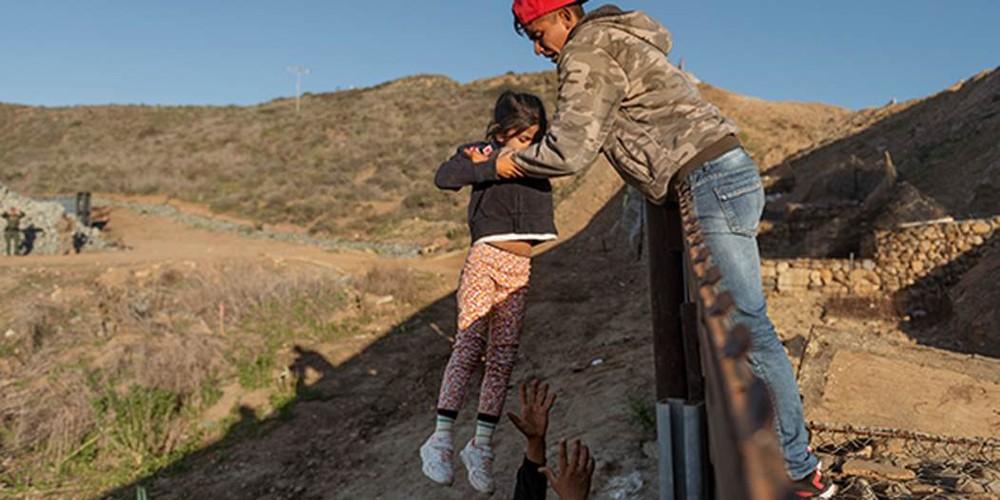
Federal authorities under the Trump administration have uncovered a staggering network of over 15,500 “super sponsors”—individuals who each took custody of three or more unrelated unaccompanied migrant children. This revelation, announced by Acting Attorney General Todd Blanche and Homeland Security Secretary Markwayne Mullin, shines a harsh light on what many suspected all along: the previous administration’s open-border experiment wasn’t just reckless policy—it created a pipeline for exploitation on a horrifying scale.
These super sponsors didn’t emerge in a vacuum. During the Biden years, nearly half a million unaccompanied alien children were released into the United States with minimal vetting, often funneled through NGOs and sponsors who claimed family ties that proved fraudulent. Now, the consequences are coming into focus as investigators track down the victims of this systemic failure. The Trump team has already located 146,000 of these children, but nearly 300,000 remain missing, many reportedly subjected to unspeakable abuse.
Blanche detailed one concrete case involving three Guatemalan nationals—Maritza Azucena Cahuec Coc, her brother Carlos Agustin Cahuec Coc, and Gladys Marina Caal Chen—indicted for a conspiracy to smuggle more than a dozen children by gaming the system.
One of the defendants had herself been fraudulently sponsored as a supposed unaccompanied minor. Another recent conviction involved a man who sexually abused a child he fraudulently sponsored. These are not isolated incidents, Blanche emphasized, but symptoms of a widespread pattern.
“This is one example, one indictment, but it is not unique. There are over 15,500 super-sponsor cases that we have identified along with DHS. And again, these super-sponsor cases are when somebody sponsors more than three children, unrelated, and they’re unaccompanied minors that come in the United States.”
Mullin painted an even grimmer picture of the human cost. Some rescued children reported being raped hundreds of times. The secretary’s pointed question cuts through the political noise: If you cannot support law enforcement efforts to recover these victims, who are you?
Democrats’ continued resistance to border enforcement and their reluctance to confront the failures of the prior regime suggest an answer many Americans find chilling.
The Human Toll of Unvetted Releases
Reports from the field reveal patterns of fraud, including fake identities and false family claims, often coordinated with cartels south of the border. A 2021 HHS Inspector General report had already flagged inadequate sponsor vetting, with many cases skipping basic FBI fingerprint checks or child abuse registry reviews. Yet the machinery of release continued at breakneck speed, prioritizing volume over safety.
This wasn’t mere bureaucratic incompetence. It reflected a deliberate ideological commitment to open borders that treated children as political pawns rather than image-bearers of God deserving protection. The same voices that decry “kids in cages” under previous administrations showed little interest in the fates of those handed over to strangers once the cameras turned away.
Secretary Mullin has vowed to pursue every lead, underscoring that no political affiliation excuses turning a blind eye to suffering. The Trump administration’s focus on accountability stands in stark contrast to the prior era’s apparent indifference.

A Moral and Constitutional Reckoning
The founders understood government’s fundamental duty to secure the border and protect the vulnerable. What unfolded under Biden betrayed that trust, turning America’s generosity into a vulnerability exploited by traffickers. Restoring order requires not just enforcement but a cultural recommitment to the principle that children are not commodities.
As Scripture warns in Matthew 18:6, “But whoso shall offend one of these little ones which believe in me, it were better for him that a millstone were hanged about his neck, and that he were drowned in the depth of the sea.”
This crisis demands justice for the exploited and vigilance against those who would repeat such failures. The exposure of these super-sponsor networks is a necessary first step toward healing a broken system and safeguarding the innocent.
The American people deserve transparency and action. As investigations deepen, the full scope of this tragedy will likely confirm what border communities have witnessed for years: compassion without borders is a recipe for predation. True moral clarity requires securing the homeland while extending real help through lawful channels that prioritize the well-being of children above political narratives.
Bypass Big Tech Censors

Starting the Day With a Scripture-Inspired Roast Helps Center Your Thoughts on Eternal Truths Amid Temporal Pressures
The world can seem chaotic, especially right after we wake up. Many believers start their mornings reaching for something familiar — a hot cup of coffee — yet end up settling for mediocre brews that do little more than deliver a caffeine jolt. The daily grind of life, with its endless distractions, news cycles, and responsibilities, can leave even the most faithful feeling spiritually parched alongside their physical fatigue. What if your morning ritual could do more than wake you up? What if it could ground you in truth, nourish your body with exceptional quality, and quietly advance a kingdom purpose at the same time?
That’s the promise — and the reality — behind Promised Grounds Coffee. This Christian-founded company doesn’t just roast beans; it approaches every step as an act of worship and discipleship. By selecting only the top 10% of specialty-grade beans, ethically sourced from dedicated farmers in Central and South America, and small-batch roasting them with reverence in Austin, Texas, Promised Grounds delivers what many describe as the best coffee available — never burnt, never bland, but rich with origin stories and layered flavors that honor God’s creation.
From the vibrant Psalm 27 Roast (a light, bright medium option) to the bold yet peaceful 2 Timothy 1:7 Decaf, each bag carries a Scripture verse that turns your daily pour into a gentle reminder of faith. And through their Ounce Per Ounce Promise, every ounce of coffee you enjoy provides an equal ounce of clean water to families in need via partnership with Filter of Hope — literally brewing hope for body and soul, one cup at a time.
The challenge for today’s Christians runs deeper than finding a decent cup. In an age of convenience-driven consumerism, it’s easy to support companies that dilute values or remain silent on matters of faith. Many believers want their everyday choices — from what they drink to how they spend — to reflect discipleship rather than just convenience. Promised Grounds solves this by weaving Christian excellence into the entire process: beans nurtured with prayerful stewardship by farming families, roasted as an offering rather than a commodity, and packaged with Bible verses to encourage a mindset of gratitude and purpose from the first sip. Reviewers consistently praise the smooth, rich profiles — whether enjoyed black in a drip maker, iced on a warm day, or shared in fellowship — noting how the quality stands toe-to-toe with premium secular brands while delivering something far more meaningful.
This integration of faith and flavor addresses a real need in Christian households and ministries. Busy parents, church leaders, and remote workers alike report that starting the day with a Scripture-inspired roast helps center their thoughts on eternal truths amid temporal pressures. The coffee’s exceptional character — bright citrus notes in lighter roasts or deep chocolate undertones in bolder ones — comes from meticulous selection and careful roasting that respects the bean’s natural gifts rather than masking them. It’s the kind of coffee that elevates a simple quiet time, fuels productive workdays, or sparks meaningful conversations when shared at Bible studies or outreach events. And because it’s ethically sourced with integrity, every purchase supports sustainable livelihoods for farmers who treat their crops like family harvests.
For those leading churches or small groups, the impact multiplies. Promised Grounds offers bundles and options perfect for hospitality ministries, turning ordinary coffee service into an opportunity to point people toward the living water of Christ. Imagine greeting visitors with a warm cup whose very bag carries God’s Word — a subtle yet powerful witness that aligns with the Great Commission. The company’s Texas roots and commitment to “brewing hope” resonate especially with believers who value American enterprise paired with global compassion.
Of course, quality alone isn’t enough if the experience feels out of reach. Promised Grounds keeps it accessible with practical perks like free shipping on orders over $40, sample sets for discovering favorites, and thoughtful add-ons such as faith-themed mugs. Whether you prefer whole beans for fresh grinding, grounds for convenience, or even bulk options for larger households and ministries, the result is consistently superior coffee that makes discipleship feel integrated rather than added on.
As you consider how to align even the smallest habits with your walk with God, Promised Grounds Coffee stands out as a refreshing solution. It tackles the dual problems of subpar daily sustenance and disconnected consumption by offering a product that genuinely excels in taste while advancing a mission of clean water, farmer dignity, and scriptural encouragement. Believers who make the switch often describe it as more than a beverage upgrade — it becomes part of their rhythm of gratitude, a daily invitation to remember that every good gift comes from above.
If you’re ready to transform your mornings (and perhaps your church gatherings) with coffee that honors both exceptional craftsmanship and Christian values, I encourage you to explore what Promised Grounds has to offer. One sip at a time, you’ll be nourishing your body, refreshing your spirit, and participating in something far greater — all while enjoying what truly is among the best coffee available.