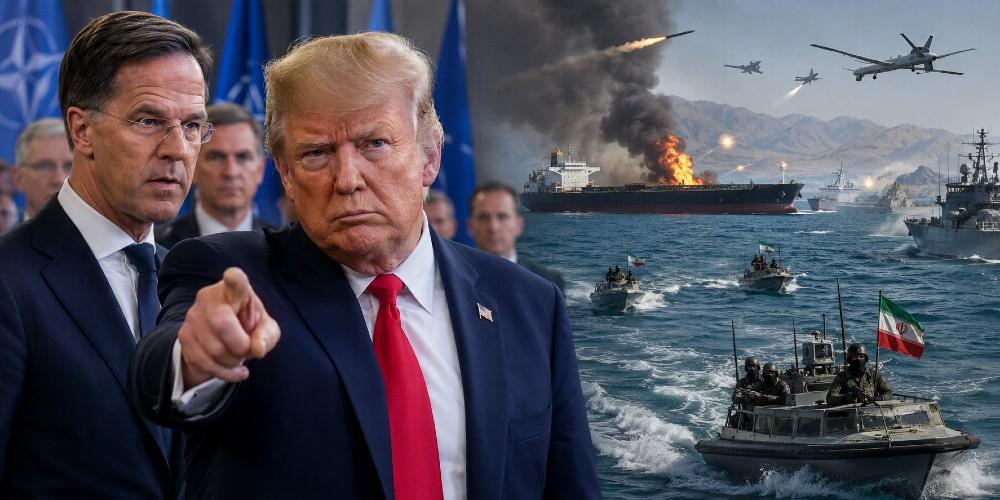
There is a moment in every failed negotiation when one side finally says out loud what everyone else has been thinking. That moment arrived Wednesday in Ankara, when President Donald Trump, seated beside NATO Secretary-General Mark Rutte at the alliance’s annual summit, was asked about the status of America’s tentative ceasefire with Iran. His answer required no translation from diplomatic language because he refused to use any.
“For me, I think it’s over,” Trump said. “As far as I’m concerned it’s just a waste of time.”
The president’s verdict came only hours after American forces struck more than 80 Iranian targets, including air defense systems, radar installations, and Revolutionary Guard vessels used to menace commercial shipping. Washington also revoked the waiver that had allowed Tehran to sell its oil on the world market, cutting off a revenue stream the regime had extracted at the negotiating table.
Both moves were retaliation for Iranian attacks on at least three commercial vessels transiting the Strait of Hormuz on Monday and Tuesday, the narrow waterway through which roughly one-fifth of the world’s traded oil must pass.
A Regime That Cannot Tell the Truth
Trump’s frustration was not with the terms of the deal but with the character of the men across the table. He accused Iranian negotiators of agreeing to terms in private and then denying them in public, a pattern anyone who has followed four decades of Islamic Republic diplomacy will recognize instantly.
“They’re liars. We make a deal. … They go outside, talk to the press. They say, ‘We never even talked about it.’ … As far as I’m concerned, it’s over.”
He left the door open for his negotiators to keep meeting with their Iranian counterparts, then promptly explained why it would accomplish nothing. “They can talk, but I think they’re wasting their time. They’re liars, they’re cheats. They’re sick people.”
The interim agreement, a memorandum of understanding signed June 17 that renewed a truce first reached in April, was supposed to calm the region and reopen the Strait of Hormuz to commercial traffic. Iran answered that arrangement by firing on the very ships the agreement existed to protect.
Restraint Repaid With Rockets
The detail that should end any lingering debate about who broke faith is the timing. Trump had held American fire to allow the regime to conduct funeral ceremonies for Ayatollah Ali Khamenei, the supreme leader killed in a joint American-Israeli strike on the war’s first day in February. That mourning period, still underway this week, featured regime-organized crowds throwing pebbles at Trump’s image in a symbolic stoning ritual while circulating lists of American officials marked for vengeance.
The president extended a courtesy no one would have faulted him for withholding, and Tehran used the window to resume attacks on civilian shipping. When the United States responded, the Revolutionary Guard launched missiles and drones at American installations in Bahrain and Kuwait, dragging two Gulf states into a fight they wanted no part of.

Kuwait publicly objected to the attacks on its soil. Oil prices jumped more than five percent, with Brent crude climbing above $78 a barrel, as markets priced in what the regime’s apologists still will not admit.
The Mirage of a Deal
The substance of the impasse explains why every apparent breakthrough dissolves. Washington wants Iran to abandon its nuclear ambitions and surrender its enriched uranium. Tehran has reportedly demanded joint control of the Strait of Hormuz and the release of billions in frozen assets. One side seeks an end to the threat. The other seeks payment for pausing it. Those are not positions that converge; they are worldviews that collide.
New supreme leader Mojtaba Khamenei, who inherited his father’s office in March, has not been seen in public since taking power. He rules from hiding while his parliament speaker declares that Iran does not fold. A regime confident in its cause does not conceal its leader and lie about its agreements. It does both because deception is not a tactic of the Islamic Republic. It is the operating system.
The psalmist knew this species of adversary well, the kind that treats an outstretched hand as an opening for the knife.
My soul hath long dwelt with him that hateth peace. I am for peace: but when I speak, they are for war. (Psalm 120:6-7)
Trump’s declaration that the ceasefire is over is not a failure of diplomacy. It is the overdue acknowledgment that diplomacy was never actually happening, because it takes two honest parties to negotiate and only one showed up.
The mullahs were given a fantastic deal, a funeral truce, and the benefit of the doubt. They spent all three on missiles. Whatever comes next, at least it will come without illusions.
Bypass Big Tech Censors

Starting the Day With a Scripture-Inspired Roast Helps Center Your Thoughts on Eternal Truths Amid Temporal Pressures
The world can seem chaotic, especially right after we wake up. Many believers start their mornings reaching for something familiar — a hot cup of coffee — yet end up settling for mediocre brews that do little more than deliver a caffeine jolt. The daily grind of life, with its endless distractions, news cycles, and responsibilities, can leave even the most faithful feeling spiritually parched alongside their physical fatigue. What if your morning ritual could do more than wake you up? What if it could ground you in truth, nourish your body with exceptional quality, and quietly advance a kingdom purpose at the same time?
That’s the promise — and the reality — behind Promised Grounds Coffee. This Christian-founded company doesn’t just roast beans; it approaches every step as an act of worship and discipleship. By selecting only the top 10% of specialty-grade beans, ethically sourced from dedicated farmers in Central and South America, and small-batch roasting them with reverence in Austin, Texas, Promised Grounds delivers what many describe as the best coffee available — never burnt, never bland, but rich with origin stories and layered flavors that honor God’s creation.
From the vibrant Psalm 27 Roast (a light, bright medium option) to the bold yet peaceful 2 Timothy 1:7 Decaf, each bag carries a Scripture verse that turns your daily pour into a gentle reminder of faith. And through their Ounce Per Ounce Promise, every ounce of coffee you enjoy provides an equal ounce of clean water to families in need via partnership with Filter of Hope — literally brewing hope for body and soul, one cup at a time.
The challenge for today’s Christians runs deeper than finding a decent cup. In an age of convenience-driven consumerism, it’s easy to support companies that dilute values or remain silent on matters of faith. Many believers want their everyday choices — from what they drink to how they spend — to reflect discipleship rather than just convenience. Promised Grounds solves this by weaving Christian excellence into the entire process: beans nurtured with prayerful stewardship by farming families, roasted as an offering rather than a commodity, and packaged with Bible verses to encourage a mindset of gratitude and purpose from the first sip. Reviewers consistently praise the smooth, rich profiles — whether enjoyed black in a drip maker, iced on a warm day, or shared in fellowship — noting how the quality stands toe-to-toe with premium secular brands while delivering something far more meaningful.
This integration of faith and flavor addresses a real need in Christian households and ministries. Busy parents, church leaders, and remote workers alike report that starting the day with a Scripture-inspired roast helps center their thoughts on eternal truths amid temporal pressures. The coffee’s exceptional character — bright citrus notes in lighter roasts or deep chocolate undertones in bolder ones — comes from meticulous selection and careful roasting that respects the bean’s natural gifts rather than masking them. It’s the kind of coffee that elevates a simple quiet time, fuels productive workdays, or sparks meaningful conversations when shared at Bible studies or outreach events. And because it’s ethically sourced with integrity, every purchase supports sustainable livelihoods for farmers who treat their crops like family harvests.
For those leading churches or small groups, the impact multiplies. Promised Grounds offers bundles and options perfect for hospitality ministries, turning ordinary coffee service into an opportunity to point people toward the living water of Christ. Imagine greeting visitors with a warm cup whose very bag carries God’s Word — a subtle yet powerful witness that aligns with the Great Commission. The company’s Texas roots and commitment to “brewing hope” resonate especially with believers who value American enterprise paired with global compassion.
Of course, quality alone isn’t enough if the experience feels out of reach. Promised Grounds keeps it accessible with practical perks like free shipping on orders over $40, sample sets for discovering favorites, and thoughtful add-ons such as faith-themed mugs. Whether you prefer whole beans for fresh grinding, grounds for convenience, or even bulk options for larger households and ministries, the result is consistently superior coffee that makes discipleship feel integrated rather than added on.
As you consider how to align even the smallest habits with your walk with God, Promised Grounds Coffee stands out as a refreshing solution. It tackles the dual problems of subpar daily sustenance and disconnected consumption by offering a product that genuinely excels in taste while advancing a mission of clean water, farmer dignity, and scriptural encouragement. Believers who make the switch often describe it as more than a beverage upgrade — it becomes part of their rhythm of gratitude, a daily invitation to remember that every good gift comes from above.
If you’re ready to transform your mornings (and perhaps your church gatherings) with coffee that honors both exceptional craftsmanship and Christian values, I encourage you to explore what Promised Grounds has to offer. One sip at a time, you’ll be nourishing your body, refreshing your spirit, and participating in something far greater — all while enjoying what truly is among the best coffee available.