There was a time when Fox News was actually somewhat conservative, legacy media at least tried to be less biased, and Rush Limbaugh pointed millions to the ideological right every single day.
Today, Fox News is just barely to the right of of center, and oftentimes not even that conservative. Legacy media is unabashedly leftist and nobody seems to care. And nobody has been able to truly fill the void left by Rush’s passing.
Conservative, patriotic, and even Christian media is under attack. Unfortunately, most of those attacks are self-inflicted as “influencers” have replaced the notion of true thought leadership. Charlie Kirk was leading the charge to bring a patriotic and unapologetically Christian perspective to mass media, but he was stolen from us. Who can step up now?
Sadly, nobody has. Perhaps nobody really can. The atmosphere is not conducive to rising above the noise the way that Rush or Charlie did in the past. This is why it’s time to adapt. It’s time to come up with better strategies. We need to scoop up those in the middle or even the left who are starting to realize the party and ideology they’ve been supporting is crazy.
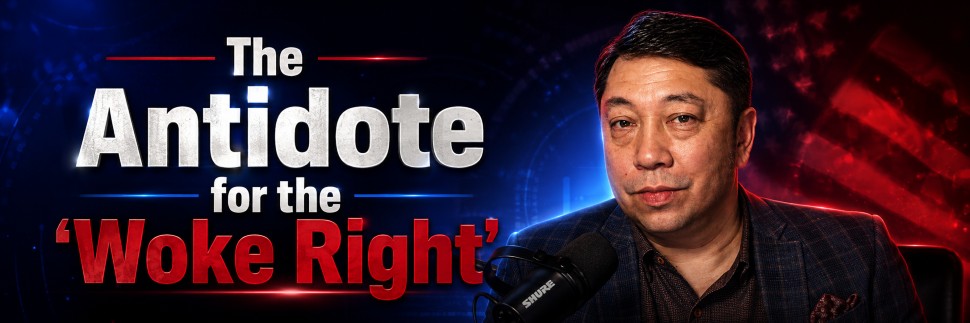
Perhaps most importantly, it’s time to reacquire the eyes and ears of patriotic Americans who have been pulled into pseudo-conservative realm of “influencers” who either do not know about real patriotism or who only use it to benefit themselves. That’s the topic of today’s episode of The JD Rucker Show.
#19 — A Handful of Owners, a Single Voice
Start with the org charts. A small cluster of conglomerates and investment firms controls the overwhelming majority of what Americans read, watch, and hear, and the trend line runs in one direction. Hedge funds have made a business model of buying storied newspapers and strip-mining them for parts, while local television groups consolidate under corporate parents that pipe identical scripts into hundreds of “local” broadcasts—the infamous supercut of dozens of anchors reciting the same words exists because it happened. Concentration of ownership is concentration of narrative, whatever the masthead says. A nation cannot have a marketplace of ideas when the marketplace has three landlords, and rebuilding patriotic media begins with building outlets those landlords cannot buy.
#18 — The Fact-Checker Cartel
The fact-checking industry presents itself as a neutral referee, but follow the funding and the function. A short list of organizations, financed by an even shorter list of foundations and tech partnerships, holds certification power over what the platforms suppress—meaning a handful of “independent” arbiters serve as the enforcement arm of whatever the prevailing narrative happens to be. Their track record includes rating true statements “missing context” when inconvenient and quietly reversing verdicts after the damage was done, from lab-leak dismissals onward. The problem is not that claims get checked; rigorous checking is exactly what patriotic media should champion. The problem is a cartel structure in which the referees are hired by one team, and the penalty box only ever holds the other.
#17 — The Memory Hole Is Real
Orwell imagined a furnace for inconvenient records; we built something more efficient. Headlines are stealth-edited after publication. Articles vanish or get rewritten without notice. Confident official assurances—on inflation, on transmission, on laptops—are scrubbed, reframed, or simply never mentioned again, and anyone producing the receipts is treated as obsessive for remembering. Archive services that preserve the record have themselves come under pressure. This is why patriotic media cannot merely comment on the news; it must be the record-keeper—screenshots, timestamps, archived originals, documented reversals. A propaganda system’s greatest asset is the public’s short memory, and its greatest fear is a library that refuses to forget.

#16 — The Rage Treadmill Devours Our Own
Honesty requires aiming this one at our side of the aisle. The independent media economy rewards whoever says the most inflammatory thing this hour, and audience capture is a real disease: creators discover what the algorithm and the superchats want, then become it, ratcheting ever further from truth-telling toward performance. The result is a right-wing media that sometimes cannot distinguish between fighting the narrative and farming engagement, and audiences trained to treat every development as a five-alarm emergency lose the ability to recognize the real ones. Patriotic media worthy of the name must be able to tell its own audience things it does not want to hear—and survive doing so. If we merely build a mirror image of MSNBC with different villains, we have built nothing.
#15 — The Next Emergency Is Coming
Pandemic, war, cyber event, financial crisis, or something not yet on the board—another national emergency will arrive, and when it does, whoever holds trusted-messenger status will steer the country’s response. Recall what that power accomplished last time: it locked down churches, closed schools, silenced dissenting scientists, and branded accurate skepticism as misinformation until the corrections could be issued quietly, years later, to an audience that had stopped listening. The emergency playbook depends entirely on a compliant information layer. Building patriotic media now is not a content strategy; it is pre-positioning lifeboats before the water rises, so that the next time the sirens sound, there exists a credible voice capable of asking the questions that were criminalized during the last one.
#14 — The Kids Are Watching Something
Whatever your opinion of TikTok, short-form video, and influencer culture, that is where the next electorate lives. Surveys consistently show younger Americans getting their news from social feeds and personalities rather than mastheads, and the formats they inhabit are dominated by voices formed in progressive assumptions—not because young people are unreachable, but because our side largely declined to show up. The 2024 cycle proved the terrain is winnable: podcasts and independent shows moved young men in numbers that stunned the consultants. But one election’s momentum is not an infrastructure. If patriotic media means op-eds and cable hits while the under-30s live somewhere else entirely, we are broadcasting brilliantly into an empty room and calling the echo an audience.
#13 — The Local News Graveyard
Thousands of American newspapers have died in the past two decades, and many survivors are ghost papers—a logo, a skeleton staff, and syndicated filler. The result is news deserts across whole counties where no one covers the school board, the county commission, the zoning fight, or the courthouse, which is precisely where the battles that actually touch families are fought and where corruption grows best unwatched. Into that vacuum pours nationalized outrage content, so citizens know everything about the controversy of the day two thousand miles away and nothing about the curriculum vote down the street. Patriotic media cannot only mean national commentary. It means rebuilding the county-level watchdog function—because self-governance starts local, and right now, nobody is on that beat.
#12 — Rented Land Is Not a Foundation
Every creator who built a life’s work on YouTube, Facebook, or a payment processor has learned, or will learn, the landlord’s lesson: demonetization, throttling, and deplatforming are editorial decisions made by someone who never hired you and owes you nothing. We watched entire channels erased in a policy update, newsletters cut off from their subscribers, and businesses severed from banking with no appeal worth the name. Even platforms currently friendlier to free speech remain single points of failure owned by men whose priorities can change with a board seat. The mandate is boring and non-negotiable: owned websites, owned email lists, diversified payment rails, independent video hosting. Patriotic media that lives at the pleasure of a platform is a hostage that hasn’t been ransomed yet.
#11 — Nobody in the Newsroom Knows a Believer
Read mainstream religion coverage and you can feel the anthropology—dispatches from an exotic tribe, written for readers presumed to find ordinary Christianity alien. Newsroom surveys have long shown that vanishingly few national journalists share the faith commitments of the tens of millions they cover, and it shows: prayer described as a curiosity, biblical convictions framed as extremism, the largest voluntary associations in American life covered only when scandal permits. Half the country’s interior life is foreign territory to the people narrating the news, and territory one does not understand, one caricatures. Patriotic media must be built substantially by people who sit in the pews they report on—not to produce church newsletters, but because you cannot tell America’s story while fundamentally misreading its soul.
#10 — Elections Run Through the Information Layer
The clearest proof that media is infrastructure, not commentary, arrived in October 2020, when a true story about a laptop was suppressed across platforms in coordinated fashion, dismissed by dozens of former intelligence officials as bearing the hallmarks of disinformation, and validated only after the votes were safely counted. Post-election polling suggested the suppression plausibly moved enough votes to matter. Whatever any individual concludes about any given race, the mechanism is now demonstrated: narrative control in the final weeks is electoral power, exercised without a single ballot touched. A patriotic press corps able to break, verify, and force stories past the blockade is not a luxury of civic life. It is election integrity infrastructure, as surely as the voter rolls.
#9 — Controlled Opposition Wears Our Jersey
An uncomfortable pattern deserves naming: some of what markets itself as alternative media functions as a corral—gathering the disaffected, absorbing their energy and their subscriptions, and steering them safely away from anything that would threaten the arrangements that matter. Sometimes it is deliberate; the intelligence world has run media assets before and said so in congressional testimony. Sometimes it is mere incentive—an outlet discovers which dissent is profitable and which is punished, and adjusts. The tell is consistent: endless permission to rage at approved targets, sudden sophistication about why the unapproved questions are beneath us. Discernment about our own side is not disloyalty; it is quality control. A movement that cannot audit its media will be led by its media, and not to where it intended to go.
#8 — The Advertiser and De-Banking Chokeholds
Censorship’s modern form rarely deletes a word; it defunds the speaker. Brand-safety consortiums—the late GARM operation being the documented example, dissolved only after congressional scrutiny and litigation—coordinated major advertisers away from disfavored outlets, while payment processors and banks have severed commentators, ministries, and gun-adjacent businesses with form-letter explanations. The mechanism is elegant: no government censor, no First Amendment case, just a quiet financial asphyxiation. This is why rebuilt patriotic media must run on revenue that cannot be strangled—direct subscriptions, sponsors who share the mission and have been vetted to withstand pressure, commerce the cartel doesn’t control. An outlet that can be defunded by a phone call to its advertisers was never independent; it was on parole.
#7 — We Build Stars; They Build Institutions
The left’s media power does not reside in personalities; it resides in institutions—wire services, j-schools, foundations, prize committees, syndication networks—that survive any individual’s retirement, disgrace, or death. The right’s media power resides overwhelmingly in stars, and when the star burns out, sells out, or flames out, the audience scatters and the enterprise evaporates. We have watched it repeatedly: empires that were one man deep, movements that were one feed wide. A serious rebuild means boring things—training pipelines for young reporters, editorial standards that outlive founders, ownership structures that cannot be flipped to a private equity buyer, bench depth behind every chair. Personalities win news cycles. Institutions win decades. The other side knows this, which is why they have both and we keep renting one.
#6 — Stenography for the State
The gravest professional sin of the prestige press is not bias; it is obedience. “Officials say” journalism launders government claims into reported fact—weapons that weren’t there, withdrawal timelines that collapsed, spy-agency talking points published verbatim, war estimates repeated long after events discredited them. The pattern holds across administrations because the incentive holds: access is the currency, and access is granted to the compliant. A press corps that functions as the communications department of the permanent government is worse than useless in the moments a republic most needs scrutiny—the run-ups to wars and the declarations of emergencies. Patriotic media must invert the posture entirely: skepticism proportional to power, and double for anyone whose claims arrive classified, anonymous, and conveniently timed.
#5 — Truth-Telling Is a Mandate Before It Is a Market
Strip away every strategic argument on this list and one remains that outranks them all. Scripture does not treat information as a commodity; it treats false witness as sin, deception as the native tongue of the enemy, and the exposure of darkness as a command. A nation’s media is its testimony about itself—the ninth commandment operating at industrial scale—and a media architecture built on narrative management is a society bearing false witness continuously, with consequences that compound in every institution downstream. That reframes the entire project: building honest media is not a business plan or a political tactic but a stewardship obligation, one that binds its builders to standards their opponents abandoned. It also means the rebuild fails if it merely swaps one set of comfortable lies for another. The mandate is truth, including when truth costs us.

#4 — Legacy Media Became a Parody of Itself
Since 2016, the legacy press has completed its transformation from flawed watchdog into open combatant, and then into something stranger—a parody of its own former self. The decade’s record includes years of collusion coverage that collapsed, Pulitzers that were never returned, suppressed stories later validated, “fiery but mostly peaceful” chyrons over burning buildings, and polling misses repeated with undiminished confidence. Trust sits at or near record lows in every survey, audiences and ad revenue bleed out, and the response from the newsrooms has been to tighten their grip—more gatekeeping, more coordinated narratives, more contempt for the customers walking out the door. An industry that answers collapsing credibility with escalated control has told you its trajectory. It will not reform, because it no longer believes reform is the problem. Replacement is the only remedy left.
#3 — The Trump Messiah Media Problem
Now the harder conversations, starting inside the family. A segment of conservative media has calcified into what can only be called Trump Messiah Media—coverage operating on the premise that the President does no wrong, has never done wrong, and that noticing otherwise is betrayal. Let’s be clear about the hierarchy of errors: it is far better to be pro-Trump than anti-Trump, and this is the least of the media problems on this list. But the no-wrong posture betrays reality, and worse, it squanders something valuable—this President has demonstrated repeatedly that he listens to pushback from his base and adjusts. That responsiveness only works if the base’s media actually pushes back. Those of us who appreciate ninety percent of what he does serve him and the country best by saying so plainly about the other ten—supportive pushback, loyal and unflinching. Courtiers make kings worse. Honest friends make them better.
#2 — AI Is Becoming the Gatekeeper, and It Leans Left
The next gatekeeper won’t have a masthead. Growing numbers of Americans already get their answers—and increasingly their news—from AI chatbots, AI-generated search summaries, and AI-curated feeds, and multiple academic analyses have found the major models’ outputs tilt left of center on political orientation measures. That should surprise no one: the models are trained on a corpus written disproportionately by the institutions elsewhere on this list and aligned by workforces drawn from the same monoculture. The risk compounds with adoption—a biased newspaper announces its perspective on the masthead, but a biased answer engine presents its tilt as neutral synthesis, invisible to users who never see what was filtered out. As AI becomes the default lens on reality, the conservative perspective risks not being argued against but simply absent, and patriotic media must produce, publish, and push its work into that pipeline or be erased from the machine’s memory of America.
#1 — The Rise of the Woke Reich
The most clarifying development in conservative media has been watching a faction show its true colors. Call it the Woke Reich—the cottage industry that grew around Tucker Carlson, Candace Owens, and a constellation of imitators who discovered that platforming Holocaust revisionism, flirting with the oldest conspiracies in the book, and turning every issue into a referendum on the Jews draws enormous engagement from the darkest corners of the internet. Whether each figure is a true believer or a grifter chasing an underserved audience is, in a sense, secondary—the market they built now exists either way, wearing our jersey and defining “conservative” for millions of young men encountering it fresh. It sits at number one because it attacks the rebuild at its foundation: patriotic media cannot be built on the woke right’s mirror-image identity politics any more than on the left’s, and a movement that will not police this boundary will be defined by it. Discernment was never only for examining our enemies. The first test of truly patriotic media is whether it can tell the truth about its own side—and this is the truth: that way lies neither patriotism nor truth, and we must build something worthy of both.
Bypass Big Tech Censors
Starting the Day With a Scripture-Inspired Roast Helps Center Your Thoughts on Eternal Truths Amid Temporal Pressures
The world can seem chaotic, especially right after we wake up. Many believers start their mornings reaching for something familiar — a hot cup of coffee — yet end up settling for mediocre brews that do little more than deliver a caffeine jolt. The daily grind of life, with its endless distractions, news cycles, and responsibilities, can leave even the most faithful feeling spiritually parched alongside their physical fatigue. What if your morning ritual could do more than wake you up? What if it could ground you in truth, nourish your body with exceptional quality, and quietly advance a kingdom purpose at the same time?
That’s the promise — and the reality — behind Promised Grounds Coffee. This Christian-founded company doesn’t just roast beans; it approaches every step as an act of worship and discipleship. By selecting only the top 10% of specialty-grade beans, ethically sourced from dedicated farmers in Central and South America, and small-batch roasting them with reverence in Austin, Texas, Promised Grounds delivers what many describe as the best coffee available — never burnt, never bland, but rich with origin stories and layered flavors that honor God’s creation.
From the vibrant Psalm 27 Roast (a light, bright medium option) to the bold yet peaceful 2 Timothy 1:7 Decaf, each bag carries a Scripture verse that turns your daily pour into a gentle reminder of faith. And through their Ounce Per Ounce Promise, every ounce of coffee you enjoy provides an equal ounce of clean water to families in need via partnership with Filter of Hope — literally brewing hope for body and soul, one cup at a time.
The challenge for today’s Christians runs deeper than finding a decent cup. In an age of convenience-driven consumerism, it’s easy to support companies that dilute values or remain silent on matters of faith. Many believers want their everyday choices — from what they drink to how they spend — to reflect discipleship rather than just convenience. Promised Grounds solves this by weaving Christian excellence into the entire process: beans nurtured with prayerful stewardship by farming families, roasted as an offering rather than a commodity, and packaged with Bible verses to encourage a mindset of gratitude and purpose from the first sip. Reviewers consistently praise the smooth, rich profiles — whether enjoyed black in a drip maker, iced on a warm day, or shared in fellowship — noting how the quality stands toe-to-toe with premium secular brands while delivering something far more meaningful.
This integration of faith and flavor addresses a real need in Christian households and ministries. Busy parents, church leaders, and remote workers alike report that starting the day with a Scripture-inspired roast helps center their thoughts on eternal truths amid temporal pressures. The coffee’s exceptional character — bright citrus notes in lighter roasts or deep chocolate undertones in bolder ones — comes from meticulous selection and careful roasting that respects the bean’s natural gifts rather than masking them. It’s the kind of coffee that elevates a simple quiet time, fuels productive workdays, or sparks meaningful conversations when shared at Bible studies or outreach events. And because it’s ethically sourced with integrity, every purchase supports sustainable livelihoods for farmers who treat their crops like family harvests.
For those leading churches or small groups, the impact multiplies. Promised Grounds offers bundles and options perfect for hospitality ministries, turning ordinary coffee service into an opportunity to point people toward the living water of Christ. Imagine greeting visitors with a warm cup whose very bag carries God’s Word — a subtle yet powerful witness that aligns with the Great Commission. The company’s Texas roots and commitment to “brewing hope” resonate especially with believers who value American enterprise paired with global compassion.
Of course, quality alone isn’t enough if the experience feels out of reach. Promised Grounds keeps it accessible with practical perks like free shipping on orders over $40, sample sets for discovering favorites, and thoughtful add-ons such as faith-themed mugs. Whether you prefer whole beans for fresh grinding, grounds for convenience, or even bulk options for larger households and ministries, the result is consistently superior coffee that makes discipleship feel integrated rather than added on.
As you consider how to align even the smallest habits with your walk with God, Promised Grounds Coffee stands out as a refreshing solution. It tackles the dual problems of subpar daily sustenance and disconnected consumption by offering a product that genuinely excels in taste while advancing a mission of clean water, farmer dignity, and scriptural encouragement. Believers who make the switch often describe it as more than a beverage upgrade — it becomes part of their rhythm of gratitude, a daily invitation to remember that every good gift comes from above.
If you’re ready to transform your mornings (and perhaps your church gatherings) with coffee that honors both exceptional craftsmanship and Christian values, I encourage you to explore what Promised Grounds has to offer. One sip at a time, you’ll be nourishing your body, refreshing your spirit, and participating in something far greater — all while enjoying what truly is among the best coffee available.