
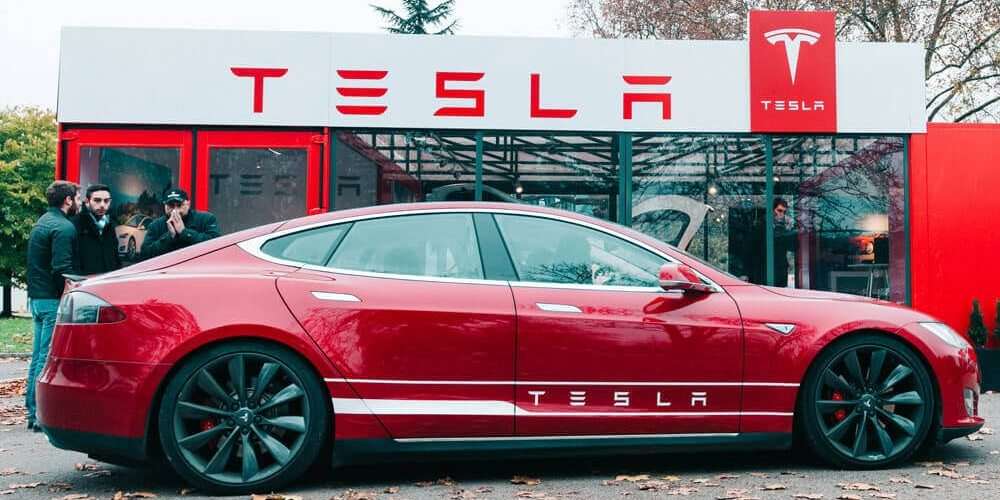
- Global protests against Elon Musk escalate into vandalism, arson, and domestic terrorism, targeting Tesla showrooms.
- The FBI labels attacks on Tesla facilities as domestic terrorism, arresting suspects amid violent incidents.
- Protest organizers deny violence but face criticism for rhetoric fueling extremism.
- Environmental activists burn EVs, contradicting their past support for green technology.
- Pro-Trump counterprotests emerge as tensions rise ahead of planned demonstrations.
(Natural News)—Elon Musk continues to be the focal point of a global protest movement that claims to oppose his influence over government policy but has increasingly devolved into vandalism, arson, and domestic terrorism. This Saturday, nearly 200 Tesla showrooms worldwide will face demonstrations organized under the banner of “Tesla Takedown,” a self-described grassroots campaign demanding accountability for Musk’s role in the Trump administration’s Department of Government Efficiency (DOGE).
While organizers insist their movement is non-violent, the FBI has launched a task force to investigate coordinated attacks on Tesla facilities, including Molotov cocktails, gunfire, and anti-Musk graffiti—acts the agency labels “domestic terrorism.”
The irony is incredible: the same left-wing activists who once championed Tesla for its green credentials are now burning its cars, polluting the environment, and endangering first responders. The hypocrisy exposes a movement unmoored from its principles, willing to embrace destruction when its ideological enemies refuse to comply.
A movement’s contradictions
Tesla Takedown organizers, like Bay Area activist Vickie Mueller Olvera, frame their protests as a righteous stand against Musk’s “hijacking” of democracy. “Nobody voted for this, and nobody voted for Elon,” Olvera told The Guardian. “He’s an unelected super-billionaire and he’s a thug.” Yet while Olvera’s rhetoric is heated, her group publicly condemns property destruction. The same cannot be said for the shadowy factions operating alongside them.
In recent weeks, Tesla facilities from Austin to Seattle have been firebombed, spray-painted with swastikas, and riddled with bullets. In Colorado, a woman allegedly torched multiple Teslas while scrawling “Nazi” on a dealership sign. In Massachusetts, seven charging stations were burned. Even individual Tesla owners report being harassed, their cars keyed or defaced. The FBI, now treating these attacks as domestic terrorism, arrested a suspect in Las Vegas this week after a showroom was targeted with Molotov cocktails.
Musk and Trump have seized on the violence to discredit the broader protest movement. “The real problem is not the crazy guy that firebombs a Tesla dealership,” Musk told Fox News. “It’s the people pushing the propaganda that caused that guy to do it.” Trump, meanwhile, has vowed to prosecute perpetrators under terrorism statutes.
Left’s green hypocrisy on full display
The most glaring contradiction lies in the environmental left’s sudden abandonment of Tesla—a company it once celebrated for pioneering electric vehicles (EVs). Now, instead of reducing emissions, activists are literally setting EVs ablaze, releasing toxins into the air and forcing firefighters to risk their lives.
Protest organizers dismiss the violence as the work of rogue actors. “We are a non-violent grassroots protest movement,” Tesla Takedown’s official statement reads. But critics argue the movement’s incendiary rhetoric—labeling Musk a “fascist” and Teslas “Swastikars”—fuels the extremism.

A tense weekend ahead
With tensions escalating, law enforcement is bracing for clashes. Pro-Trump “Tesla Shield” counterprotests are planned, and organizers like Terry Beck in New Jersey are mobilizing caravans to “support a Trump ally.” Meanwhile, anti-Tesla activists admit they fear vehicular attacks. “We’re pretty vulnerable,” said Adam Sheridan, a New Jersey organizer.
The FBI’s involvement suggests this is no ordinary protest movement. Whether Tesla Takedown can distance itself from the violence remains to be seen—but for now, the left’s embrace of eco-vandalism has exposed its moral bankruptcy. As Musk’s net worth tumbles and his cars burn, one thing is clear: the movement claiming to defend democracy is doing so by destroying the very institutions it claims to protect.
The “Tesla Takedown” protests reveal a left increasingly willing to abandon its principles for political vengeance. Once cheerleaders for green technology, activists now torch the very symbols of environmental progress—all while decrying the “fascism” of a man they once admired. The FBI’s crackdown may curb the violence, but the hypocrisy will linger long after the smoke clears.
Sources for this article include:
Bypass Big Tech Censors
Starting the Day With a Scripture-Inspired Roast Helps Center Your Thoughts on Eternal Truths Amid Temporal Pressures
The world can seem chaotic, especially right after we wake up. Many believers start their mornings reaching for something familiar — a hot cup of coffee — yet end up settling for mediocre brews that do little more than deliver a caffeine jolt. The daily grind of life, with its endless distractions, news cycles, and responsibilities, can leave even the most faithful feeling spiritually parched alongside their physical fatigue. What if your morning ritual could do more than wake you up? What if it could ground you in truth, nourish your body with exceptional quality, and quietly advance a kingdom purpose at the same time?
That’s the promise — and the reality — behind Promised Grounds Coffee. This Christian-founded company doesn’t just roast beans; it approaches every step as an act of worship and discipleship. By selecting only the top 10% of specialty-grade beans, ethically sourced from dedicated farmers in Central and South America, and small-batch roasting them with reverence in Austin, Texas, Promised Grounds delivers what many describe as the best coffee available — never burnt, never bland, but rich with origin stories and layered flavors that honor God’s creation.
From the vibrant Psalm 27 Roast (a light, bright medium option) to the bold yet peaceful 2 Timothy 1:7 Decaf, each bag carries a Scripture verse that turns your daily pour into a gentle reminder of faith. And through their Ounce Per Ounce Promise, every ounce of coffee you enjoy provides an equal ounce of clean water to families in need via partnership with Filter of Hope — literally brewing hope for body and soul, one cup at a time.
The challenge for today’s Christians runs deeper than finding a decent cup. In an age of convenience-driven consumerism, it’s easy to support companies that dilute values or remain silent on matters of faith. Many believers want their everyday choices — from what they drink to how they spend — to reflect discipleship rather than just convenience. Promised Grounds solves this by weaving Christian excellence into the entire process: beans nurtured with prayerful stewardship by farming families, roasted as an offering rather than a commodity, and packaged with Bible verses to encourage a mindset of gratitude and purpose from the first sip. Reviewers consistently praise the smooth, rich profiles — whether enjoyed black in a drip maker, iced on a warm day, or shared in fellowship — noting how the quality stands toe-to-toe with premium secular brands while delivering something far more meaningful.
This integration of faith and flavor addresses a real need in Christian households and ministries. Busy parents, church leaders, and remote workers alike report that starting the day with a Scripture-inspired roast helps center their thoughts on eternal truths amid temporal pressures. The coffee’s exceptional character — bright citrus notes in lighter roasts or deep chocolate undertones in bolder ones — comes from meticulous selection and careful roasting that respects the bean’s natural gifts rather than masking them. It’s the kind of coffee that elevates a simple quiet time, fuels productive workdays, or sparks meaningful conversations when shared at Bible studies or outreach events. And because it’s ethically sourced with integrity, every purchase supports sustainable livelihoods for farmers who treat their crops like family harvests.
For those leading churches or small groups, the impact multiplies. Promised Grounds offers bundles and options perfect for hospitality ministries, turning ordinary coffee service into an opportunity to point people toward the living water of Christ. Imagine greeting visitors with a warm cup whose very bag carries God’s Word — a subtle yet powerful witness that aligns with the Great Commission. The company’s Texas roots and commitment to “brewing hope” resonate especially with believers who value American enterprise paired with global compassion.
Of course, quality alone isn’t enough if the experience feels out of reach. Promised Grounds keeps it accessible with practical perks like free shipping on orders over $40, sample sets for discovering favorites, and thoughtful add-ons such as faith-themed mugs. Whether you prefer whole beans for fresh grinding, grounds for convenience, or even bulk options for larger households and ministries, the result is consistently superior coffee that makes discipleship feel integrated rather than added on.
As you consider how to align even the smallest habits with your walk with God, Promised Grounds Coffee stands out as a refreshing solution. It tackles the dual problems of subpar daily sustenance and disconnected consumption by offering a product that genuinely excels in taste while advancing a mission of clean water, farmer dignity, and scriptural encouragement. Believers who make the switch often describe it as more than a beverage upgrade — it becomes part of their rhythm of gratitude, a daily invitation to remember that every good gift comes from above.
If you’re ready to transform your mornings (and perhaps your church gatherings) with coffee that honors both exceptional craftsmanship and Christian values, I encourage you to explore what Promised Grounds has to offer. One sip at a time, you’ll be nourishing your body, refreshing your spirit, and participating in something far greater — all while enjoying what truly is among the best coffee available.


