(The Daily Signal)—This year’s midterm elections could decide the balance of power in Washington, as well as the ideological direction of the Democratic and Republican parties
Swing states such as Michigan, Pennsylvania, and Wisconsin will again be political battlegrounds. But other states could prove just as decisive. Here are three you need to be watching.
Texas
On March 3, Republican and Democrat primary voters in the Lone Star State will go to the polls to determine their nominee for the state’s Senate race, which could play a significant role in determining the future of both parties.
On the Republican side, Sen. John Cornyn, an incumbent of over two decades, faces primary challenges from Texas Attorney General Ken Paxton and Rep. Wesley Hunt.
Both candidates have presented themselves as politically to the right of Cornyn.
Neither Sen. Ted Cruz, R-Texas, nor President Donald Trump have made an endorsement in the primary.
Democrat primary voters will also decide between state Rep. James Talarico and U.S. Rep. Jasmine Crockett, both young candidates with a major social media presence.
In the Texas primary system, if no candidate receives over 50% of the vote in a primary election, that would trigger a May 26 runoff election between the top two primary candidates.

In the House of Representatives, several major Texas members are not seeking reelection, such as former foreign affairs chairman Michael McCaul, budget chairman Jodey Arrington, and freedom caucus member Chip Roy.
These departures, combined with a recent redistricting bill that could flip around a half dozen seats to Republicans, will amount to a transformation of the Texas delegation.
Maine
New England is a reliable liberal stronghold, but it features plenty of races this year that are important for determining both parties’ power in Congress.
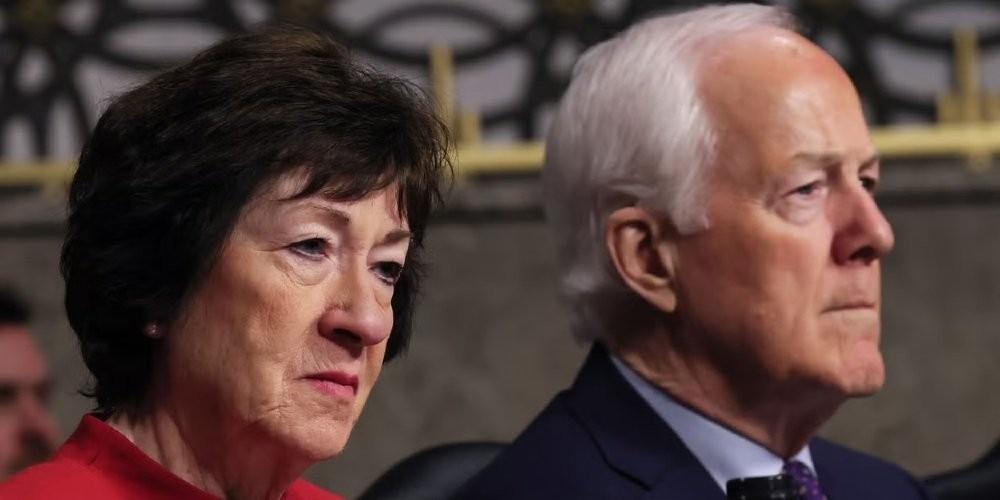
Sen. Susan Collins, R-Maine, is the only Republican member of Congress from the region, and she is up for reelection in 2026.
Having represented the state for three decades in the Senate, Collins has established herself as an independent Republican, voting against the confirmation of Supreme Court Justice Amy Coney Barrett, and opposing a Republican-backed budget reconciliation bill in July. She holds significant influences in the Senate as the top Republican appropriator.
President Donald Trump recently said Collins “should never be elected to office again” after her vote to rein in his military powers in Venezuela.
Currently, the Cook Political Report rates the Maine Senate race a “toss-up” for 2026. Democrat competition has already lined up to challenge Collins for her seat.
Gov. Janet Mills and Graham Platner, a Bernie Sanders-endorsed candidate who appeals to the left-wing of the Democratic Party, are the Democrat frontrunners.
This Democratic primary itself encapsulates major tensions within the party, as Mills, a 78-year-old established party figure, faces off against Platner, a 41-year-old who has accused Israel of “genocide” and advocates highly interventionist economic policies.
Platner, however, announced this week he will step away from campaign activities to accompany his wife to Norway to seek IVF treatment. He said his campaign team will remain active in the state, according to WMTW.
Maine also presents opportunities for Republicans in the House of Representatives.
Democrat Rep. Jared Golden is not seeking reelection in 2026, presenting Republicans an opportunity in Maine’s 2nd Congressional District, which Golden won by fewer than 3,000 votes in 2024.
Stepping up to the plate for Republicans is Paul LePage, who served as governor of Maine from 2011 until 2019.
New Hampshire
Another New England state to watch is New Hampshire, where Republicans control every branch of power on the state level but Democrats hold all federal offices.
Democrat Sen. Jeanne Shaheen is not seeking reelection in 2026, and Rep. Chris Pappas, D-N.H., is running for her seat.
Republican John Sununu, who held the Senate seat from 2003 to 2009, has launched a bid to retake his old seat.
Sununu has received the endorsements of dozens of sitting Republican senators, including Senate Majority Whip John Barrasso of Wyoming.
Scott Brown, a former Republican Senator for Massachusetts who now lives in New Hampshire, has entered the Granite State primary as well.
Cook Political Report rates New Hampshire as a “lean Democrat” seat.
What’s more, as the 2028 presidential election cycle approaches, candidates will likely be eager to woo New Hampshire voters, as the state will likely hold early primaries for Republicans and Democrats.
Bypass Big Tech Censors

Starting the Day With a Scripture-Inspired Roast Helps Center Your Thoughts on Eternal Truths Amid Temporal Pressures
The world can seem chaotic, especially right after we wake up. Many believers start their mornings reaching for something familiar — a hot cup of coffee — yet end up settling for mediocre brews that do little more than deliver a caffeine jolt. The daily grind of life, with its endless distractions, news cycles, and responsibilities, can leave even the most faithful feeling spiritually parched alongside their physical fatigue. What if your morning ritual could do more than wake you up? What if it could ground you in truth, nourish your body with exceptional quality, and quietly advance a kingdom purpose at the same time?
That’s the promise — and the reality — behind Promised Grounds Coffee. This Christian-founded company doesn’t just roast beans; it approaches every step as an act of worship and discipleship. By selecting only the top 10% of specialty-grade beans, ethically sourced from dedicated farmers in Central and South America, and small-batch roasting them with reverence in Austin, Texas, Promised Grounds delivers what many describe as the best coffee available — never burnt, never bland, but rich with origin stories and layered flavors that honor God’s creation.
From the vibrant Psalm 27 Roast (a light, bright medium option) to the bold yet peaceful 2 Timothy 1:7 Decaf, each bag carries a Scripture verse that turns your daily pour into a gentle reminder of faith. And through their Ounce Per Ounce Promise, every ounce of coffee you enjoy provides an equal ounce of clean water to families in need via partnership with Filter of Hope — literally brewing hope for body and soul, one cup at a time.
The challenge for today’s Christians runs deeper than finding a decent cup. In an age of convenience-driven consumerism, it’s easy to support companies that dilute values or remain silent on matters of faith. Many believers want their everyday choices — from what they drink to how they spend — to reflect discipleship rather than just convenience. Promised Grounds solves this by weaving Christian excellence into the entire process: beans nurtured with prayerful stewardship by farming families, roasted as an offering rather than a commodity, and packaged with Bible verses to encourage a mindset of gratitude and purpose from the first sip. Reviewers consistently praise the smooth, rich profiles — whether enjoyed black in a drip maker, iced on a warm day, or shared in fellowship — noting how the quality stands toe-to-toe with premium secular brands while delivering something far more meaningful.
This integration of faith and flavor addresses a real need in Christian households and ministries. Busy parents, church leaders, and remote workers alike report that starting the day with a Scripture-inspired roast helps center their thoughts on eternal truths amid temporal pressures. The coffee’s exceptional character — bright citrus notes in lighter roasts or deep chocolate undertones in bolder ones — comes from meticulous selection and careful roasting that respects the bean’s natural gifts rather than masking them. It’s the kind of coffee that elevates a simple quiet time, fuels productive workdays, or sparks meaningful conversations when shared at Bible studies or outreach events. And because it’s ethically sourced with integrity, every purchase supports sustainable livelihoods for farmers who treat their crops like family harvests.
For those leading churches or small groups, the impact multiplies. Promised Grounds offers bundles and options perfect for hospitality ministries, turning ordinary coffee service into an opportunity to point people toward the living water of Christ. Imagine greeting visitors with a warm cup whose very bag carries God’s Word — a subtle yet powerful witness that aligns with the Great Commission. The company’s Texas roots and commitment to “brewing hope” resonate especially with believers who value American enterprise paired with global compassion.
Of course, quality alone isn’t enough if the experience feels out of reach. Promised Grounds keeps it accessible with practical perks like free shipping on orders over $40, sample sets for discovering favorites, and thoughtful add-ons such as faith-themed mugs. Whether you prefer whole beans for fresh grinding, grounds for convenience, or even bulk options for larger households and ministries, the result is consistently superior coffee that makes discipleship feel integrated rather than added on.
As you consider how to align even the smallest habits with your walk with God, Promised Grounds Coffee stands out as a refreshing solution. It tackles the dual problems of subpar daily sustenance and disconnected consumption by offering a product that genuinely excels in taste while advancing a mission of clean water, farmer dignity, and scriptural encouragement. Believers who make the switch often describe it as more than a beverage upgrade — it becomes part of their rhythm of gratitude, a daily invitation to remember that every good gift comes from above.
If you’re ready to transform your mornings (and perhaps your church gatherings) with coffee that honors both exceptional craftsmanship and Christian values, I encourage you to explore what Promised Grounds has to offer. One sip at a time, you’ll be nourishing your body, refreshing your spirit, and participating in something far greater — all while enjoying what truly is among the best coffee available.