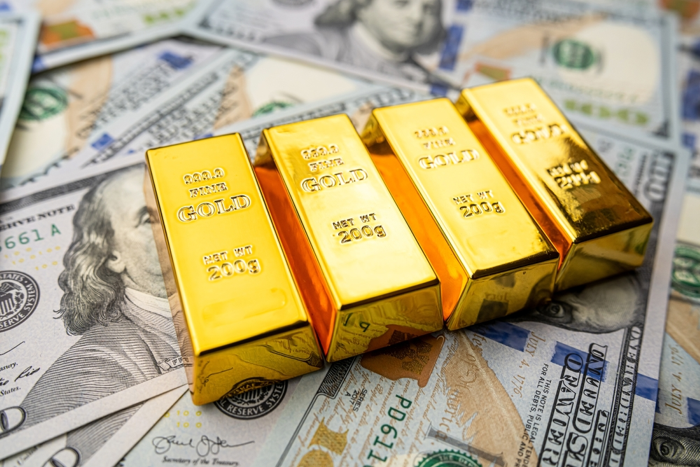
(AIER)—Judy Shelton has spent her career advocating for sound money. Her latest book, “Good as Gold: How to Unleash the Power of Sound Money,” makes an up-to-date case for reinstituting a gold standard. Her intriguing conclusion is that the dollar can be reconnected to gold by simply issuing federal treasury bonds with gold-redeemability clauses. The book also addresses recent events and important current debates about monetary systems like whether central bankers should have wide policy discretion, whether fixed or floating exchange rates are better for economic growth, and what happens when countries manipulate their currency to boost exports.
Dr. Shelton engages these questions in the context of academic debates, but she also uses the lens of rational economic planning to evaluate how the monetary system contributes to or detracts from economic growth. At the end of the day, the case for sound money rests on the claim that it will generate more stable and greater long-run economic prosperity. Dr. Shelton believes sound money will do just that. But what would such a sound money regime look like?
Although Dr. Shelton would prefer a system along the lines of a classical gold standard, she would probably be content with other monetary systems that dramatically reduced the discretion of policymakers. The real problem with our current monetary regime is not primarily technical. It is behavioral. Because public officials have strong incentives to inflate the currency, bail out various corporations, and underwrite extensive government borrowing, they do a poor job conserving the value of fiat currency or providing a predictable stable system of interest rates, credit, liquidity, etc.
In the first couple chapters of “Good as Gold,” Dr. Shelton takes the Federal Reserve to task. The wide discretion Fed officials can exercise makes monetary policy unpredictable. Although Fed officials argue that their decisions are countercyclical, that may not always be the case. As Milton Friedman famously noted, the effects of monetary policy decisions have “long and variable” lags. Despite claims to being “data-driven,” Federal Open Market Committee (FOMC) decisions remain unpredictable. Data can change rapidly and unpredictably, which can make policy change rapid and unpredictable too.
Another problem is that the “data-driven” mantra invokes the assumption that the data always clearly indicate what ought to be done. In fact, this is rarely the case. Not only do a wide variety of inflation measures exist, but there are also a wide range of time intervals over which to compare inflation trends. But that’s not the worst of it!
Employment, unemployment, GDP, and a host of other economic numbers suggest different things are going on in the economy. Retailers expect strong record spending this holiday season while the N.Y. Fed just released a study where the number of people reporting concern about their ability to make debt payments hit its highest level since 2020. How to weigh these various factors is far from clear.
Another problem with Fed policy is the rapid change in its interest rate targets. Three years ago, the short-run interest rate was ~.5 percent. Within two years it was over 5 percent. That rapid change created many issues in the economy, only some of which we have recognized. The rate-hike cycle created significant turmoil in the banking industry with Silicon Valley Bank and Signature Bank failing entirely while many large regional banks shrank or were enfolded into larger national banks.
The commercial real estate market has also been upended. While the owners of office buildings were already facing strong headwinds from the pandemic’s normalization of remote work, the Fed delivered a one-two punch when it raised interest rates. Most large commercial real estate investors use variable rate debt to finance their portfolios—which means the interest rate they pay moves with the market. Adding a couple percentage points to one’s debt rapidly changes the viability of a venture. In addition to higher debt-servicing costs, commercial real estate investors saw the market value of their holdings decline precipitously as buyers disappeared, financing costs rose, and future potential cash flows were more heavily discounted.

The previous rate-hike cycle in 2006 and 2007 preceded a major recession and financial crisis. Even as the Fed creates disruptions in markets, it has also overseen the relentless decline in the value of the dollar—ironically in the name of pursuing their mandate to maintain price stability. A dollar in 2024 is worth what a quarter was in 1980 and what a dime was in 1965. And a 2024 dollar is worth about what a penny was worth in 1900.
This downward march in the value of the dollar creates problems.
It drives up asset prices, favoring those who have investment savvy while eating away at the value of people’s savings and undermining the prosperity of those on fixed incomes. The steady fall of the dollar also distorts price calculations and expectations.
I’ve argued elsewhere that the Fed has been a prime culprit in boosting housing prices and, as a result, creating a “transitional gains trap” where homeowners with significant equity, juiced in large part by easy money, have organized to protect their equity by putting up local legal barriers to building new housing.
But “Good as Gold” includes much more than criticism of the Fed. Dr. Shelton points out that unstable money and exchange rates create costs to doing business. International firms must devote time, energy, and money to protect themselves from erratic fluctuations in currency exchange rates. Creating these “hedges” to protect their profitability from exchange-rate risk necessitates additional classes of assets and asset traders—contributing to greater “financialization” of the economy. While the services being offered create real value for corporations, they come at a price and would not be needed under more stable monetary arrangements.
Besides the frictions and costs that unstable money introduces into day-to-day business operations, it also creates long-term consequences when it comes to investing. If certain exchange rates can move 15 percent, 30 percent, or more in a single year, Dr. Shelton asks, then how can investors rationally allocate capital based on real factors and comparative advantage? The structure and mix of capital investment we currently have across countries and within the same country looks very different than it would in a world of stable money.
Dr. Shelton makes this point indirectly in a fascinating chapter about the monetary debate between Milton Friedman and Robert Mundell. Both were staunch advocates of free markets, but they differed in what monetary regime they thought best. Friedman argued in favor of freely floating exchange rates set by market participants. In this world, governments would feel pressure from markets, in the form of capital outflows, if they engaged in domestic monetary policy shenanigans. Mundell, on the other hand, favored more stability in exchange rates that would require domestic prices to adapt to changes in trade and capital flows. Friedman and Mundell both agreed, however, that government officials and central bankers should have very little discretion in how they managed a country’s monetary system.
In a later chapter, Shelton offers the problem of “currency manipulation” as a reason for implementing a sound money regime. Her argument basically asserts that countries that actively depreciate or weaken their domestic currency experience short-run benefits (in the form of more competitive exports) and long-term costs (in the form of inflation and capital outflows). Other countries, however, feel short-run pain as their exports decline and their factories shut down—even though they also receive cheaper goods and reallocate much of the displaced labor and capital. I find this line of reasoning a bit curious.
Shelton rightly champions free trade and argues that it works best when countries do not artificially manipulate the value of their currencies. No objection here. But I am not convinced that a sound money regime, even a gold standard, would change other countries’ incentives to devalue their currency. Gold convertibility of one currency does not prevent the issuer of a different fiat currency from issuing large amounts of that fiat currency to reduce the relative price of its exports.
I suppose one could argue (and Dr. Shelton does) that currency manipulation becomes easier to discern because currencies will be valued in terms of a fixed standard (gold), rather than in terms of another fluctuating fiat currency. For example, the price of gold in terms of dollars increased by 77 percent from May 2014 to May 2024.
The currencies of the largest trade partners with the United States lost far more value relative to gold in that period: Euros (129 percent), Mexican Peso (131 percent), Canadian dollar (122 percent), Chinese yuan (105 percent), and Japanese yen (165 percent). But that probably matters relatively little to the devaluing regime. Using gold as a benchmark might reveal relative changes in the value of currencies better. It could also defuse the language of “currency manipulation.”
Instead of attributing motives to foreign central bankers, policy makers could set relatively straight-forward criteria for when another country’s currency declines in a distortive way. Shelton suggests that some level of tariffs should be imposed in response to another country’s currency devaluation to offset the monetary distortion to international trade. This idea may not be crazy from a purely technical standpoint, yet I would hesitate to recommend it because of the likely distortions and co-opting of such policies by special interests. I also question whether the costs of not imposing tariffs on depreciating currencies is as high as Dr. Shelton believes.

Sound money advocates like Shelton must explain how we could get to a sound money regime. On the one hand, advocating a gold standard seems archaic and implausible. On the other hand, it would not be technically difficult to implement. And, in fact, given the dominance of the U.S. dollar, if another major currency, such as the Euro, also chose to move back to gold redeemability, it is not hard to imagine other major currencies (Yen, Yuan, Pound, etc.) following suit. The political difficulty, of course, is getting the United States to take the first step and then getting the EU to follow suit.
The odds of successful reform are highest when pursuing the easiest path to transition the current system to a sound monetary regime. Abolishing the Federal Reserve is not on that path. So tying dollars back to gold using the Fed makes more sense than moving back to a pre-Fed world. Similarly, constraining the FOMC seems far more plausible than abolishing it.
It may be worth raising a few other important secondary questions. At what price will the currency be convertible into gold? Dr. Shelton has suggested that incorporating a gold clause in Treasury bonds could be a good method for discovering the right price of convertibility. In fact, putting gold convertibility into government bond contracts may be sufficient, in and of itself, to tie dollars back to gold.
Afterall, depreciation of dollars would create consequences for the federal government and the Federal Reserve, the very institutions primarily responsible for managing the dollar and maintaining the monetary system. Shelton also makes the important point that currency should be seen as being like a weight or measure—something standardized for the public to use. It should not be viewed as a policy instrument or lever for managing the economy. This simple point rarely arises in modern commentary on the Fed and on monetary policy—yet it has deep legal and historical roots in the American founding and beyond.
Another benefit of moving to gold redeemability for U.S. bonds is that it utilizes U.S. gold reserves more effectively. Currently, the United States is the largest holder of gold in the world. But ironically, that gold is severely undervalued on the government’s ledger. Its book value is less than two percent of its market value (i.e., on the ledger the gold is valued at less than $50/oz when its market value is over $2700/oz). Offering gold redeemability might also open up the option for extremely long-dated debt (50 years or more) and lower interest rates because the most significant risk to lending to the federal government, the devaluation of future dollars, has been taken off the table.
The likely benefits of such bonds are so significant that it may seem surprising that they have not been implemented. The problem, of course, is that this form of bond would reveal the man behind the curtain. It would show that government officials can and do play fast and loose with the dollar and with the U.S. financial system to enable themselves and their friends a free hand to borrow and spend, and to actively “manage” the economy.

Dr. Shelton’s proposed changes will be vigorously resisted by those who benefit from the existing status quo—large commercial banks and financial institutions, Federal Reserve officials and bureaucrats, politicians and regulators—everyone who benefits from the Fed’s tendency to loose monetary policy. Still advocates of freedom and prosperity should continue to make the arguments and offer proposals for moving to a sound monetary regime.
And that is exactly what Dr. Shelton does in “Good as Gold.”
Bypass Big Tech Censors
Two Storms, One Harvest

Every food crisis in living memory has been a one-shock event. The 2008 price spike was a commodity bubble. The 2020 shortages were a logistics failure. The 2022 grain scare was a war on one exporter’s ports. Each time, the system bent, adjusted, and recovered, and each time the experts assured us afterward that global markets are simply too big and too diversified to fail.
What nobody in Washington seems eager to discuss is that 2026 is shaping up to be something the modern food system has never actually faced. Two independent shocks, one climatic and one geopolitical, are converging on the same harvest cycle at the same time. Not sequentially. Simultaneously.
Start with the weather. The Pacific Ocean is currently building toward what forecasters now openly call a record event. NOAA’s Climate Prediction Center puts the odds of at least a strong El Niño near 88 percent, with roughly two in three odds it reaches “very strong” status, the tier reserved for perhaps three or four events in the entire satellite era. Every major global model now projects a median peak in Super El Niño territory, and most of them project it exceeding the 2015-16 event, which until now held the modern record. Sea surface anomalies were already brushing the super threshold in mid-July, months before these events normally peak. The atmosphere has already shifted into El Niño mode, and the event is forecast to crest in late fall and early winter.
This is not about “climate change.” It’s about the standard cycles of weather, and the cycle we’re currently in is one that has likely devastated societies in the past. We’re better prepared as a society today, but not all Americans are equally prepared.
Serious households have started doing the quiet math on their own. Grocery bills tell part of the story, and the forecast maps tell the rest, which is why long-term food storage has moved from fringe hobby to mainstream line item in the family budget, with established suppliers like Heaven’s Harvest seeing demand from people who five years ago would have rolled their eyes at the idea. That instinct is not paranoia. It is pattern recognition, and the pattern is worth walking through carefully.
Editor’s Note: Heaven’s Harvest IS a sponsor, but the warnings of this article are real and would be written even if we didn’t have a survival food sponsor. With that said, those who take advantage of what they offer can use promo code “Patriot” for 15% off.
The Fertilizer Clock Is Already Running
While the Pacific warms, the second shock has been unfolding in the Strait of Hormuz. The conflict with Iran turned the world’s most important energy chokepoint into a contested waterway, and the consequences reach far beyond the gas pump. Roughly a third of global fertilizer trade moves through Hormuz, and the disruption sent urea prices up 86 percent year over year by March, with a 53 percent jump in a single month.
The World Bank projects energy prices rising about 24 percent in 2026 and fertilizer about 31 percent. By its own accounting, fertilizer prices ran 35 percent higher in the first five months of this year than the same period last year.
Here is the mechanism the nightly news will not explain. Fertilizer is not a grocery item. It is a time-delayed input. The nitrogen a farmer in Iowa or Punjab could not afford to apply this spring does not show up as a problem this spring. It shows up as a thinner harvest six to twelve months later.
The World Bank’s own food security brief concedes that the effects of reduced applications earlier this season “are likely to become visible only later in harvest outcomes.” Translate that from institutional language into plain English and it means this. The damage is already done, it is already in the ground, and we are simply waiting for it to arrive on the shelf.
Now check the calendar. Six to twelve months from the spring planting season lands us squarely in late 2026 and early 2027. Which is precisely when the strongest El Niño in the instrumental record is forecast to peak, bringing its signature droughts to Southeast Asia, Australia, southern Africa, northern Brazil, and South Asia, the very regions that grow the world’s rice, sugar, and oilseeds.
The World Bank warns openly that a strong El Niño “could disrupt multiple crop belts simultaneously” on top of the conflict-driven input costs. Their baseline projection assumes the Middle East disruptions ease by autumn. What in the last two years of Middle East history suggests that assumption is safe?
The System Has No Slack Left
The comfortable answer is that global markets always adjust. But adjustment requires slack, and the slack is gone. Global cereal production is expected to decline from last year’s records even before El Niño does its work. The UN World Food Programme, hardly a den of right-wing preppers, is calling this the most significant disruption to its supply chains since Covid and the invasion of Ukraine, and its supply chain director put the stakes bluntly.
Today’s supply chain challenges are tomorrow’s hunger crisis.
There is also a political dimension that markets cannot price. When food gets scarce, governments do not behave like economists. They behave like politicians. Export bans, hoarding mandates, and panic buying at the national level turned the modest rice shortfall of 2008 into a global crisis, and analysts are already warning that import-dependent nations are the first dominoes.
The 2015-16 Super El Niño, a far weaker event than what is now forecast, threw tens of millions into food stress across Africa and Asia. This one is projected to be stronger, and it arrives with fertilizer already rationed by price and shipping lanes already contested by missiles.
What Joseph Knew
Scripture does not treat preparation for lean years as faithlessness. It treats it as wisdom delivered in advance to those willing to act on it.
Behold, there come seven years of great plenty throughout all the land of Egypt: And there shall arise after them seven years of famine; and all the plenty shall be forgotten in the land of Egypt.
Joseph did not respond to that warning with a hashtag or a committee. He stored grain during the years of abundance, and when the famine came, Egypt stood while its neighbors begged. The lesson is not that famine is certain. It is that the time to prepare is precisely when preparation still looks optional.
Nobody who filled a pantry in a year of plenty has ever regretted it, and nobody standing in an empty aisle has ever been glad he waited for certainty.
None of this calls for panic, and panic is the enemy of sound judgment anyway. It calls for the same unglamorous prudence our grandparents considered ordinary. Keep some cash margin, know your local growers, and put real food in deep storage while it is cheap and available, because the entire arc of this story is that cheap and available is a closing window.
Families looking for a straightforward place to start can visit Heaven’s Harvest and use promo code Patriot for 15 percent off long-term storable food. The forecasts may yet soften, the strait may yet reopen, and we should pray they do. But hope is a fine thing to hold and a foolish thing to eat.