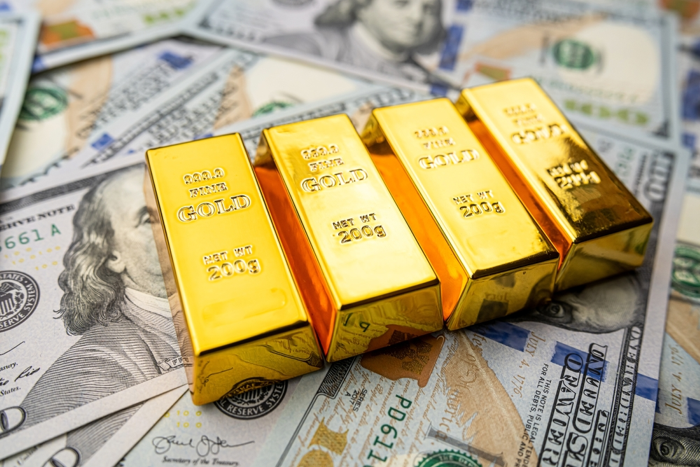
(AIER)—Judy Shelton has spent her career advocating for sound money. Her latest book, “Good as Gold: How to Unleash the Power of Sound Money,” makes an up-to-date case for reinstituting a gold standard. Her intriguing conclusion is that the dollar can be reconnected to gold by simply issuing federal treasury bonds with gold-redeemability clauses. The book also addresses recent events and important current debates about monetary systems like whether central bankers should have wide policy discretion, whether fixed or floating exchange rates are better for economic growth, and what happens when countries manipulate their currency to boost exports.
Dr. Shelton engages these questions in the context of academic debates, but she also uses the lens of rational economic planning to evaluate how the monetary system contributes to or detracts from economic growth. At the end of the day, the case for sound money rests on the claim that it will generate more stable and greater long-run economic prosperity. Dr. Shelton believes sound money will do just that. But what would such a sound money regime look like?
Although Dr. Shelton would prefer a system along the lines of a classical gold standard, she would probably be content with other monetary systems that dramatically reduced the discretion of policymakers. The real problem with our current monetary regime is not primarily technical. It is behavioral. Because public officials have strong incentives to inflate the currency, bail out various corporations, and underwrite extensive government borrowing, they do a poor job conserving the value of fiat currency or providing a predictable stable system of interest rates, credit, liquidity, etc.
In the first couple chapters of “Good as Gold,” Dr. Shelton takes the Federal Reserve to task. The wide discretion Fed officials can exercise makes monetary policy unpredictable. Although Fed officials argue that their decisions are countercyclical, that may not always be the case. As Milton Friedman famously noted, the effects of monetary policy decisions have “long and variable” lags. Despite claims to being “data-driven,” Federal Open Market Committee (FOMC) decisions remain unpredictable. Data can change rapidly and unpredictably, which can make policy change rapid and unpredictable too.
Another problem is that the “data-driven” mantra invokes the assumption that the data always clearly indicate what ought to be done. In fact, this is rarely the case. Not only do a wide variety of inflation measures exist, but there are also a wide range of time intervals over which to compare inflation trends. But that’s not the worst of it!
Employment, unemployment, GDP, and a host of other economic numbers suggest different things are going on in the economy. Retailers expect strong record spending this holiday season while the N.Y. Fed just released a study where the number of people reporting concern about their ability to make debt payments hit its highest level since 2020. How to weigh these various factors is far from clear.
Another problem with Fed policy is the rapid change in its interest rate targets. Three years ago, the short-run interest rate was ~.5 percent. Within two years it was over 5 percent. That rapid change created many issues in the economy, only some of which we have recognized. The rate-hike cycle created significant turmoil in the banking industry with Silicon Valley Bank and Signature Bank failing entirely while many large regional banks shrank or were enfolded into larger national banks.
The commercial real estate market has also been upended. While the owners of office buildings were already facing strong headwinds from the pandemic’s normalization of remote work, the Fed delivered a one-two punch when it raised interest rates. Most large commercial real estate investors use variable rate debt to finance their portfolios—which means the interest rate they pay moves with the market. Adding a couple percentage points to one’s debt rapidly changes the viability of a venture. In addition to higher debt-servicing costs, commercial real estate investors saw the market value of their holdings decline precipitously as buyers disappeared, financing costs rose, and future potential cash flows were more heavily discounted.

The previous rate-hike cycle in 2006 and 2007 preceded a major recession and financial crisis. Even as the Fed creates disruptions in markets, it has also overseen the relentless decline in the value of the dollar—ironically in the name of pursuing their mandate to maintain price stability. A dollar in 2024 is worth what a quarter was in 1980 and what a dime was in 1965. And a 2024 dollar is worth about what a penny was worth in 1900.
This downward march in the value of the dollar creates problems.
It drives up asset prices, favoring those who have investment savvy while eating away at the value of people’s savings and undermining the prosperity of those on fixed incomes. The steady fall of the dollar also distorts price calculations and expectations.
I’ve argued elsewhere that the Fed has been a prime culprit in boosting housing prices and, as a result, creating a “transitional gains trap” where homeowners with significant equity, juiced in large part by easy money, have organized to protect their equity by putting up local legal barriers to building new housing.
But “Good as Gold” includes much more than criticism of the Fed. Dr. Shelton points out that unstable money and exchange rates create costs to doing business. International firms must devote time, energy, and money to protect themselves from erratic fluctuations in currency exchange rates. Creating these “hedges” to protect their profitability from exchange-rate risk necessitates additional classes of assets and asset traders—contributing to greater “financialization” of the economy. While the services being offered create real value for corporations, they come at a price and would not be needed under more stable monetary arrangements.
Besides the frictions and costs that unstable money introduces into day-to-day business operations, it also creates long-term consequences when it comes to investing. If certain exchange rates can move 15 percent, 30 percent, or more in a single year, Dr. Shelton asks, then how can investors rationally allocate capital based on real factors and comparative advantage? The structure and mix of capital investment we currently have across countries and within the same country looks very different than it would in a world of stable money.
Dr. Shelton makes this point indirectly in a fascinating chapter about the monetary debate between Milton Friedman and Robert Mundell. Both were staunch advocates of free markets, but they differed in what monetary regime they thought best. Friedman argued in favor of freely floating exchange rates set by market participants. In this world, governments would feel pressure from markets, in the form of capital outflows, if they engaged in domestic monetary policy shenanigans. Mundell, on the other hand, favored more stability in exchange rates that would require domestic prices to adapt to changes in trade and capital flows. Friedman and Mundell both agreed, however, that government officials and central bankers should have very little discretion in how they managed a country’s monetary system.
In a later chapter, Shelton offers the problem of “currency manipulation” as a reason for implementing a sound money regime. Her argument basically asserts that countries that actively depreciate or weaken their domestic currency experience short-run benefits (in the form of more competitive exports) and long-term costs (in the form of inflation and capital outflows). Other countries, however, feel short-run pain as their exports decline and their factories shut down—even though they also receive cheaper goods and reallocate much of the displaced labor and capital. I find this line of reasoning a bit curious.
Shelton rightly champions free trade and argues that it works best when countries do not artificially manipulate the value of their currencies. No objection here. But I am not convinced that a sound money regime, even a gold standard, would change other countries’ incentives to devalue their currency. Gold convertibility of one currency does not prevent the issuer of a different fiat currency from issuing large amounts of that fiat currency to reduce the relative price of its exports.
I suppose one could argue (and Dr. Shelton does) that currency manipulation becomes easier to discern because currencies will be valued in terms of a fixed standard (gold), rather than in terms of another fluctuating fiat currency. For example, the price of gold in terms of dollars increased by 77 percent from May 2014 to May 2024.
The currencies of the largest trade partners with the United States lost far more value relative to gold in that period: Euros (129 percent), Mexican Peso (131 percent), Canadian dollar (122 percent), Chinese yuan (105 percent), and Japanese yen (165 percent). But that probably matters relatively little to the devaluing regime. Using gold as a benchmark might reveal relative changes in the value of currencies better. It could also defuse the language of “currency manipulation.”
Instead of attributing motives to foreign central bankers, policy makers could set relatively straight-forward criteria for when another country’s currency declines in a distortive way. Shelton suggests that some level of tariffs should be imposed in response to another country’s currency devaluation to offset the monetary distortion to international trade. This idea may not be crazy from a purely technical standpoint, yet I would hesitate to recommend it because of the likely distortions and co-opting of such policies by special interests. I also question whether the costs of not imposing tariffs on depreciating currencies is as high as Dr. Shelton believes.

Sound money advocates like Shelton must explain how we could get to a sound money regime. On the one hand, advocating a gold standard seems archaic and implausible. On the other hand, it would not be technically difficult to implement. And, in fact, given the dominance of the U.S. dollar, if another major currency, such as the Euro, also chose to move back to gold redeemability, it is not hard to imagine other major currencies (Yen, Yuan, Pound, etc.) following suit. The political difficulty, of course, is getting the United States to take the first step and then getting the EU to follow suit.
The odds of successful reform are highest when pursuing the easiest path to transition the current system to a sound monetary regime. Abolishing the Federal Reserve is not on that path. So tying dollars back to gold using the Fed makes more sense than moving back to a pre-Fed world. Similarly, constraining the FOMC seems far more plausible than abolishing it.
It may be worth raising a few other important secondary questions. At what price will the currency be convertible into gold? Dr. Shelton has suggested that incorporating a gold clause in Treasury bonds could be a good method for discovering the right price of convertibility. In fact, putting gold convertibility into government bond contracts may be sufficient, in and of itself, to tie dollars back to gold.
Afterall, depreciation of dollars would create consequences for the federal government and the Federal Reserve, the very institutions primarily responsible for managing the dollar and maintaining the monetary system. Shelton also makes the important point that currency should be seen as being like a weight or measure—something standardized for the public to use. It should not be viewed as a policy instrument or lever for managing the economy. This simple point rarely arises in modern commentary on the Fed and on monetary policy—yet it has deep legal and historical roots in the American founding and beyond.
Another benefit of moving to gold redeemability for U.S. bonds is that it utilizes U.S. gold reserves more effectively. Currently, the United States is the largest holder of gold in the world. But ironically, that gold is severely undervalued on the government’s ledger. Its book value is less than two percent of its market value (i.e., on the ledger the gold is valued at less than $50/oz when its market value is over $2700/oz). Offering gold redeemability might also open up the option for extremely long-dated debt (50 years or more) and lower interest rates because the most significant risk to lending to the federal government, the devaluation of future dollars, has been taken off the table.
The likely benefits of such bonds are so significant that it may seem surprising that they have not been implemented. The problem, of course, is that this form of bond would reveal the man behind the curtain. It would show that government officials can and do play fast and loose with the dollar and with the U.S. financial system to enable themselves and their friends a free hand to borrow and spend, and to actively “manage” the economy.

Dr. Shelton’s proposed changes will be vigorously resisted by those who benefit from the existing status quo—large commercial banks and financial institutions, Federal Reserve officials and bureaucrats, politicians and regulators—everyone who benefits from the Fed’s tendency to loose monetary policy. Still advocates of freedom and prosperity should continue to make the arguments and offer proposals for moving to a sound monetary regime.
And that is exactly what Dr. Shelton does in “Good as Gold.”
Bypass Big Tech Censors

Starting the Day With a Scripture-Inspired Roast Helps Center Your Thoughts on Eternal Truths Amid Temporal Pressures
The world can seem chaotic, especially right after we wake up. Many believers start their mornings reaching for something familiar — a hot cup of coffee — yet end up settling for mediocre brews that do little more than deliver a caffeine jolt. The daily grind of life, with its endless distractions, news cycles, and responsibilities, can leave even the most faithful feeling spiritually parched alongside their physical fatigue. What if your morning ritual could do more than wake you up? What if it could ground you in truth, nourish your body with exceptional quality, and quietly advance a kingdom purpose at the same time?
That’s the promise — and the reality — behind Promised Grounds Coffee. This Christian-founded company doesn’t just roast beans; it approaches every step as an act of worship and discipleship. By selecting only the top 10% of specialty-grade beans, ethically sourced from dedicated farmers in Central and South America, and small-batch roasting them with reverence in Austin, Texas, Promised Grounds delivers what many describe as the best coffee available — never burnt, never bland, but rich with origin stories and layered flavors that honor God’s creation.
From the vibrant Psalm 27 Roast (a light, bright medium option) to the bold yet peaceful 2 Timothy 1:7 Decaf, each bag carries a Scripture verse that turns your daily pour into a gentle reminder of faith. And through their Ounce Per Ounce Promise, every ounce of coffee you enjoy provides an equal ounce of clean water to families in need via partnership with Filter of Hope — literally brewing hope for body and soul, one cup at a time.
The challenge for today’s Christians runs deeper than finding a decent cup. In an age of convenience-driven consumerism, it’s easy to support companies that dilute values or remain silent on matters of faith. Many believers want their everyday choices — from what they drink to how they spend — to reflect discipleship rather than just convenience. Promised Grounds solves this by weaving Christian excellence into the entire process: beans nurtured with prayerful stewardship by farming families, roasted as an offering rather than a commodity, and packaged with Bible verses to encourage a mindset of gratitude and purpose from the first sip. Reviewers consistently praise the smooth, rich profiles — whether enjoyed black in a drip maker, iced on a warm day, or shared in fellowship — noting how the quality stands toe-to-toe with premium secular brands while delivering something far more meaningful.
This integration of faith and flavor addresses a real need in Christian households and ministries. Busy parents, church leaders, and remote workers alike report that starting the day with a Scripture-inspired roast helps center their thoughts on eternal truths amid temporal pressures. The coffee’s exceptional character — bright citrus notes in lighter roasts or deep chocolate undertones in bolder ones — comes from meticulous selection and careful roasting that respects the bean’s natural gifts rather than masking them. It’s the kind of coffee that elevates a simple quiet time, fuels productive workdays, or sparks meaningful conversations when shared at Bible studies or outreach events. And because it’s ethically sourced with integrity, every purchase supports sustainable livelihoods for farmers who treat their crops like family harvests.
For those leading churches or small groups, the impact multiplies. Promised Grounds offers bundles and options perfect for hospitality ministries, turning ordinary coffee service into an opportunity to point people toward the living water of Christ. Imagine greeting visitors with a warm cup whose very bag carries God’s Word — a subtle yet powerful witness that aligns with the Great Commission. The company’s Texas roots and commitment to “brewing hope” resonate especially with believers who value American enterprise paired with global compassion.
Of course, quality alone isn’t enough if the experience feels out of reach. Promised Grounds keeps it accessible with practical perks like free shipping on orders over $40, sample sets for discovering favorites, and thoughtful add-ons such as faith-themed mugs. Whether you prefer whole beans for fresh grinding, grounds for convenience, or even bulk options for larger households and ministries, the result is consistently superior coffee that makes discipleship feel integrated rather than added on.
As you consider how to align even the smallest habits with your walk with God, Promised Grounds Coffee stands out as a refreshing solution. It tackles the dual problems of subpar daily sustenance and disconnected consumption by offering a product that genuinely excels in taste while advancing a mission of clean water, farmer dignity, and scriptural encouragement. Believers who make the switch often describe it as more than a beverage upgrade — it becomes part of their rhythm of gratitude, a daily invitation to remember that every good gift comes from above.
If you’re ready to transform your mornings (and perhaps your church gatherings) with coffee that honors both exceptional craftsmanship and Christian values, I encourage you to explore what Promised Grounds has to offer. One sip at a time, you’ll be nourishing your body, refreshing your spirit, and participating in something far greater — all while enjoying what truly is among the best coffee available.