
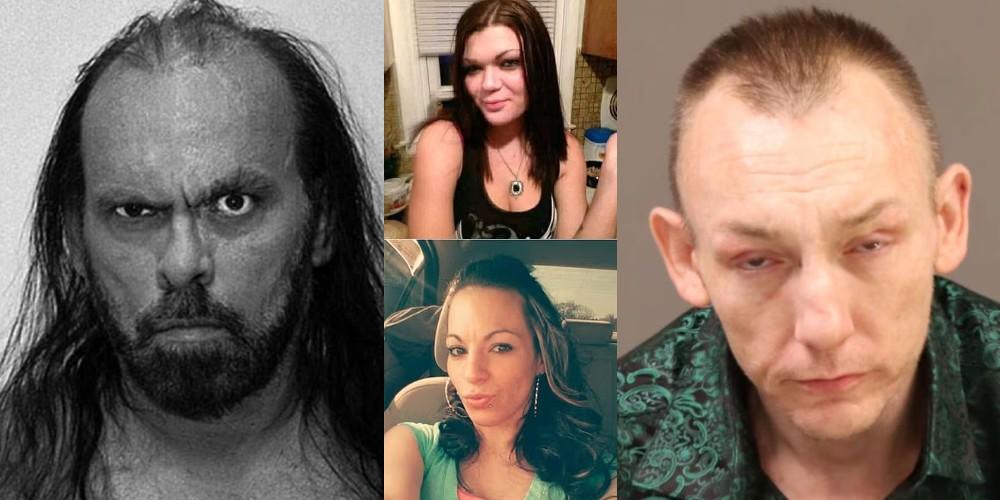
Five women appear lifeless in the pictures. Two more are still missing. Investigators have already counted 58 alleged victims in the digital wreckage pulled from a rotting twin house on Chew Avenue in Olney. And the man who built that house of horrors died in his bed last year at 82, never answering for any of it.
Raymond “R.C.” Horsch was a pornographer who wrote books about serial killers preying on women, filmed sadomasochistic filth, and spent decades fishing vulnerable addicts out of Kensington with cash and narcotics. His son Eugene, 44, is the one sitting in federal custody. The women are the ones who never came home.
This is not only a monster story. It is a Philadelphia story. And Philadelphia has spent eight years under Soros-funded District Attorney Larry Krasner, a man who treats prosecution like a moral embarrassment and predators like policy experiments.
What Police Say They Found

The case broke open June 19, when a U.S. park ranger noticed a black BMW parked where it should not have been near Independence Mall. Inside were Eugene Horsch, a woman, two handguns with obliterated serial numbers, drugs, a fake DEA badge, and a fake FBI credential. The woman was carrying identification in the name of Blair Tonzelli, missing since 2023.
That stop sent police and the FBI into 417 West Chew Avenue. What they found, as the Daily Mail and the New York Post have laid out, is the kind of inventory you expect from a nightmare and not a residential block in North Philadelphia.
- More than 50 hard drives holding over 600,000 images, 70,000 videos, and 10,000 writings and drawings
- More than a million digital files still being cataloged, with only about 30 percent reviewed
- A 55-gallon drum tied to water lines, vats of chemicals, and notes referencing Ted Bundy, zip ties, and “trash that needs to go”
- Illegal guns, a marijuana grow, another fake federal badge, and urns containing cremated remains

Deputy Police Commissioner Frank Vanore said officers have identified 58 different alleged victims in the material so far. Five women in the videos and photographs appear lifeless or unconscious. Ten others later overdosed across the city. Sixteen were found alive and wanted nothing to do with investigators. Three refused to speak. Twenty-five more still have to be contacted.
No bodies have been recovered. That is the cruelest detail. Families are being told their daughters and sisters are believed dead because a hard drive says so.
The Women

Gabrielle Amarando vanished in 2012 at 22. Maribel Fresses disappeared in 2018 at 27. Police say 2017 metadata on images from the house shows both women unconscious, with injuries. Neither body has been found. No DNA traces either.

Nicole Fusaro, also 27, disappeared from Kensington in 2018. Relatives and law-enforcement sources say police believe they have video of Horsch strangling her. Another 2017 clip, described by Vanore, shows Horsch nude with a woman, handing her money, using narcotics, cuffing her to a bed, looping a zip tie around her neck, and watching her go limp.
Amy McHale, Horsch’s much younger ex-wife, was last heard from in June 2016 in a voicemail telling her mother she was safe at the Olney house. She was 44. She never came out. Blair Tonzelli, 35, vanished in 2023. A friend later told reporters Tonzelli called Eugene a sociopath who talked about melting a body small enough to flush.
That is the hunting pattern. Kensington supplies the wounded. The house supplies the camera. The city supplies the indifference.
The Son Who Kept Walking

Raymond Horsch died in May 2025 of lung disease. He never faced a murder charge. He had been a counterfeiter, a meth cook, a fugitive who stole a chemist’s identity and hid in New Zealand, a cannabis grower busted with 455 plants and two shotguns in 2009.
A former New Britain Township police chief who arrested him that year said the man “always got light sentences for some reason.” A 1985 psychological exam, later obtained by the Inquirer, called him grandiose, consumed by anger, and excessively controlling. Then Philadelphia let him age in place with a studio full of addicted women.
Eugene is the unfinished half of the same story. Court records show at least ten prior arrests for drugs, dealing, assault, and drunken driving. In 2013 police found $1.9 million worth of cannabis in the Chew Avenue house and he drew four to eight years. In May 2025 he caught three years’ probation on another drug case. In March 2026 he was charged with aggravated assault after police said he stabbed a man in the stomach at Eighth and Market.
Philadelphia prosecutors withdrew that stabbing case on May 5, 2026, after a witness failed to appear. Six weeks later federal rangers found him armed, badged, and sitting next to a missing woman’s identification. In August, Krasner’s office withdrew the remaining state charges so federal prosecutors could take the gun and fake-credential case. Eugene still has not been charged in connection with any of the dead or missing women.
A witness no-show is not a conspiracy theory. It is what happens in a city where victims stop believing the courthouse will protect them and defendants learn that cases evaporate.
Krasner’s Philadelphia
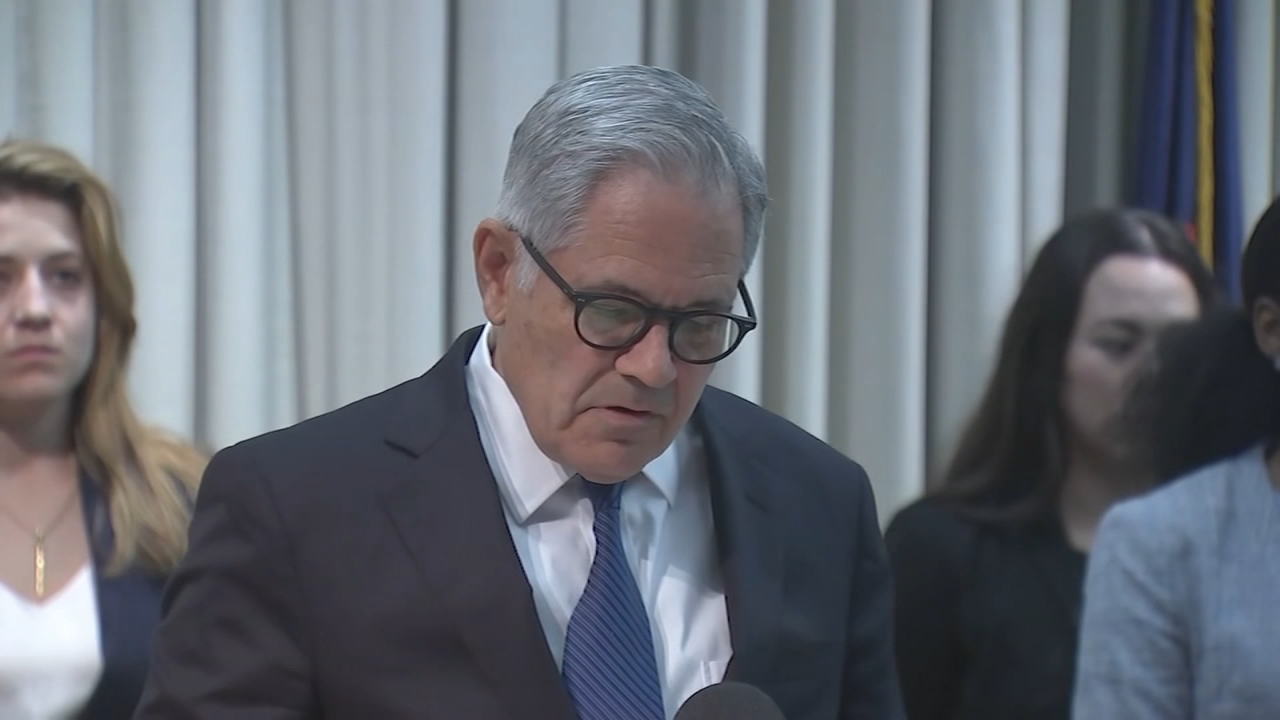
Larry Krasner did not load the cameras. He did not loop the zip tie. Blaming him for every frame on those hard drives would be cheap. Pretending his office is irrelevant would be cheaper.
George Soros poured nearly $1.7 million into putting Krasner in the DA’s chair in 2017. Krasner had spent his career suing police. He won. Then he governed like a defense attorney with a taxpayer badge. Cashless bail for whole categories of crime. Marijuana non-prosecution by fiat. Soft charging. A Conviction Integrity Unit so aggressive a federal judge this week referred Krasner himself to the Justice Department for possible perjury, false statements, obstruction, and conspiracy while trying to unwind a 2009 murder conviction.
Homicides in Philadelphia exploded after he took office, peaking above 500. Kensington became a national exhibit of open-air despair. Women with addiction and no one watching them became inventory. That is the ecosystem in which a self-described sociopath pornographer can film unconscious women for years, bury the files in a stack of hard drives, and die of old age.
The disappearances stretch from 2012 through 2023. Amy McHale vanished two years into Krasner’s first term. Fresses and Fusaro vanished the same year. Tonzelli vanished in 2023. Eugene’s stabbing case vanished in May 2026. The house did not become a crime scene because Philadelphia’s top prosecutor went looking. It became a crime scene because a park ranger heard a woman in a parked car say she was going to get hurt.

Police Commissioner Kevin Bethel said the department has a duty to families who need to know whether their loved ones died in that house or somewhere else. He is right. A district attorney has a duty too. It is not to refine the theory of decarceration while women are handcuffed to a bed on camera.
The stone is crying out of the wall on Chew Avenue. The files are still only 30 percent reviewed. More names are coming. The question is not whether Philadelphia will be shocked. The question is whether a city that elected Larry Krasner three times still remembers that the magistrate is supposed to bear the sword.
Bypass Big Tech Censors
Starting the Day With a Scripture-Inspired Roast Helps Center Your Thoughts on Eternal Truths Amid Temporal Pressures
The world can seem chaotic, especially right after we wake up. Many believers start their mornings reaching for something familiar — a hot cup of coffee — yet end up settling for mediocre brews that do little more than deliver a caffeine jolt. The daily grind of life, with its endless distractions, news cycles, and responsibilities, can leave even the most faithful feeling spiritually parched alongside their physical fatigue. What if your morning ritual could do more than wake you up? What if it could ground you in truth, nourish your body with exceptional quality, and quietly advance a kingdom purpose at the same time?
That’s the promise — and the reality — behind Promised Grounds Coffee. This Christian-founded company doesn’t just roast beans; it approaches every step as an act of worship and discipleship. By selecting only the top 10% of specialty-grade beans, ethically sourced from dedicated farmers in Central and South America, and small-batch roasting them with reverence in Austin, Texas, Promised Grounds delivers what many describe as the best coffee available — never burnt, never bland, but rich with origin stories and layered flavors that honor God’s creation.
From the vibrant Psalm 27 Roast (a light, bright medium option) to the bold yet peaceful 2 Timothy 1:7 Decaf, each bag carries a Scripture verse that turns your daily pour into a gentle reminder of faith. And through their Ounce Per Ounce Promise, every ounce of coffee you enjoy provides an equal ounce of clean water to families in need via partnership with Filter of Hope — literally brewing hope for body and soul, one cup at a time.
The challenge for today’s Christians runs deeper than finding a decent cup. In an age of convenience-driven consumerism, it’s easy to support companies that dilute values or remain silent on matters of faith. Many believers want their everyday choices — from what they drink to how they spend — to reflect discipleship rather than just convenience. Promised Grounds solves this by weaving Christian excellence into the entire process: beans nurtured with prayerful stewardship by farming families, roasted as an offering rather than a commodity, and packaged with Bible verses to encourage a mindset of gratitude and purpose from the first sip. Reviewers consistently praise the smooth, rich profiles — whether enjoyed black in a drip maker, iced on a warm day, or shared in fellowship — noting how the quality stands toe-to-toe with premium secular brands while delivering something far more meaningful.
This integration of faith and flavor addresses a real need in Christian households and ministries. Busy parents, church leaders, and remote workers alike report that starting the day with a Scripture-inspired roast helps center their thoughts on eternal truths amid temporal pressures. The coffee’s exceptional character — bright citrus notes in lighter roasts or deep chocolate undertones in bolder ones — comes from meticulous selection and careful roasting that respects the bean’s natural gifts rather than masking them. It’s the kind of coffee that elevates a simple quiet time, fuels productive workdays, or sparks meaningful conversations when shared at Bible studies or outreach events. And because it’s ethically sourced with integrity, every purchase supports sustainable livelihoods for farmers who treat their crops like family harvests.
For those leading churches or small groups, the impact multiplies. Promised Grounds offers bundles and options perfect for hospitality ministries, turning ordinary coffee service into an opportunity to point people toward the living water of Christ. Imagine greeting visitors with a warm cup whose very bag carries God’s Word — a subtle yet powerful witness that aligns with the Great Commission. The company’s Texas roots and commitment to “brewing hope” resonate especially with believers who value American enterprise paired with global compassion.
Of course, quality alone isn’t enough if the experience feels out of reach. Promised Grounds keeps it accessible with practical perks like free shipping on orders over $40, sample sets for discovering favorites, and thoughtful add-ons such as faith-themed mugs. Whether you prefer whole beans for fresh grinding, grounds for convenience, or even bulk options for larger households and ministries, the result is consistently superior coffee that makes discipleship feel integrated rather than added on.
As you consider how to align even the smallest habits with your walk with God, Promised Grounds Coffee stands out as a refreshing solution. It tackles the dual problems of subpar daily sustenance and disconnected consumption by offering a product that genuinely excels in taste while advancing a mission of clean water, farmer dignity, and scriptural encouragement. Believers who make the switch often describe it as more than a beverage upgrade — it becomes part of their rhythm of gratitude, a daily invitation to remember that every good gift comes from above.
If you’re ready to transform your mornings (and perhaps your church gatherings) with coffee that honors both exceptional craftsmanship and Christian values, I encourage you to explore what Promised Grounds has to offer. One sip at a time, you’ll be nourishing your body, refreshing your spirit, and participating in something far greater — all while enjoying what truly is among the best coffee available.