

Five women appear lifeless in the pictures. Two more are still missing. Investigators have already counted 58 alleged victims in the digital wreckage pulled from a rotting twin house on Chew Avenue in Olney. And the man who built that house of horrors died in his bed last year at 82, never answering for any of it.
Raymond “R.C.” Horsch was a pornographer who wrote books about serial killers preying on women, filmed sadomasochistic filth, and spent decades fishing vulnerable addicts out of Kensington with cash and narcotics. His son Eugene, 44, is the one sitting in federal custody. The women are the ones who never came home.
This is not only a monster story. It is a Philadelphia story. And Philadelphia has spent eight years under Soros-funded District Attorney Larry Krasner, a man who treats prosecution like a moral embarrassment and predators like policy experiments.
What Police Say They Found

The case broke open June 19, when a U.S. park ranger noticed a black BMW parked where it should not have been near Independence Mall. Inside were Eugene Horsch, a woman, two handguns with obliterated serial numbers, drugs, a fake DEA badge, and a fake FBI credential. The woman was carrying identification in the name of Blair Tonzelli, missing since 2023.
That stop sent police and the FBI into 417 West Chew Avenue. What they found, as the Daily Mail and the New York Post have laid out, is the kind of inventory you expect from a nightmare and not a residential block in North Philadelphia.
- More than 50 hard drives holding over 600,000 images, 70,000 videos, and 10,000 writings and drawings
- More than a million digital files still being cataloged, with only about 30 percent reviewed
- A 55-gallon drum tied to water lines, vats of chemicals, and notes referencing Ted Bundy, zip ties, and “trash that needs to go”
- Illegal guns, a marijuana grow, another fake federal badge, and urns containing cremated remains

Deputy Police Commissioner Frank Vanore said officers have identified 58 different alleged victims in the material so far. Five women in the videos and photographs appear lifeless or unconscious. Ten others later overdosed across the city. Sixteen were found alive and wanted nothing to do with investigators. Three refused to speak. Twenty-five more still have to be contacted.
No bodies have been recovered. That is the cruelest detail. Families are being told their daughters and sisters are believed dead because a hard drive says so.
The Women

Gabrielle Amarando vanished in 2012 at 22. Maribel Fresses disappeared in 2018 at 27. Police say 2017 metadata on images from the house shows both women unconscious, with injuries. Neither body has been found. No DNA traces either.

Nicole Fusaro, also 27, disappeared from Kensington in 2018. Relatives and law-enforcement sources say police believe they have video of Horsch strangling her. Another 2017 clip, described by Vanore, shows Horsch nude with a woman, handing her money, using narcotics, cuffing her to a bed, looping a zip tie around her neck, and watching her go limp.
Amy McHale, Horsch’s much younger ex-wife, was last heard from in June 2016 in a voicemail telling her mother she was safe at the Olney house. She was 44. She never came out. Blair Tonzelli, 35, vanished in 2023. A friend later told reporters Tonzelli called Eugene a sociopath who talked about melting a body small enough to flush.
That is the hunting pattern. Kensington supplies the wounded. The house supplies the camera. The city supplies the indifference.
The Son Who Kept Walking

Raymond Horsch died in May 2025 of lung disease. He never faced a murder charge. He had been a counterfeiter, a meth cook, a fugitive who stole a chemist’s identity and hid in New Zealand, a cannabis grower busted with 455 plants and two shotguns in 2009.
A former New Britain Township police chief who arrested him that year said the man “always got light sentences for some reason.” A 1985 psychological exam, later obtained by the Inquirer, called him grandiose, consumed by anger, and excessively controlling. Then Philadelphia let him age in place with a studio full of addicted women.
Eugene is the unfinished half of the same story. Court records show at least ten prior arrests for drugs, dealing, assault, and drunken driving. In 2013 police found $1.9 million worth of cannabis in the Chew Avenue house and he drew four to eight years. In May 2025 he caught three years’ probation on another drug case. In March 2026 he was charged with aggravated assault after police said he stabbed a man in the stomach at Eighth and Market.
Philadelphia prosecutors withdrew that stabbing case on May 5, 2026, after a witness failed to appear. Six weeks later federal rangers found him armed, badged, and sitting next to a missing woman’s identification. In August, Krasner’s office withdrew the remaining state charges so federal prosecutors could take the gun and fake-credential case. Eugene still has not been charged in connection with any of the dead or missing women.
A witness no-show is not a conspiracy theory. It is what happens in a city where victims stop believing the courthouse will protect them and defendants learn that cases evaporate.
Krasner’s Philadelphia
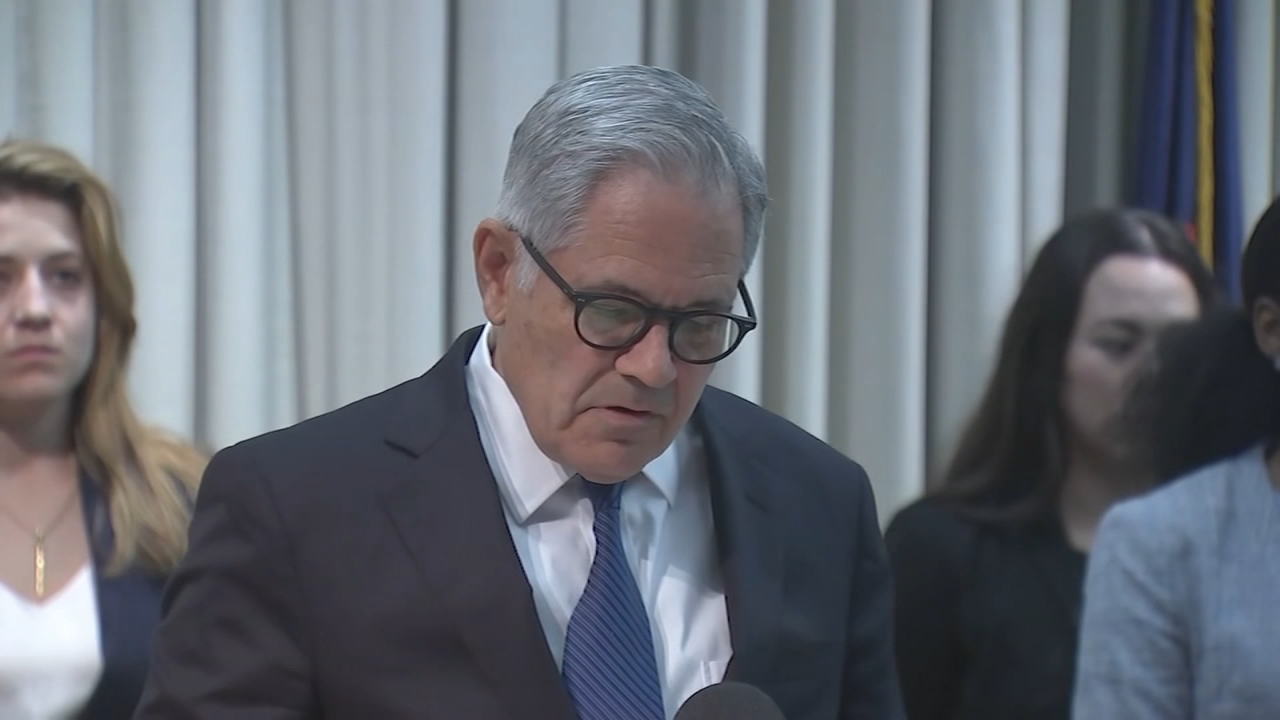
Larry Krasner did not load the cameras. He did not loop the zip tie. Blaming him for every frame on those hard drives would be cheap. Pretending his office is irrelevant would be cheaper.
George Soros poured nearly $1.7 million into putting Krasner in the DA’s chair in 2017. Krasner had spent his career suing police. He won. Then he governed like a defense attorney with a taxpayer badge. Cashless bail for whole categories of crime. Marijuana non-prosecution by fiat. Soft charging. A Conviction Integrity Unit so aggressive a federal judge this week referred Krasner himself to the Justice Department for possible perjury, false statements, obstruction, and conspiracy while trying to unwind a 2009 murder conviction.
Homicides in Philadelphia exploded after he took office, peaking above 500. Kensington became a national exhibit of open-air despair. Women with addiction and no one watching them became inventory. That is the ecosystem in which a self-described sociopath pornographer can film unconscious women for years, bury the files in a stack of hard drives, and die of old age.
The disappearances stretch from 2012 through 2023. Amy McHale vanished two years into Krasner’s first term. Fresses and Fusaro vanished the same year. Tonzelli vanished in 2023. Eugene’s stabbing case vanished in May 2026. The house did not become a crime scene because Philadelphia’s top prosecutor went looking. It became a crime scene because a park ranger heard a woman in a parked car say she was going to get hurt.

Police Commissioner Kevin Bethel said the department has a duty to families who need to know whether their loved ones died in that house or somewhere else. He is right. A district attorney has a duty too. It is not to refine the theory of decarceration while women are handcuffed to a bed on camera.
The stone is crying out of the wall on Chew Avenue. The files are still only 30 percent reviewed. More names are coming. The question is not whether Philadelphia will be shocked. The question is whether a city that elected Larry Krasner three times still remembers that the magistrate is supposed to bear the sword.
Bypass Big Tech Censors
Two Storms, One Harvest

Every food crisis in living memory has been a one-shock event. The 2008 price spike was a commodity bubble. The 2020 shortages were a logistics failure. The 2022 grain scare was a war on one exporter’s ports. Each time, the system bent, adjusted, and recovered, and each time the experts assured us afterward that global markets are simply too big and too diversified to fail.
What nobody in Washington seems eager to discuss is that 2026 is shaping up to be something the modern food system has never actually faced. Two independent shocks, one climatic and one geopolitical, are converging on the same harvest cycle at the same time. Not sequentially. Simultaneously.
Start with the weather. The Pacific Ocean is currently building toward what forecasters now openly call a record event. NOAA’s Climate Prediction Center puts the odds of at least a strong El Niño near 88 percent, with roughly two in three odds it reaches “very strong” status, the tier reserved for perhaps three or four events in the entire satellite era. Every major global model now projects a median peak in Super El Niño territory, and most of them project it exceeding the 2015-16 event, which until now held the modern record. Sea surface anomalies were already brushing the super threshold in mid-July, months before these events normally peak. The atmosphere has already shifted into El Niño mode, and the event is forecast to crest in late fall and early winter.
This is not about “climate change.” It’s about the standard cycles of weather, and the cycle we’re currently in is one that has likely devastated societies in the past. We’re better prepared as a society today, but not all Americans are equally prepared.
Serious households have started doing the quiet math on their own. Grocery bills tell part of the story, and the forecast maps tell the rest, which is why long-term food storage has moved from fringe hobby to mainstream line item in the family budget, with established suppliers like Heaven’s Harvest seeing demand from people who five years ago would have rolled their eyes at the idea. That instinct is not paranoia. It is pattern recognition, and the pattern is worth walking through carefully.
Editor’s Note: Heaven’s Harvest IS a sponsor, but the warnings of this article are real and would be written even if we didn’t have a survival food sponsor. With that said, those who take advantage of what they offer can use promo code “Patriot” for 15% off.
The Fertilizer Clock Is Already Running
While the Pacific warms, the second shock has been unfolding in the Strait of Hormuz. The conflict with Iran turned the world’s most important energy chokepoint into a contested waterway, and the consequences reach far beyond the gas pump. Roughly a third of global fertilizer trade moves through Hormuz, and the disruption sent urea prices up 86 percent year over year by March, with a 53 percent jump in a single month.
The World Bank projects energy prices rising about 24 percent in 2026 and fertilizer about 31 percent. By its own accounting, fertilizer prices ran 35 percent higher in the first five months of this year than the same period last year.
Here is the mechanism the nightly news will not explain. Fertilizer is not a grocery item. It is a time-delayed input. The nitrogen a farmer in Iowa or Punjab could not afford to apply this spring does not show up as a problem this spring. It shows up as a thinner harvest six to twelve months later.
The World Bank’s own food security brief concedes that the effects of reduced applications earlier this season “are likely to become visible only later in harvest outcomes.” Translate that from institutional language into plain English and it means this. The damage is already done, it is already in the ground, and we are simply waiting for it to arrive on the shelf.
Now check the calendar. Six to twelve months from the spring planting season lands us squarely in late 2026 and early 2027. Which is precisely when the strongest El Niño in the instrumental record is forecast to peak, bringing its signature droughts to Southeast Asia, Australia, southern Africa, northern Brazil, and South Asia, the very regions that grow the world’s rice, sugar, and oilseeds.
The World Bank warns openly that a strong El Niño “could disrupt multiple crop belts simultaneously” on top of the conflict-driven input costs. Their baseline projection assumes the Middle East disruptions ease by autumn. What in the last two years of Middle East history suggests that assumption is safe?
The System Has No Slack Left
The comfortable answer is that global markets always adjust. But adjustment requires slack, and the slack is gone. Global cereal production is expected to decline from last year’s records even before El Niño does its work. The UN World Food Programme, hardly a den of right-wing preppers, is calling this the most significant disruption to its supply chains since Covid and the invasion of Ukraine, and its supply chain director put the stakes bluntly.
Today’s supply chain challenges are tomorrow’s hunger crisis.
There is also a political dimension that markets cannot price. When food gets scarce, governments do not behave like economists. They behave like politicians. Export bans, hoarding mandates, and panic buying at the national level turned the modest rice shortfall of 2008 into a global crisis, and analysts are already warning that import-dependent nations are the first dominoes.
The 2015-16 Super El Niño, a far weaker event than what is now forecast, threw tens of millions into food stress across Africa and Asia. This one is projected to be stronger, and it arrives with fertilizer already rationed by price and shipping lanes already contested by missiles.
What Joseph Knew
Scripture does not treat preparation for lean years as faithlessness. It treats it as wisdom delivered in advance to those willing to act on it.
Behold, there come seven years of great plenty throughout all the land of Egypt: And there shall arise after them seven years of famine; and all the plenty shall be forgotten in the land of Egypt.
Joseph did not respond to that warning with a hashtag or a committee. He stored grain during the years of abundance, and when the famine came, Egypt stood while its neighbors begged. The lesson is not that famine is certain. It is that the time to prepare is precisely when preparation still looks optional.
Nobody who filled a pantry in a year of plenty has ever regretted it, and nobody standing in an empty aisle has ever been glad he waited for certainty.
None of this calls for panic, and panic is the enemy of sound judgment anyway. It calls for the same unglamorous prudence our grandparents considered ordinary. Keep some cash margin, know your local growers, and put real food in deep storage while it is cheap and available, because the entire arc of this story is that cheap and available is a closing window.
Families looking for a straightforward place to start can visit Heaven’s Harvest and use promo code Patriot for 15 percent off long-term storable food. The forecasts may yet soften, the strait may yet reopen, and we should pray they do. But hope is a fine thing to hold and a foolish thing to eat.