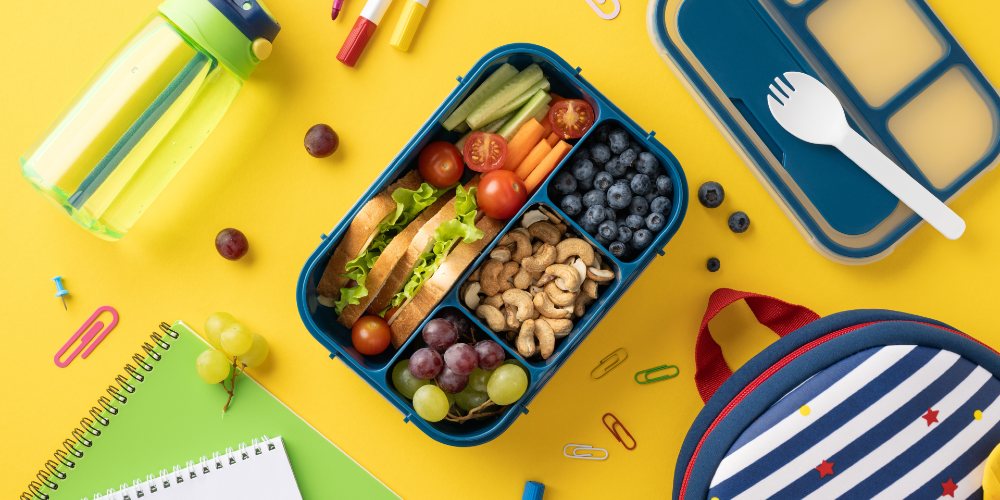
- About 28.6 million U.S. students rely on school lunches. Although the U.S. Department of Agriculture (USDA) claims these are among the most nutritious meals, the quality has been steadily declining
- Testing conducted by Spotlight on America revealed alarming amounts of heavy metals and almost 50 different pesticides in school lunches, with one meal containing 38 different pesticides
- Lab results uncovered banned pesticides like carbendazim, along with glyphosate and harmful heavy metals such as lead, arsenic and cadmium in school meal samples
- Children are particularly vulnerable to low-level chemical exposure, as pesticides and heavy metals cause permanent neurological damage, developmental issues and increased disease risk
- Protect your child by packing homemade lunches, advocating for healthier school meals and supporting initiatives like Garden to Cafeteria that promote fresher, more nutritious food options
(Mercola)—Every day, about 28.6 million students in the United States are served school lunches, according to the School Nutrition Association.1 For many children, these meals are a key source of nutrition. The U.S. Department of Agriculture (USDA) even claims that school-provided lunches are among the healthiest meals children eat.2
However, the quality of school lunches has actually been deteriorating for decades. While standards for calories, sodium and added sugars are in place, little is known about the other substances in school lunches beyond these guidelines. A recent investigation3 by Spotlight on America uncovered hidden dangers in these lunches that are putting children’s health at risk — namely, heavy metals and pesticides.
Shocking Cocktail of Pesticides and Heavy Metals Found in America’s School Lunches
Spotlight on America4 tested school lunches from Washington, D.C., Virginia and Maryland to identify substances and ingredients that are not listed on the label. They sent the samples to Health Research Institute (HRI), an accredited laboratory in Iowa, wherein the researchers analyzed common cafeteria fare including breadsticks, pizza, potatoes and fruit under the supervision of Dr. John Fagan, the lab’s CEO and Chief Scientific Officer.
“To make the invisible, visible,” said Dr. Fagan, explaining the mission behind testing school lunches. “To me it’s counterintuitive that anybody would say, ‘Let’s put poisons on our food,’ but that’s the way our food system is today.”
The laboratory findings5 revealed a disturbing reality about what children consume daily in school cafeterias. Nearly 50 different pesticides were identified across the samples, with dozens of chemicals often present in single meals. Notably, one elementary school lunch contained 38 distinct pesticides, while a single cup of strawberries contained 23 different pesticides.
Among the identified pesticides was carbendazim, a fungicide banned in the U.S., most European countries, Brazil and Australia due to its associations with cancer, infertility and birth defects, present in nearly half of the tested samples. Additionally, glyphosate, the active ingredient Round-Up that’s linked to cancer, diabetes and heart problems, was found in multiple samples, especially in wheat-based products like bread.
Their test also revealed the presence of dicamba and 2,4D in several lunch samples; these are weed killers associated with increased risk of certain types of cancer. The full list of detected pesticides is available in Spotlight on America’s report.6
Beyond pesticides, their findings showed concerning levels of heavy metals in these school meals. These include cadmium, a known carcinogen, at levels 12 times higher than the U.S. Food and Drug Administration’s (FDA) limit for bottled water. Arsenic in rice samples also measured six times above the allowable limit for apple juice. Most alarming was the detection of lead, a neurotoxin with no safe exposure level, in every single sample tested.

Epidemiologist Dr. Melissa Perry, Dean of the George Mason University School of Public Health, reviewed the results and expressed concerns about the implications. “50 pesticides in school lunches, it’s not okay,” she said in Spotlight on America’s report. “It demonstrates that our regulatory system is not succeeding in ensuring that the food that children eat are free from chemical burden.”
Low-Level Exposure to Pesticides Is Still Harmful to Children
Spotlight on America noted7 that most of their test results were within the limits set by the U.S. Environmental Protection Agency (EPA). However, this does not imply the levels are harmless, especially for children, whose developing brains and bodies are far more sensitive to even minimal chemical exposure. According to Dr. Perry:8
“The variety and the volume of chemicals that are being introduced in the market every year makes it practically impossible to evaluate the health effects of each and every chemical. We don’t know what it means to be exposed over time at low levels continuously, especially for developing children.”
According to the Developmental Origin of Health and Disease (DOHaD) concept, exposure to pesticides during key stages of brain development causes lasting damage to brain structure and function, increasing the risk of various chronic diseases later in life.9
Of particular concern are the neurotoxic insecticides known as “neonics,” which were introduced in the 1990s and are now the most widely used insecticides in the United States. These compounds were found in six of the school lunch samples tested. As Dr. Perry explains, these insecticides are specifically designed to be neurologically active, targeting processes crucial to brain development.10
The emergence of unexplained neurological conditions in younger populations may serve as an early warning of these effects. In New Brunswick, Canada, neurologist Dr. Alier Marrero has documented 430 patients with unexplained neurological conditions, including 111 patients under age 45. When tested, 90% of these patients showed elevated blood levels of glyphosate, with one sample reaching 15,000 times above the detection limit.11
According to a comprehensive 2020 review,12 glyphosate is known to cross the blood-brain barrier and trigger inflammation implicated in Alzheimer’s disease. The herbicide has also been linked to various neurological effects, including elevated risk of autism from childhood exposures. Animal studies have demonstrated additional concerns, showing that exposure leads to anxiety, impaired working memory, decreased curiosity and reduced movement.13
Exposure to Heavy Metals Causes Irreversible Damage to the Body
The heavy metals detected in school lunches are equally concerning. Lead exposure poses one of the most serious threats to human health, particularly in children. Even low levels cause permanent damage to the nervous system and impair cognitive development. It also accumulates in bones and teeth over time, causing skeletal problems and making its toxic effects long-lasting and difficult to reverse.14
Children exposed to lead often experience learning disabilities, behavioral problems, reduced IQ and delayed growth and development.15 Cadmium contamination is similarly hazardous, with severe effects on multiple organ systems.
The kidneys are especially vulnerable to cadmium toxicity, leading to proteinuria (elevated protein levels in the urine) and reduced filtration capacity.16 Long-term exposure results in brittle bones, as cadmium interferes with calcium metabolism and bone structure.17
Arsenic, a known carcinogen, has been linked to various types of cancer, including skin, bladder, lung and liver cancers.18 It also disrupts cellular function by interfering with enzyme systems and DNA repair mechanisms.19 Arsenic exposure during pregnancy increases the risk of miscarriage, low birth weight and developmental delays in children.20
These heavy metals also bioaccumulate, meaning they build up in the body faster than they are eliminated. The liver and kidneys work continuously to filter these toxins but eventually become overwhelmed and damaged by prolonged exposure.21 Once these metals cross the blood-brain barrier, they cause permanent neurological damage and cognitive decline.22
Given the irreversible nature of the damage caused by heavy metals, prevention and early intervention are important. Reducing exposure to these toxins in school lunches — and in food more broadly — needs to be a priority to protect children’s long-term health.
This Is Not the First Time Children’s Nutrition Has Been Compromised
The recent findings of pesticides and heavy metals in school lunches echo a disturbing pattern of contamination in children’s food that spans decades. In 2017, the Environmental Defense Fund (EDF)23 found that 20% of baby food samples contained detectable levels of lead. The contamination was especially high in fruit juices, sweet potatoes and teething biscuits.
In another case, a 2021 congressional report24 revealed dangerous levels of heavy metals like arsenic, lead, cadmium and mercury in popular baby foods sold by major companies, including Gerber and Beech-Nut.
The report noted that some products had arsenic levels up to 91 times higher than the FDA’s limit for bottled water. Similarly, a testing by Environmental Working Group (EWG)25 in 2018 found traces of glyphosate, the active ingredient in Roundup, in popular cereals like Cheerios and Quaker Oats.
In 2022, Moms Across America conducted an analysis26 of 43 school lunches from public schools across 15 U.S. states and found that 95.3% of them had detectable levels of glyphosate. Four veterinary drugs and hormones were also identified in nine of the samples, and every single lunch tested contained heavy metals, with levels up to 6,293 times higher than the EPA’s allowable limits for drinking water.
More recently, a September 2024 investigation led by Friends of the Earth27 found alarming levels of pesticide residues in baby food produced by Target under its Good & Gather brand.
Lab tests on nonorganic apple and pear purees revealed 21 pesticides, including 12 classified as highly hazardous to human health or the environment. Neonicotinoid pesticides were detected in 100% of the samples, linked to birth defects, learning disorders, autism spectrum disorder and hormone disruption.

Organophosphate metabolites, equally toxic to children’s developing brains, were also found in every sample.28 Additionally, 10 of the pesticides detected are known endocrine-disrupting chemicals (EDCs), which harm brain development, hormones and the immune system even in minuscule amounts.29
On the topic of EDCs, a September 2024 peer-reviewed study30 identified nearly 200 EDCs linked to breast cancer in common food packaging and plastic tableware, with about two-thirds of these chemicals shown to migrate into food. While breast cancer may not be an immediate concern for young children, exposure to EDCs during their developmental stages disrupts metabolism, impairs growth and affects overall development.31
As if these hidden threats weren’t enough, the FDA approved the inclusion of Kraft Heinz ready-to-eat prepackaged Lunchables to the K-12 school meal programs, supposedly reformulated to meet the National School Lunch Program’s (NSLP) nutritional requirements.32 But if you have even the slightest knowledge about diet and nutrition, you’ll realize that NSLP nutritional requirements really don’t amount to much. They certainly do not guarantee that your children are being well-fed.
Safe School Meals Act — A Step Toward Protecting Children from Toxic Exposure
Just days before Spotlight on America released its school lunch testing results, Senator Cory Booker introduced the Safe School Meals Act.33 This bill, if enacted, would establish rigorous standards aimed at eliminating dangerous toxins from school meals.
One of its primary goals is to ensure that the FDA sets strict limits on heavy metals like lead, cadmium and arsenic. If the FDA does not act within two years, the bill requires that the allowable levels of these toxins be set to non-detectable, offering immediate protection for school-aged children. It also addresses pesticide residues commonly found in school meals. It would ban harmful chemicals such as glyphosate, paraquat and organophosphates.
Another key focus of the bill is eliminating toxic chemicals from food packaging. Materials containing PFAS, phthalates, bisphenols and lead, which leach into food and threaten children’s health, would be banned from use in school meal packaging under the new legislation. This ensures that children are not exposed to harmful substances from their food containers.

In addition to setting safety standards, the Safe School Meals Act promotes the sourcing of food from organic and regenerative farms. The bill offers schools financial incentives to purchase clean, nutrient-dense foods from certified organic producers.
It also supports small farms by covering the costs of organic certification and providing grants to help them transition to safer, toxin-free farming practices. By connecting these responsible growers with the $17 billion National School Lunch Program, the bill aims to improve both the safety and nutritional quality of school meals, ensuring that they are a source of nourishment, not a source of toxic exposure.
Empowering Healthy Food Choices in School and at Home
As parents, taking an active role in your child’s diet is more important than ever. If resources allow, sending your child to school with a homemade lunch made from real, whole foods is one of the best ways to ensure they’re getting the nutrition they need. For parents who can’t pack lunch every day, there are still ways to make sure your children eat healthier even when relying on school-provided meals.
Start by staying informed about the school’s lunch offerings. Many schools provide menus in advance, giving you the opportunity to help your child select healthier options from what’s available. Having open conversations with your child about the importance of choosing real, whole foods over ultraprocessed ones encourages them to make better choices when you’re not there.
Advocating for improved school meals is another important step. By participating in parent-teacher organizations or attending school board meetings, you have the opportunity to push for healthier cafeteria offerings. Exploring simple interventions like introducing school gardens also make a big difference. The Garden to Cafeteria program is one such option, which teaches students how to grow food, which is then used in salad bars in school cafeterias.
In Denver, this program has been in place for years, resulting in more than 5,000 pounds of produce that have been enjoyed by students in about 250 schools.34 Such programs are even self-sustaining, with proceeds going back to support the program, and are implemented throughout the U.S.
At home, complementing school lunches with balanced, nutrient-dense breakfasts and dinners ensures your child gets the nourishment they need throughout the day, even if school meals fall short. Ultimately, while you may not always control what’s served at school, you still have the power to influence your child’s overall diet and long-term health.
- 1 School Nutrition Association, School Meal Statistics
- 2 USDA, Lunches Consumed from School Are the Most Nutritious
- 3, 4, 5, 6, 7, 8, 10 ABC7, September 27, 2024
- 9 Antioxidants 2023, 12(10), 1825
- 11 Children’s Health Defense, September 5, 2024
- 12 J Immunotoxicol. 2020 Dec;17(1):163-174
- 13 Int J Mol Sci. 2022 Apr 21;23(9):4605
- 14 WHO, September 27, 2024
- 15 NIH, Low Levels of Lead Linked to Problems in Children
- 16 Biomolecules. 2021 Oct 23;11(11):1575
- 17 Front Endocrinol (Lausanne). 2024 Mar 21:15:1354577
- 18 American Cancer Society, Arsenic and Cancer Risk
- 19 Chem Res Toxicol. 2020 Feb 7;33(3):709–726
- 20 Cureus. 2023 Nov 21;15(11):e49177
- 21 Toxics. 2023 Jun 9;11(6):519
- 22 Environmental Sciences Europe Volume 36, article number 18, (2024)
- 23 EDF, June 15, 2017
- 24 U.S. House of Representatives, February 4, 2021
- 25 EWG, October 24, 2018
- 26 Moms Across America, September 28, 2022
- 27, 28 Friends of the Earth, September 18, 2024
- 29, 31 Pediatr Rev (2024) 45 (2): 111–115
- 30 Front Toxicol. 2024 Sep 24:6:1440331
- 32 CNN, March 14, 2023
- 33 Cory Booker, September 18, 2024
- 34 Slow Food USA, Garden to Cafeteria
Bypass Big Tech Censors

Starting the Day With a Scripture-Inspired Roast Helps Center Your Thoughts on Eternal Truths Amid Temporal Pressures
The world can seem chaotic, especially right after we wake up. Many believers start their mornings reaching for something familiar — a hot cup of coffee — yet end up settling for mediocre brews that do little more than deliver a caffeine jolt. The daily grind of life, with its endless distractions, news cycles, and responsibilities, can leave even the most faithful feeling spiritually parched alongside their physical fatigue. What if your morning ritual could do more than wake you up? What if it could ground you in truth, nourish your body with exceptional quality, and quietly advance a kingdom purpose at the same time?
That’s the promise — and the reality — behind Promised Grounds Coffee. This Christian-founded company doesn’t just roast beans; it approaches every step as an act of worship and discipleship. By selecting only the top 10% of specialty-grade beans, ethically sourced from dedicated farmers in Central and South America, and small-batch roasting them with reverence in Austin, Texas, Promised Grounds delivers what many describe as the best coffee available — never burnt, never bland, but rich with origin stories and layered flavors that honor God’s creation.
From the vibrant Psalm 27 Roast (a light, bright medium option) to the bold yet peaceful 2 Timothy 1:7 Decaf, each bag carries a Scripture verse that turns your daily pour into a gentle reminder of faith. And through their Ounce Per Ounce Promise, every ounce of coffee you enjoy provides an equal ounce of clean water to families in need via partnership with Filter of Hope — literally brewing hope for body and soul, one cup at a time.
The challenge for today’s Christians runs deeper than finding a decent cup. In an age of convenience-driven consumerism, it’s easy to support companies that dilute values or remain silent on matters of faith. Many believers want their everyday choices — from what they drink to how they spend — to reflect discipleship rather than just convenience. Promised Grounds solves this by weaving Christian excellence into the entire process: beans nurtured with prayerful stewardship by farming families, roasted as an offering rather than a commodity, and packaged with Bible verses to encourage a mindset of gratitude and purpose from the first sip. Reviewers consistently praise the smooth, rich profiles — whether enjoyed black in a drip maker, iced on a warm day, or shared in fellowship — noting how the quality stands toe-to-toe with premium secular brands while delivering something far more meaningful.
This integration of faith and flavor addresses a real need in Christian households and ministries. Busy parents, church leaders, and remote workers alike report that starting the day with a Scripture-inspired roast helps center their thoughts on eternal truths amid temporal pressures. The coffee’s exceptional character — bright citrus notes in lighter roasts or deep chocolate undertones in bolder ones — comes from meticulous selection and careful roasting that respects the bean’s natural gifts rather than masking them. It’s the kind of coffee that elevates a simple quiet time, fuels productive workdays, or sparks meaningful conversations when shared at Bible studies or outreach events. And because it’s ethically sourced with integrity, every purchase supports sustainable livelihoods for farmers who treat their crops like family harvests.
For those leading churches or small groups, the impact multiplies. Promised Grounds offers bundles and options perfect for hospitality ministries, turning ordinary coffee service into an opportunity to point people toward the living water of Christ. Imagine greeting visitors with a warm cup whose very bag carries God’s Word — a subtle yet powerful witness that aligns with the Great Commission. The company’s Texas roots and commitment to “brewing hope” resonate especially with believers who value American enterprise paired with global compassion.
Of course, quality alone isn’t enough if the experience feels out of reach. Promised Grounds keeps it accessible with practical perks like free shipping on orders over $40, sample sets for discovering favorites, and thoughtful add-ons such as faith-themed mugs. Whether you prefer whole beans for fresh grinding, grounds for convenience, or even bulk options for larger households and ministries, the result is consistently superior coffee that makes discipleship feel integrated rather than added on.
As you consider how to align even the smallest habits with your walk with God, Promised Grounds Coffee stands out as a refreshing solution. It tackles the dual problems of subpar daily sustenance and disconnected consumption by offering a product that genuinely excels in taste while advancing a mission of clean water, farmer dignity, and scriptural encouragement. Believers who make the switch often describe it as more than a beverage upgrade — it becomes part of their rhythm of gratitude, a daily invitation to remember that every good gift comes from above.
If you’re ready to transform your mornings (and perhaps your church gatherings) with coffee that honors both exceptional craftsmanship and Christian values, I encourage you to explore what Promised Grounds has to offer. One sip at a time, you’ll be nourishing your body, refreshing your spirit, and participating in something far greater — all while enjoying what truly is among the best coffee available.