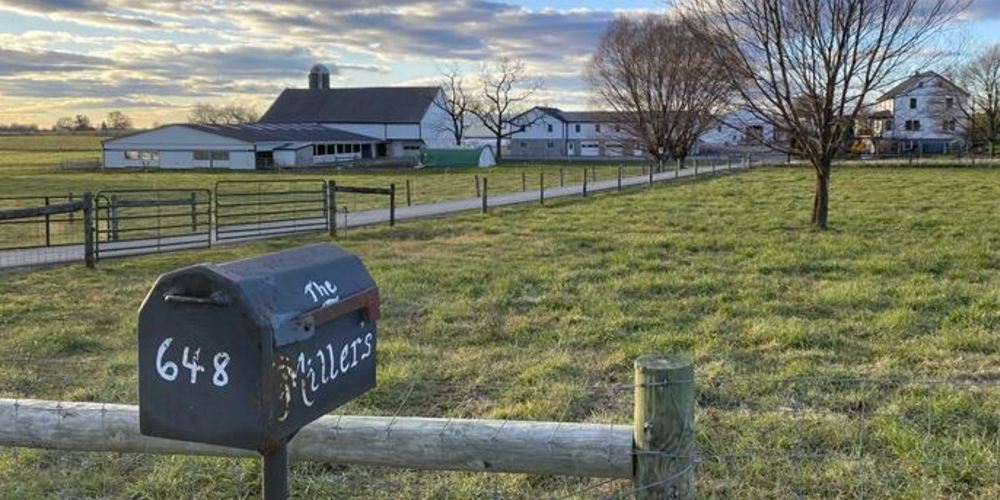
- Amish farmer Amos Miller successfully defended his right to sell raw milk outside Pennsylvania, highlighting the broader battle for food freedom
- Previously, regulatory agencies raided Miller’s farm, detaining $100,000 worth of whole natural foods, threatening his livelihood
- Research shows that raw milk is a nutrient-dense food offering probiotics and enzymes that support digestion and immunity, which are lost in pasteurization
- Strict regulations on small farmers often favor large-scale industrial producers, leaving traditional farms at a significant economic disadvantage
- Supporting local farms and advocating for food freedom reforms empower consumers, giving them access healthier, unprocessed foods directly from trusted sources
(Mercola)—Amish farmer Amos Miller has been fighting tooth and nail for the right to sell raw milk, a nutrient-dense food that has been consumed for millennia. Raw milk, which has not undergone pasteurization, retains its natural enzymes, probiotics and vitamins — components that are essential for gut health and immunity. This is because pasteurization, while designed to kill harmful bacteria, also destroys beneficial nutrients, leaving a product that is less nourishing.1
The stakes for small-scale farmers like Miller are high. According to federal law, selling raw milk across state lines is prohibited due to safety concerns, citing risks of bacterial contamination from pathogens such as E. coli and listeria. Despite this, Miller’s customers believe in the health benefits of raw milk. Interestingly, the U.S. Food and Drug Administration (FDA) recognizes the right of consumers to buy and transport raw milk across state lines for their personal use.2
The government’s actions against Miller highlight a troubling trend. Regulatory agencies already raided his farm back in 2024, seizing products worth over $100,000 and imposing restrictions that threaten his livelihood. But reason has prevailed, as a new ruling reinforced a previous decision allowing him to continue selling raw milk outside Pennsylvania.
Court Decision Upholds Raw Milk Sales Across State Borders
A January 2025 ruling from the Commonwealth Court of Pennsylvania has brought attention to the ongoing battle for food freedom for consumers. This decision, which centers on Amish farmers Amos and Rebecca Miller, allows them to sell their raw milk products outside the state while a lawsuit against them proceeds.
The case not only addresses state regulations but also raises constitutional questions about individuals’ rights to purchase traditional foods directly from producers.3
The Millers’ farm serves customers through a private membership model, providing raw milk, grass fed beef and various produce. However, it’s their raw milk that is sought by health-conscious consumers, which has also gained the ire of the government.
Despite the health benefits, federal law prohibits raw milk sales across state lines, and in Pennsylvania, strict permitting processes limit its sale within the state. The Millers have challenged these regulations, arguing that their business model respects individual freedoms and meets consumer demand for unprocessed foods.4
The Commonwealth Court of Pennsylvania just upheld a March 2024 ruling that permitted the Millers to continue selling their raw milk outside the state. This decision is pivotal, as the state had initially sought to completely ban their sales.

While a important battle has been won, the war isn’t over yet. The Commonwealth Court also acknowledged the Millers raised “potentially meritorious constitutional challenges,” including those tied to the Commerce Clause and the right to purchase traditional foods directly from producers. These points will now be examined more thoroughly during a full trial because of the ambiguity of the state law.5
Miller’s Case Is a ‘Big Win’ for the Sustainable, Healthy Food
Amos Miller’s attorney, Robert Barnes, emphasized the broader implications of this ruling for small-scale farmers, calling it “a big win for food freedom” on his X account. He also stated that this battle is about more than just about raw milk — it is about the individual getting to decide what to consume and not what the government is pushing. In a statement for The Defender, Barnes said:6
“Amos Miller, a fifth-generation Amish farmer from the heart of dairy country, produced tens of millions of food products for tens of thousands of Americans over a quarter century, using the best and healthiest techniques taught and trained by his father and his father before him. How do we know?
The total number of customer complaints to any government agency for any food product of Amos Miller’s is a big fat zero, the highest known customer satisfaction rate of any farmer in America.
Yet the government sought to shut him down and close his farm because they demanded 90% of raw milk products be banned from sale to anyone anywhere. This win for Amos Miller is a win for all small farmers, for the Amish and for everyone who cares about food freedom.”
The case also underscores a significant tension between traditional farming practices and modern regulatory frameworks. These actions often target raw milk producers who operate under stricter standards than large-scale agricultural corporations.
While regulators supposedly cite public health concerns, these measures disproportionately burden small farms, effectively consolidating market power among industrial producers For the Millers, complying with unreasonable state regulations would severely limit their product offerings, making their business model unsustainable.7
While regulators argue that raw milk poses public health risks due to potential bacterial contamination, advocates counter that traditional farming practices and consumer education reduce these risks. Raw milk supporters often cite its immune-boosting properties and benefits for digestion. They also argue that pasteurization, while effective at eliminating harmful bacteria, also destroys beneficial nutrients, making raw milk a superior choice for many of them.8
Biologically, raw milk contains enzymes like lactase, which aid in lactose digestion, as well as probiotics, which support gut health. It also contains immune-boosting proteins and vitamins. Pasteurization eliminates these components, leaving a product that some individuals find harder to digest. For consumers with specific health concerns, these attributes make raw milk an attractive alternative.9
The constitutional questions raised in the case go beyond food safety. The Commerce Clause, which governs interstate trade, is central to the Millers’ argument. By prohibiting raw milk sales across state lines, federal regulations restrict consumer choice and create barriers for small farmers.
The Millers also invoked the right to purchase traditional foods, framing the issue as a matter of personal freedom and cultural preservation. These arguments resonate with those who view food freedom as an essential aspect of individual rights.10
This new court ruling sets a precedent that will influence future cases involving raw milk and other traditional food products. It challenges the status quo of regulatory oversight, emphasizing the importance of balancing public health concerns with consumer rights and small farmers’ livelihoods.
The Crackdown on Amos Miller’s Farm Sparks Food Freedom Debate
I originally wrote about Amos Miller’s legal issues back in February 2024. Operating in Bird-in-Hand, Pennsylvania, Miller adheres to traditional farming practices, offering unprocessed, nutrient-dense foods to his community.
Moreover, it’s where I originally highlighted the raid conducted by the Pennsylvania Department of Agriculture, during which $100,000 worth of natural food products were place “under detention.” This event has reignited discussions about food freedom and the balance between consumer rights and government regulations. For those who prioritize raw, natural products, these actions represent an infringement on their personal choice.
The raid targeted Miller’s raw dairy products like milk and eggnog, which allegedly caused E. coli illnesses in Michigan and New York. However, Miller’s supporters argue that these claims lack substantiated evidence and highlight the disproportionate scrutiny faced by small-scale farmers compared to large-scale industrial producers.
I also pointed out that the raid violated established procedural norms. According to Barnes, the Department of Agriculture failed to provide advance notice or follow proper inspection protocols.
Instead, they acted “in a lawless manner” by unlawfully obtaining a search warrant based on what Barnes described as “materially false statements” from a high-ranking official with grievances against independent farmers. Again, this blatant disregard for the rule of law has raised significant concerns about government overreach and the unequal treatment of small farmers.
One of the more striking revelations is the economic disparity between small farmers and industrial producers. As reported by A Campaign for Real Milk , conventional dairy farmers earn approximately $16 per 100 pounds of milk sold, which keeps them just above the poverty line.11
In contrast, farmers like Miller, who are able to directly sell to consumers, will be able sustain their operations and even thrive. This stark difference exposes the financial motivations behind unfair regulatory actions, which align with the interests of Big Dairy.
I also discussed the health benefits of raw milk in this article. Its natural composition, which includes beneficial enzymes, probiotics and anti-inflammatory properties form the bulk of its therapeutic benefits. In fact, the Raw Milk Institute reported that it lowered rates of allergies, eczema, respiratory infections and fevers.12
The raid on Miller’s farm also brings attention to the economic and political grip of centralized food systems on government agencies. By preserving traditional farming methods, these operations offer a sustainable solution to the environmental degradation caused by Big Ag. However, current regulations often hinder the ability of small-scale farmers to compete, thus limiting consumer access to healthier, more sustainable food options.

I also concluded my analysis by calling attention to the broader societal impacts of such actions. The shakedown of small-scale farmers undermines local economies and erodes consumer trust in regulatory institutions. As Miller’s case progresses, it will set a precedent for how traditional farming practices are treated in the context of modern regulations. Whatever the outcome, it will show a glimpse into the future of food freedom.
Five Ways to Support Food Freedom and Protect Your Choices
There are concrete steps available to protect your right to traditional, unprocessed, nutrient-dense foods like raw milk, while also empowering small, local farmers and strengthening community food systems. Here are my five recommendations:
1.Educate yourself about local food laws — Knowledge is your most powerful tool to make informed choices and advocate effectively for changes where needed. Start by understanding legislation regarding selling raw milk and other food freedom laws in your state. Regulations vary widely, with some states allowing raw milk sales directly from farms, while others impose strict bans.
2.Support small, local farms — Where you spend your money makes a difference. Choose to buy directly from local farmers who use traditional, sustainable methods. Many small farms offer memberships or co-ops with access to raw milk, grass fed meats and other whole foods. By doing this, you’re not only improving your diet but also helping small farms stay afloat in the face of restrictive regulations.
3.Advocate for regulatory reforms — Make your voice heard. Reach out to your state legislators and express your support for policies that allow direct-to-consumer sales of unprocessed foods.
Supporting initiatives like the PRIME (Processing Revival and Intrastate Meat Exemption) Act, which aims to ease restrictions on small slaughterhouses, will help pave the way for broader food freedom. Grassroots movements rely on individuals like you to drive change.
4.Get involved in your community — Build connections with like-minded individuals by joining food advocacy groups or attending farm tours and events. These networks often share resources, updates on legislation and ways to support local farmers. If there’s a rally or hearing for a farmer like Amos Miller in your area, attending shows your support and helps amplify a noble cause.
5.Choose high-quality, traditional foods — Prioritize your health by incorporating nutrient-dense foods into your diet. Look for raw dairy, grass fed meats and produce grown without synthetic chemicals.
If raw milk is your choice, ensure it comes from a reputable source with rigorous cleanliness standards. Doing this supports your body with high-quality nutrition while backing farmers who prioritize sustainable and ethical farming practices.
- 1, 2, 3, 4, 5, 6, 7, 8, 9, 10 Children’s Health Defense, The Defender, January 7, 2025
- 11 A Campaign for Real Milk, “The Economics of Raw Milk”
- 12 Raw Milk Institute, “About Raw Milk” Main Findings
Bypass Big Tech Censors

Two Storms, One Harvest

Every food crisis in living memory has been a one-shock event. The 2008 price spike was a commodity bubble. The 2020 shortages were a logistics failure. The 2022 grain scare was a war on one exporter’s ports. Each time, the system bent, adjusted, and recovered, and each time the experts assured us afterward that global markets are simply too big and too diversified to fail.
What nobody in Washington seems eager to discuss is that 2026 is shaping up to be something the modern food system has never actually faced. Two independent shocks, one climatic and one geopolitical, are converging on the same harvest cycle at the same time. Not sequentially. Simultaneously.
Start with the weather. The Pacific Ocean is currently building toward what forecasters now openly call a record event. NOAA’s Climate Prediction Center puts the odds of at least a strong El Niño near 88 percent, with roughly two in three odds it reaches “very strong” status, the tier reserved for perhaps three or four events in the entire satellite era. Every major global model now projects a median peak in Super El Niño territory, and most of them project it exceeding the 2015-16 event, which until now held the modern record. Sea surface anomalies were already brushing the super threshold in mid-July, months before these events normally peak. The atmosphere has already shifted into El Niño mode, and the event is forecast to crest in late fall and early winter.
This is not about “climate change.” It’s about the standard cycles of weather, and the cycle we’re currently in is one that has likely devastated societies in the past. We’re better prepared as a society today, but not all Americans are equally prepared.
Serious households have started doing the quiet math on their own. Grocery bills tell part of the story, and the forecast maps tell the rest, which is why long-term food storage has moved from fringe hobby to mainstream line item in the family budget, with established suppliers like Heaven’s Harvest seeing demand from people who five years ago would have rolled their eyes at the idea. That instinct is not paranoia. It is pattern recognition, and the pattern is worth walking through carefully.
Editor’s Note: Heaven’s Harvest IS a sponsor, but the warnings of this article are real and would be written even if we didn’t have a survival food sponsor. With that said, those who take advantage of what they offer can use promo code “Patriot” for 15% off.
The Fertilizer Clock Is Already Running
While the Pacific warms, the second shock has been unfolding in the Strait of Hormuz. The conflict with Iran turned the world’s most important energy chokepoint into a contested waterway, and the consequences reach far beyond the gas pump. Roughly a third of global fertilizer trade moves through Hormuz, and the disruption sent urea prices up 86 percent year over year by March, with a 53 percent jump in a single month.
The World Bank projects energy prices rising about 24 percent in 2026 and fertilizer about 31 percent. By its own accounting, fertilizer prices ran 35 percent higher in the first five months of this year than the same period last year.
Here is the mechanism the nightly news will not explain. Fertilizer is not a grocery item. It is a time-delayed input. The nitrogen a farmer in Iowa or Punjab could not afford to apply this spring does not show up as a problem this spring. It shows up as a thinner harvest six to twelve months later.
The World Bank’s own food security brief concedes that the effects of reduced applications earlier this season “are likely to become visible only later in harvest outcomes.” Translate that from institutional language into plain English and it means this. The damage is already done, it is already in the ground, and we are simply waiting for it to arrive on the shelf.
Now check the calendar. Six to twelve months from the spring planting season lands us squarely in late 2026 and early 2027. Which is precisely when the strongest El Niño in the instrumental record is forecast to peak, bringing its signature droughts to Southeast Asia, Australia, southern Africa, northern Brazil, and South Asia, the very regions that grow the world’s rice, sugar, and oilseeds.
The World Bank warns openly that a strong El Niño “could disrupt multiple crop belts simultaneously” on top of the conflict-driven input costs. Their baseline projection assumes the Middle East disruptions ease by autumn. What in the last two years of Middle East history suggests that assumption is safe?
The System Has No Slack Left
The comfortable answer is that global markets always adjust. But adjustment requires slack, and the slack is gone. Global cereal production is expected to decline from last year’s records even before El Niño does its work. The UN World Food Programme, hardly a den of right-wing preppers, is calling this the most significant disruption to its supply chains since Covid and the invasion of Ukraine, and its supply chain director put the stakes bluntly.
Today’s supply chain challenges are tomorrow’s hunger crisis.
There is also a political dimension that markets cannot price. When food gets scarce, governments do not behave like economists. They behave like politicians. Export bans, hoarding mandates, and panic buying at the national level turned the modest rice shortfall of 2008 into a global crisis, and analysts are already warning that import-dependent nations are the first dominoes.
The 2015-16 Super El Niño, a far weaker event than what is now forecast, threw tens of millions into food stress across Africa and Asia. This one is projected to be stronger, and it arrives with fertilizer already rationed by price and shipping lanes already contested by missiles.
What Joseph Knew
Scripture does not treat preparation for lean years as faithlessness. It treats it as wisdom delivered in advance to those willing to act on it.
Behold, there come seven years of great plenty throughout all the land of Egypt: And there shall arise after them seven years of famine; and all the plenty shall be forgotten in the land of Egypt.
Joseph did not respond to that warning with a hashtag or a committee. He stored grain during the years of abundance, and when the famine came, Egypt stood while its neighbors begged. The lesson is not that famine is certain. It is that the time to prepare is precisely when preparation still looks optional.
Nobody who filled a pantry in a year of plenty has ever regretted it, and nobody standing in an empty aisle has ever been glad he waited for certainty.
None of this calls for panic, and panic is the enemy of sound judgment anyway. It calls for the same unglamorous prudence our grandparents considered ordinary. Keep some cash margin, know your local growers, and put real food in deep storage while it is cheap and available, because the entire arc of this story is that cheap and available is a closing window.
Families looking for a straightforward place to start can visit Heaven’s Harvest and use promo code Patriot for 15 percent off long-term storable food. The forecasts may yet soften, the strait may yet reopen, and we should pray they do. But hope is a fine thing to hold and a foolish thing to eat.