For complete transparency, I have been on a soft boycott of Hollywood for many years. And by “soft” boycott, I mean I will only go to see movies that are verified “unwoke.” That’s why in the past five years I’ve only seen Top Gun: Maverick and John Wick 4.
I mention that because I may be biased with my belief that I’m not missing much. Hollywood has been stuck in a creative slump for years with everyone seemingly focused on remakes, reboots, regurgitations, and comic book blockbusters, none of which make for good moviemaking. Now, it seems Hollywood will take its failures and exacerbate them by ramping up their omnipresent wokeness to ludicrous speed.
Here’s a brief writeup by Discern News Wire followed by my further commentary:
Controversy Surrounds Academy Awards’ New Diversity Guidelines for Best Picture Nominees
The Academy Awards have come under fire for their recent implementation of diversity and inclusion guidelines, specifically for films vying for the “Best Picture” Oscar. Several voting members have expressed their concerns after the Academy Awards introduced the Aperture 2025 initiative, a comprehensive set of regulations aimed at promoting equity and diversity in Hollywood.
Critics argue that the guidelines are excessive and undermine the authenticity of the casting process. One director interviewed by The Post stated, “I’m all for diversity, but mandating specific types of people for nominations? It feels contrived. The best person for the role should be chosen. Why limit the choices? Unfortunately, this is the world we live in now. It’s crazy.”
Starting in 2024, film producers and directors will be required to submit a dossier to the Academy, providing information about the race, gender, sexual orientation, and disability status of the cast and crew members involved in their films. According to reports, one prominent Hollywood producer mentioned that very few industry insiders support these guidelines but choose not to speak out due to fears of cancel culture.
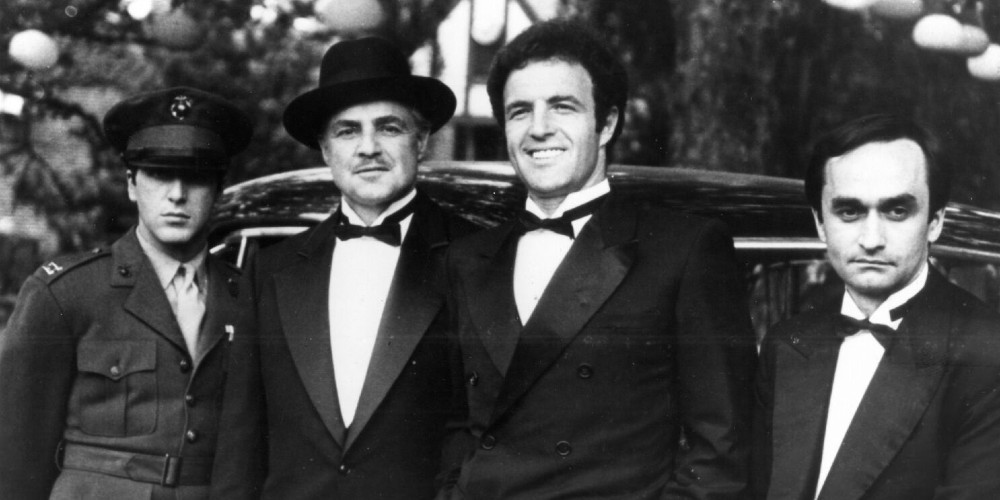
Critics argue that iconic films such as “The Godfather” and “Schindler’s List” might not have qualified for Best Picture under the new inclusion guidelines. Concerns have been raised about the potential chilling effect on artistic freedom and creativity if every film is required to conform to specific criteria for a nomination. Additionally, esteemed actor Richard Dreyfuss strongly condemned the new inclusivity standards in a recent interview, describing them as nauseating.
During an interview on “Firing Line,” Dreyfuss expressed his vehement opposition, stating, “They make me vomit.” He defended his rejection of the concept, emphasizing that film is not only a commercial endeavor but also an art form. He firmly believed that artists should not be compelled to conform to constantly shifting moral standards.

Dreyfuss further argued against special treatment for any particular group, stating, “I don’t think there’s a minority or a majority in the country that has to be catered to like that.”
The Oscars released the controversial guidelines in 2020, stating that they aimed to encourage equitable representation both on and off the screen, reflecting the diversity of movie audiences. Failure to adhere to these stringent guidelines could result in disqualification from Oscar consideration for films lacking sufficient representation of people of color, individuals with disabilities, or those who identify as LGBTQ+.
Despite facing backlash from Oscar voters and critics, a Best Picture winner at the 2023 Academy Awards, “Everything Everywhere All at Once,” managed to meet the inclusion criteria. The sci-fi indie film featured a predominantly Asian cast, including Michelle Yeoh and Ke Huy Quan.
Some Hollywood executives are willing to accept the new guidelines but with certain reservations. One executive stated, “We want to be inclusive, but it’s essential to make the best movie. It’s unreasonable to include a person from a specific ethnic group if they don’t belong to the story being told. Similarly, featuring an LGBTQ+ character should align with the narrative. Imposing restrictions can undermine the integrity of the film and hinder its success at the box office.”
The debate surrounding these diversity guidelines continues as industry insiders grapple with the balance between fostering inclusivity and maintaining creative freedom in filmmaking.
Diversity Versus Forced Diversity
Let’s be clear. I’m all for natural diversity. I’m a mixed-race legal immigrant married to a mixed-race American citizen with very mixed-race children. I believe that diversity in the proper context can strengthen us. But that’s a far cry from the forced diversity that’s plaguing this nation and forcing institutions to make decisions based solely on race, gender, and other Cultural Marxist considerations rather than merit.
Imagine a world in which Godfather couldn’t even qualify to win Best Picture. That’s the world we live in today. So when I say I have been soft-boycotting Hollywood for years, I think it’s finally time to make it a hard boycott.
But this isn’t really about Hollywood. This is about our society’s collision course with oblivion. Movies are frivolous. Meaningless. What happens when forced diversity impacts areas that are not frivolous?
The military is an obvious example. For the first time in my life, I’m actually very concerned that our warfighters are not properly prepared to face threats abroad. It’s not because the warfighters themselves are any worse than in the past. It’s not that our technology hasn’t kept pace. It’s the woke attitude pervasive in the Pentagon that concerns me.
What about education? Healthcare? Law enforcement? What about the fact that airline pilot qualifications are being hampered by forced diversity to the point that the best pilots are being passed over because they don’t check enough boxes?
This isn’t something we can vote our way out of any time soon. Any surge of lucid patriots making their way into offices of government cannot come quickly enough. We’re faced with two possible outcomes. Either we will watch forced diversity prompt a massive disaster (and not just in the form of Kamala Harris) or we will double our efforts to dispel this worldview.
Pushing back on Bud Light and Target for trans-indoctrination practices is a start, but it’s not nearly enough. We need every business that engages in forced diversity to hear the same message that Anheuser-Busch got, only louder. It’s not just about LGBTQIA+ supremacy. It’s about all forms of forced diversity.

We either address this now while we still have a nation or we will watch helplessly as the truly “woke” get their wish of a dismantled United States of America.
Bypass Big Tech Censors
Two Storms, One Harvest

Every food crisis in living memory has been a one-shock event. The 2008 price spike was a commodity bubble. The 2020 shortages were a logistics failure. The 2022 grain scare was a war on one exporter’s ports. Each time, the system bent, adjusted, and recovered, and each time the experts assured us afterward that global markets are simply too big and too diversified to fail.
What nobody in Washington seems eager to discuss is that 2026 is shaping up to be something the modern food system has never actually faced. Two independent shocks, one climatic and one geopolitical, are converging on the same harvest cycle at the same time. Not sequentially. Simultaneously.
Start with the weather. The Pacific Ocean is currently building toward what forecasters now openly call a record event. NOAA’s Climate Prediction Center puts the odds of at least a strong El Niño near 88 percent, with roughly two in three odds it reaches “very strong” status, the tier reserved for perhaps three or four events in the entire satellite era. Every major global model now projects a median peak in Super El Niño territory, and most of them project it exceeding the 2015-16 event, which until now held the modern record. Sea surface anomalies were already brushing the super threshold in mid-July, months before these events normally peak. The atmosphere has already shifted into El Niño mode, and the event is forecast to crest in late fall and early winter.
This is not about “climate change.” It’s about the standard cycles of weather, and the cycle we’re currently in is one that has likely devastated societies in the past. We’re better prepared as a society today, but not all Americans are equally prepared.
Serious households have started doing the quiet math on their own. Grocery bills tell part of the story, and the forecast maps tell the rest, which is why long-term food storage has moved from fringe hobby to mainstream line item in the family budget, with established suppliers like Heaven’s Harvest seeing demand from people who five years ago would have rolled their eyes at the idea. That instinct is not paranoia. It is pattern recognition, and the pattern is worth walking through carefully.
Editor’s Note: Heaven’s Harvest IS a sponsor, but the warnings of this article are real and would be written even if we didn’t have a survival food sponsor. With that said, those who take advantage of what they offer can use promo code “Patriot” for 15% off.
The Fertilizer Clock Is Already Running
While the Pacific warms, the second shock has been unfolding in the Strait of Hormuz. The conflict with Iran turned the world’s most important energy chokepoint into a contested waterway, and the consequences reach far beyond the gas pump. Roughly a third of global fertilizer trade moves through Hormuz, and the disruption sent urea prices up 86 percent year over year by March, with a 53 percent jump in a single month.
The World Bank projects energy prices rising about 24 percent in 2026 and fertilizer about 31 percent. By its own accounting, fertilizer prices ran 35 percent higher in the first five months of this year than the same period last year.
Here is the mechanism the nightly news will not explain. Fertilizer is not a grocery item. It is a time-delayed input. The nitrogen a farmer in Iowa or Punjab could not afford to apply this spring does not show up as a problem this spring. It shows up as a thinner harvest six to twelve months later.
The World Bank’s own food security brief concedes that the effects of reduced applications earlier this season “are likely to become visible only later in harvest outcomes.” Translate that from institutional language into plain English and it means this. The damage is already done, it is already in the ground, and we are simply waiting for it to arrive on the shelf.
Now check the calendar. Six to twelve months from the spring planting season lands us squarely in late 2026 and early 2027. Which is precisely when the strongest El Niño in the instrumental record is forecast to peak, bringing its signature droughts to Southeast Asia, Australia, southern Africa, northern Brazil, and South Asia, the very regions that grow the world’s rice, sugar, and oilseeds.
The World Bank warns openly that a strong El Niño “could disrupt multiple crop belts simultaneously” on top of the conflict-driven input costs. Their baseline projection assumes the Middle East disruptions ease by autumn. What in the last two years of Middle East history suggests that assumption is safe?
The System Has No Slack Left
The comfortable answer is that global markets always adjust. But adjustment requires slack, and the slack is gone. Global cereal production is expected to decline from last year’s records even before El Niño does its work. The UN World Food Programme, hardly a den of right-wing preppers, is calling this the most significant disruption to its supply chains since Covid and the invasion of Ukraine, and its supply chain director put the stakes bluntly.
Today’s supply chain challenges are tomorrow’s hunger crisis.
There is also a political dimension that markets cannot price. When food gets scarce, governments do not behave like economists. They behave like politicians. Export bans, hoarding mandates, and panic buying at the national level turned the modest rice shortfall of 2008 into a global crisis, and analysts are already warning that import-dependent nations are the first dominoes.
The 2015-16 Super El Niño, a far weaker event than what is now forecast, threw tens of millions into food stress across Africa and Asia. This one is projected to be stronger, and it arrives with fertilizer already rationed by price and shipping lanes already contested by missiles.
What Joseph Knew
Scripture does not treat preparation for lean years as faithlessness. It treats it as wisdom delivered in advance to those willing to act on it.
Behold, there come seven years of great plenty throughout all the land of Egypt: And there shall arise after them seven years of famine; and all the plenty shall be forgotten in the land of Egypt.
Joseph did not respond to that warning with a hashtag or a committee. He stored grain during the years of abundance, and when the famine came, Egypt stood while its neighbors begged. The lesson is not that famine is certain. It is that the time to prepare is precisely when preparation still looks optional.
Nobody who filled a pantry in a year of plenty has ever regretted it, and nobody standing in an empty aisle has ever been glad he waited for certainty.
None of this calls for panic, and panic is the enemy of sound judgment anyway. It calls for the same unglamorous prudence our grandparents considered ordinary. Keep some cash margin, know your local growers, and put real food in deep storage while it is cheap and available, because the entire arc of this story is that cheap and available is a closing window.
Families looking for a straightforward place to start can visit Heaven’s Harvest and use promo code Patriot for 15 percent off long-term storable food. The forecasts may yet soften, the strait may yet reopen, and we should pray they do. But hope is a fine thing to hold and a foolish thing to eat.