(Alt-Market)—The term “protectionism” is generally treated as a pejorative in the economic world, akin to “isolationism” and “populism”. In an era where globalism is treated as the end-all-be-all of social and geopolitical evolution, the idea of taking a step back and reconsidering the notion of independence and self reliance is abhorrent. Globalists and progressives argue that there can be no going back and that only they know the way forward.
It’s rather convenient that they’ve become the self designated prophets of correct economic policy, is it not?
I don’t know who voted for these financial elites to take on such a role; as far as I can tell no one did. But they certainly have assumed the authority to dictate the path of international trade, currency methodology and even debt creation. Central bankers and their globalist counterparts control every fiscal policy that determines if you or I live a life of plenty or a life of peasantry, and, with the flip of a switch, they can send the whole of the global system crashing down.
The globalists have this power because there are no fail safes – There are no redundancies and there is no Plan B. The more the populace needs the system the more they need the globalists, and the more they need the globalists the more power the globalists enjoy.
The international trade network is designed like an intricate Jenga tower with a foundation of just a few wooden pieces holding up a vast and seemingly infinite cathedral. However, pull just one of those base pieces and the entire edifice collapses. Globalism relies on forced interdependency between nations, so that every country needs something from every other country in order to survive. No single nation is allowed to rely on its own resources and production – As noted, that’s what they call “protectionism”. It’s the great taboo; a violation of the will of the tiny globalist gods.
But what happens when the globalists create international division and sow seeds of instability? What happens when they create multiple wars? Or when people get fed up with the imbalances, leading to sanctions and tariffs and trade disputes?
Today, there are at least three regions of the world in which World War III could spark off, including Ukraine, Iran/Israel and Taiwan. Sanctions between NATO countries and Russia have greatly affected Europe’s energy security and the EU has been sabotaging itself with climate change regulations that are destroying their ability to build more power plants and produce more food.
The BRICS nations are actively pursuing a new currency exchange system to cut out the US dollar as the world reserve and they are supported by global banking institutions like the BIS and IMF which are getting ready to introduce CBDCs (Central Bank Digital Currencies) as the new framework for banking exchange.

In the meantime, Donald Trump is engaging in wider tariffs, which could bring the US economy back from the brink of debt disaster, but only if he is able to somehow accelerate domestic production at the same time. If he is unsuccessful, the US consumer will be left with mostly foreign-made goods and all those goods will be more expensive.
The globalists have created a scenario in which globalism is an exponential detriment. I believe that their original plan was to create enough chaos to force nations into even deeper centralization (a one world currency system, cashless society, wealth redistribution, rationing and Universal Basic Income). But what if some countries go in a different direction? What happens when nations stop participating in the dependency game and walk away?
Well, you get a worldwide economic crisis, but also a great rush by nation states to juice their domestic production. You get a rush to localism. If countries hope to survive what is coming, they’re going to have to start manufacturing their own survival goods. Otherwise, they will face civil unrest and internal collapse.
Such a crisis environment comes with a host of problems, primarily in the supply chain. Shifting away from globalism after so many decades of addiction will be a difficult process. In the case of the US, a large number of non-necessities are made overseas rather than produced domestically, but there are quite a few essentials as well.
The US is lucky enough to have considerable natural resources including untapped mineral wealth and oil (America has more untapped oil than any other country on the planet). The problem is that we don’t utilize them, at least not in an efficient way. The concern, of course, is environmental decay if America ever tapped into these resources on a large scale.
The EPA and far-left environmental doomers tend to exaggerate the risks of resource development. The technology to prevent pollution is well in hand, though it’s true that prices rise the more companies have to spend on preventing contamination.
It’s also true that most Americans regardless of politics don’t want to live in a country that’s production wealthy if that means it is also health poor. In other words, when America does shift into a domestic production model, it will have to do so with much greater expense than developing nations like China that don’t care about their own environment.
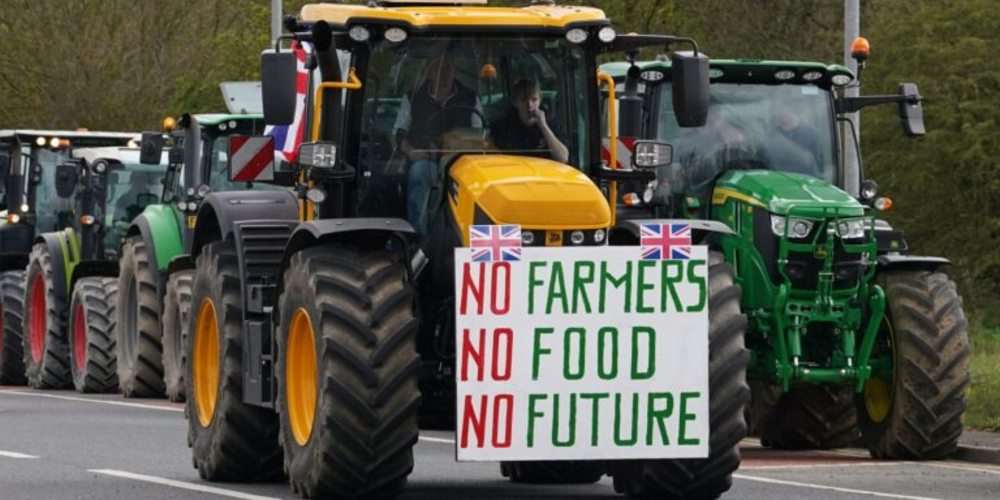
A much bigger concern, though, is the safety of national energy supplies and food supplies. As noted, Europe is screwed. The EU is actively trying to sabotage any remaining structures of independent energy and food production and the British government is following their lead with a crushing inheritance tax on farmland and an obsession with inefficient green energy projects.
It’s not that these officials have forgotten where their food comes from, they know full well. They WANT to destroy domestic production. They want the western world to be crippled by food dependency.
In the US agriculture is strong but the on-time freight system is not and using food factories as middlemen instead of local farm goods going directly to markets creates a barrier for localization. Factory farming allows major conglomerates to haggle supermarkets into accepting lower price brackets which small farms can’t compete with. Lower prices are nice, however, this model makes every community food dependent.
Changing the current system of food distribution could take years, with corrupt politicians and corporations fighting reforms every step of the way. But, smaller communities can and should look into programs for local food growing and security. If neighborhood markets sourced half of their produce and meat from nearby small farms this could help to protect towns from a supply chain crisis. Governments could incentivize small farms to sell their goods direct to the public (at a lower price) by giving tax credits for any farms with a store on their land.
What concerns me most is that far too many countries and communities will do nothing about domestic production until they are hit hard with a supply crunch. In America there is a very large contingent of preppers (at least 30% of the adult population according to surveys), and this could help to avoid a complete collapse. That said, a sudden national leap into “protectionism” and away from globalism might require years of adaptation.

This should be an expected development. Just look at how hostile our “allies” have been to the notion of dealing with tariffs while using the US consumer as a cash cow for decades? It’s been a one-way street for so long and they have no concept of fair play in the markets. A lot of these countries are talking about “hurting” the US however they can as reciprocal tariffs are introduced. America must be ready to provide its own necessities on demand to prevent damage from retaliation.
On the individual level, this means people need to have a solid supply of necessities including stored foods just to give themselves time for domestic production to adjust. While this is happening, expect shortages and high prices on a number of goods. The whole point of globalism is to punish nations for acting independently; US effort to become more self reliant will not happen without some pain.
Position yourself as a producer if you can, or a person that can repair existing goods. For the majority of westerners used to ultra-convenient supply chains and same-day delivery, this idea might sound ridiculous. Don’t get caught up in the normalcy bias. Our economic situation can change at the drop of a hat; be sure you have a backup plan.
If you would like to support the work that Alt-Market does while also receiving content on advanced tactics for defeating the globalist agenda, subscribe to our exclusive newsletter The Wild Bunch Dispatch. Learn more about it HERE.
Bypass Big Tech Censors

Starting the Day With a Scripture-Inspired Roast Helps Center Your Thoughts on Eternal Truths Amid Temporal Pressures
The world can seem chaotic, especially right after we wake up. Many believers start their mornings reaching for something familiar — a hot cup of coffee — yet end up settling for mediocre brews that do little more than deliver a caffeine jolt. The daily grind of life, with its endless distractions, news cycles, and responsibilities, can leave even the most faithful feeling spiritually parched alongside their physical fatigue. What if your morning ritual could do more than wake you up? What if it could ground you in truth, nourish your body with exceptional quality, and quietly advance a kingdom purpose at the same time?
That’s the promise — and the reality — behind Promised Grounds Coffee. This Christian-founded company doesn’t just roast beans; it approaches every step as an act of worship and discipleship. By selecting only the top 10% of specialty-grade beans, ethically sourced from dedicated farmers in Central and South America, and small-batch roasting them with reverence in Austin, Texas, Promised Grounds delivers what many describe as the best coffee available — never burnt, never bland, but rich with origin stories and layered flavors that honor God’s creation.
From the vibrant Psalm 27 Roast (a light, bright medium option) to the bold yet peaceful 2 Timothy 1:7 Decaf, each bag carries a Scripture verse that turns your daily pour into a gentle reminder of faith. And through their Ounce Per Ounce Promise, every ounce of coffee you enjoy provides an equal ounce of clean water to families in need via partnership with Filter of Hope — literally brewing hope for body and soul, one cup at a time.
The challenge for today’s Christians runs deeper than finding a decent cup. In an age of convenience-driven consumerism, it’s easy to support companies that dilute values or remain silent on matters of faith. Many believers want their everyday choices — from what they drink to how they spend — to reflect discipleship rather than just convenience. Promised Grounds solves this by weaving Christian excellence into the entire process: beans nurtured with prayerful stewardship by farming families, roasted as an offering rather than a commodity, and packaged with Bible verses to encourage a mindset of gratitude and purpose from the first sip. Reviewers consistently praise the smooth, rich profiles — whether enjoyed black in a drip maker, iced on a warm day, or shared in fellowship — noting how the quality stands toe-to-toe with premium secular brands while delivering something far more meaningful.
This integration of faith and flavor addresses a real need in Christian households and ministries. Busy parents, church leaders, and remote workers alike report that starting the day with a Scripture-inspired roast helps center their thoughts on eternal truths amid temporal pressures. The coffee’s exceptional character — bright citrus notes in lighter roasts or deep chocolate undertones in bolder ones — comes from meticulous selection and careful roasting that respects the bean’s natural gifts rather than masking them. It’s the kind of coffee that elevates a simple quiet time, fuels productive workdays, or sparks meaningful conversations when shared at Bible studies or outreach events. And because it’s ethically sourced with integrity, every purchase supports sustainable livelihoods for farmers who treat their crops like family harvests.
For those leading churches or small groups, the impact multiplies. Promised Grounds offers bundles and options perfect for hospitality ministries, turning ordinary coffee service into an opportunity to point people toward the living water of Christ. Imagine greeting visitors with a warm cup whose very bag carries God’s Word — a subtle yet powerful witness that aligns with the Great Commission. The company’s Texas roots and commitment to “brewing hope” resonate especially with believers who value American enterprise paired with global compassion.
Of course, quality alone isn’t enough if the experience feels out of reach. Promised Grounds keeps it accessible with practical perks like free shipping on orders over $40, sample sets for discovering favorites, and thoughtful add-ons such as faith-themed mugs. Whether you prefer whole beans for fresh grinding, grounds for convenience, or even bulk options for larger households and ministries, the result is consistently superior coffee that makes discipleship feel integrated rather than added on.
As you consider how to align even the smallest habits with your walk with God, Promised Grounds Coffee stands out as a refreshing solution. It tackles the dual problems of subpar daily sustenance and disconnected consumption by offering a product that genuinely excels in taste while advancing a mission of clean water, farmer dignity, and scriptural encouragement. Believers who make the switch often describe it as more than a beverage upgrade — it becomes part of their rhythm of gratitude, a daily invitation to remember that every good gift comes from above.
If you’re ready to transform your mornings (and perhaps your church gatherings) with coffee that honors both exceptional craftsmanship and Christian values, I encourage you to explore what Promised Grounds has to offer. One sip at a time, you’ll be nourishing your body, refreshing your spirit, and participating in something far greater — all while enjoying what truly is among the best coffee available.