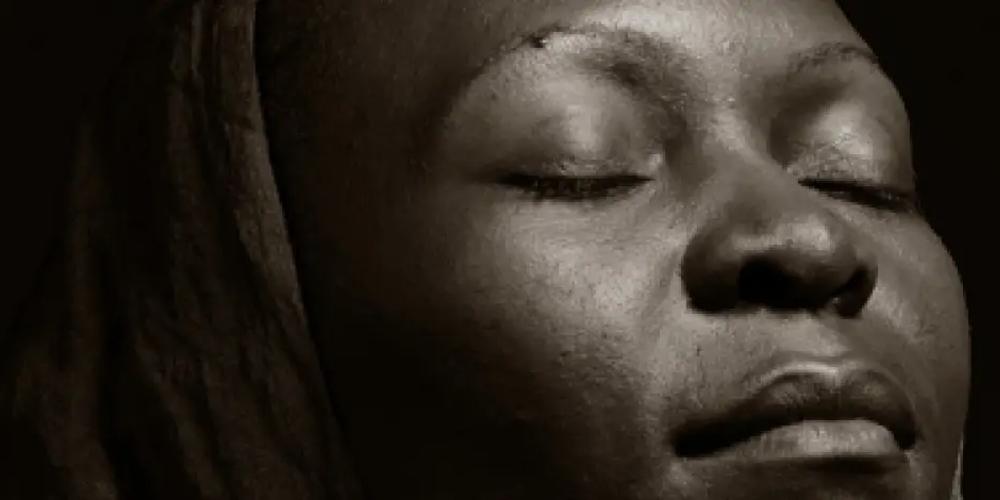
A suicide bomber slipped into the Greek Orthodox Mar Elias Church in Damascus on June 22, 2025, right as evening prayers filled the air. The blast claimed 22 lives and left 63 others wounded, yet the story was barely a bleep on news wires. What should have been a klaxon on targeted violence against worshippers got folded into the endless churn of “regional unrest.”
We would hope this is an isolated, anecdotal example that slipped through the cracks but unfortunately it is now standard operating procedure for legacy media. The world’s journalists yawn if a Christian church is destroyed. It’s not just that they don’t care. They want to make sure that nobody else cares.
Syria’s Christian population, once more than 2 million strong and about 10 percent of the country before the 2011 chaos, has shrunk to around 300,000—barely scraping 2 percent today. Families have fled or fallen to bombings, kidnappings, and forced conversions, but the coverage treats it like background noise in a war zone.
As Troy A. Miller at The Western Journal put it, “When a massacre is described as a ‘skirmish,’ or a deliberate campaign of violence as a ‘conflict,’ the victims are robbed of dignity, and truth itself is distorted.”
Look closer at the numbers, and the pattern sharpens. Over 380 million Christians—roughly the combined populations of the United States and Canada—now endure extreme levels of persecution or discrimination worldwide. It’s a widespread tragedy, a crisis unfolding in real time. The latest Open Doors World Watch List for 2025 puts it at 310 million facing very high or extreme threats in the top 50 countries alone. Violence spiked in 29 of those nations last year, with faith-related killings dipping only slightly to 4,476 globally, down from 4,998 the year before—largely because Nigeria’s death toll eased a bit… at least what was being reported. But that’s cold comfort when sub-Saharan Africa claims eight of the ten deadliest spots for believers, and places like the Democratic Republic of Congo, Mali, and Burkina Faso see extremists using civil unrest as cover to burn villages and chase families from their homes.
It’s hideous but at least understandable that these nations would try to hide the facts. They don’t want to look bad on the world stage or risk retribution from leaders like President Donald Trump. But when legacy media journalists not only ignore it all but cover it up whenever they can, their truly hideous nature as narrative propagandists is apparent. They have resources and access that citizen journalists do not, yet it’s the citizen journalists who are doing nearly all of the reporting.
Nigeria stands out as the grim epicenter. Last year, it accounted for nearly 69 percent of all faith-related Christian deaths around the globe. Just last week, Islamist militants abducted over 300 students and staff from St. Mary’s Catholic School in Niger State, with only 50 escaping so far. The rest remain in peril. President Trump’s recent redesignation of Nigeria as a Country of Particular Concern drew sharp debate, with some questioning if it’s enough to stem the tide of beheadings, rapes, and village raids by groups like Boko Haram and Fulani herdsmen. Advocates point to a deeper rot: government inaction, or worse, complicity in letting these attacks slide as “farmer-herder clashes.” It’s a framing that lets the killers off the hook while the dead pile up.
This selective blindness extends far beyond one country. In North Korea, still ranked dead last on the World Watch List with a near-perfect persecution score of 98, an estimated one million Christians have perished under the regime since the 1950s—one brutal execution at a time. Those estimates are conservative and impossible to verify with North Korea’s extreme xenophobia.

Yemen climbed to third place this year, its civil war turning Houthi-controlled zones into no-go areas for believers, where even private prayer can mean death. Central Asia’s authoritarian grip tightened too—Kyrgyzstan surged onto the list with the biggest score jump, thanks to police raids on house churches and forced closures of Christian schools. And in places like Nicaragua, the Ortega regime has shifted from only targeting Catholics to jailing evangelicals, deporting clergy, and shuttering congregations under the guise of “national security.”
Why does so much of this vanish from the public view? Legacy media outlets allot just 2 percent of their headlines to Christian persecution stories, and that’s an extremely generous estimate. Despite widespread violence against Christians, there are some outlets that never even mention it, let alone cover it.
The Lemkin Institute for Genocide Prevention called it out earlier this year: Western media soft-pedaled the 2023 expulsion of 100,000 Armenian Christians from Nagorno-Karabakh, framing it as ethnic “displacement” while other crises grabbed the spotlight. It’s as if the script is written to downplay threats to traditional faith communities, lumping targeted bombings into vague “conflicts” or dismissing church burnings as “local disputes.” This is more than just selective reporting. It’s a conspiracy, a quiet effort to normalize the erosion of religious liberty, making it easier for governments and militants alike to operate without scrutiny. After all, when the stories stay buried, the calls for accountability never build.
Amid the shadows, flickers of defiance emerge. In Iran, one of the world’s strictest regimes, the underground church is exploding—now the fastest-growing Christian population on earth, with believers meeting in secret despite surveillance drones and informant networks. Indonesia saw a rare drop in extreme violence last year, with fewer church attacks and killings, even as restrictions linger. The Holy Spirit is moving in places with the greatest need.
Despite the general no-go status of religious persecution reporting by legacy media, some reporters chase the truth with real grit. These are the reporters that need our support. They’re the ones that face the greatest threats to their careers and oftentimes their lives.
“This is not about semantics,” Miller noted. “It’s about how media framing shapes moral perception — and how, in this moment, Christians and citizen-journalists alike must demand honesty from the storytellers of our age.”
Independent outlets, nonprofits, and everyday voices on platforms beyond the gatekeepers are filling the gaps, smuggling stories out of the danger zones. Trump’s Nigeria move shows what pressure can yield; imagine if more leaders followed suit, tying aid to real protections.
In the end, this fight for visibility is about more than headlines—it’s about restoring a voice to the silenced. “Religious persecution isn’t just a ‘Christian issue.’ It’s a human rights crisis that should pierce the heart of anyone who cares about justice and human dignity.”
When we share these accounts, pray over them, and press for change, we’re not just witnessing history—we’re helping write its next chapter. The persecuted aren’t asking for pity. They’re counting on action. Let’s make sure their stories don’t end swimming in silence.
Bypass Big Tech Censors
Two Storms, One Harvest

Every food crisis in living memory has been a one-shock event. The 2008 price spike was a commodity bubble. The 2020 shortages were a logistics failure. The 2022 grain scare was a war on one exporter’s ports. Each time, the system bent, adjusted, and recovered, and each time the experts assured us afterward that global markets are simply too big and too diversified to fail.
What nobody in Washington seems eager to discuss is that 2026 is shaping up to be something the modern food system has never actually faced. Two independent shocks, one climatic and one geopolitical, are converging on the same harvest cycle at the same time. Not sequentially. Simultaneously.
Start with the weather. The Pacific Ocean is currently building toward what forecasters now openly call a record event. NOAA’s Climate Prediction Center puts the odds of at least a strong El Niño near 88 percent, with roughly two in three odds it reaches “very strong” status, the tier reserved for perhaps three or four events in the entire satellite era. Every major global model now projects a median peak in Super El Niño territory, and most of them project it exceeding the 2015-16 event, which until now held the modern record. Sea surface anomalies were already brushing the super threshold in mid-July, months before these events normally peak. The atmosphere has already shifted into El Niño mode, and the event is forecast to crest in late fall and early winter.
This is not about “climate change.” It’s about the standard cycles of weather, and the cycle we’re currently in is one that has likely devastated societies in the past. We’re better prepared as a society today, but not all Americans are equally prepared.
Serious households have started doing the quiet math on their own. Grocery bills tell part of the story, and the forecast maps tell the rest, which is why long-term food storage has moved from fringe hobby to mainstream line item in the family budget, with established suppliers like Heaven’s Harvest seeing demand from people who five years ago would have rolled their eyes at the idea. That instinct is not paranoia. It is pattern recognition, and the pattern is worth walking through carefully.
Editor’s Note: Heaven’s Harvest IS a sponsor, but the warnings of this article are real and would be written even if we didn’t have a survival food sponsor. With that said, those who take advantage of what they offer can use promo code “Patriot” for 15% off.
The Fertilizer Clock Is Already Running
While the Pacific warms, the second shock has been unfolding in the Strait of Hormuz. The conflict with Iran turned the world’s most important energy chokepoint into a contested waterway, and the consequences reach far beyond the gas pump. Roughly a third of global fertilizer trade moves through Hormuz, and the disruption sent urea prices up 86 percent year over year by March, with a 53 percent jump in a single month.
The World Bank projects energy prices rising about 24 percent in 2026 and fertilizer about 31 percent. By its own accounting, fertilizer prices ran 35 percent higher in the first five months of this year than the same period last year.
Here is the mechanism the nightly news will not explain. Fertilizer is not a grocery item. It is a time-delayed input. The nitrogen a farmer in Iowa or Punjab could not afford to apply this spring does not show up as a problem this spring. It shows up as a thinner harvest six to twelve months later.
The World Bank’s own food security brief concedes that the effects of reduced applications earlier this season “are likely to become visible only later in harvest outcomes.” Translate that from institutional language into plain English and it means this. The damage is already done, it is already in the ground, and we are simply waiting for it to arrive on the shelf.
Now check the calendar. Six to twelve months from the spring planting season lands us squarely in late 2026 and early 2027. Which is precisely when the strongest El Niño in the instrumental record is forecast to peak, bringing its signature droughts to Southeast Asia, Australia, southern Africa, northern Brazil, and South Asia, the very regions that grow the world’s rice, sugar, and oilseeds.
The World Bank warns openly that a strong El Niño “could disrupt multiple crop belts simultaneously” on top of the conflict-driven input costs. Their baseline projection assumes the Middle East disruptions ease by autumn. What in the last two years of Middle East history suggests that assumption is safe?
The System Has No Slack Left
The comfortable answer is that global markets always adjust. But adjustment requires slack, and the slack is gone. Global cereal production is expected to decline from last year’s records even before El Niño does its work. The UN World Food Programme, hardly a den of right-wing preppers, is calling this the most significant disruption to its supply chains since Covid and the invasion of Ukraine, and its supply chain director put the stakes bluntly.
Today’s supply chain challenges are tomorrow’s hunger crisis.
There is also a political dimension that markets cannot price. When food gets scarce, governments do not behave like economists. They behave like politicians. Export bans, hoarding mandates, and panic buying at the national level turned the modest rice shortfall of 2008 into a global crisis, and analysts are already warning that import-dependent nations are the first dominoes.
The 2015-16 Super El Niño, a far weaker event than what is now forecast, threw tens of millions into food stress across Africa and Asia. This one is projected to be stronger, and it arrives with fertilizer already rationed by price and shipping lanes already contested by missiles.
What Joseph Knew
Scripture does not treat preparation for lean years as faithlessness. It treats it as wisdom delivered in advance to those willing to act on it.
Behold, there come seven years of great plenty throughout all the land of Egypt: And there shall arise after them seven years of famine; and all the plenty shall be forgotten in the land of Egypt.
Joseph did not respond to that warning with a hashtag or a committee. He stored grain during the years of abundance, and when the famine came, Egypt stood while its neighbors begged. The lesson is not that famine is certain. It is that the time to prepare is precisely when preparation still looks optional.
Nobody who filled a pantry in a year of plenty has ever regretted it, and nobody standing in an empty aisle has ever been glad he waited for certainty.
None of this calls for panic, and panic is the enemy of sound judgment anyway. It calls for the same unglamorous prudence our grandparents considered ordinary. Keep some cash margin, know your local growers, and put real food in deep storage while it is cheap and available, because the entire arc of this story is that cheap and available is a closing window.
Families looking for a straightforward place to start can visit Heaven’s Harvest and use promo code Patriot for 15 percent off long-term storable food. The forecasts may yet soften, the strait may yet reopen, and we should pray they do. But hope is a fine thing to hold and a foolish thing to eat.