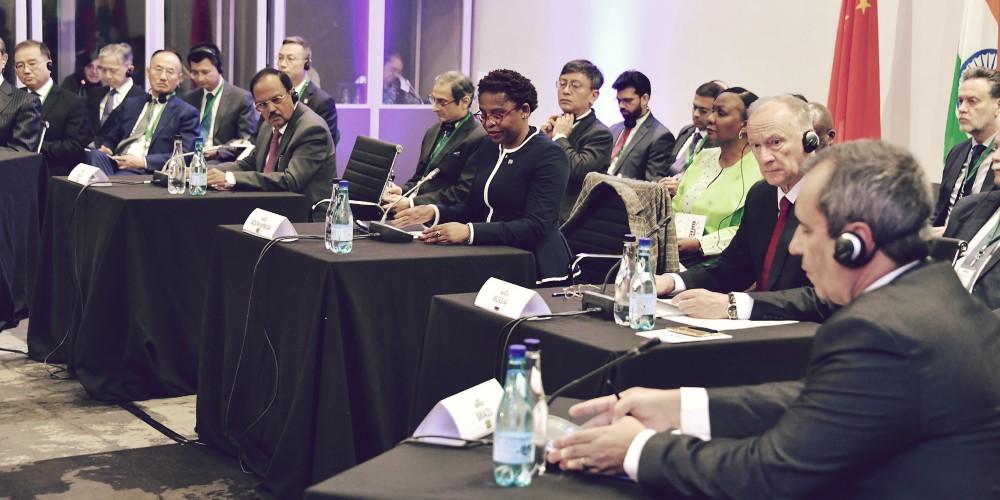
(Economic Collapse Report)—For decades, the United States and its Western allies dictated the terms of global trade, finance, and power. From the petrodollar system to the World Bank and the IMF, Washington called the shots. But a quiet revolution is underway—one that could soon make the global order unrecognizable. The BRICS alliance—Brazil, Russia, India, China, and South Africa—is no longer a collection of “emerging economies.” It’s evolving into a geopolitical counterweight to the West, a coalition determined to dethrone the U.S. dollar and rewrite the rules of international power.
At the 2024 BRICS summit in Kazan, Russia, leaders from dozens of nations gathered not just to discuss trade, but to openly challenge Western hegemony. Membership expansion was front and center. Countries like Saudi Arabia, Iran, Egypt, Ethiopia, and the UAE have already joined the bloc, giving BRICS control over vast reserves of oil, rare earth minerals, and critical trade routes. Argentina, Indonesia, and others are knocking at the door. What began as an economic partnership is transforming into a multipolar alliance with the explicit goal of ending unipolar domination.
The economic implications are seismic. The BRICS nations are increasingly settling trades in local currencies instead of the dollar. Russia and China have led the charge, using the yuan and ruble in energy deals. Brazil and India are experimenting with similar arrangements. Saudi Arabia’s recent decision to accept Chinese yuan for oil exports—a move once unthinkable—signals that the petrodollar’s days may be numbered. Once that system collapses, America’s ability to print prosperity from thin air will collapse with it.
The dollar’s dominance is not just economic—it’s political. Every sanction, every IMF loan, every U.S.-led “peacekeeping” mission relies on the dollar’s status as the world’s reserve currency. That leverage has allowed Washington to control entire economies without firing a shot. But as more countries diversify into BRICS-led mechanisms, including alternative payment systems like the proposed BRICS digital currency, that control is slipping away. The irony is that the United States’ own weaponization of the dollar—especially against Russia after 2022—accelerated the shift. In trying to punish Moscow, Washington may have doomed its own empire.
China, the quiet architect behind BRICS’ ascension, is methodically building what can only be described as a new world system. Through its Belt and Road Initiative, Beijing has ensnared over 150 countries in a web of infrastructure loans, ports, and resource agreements. Combined with BRICS’ growing financial networks, the Chinese Communist Party is positioning itself as the banker and builder of the 21st century world order. While Western media dismisses BRICS as disorganized or symbolic, the numbers tell a different story: BRICS nations now represent over 45% of global GDP (when measured by purchasing power parity) and more than 60% of global population.
The West’s answer has been predictably weak—rhetoric about “shared values” and “rules-based order,” empty phrases that ring hollow in an era of economic coercion and digital surveillance. Meanwhile, the Global South—nations long exploited by Western banking institutions—are finding in BRICS a platform for sovereignty. The promise of independence from the IMF’s predatory lending and from the dollar’s volatility is too tempting to ignore.
Of course, BRICS is not without its contradictions. India’s rivalry with China, Brazil’s political instability, and Russia’s war economy all pose internal challenges. But what unites them is more powerful than what divides them: resentment toward the global system that they believe enriched the few and impoverished the many. The alliance doesn’t need to be perfect; it just needs to be credible enough to offer the world a way out of Western dependency. And it’s rapidly becoming that.
The implications for Americans are enormous. A weaker dollar means imported inflation, higher interest rates, and the eventual end of the U.S. government’s ability to fund trillion-dollar deficits. The “free money” era is over. As BRICS nations build parallel systems—financial, technological, and even military—the global order anchored by Washington, London, and Brussels will fracture. The world isn’t going global—it’s going multipolar.

History teaches that empires rarely recognize their own decline until it’s too late. The Roman Empire debased its currency before collapsing under its own weight. The British Empire clung to its navy while losing its colonies. The American Empire is repeating both mistakes—printing wealth out of debt while policing a world that no longer wants to be policed.
BRICS may not yet control the global order, but it is undeniably reshaping it. Each new trade deal, each currency swap, and each new member brings us closer to the moment when Washington’s financial supremacy will be remembered as a bygone era. The world is changing, not because the BRICS nations are perfect—but because the West’s corruption, arrogance, and overreach have made change inevitable.
The question now is whether Americans will wake up to this shift before the ground gives way beneath them—or whether we’ll continue pretending that the empire is eternal, right up until the moment it falls.
Image by GovernmentZA via Flickr, CC BY-ND 2.0.
Bypass Big Tech Censors

Starting the Day With a Scripture-Inspired Roast Helps Center Your Thoughts on Eternal Truths Amid Temporal Pressures
The world can seem chaotic, especially right after we wake up. Many believers start their mornings reaching for something familiar — a hot cup of coffee — yet end up settling for mediocre brews that do little more than deliver a caffeine jolt. The daily grind of life, with its endless distractions, news cycles, and responsibilities, can leave even the most faithful feeling spiritually parched alongside their physical fatigue. What if your morning ritual could do more than wake you up? What if it could ground you in truth, nourish your body with exceptional quality, and quietly advance a kingdom purpose at the same time?
That’s the promise — and the reality — behind Promised Grounds Coffee. This Christian-founded company doesn’t just roast beans; it approaches every step as an act of worship and discipleship. By selecting only the top 10% of specialty-grade beans, ethically sourced from dedicated farmers in Central and South America, and small-batch roasting them with reverence in Austin, Texas, Promised Grounds delivers what many describe as the best coffee available — never burnt, never bland, but rich with origin stories and layered flavors that honor God’s creation.
From the vibrant Psalm 27 Roast (a light, bright medium option) to the bold yet peaceful 2 Timothy 1:7 Decaf, each bag carries a Scripture verse that turns your daily pour into a gentle reminder of faith. And through their Ounce Per Ounce Promise, every ounce of coffee you enjoy provides an equal ounce of clean water to families in need via partnership with Filter of Hope — literally brewing hope for body and soul, one cup at a time.
The challenge for today’s Christians runs deeper than finding a decent cup. In an age of convenience-driven consumerism, it’s easy to support companies that dilute values or remain silent on matters of faith. Many believers want their everyday choices — from what they drink to how they spend — to reflect discipleship rather than just convenience. Promised Grounds solves this by weaving Christian excellence into the entire process: beans nurtured with prayerful stewardship by farming families, roasted as an offering rather than a commodity, and packaged with Bible verses to encourage a mindset of gratitude and purpose from the first sip. Reviewers consistently praise the smooth, rich profiles — whether enjoyed black in a drip maker, iced on a warm day, or shared in fellowship — noting how the quality stands toe-to-toe with premium secular brands while delivering something far more meaningful.
This integration of faith and flavor addresses a real need in Christian households and ministries. Busy parents, church leaders, and remote workers alike report that starting the day with a Scripture-inspired roast helps center their thoughts on eternal truths amid temporal pressures. The coffee’s exceptional character — bright citrus notes in lighter roasts or deep chocolate undertones in bolder ones — comes from meticulous selection and careful roasting that respects the bean’s natural gifts rather than masking them. It’s the kind of coffee that elevates a simple quiet time, fuels productive workdays, or sparks meaningful conversations when shared at Bible studies or outreach events. And because it’s ethically sourced with integrity, every purchase supports sustainable livelihoods for farmers who treat their crops like family harvests.
For those leading churches or small groups, the impact multiplies. Promised Grounds offers bundles and options perfect for hospitality ministries, turning ordinary coffee service into an opportunity to point people toward the living water of Christ. Imagine greeting visitors with a warm cup whose very bag carries God’s Word — a subtle yet powerful witness that aligns with the Great Commission. The company’s Texas roots and commitment to “brewing hope” resonate especially with believers who value American enterprise paired with global compassion.
Of course, quality alone isn’t enough if the experience feels out of reach. Promised Grounds keeps it accessible with practical perks like free shipping on orders over $40, sample sets for discovering favorites, and thoughtful add-ons such as faith-themed mugs. Whether you prefer whole beans for fresh grinding, grounds for convenience, or even bulk options for larger households and ministries, the result is consistently superior coffee that makes discipleship feel integrated rather than added on.
As you consider how to align even the smallest habits with your walk with God, Promised Grounds Coffee stands out as a refreshing solution. It tackles the dual problems of subpar daily sustenance and disconnected consumption by offering a product that genuinely excels in taste while advancing a mission of clean water, farmer dignity, and scriptural encouragement. Believers who make the switch often describe it as more than a beverage upgrade — it becomes part of their rhythm of gratitude, a daily invitation to remember that every good gift comes from above.
If you’re ready to transform your mornings (and perhaps your church gatherings) with coffee that honors both exceptional craftsmanship and Christian values, I encourage you to explore what Promised Grounds has to offer. One sip at a time, you’ll be nourishing your body, refreshing your spirit, and participating in something far greater — all while enjoying what truly is among the best coffee available.