Stop me if you’ve heard this one. An international peer-reviewed study was just released showing a direct correlation and likely causation between spikes in major heart issues in people under 40-years-old and the rollout of the Covid-19 “vaccines.”
Chances are, you HAVEN’T heard that one before even though we’ve seen multiple reports from across the globe singing the same basic tune. Last month, we posted information from Germany that highlights the young and jabbed getting hit with a sudden spike in heart-related emergencies, prompting emergency medical groups to demand an end to vaccine mandates. Now, we’re seeing the same thing from Israel.
Before I get to that study, let’s explain why we’re having to rely on international studies. It’s noteworthy that such studies are not being pushed here in the United States because of one unfortunate reason: We don’t make the data public or available to researchers as much as other nations do. Or, to be more accurate, our government does not RELEASE the data regarding emergency medical services. They claim they don’t have the mechanisms to meld the various reporting styles from city to city and state to state, but this is a lie. We can solve that problem with a day’s worth of coding. I’m sure they’ve done just that, but they won’t release that data or even acknowledge it exists because it betrays the vaccine narrative.
The Israel study shows a dramatic increase in heart-related emergencies reported during the times the Covid jabs were being heavily pushed. While the study goes out of its way to express correlation does not necessarily mean causation, it’s pretty clear when looking at this and other studies from around the world that causation is very likely.
Here’s the Israel story by KoolBeens Cafe on Substack:
Increased Emergency Cardiovascular Events Associated With Vaccine Rollout in Israel Among 16-39-Year-Olds, Study Finds
A retrospective population-based study that analyzed call data from Israel’s National Emergency Medical Services (IEMS) found a more than 25% increase in calls for both cardiac arrest and acute coronary syndrome among 16-39 year-olds during the first 5 months of 2021, as compared to the years 2019-2020.1 While cardiac conditions are caused by COVID-19 and are also reported as side effects of the vaccines, the peer-reviewed study published in Scientific Reports found that the emergency calls were “significantly associated” with the rates of 1st and 2nd vaccine doses administered to this age group, but not with COVID-19 infection rates. All of the vaccines administered in Israel were manufactured by Pfizer.
The authors say the findings “underscore the already established causal relationship between vaccines and myocarditis, a frequent cause of unexpected cardiac arrest in young individuals.”
Messenger RNA vaccines manufactured by Moderna (mRNA-1273) and Pfizer (BNT162b2) have been associated with an increased risk of myocarditis, especially in male adolescents and young adults. According to the United States Centre for Disease Control—drawing on self-reported data from the Vaccine Adverse Event Reporting System (VAERS)—myocarditis has been reported typically after the second dose and within a week of vaccination.

Myocarditis causes inflammation of the heart muscle, which enlarges and weakens the organ, and creates scar tissue forcing it to work harder to circulate blood and oxygen throughout the body. Myopericarditis is inflammation of both the heart muscle and the layer (pericardium) surrounding the heart. According to the Myocarditis Foundation, the inflammation can be in response to a viral infection, or some other trigger including autoimmune diseases, such as rheumatoid arthritis or lupus.
Combining emergency call data with pandemic waves and vaccination rates
The study combines IEMS call volume data for cardiac arrest (CA) and for acute coronary syndrome (ACS) with data on COVID-19 infection rates and vaccination rates over a span of two and half years, divided into three time periods: a 14-month “normal period” beginning in January 2019, prior to the pandemic; a ten-month “pandemic period” starting in March 2020, which includes two infection waves; and a “pandemic and vaccination period” from January to June 2021, which includes a third wave as well as Israel’s vaccination rollout for those aged 16 and older.
Here are some of the main observations (see Figures below for more detail):
- Cardiac arrest calls (red line) appear to be decoupled from pandemic infection waves (grey line).
- The increase in cardiac arrest calls (red line) appears to be associated with the vaccination rollout (purple and blue lines for 1st and 2nd dose respectively) and not with third wave (grey line).
- The increase in cardiac arrest calls (red line) appears to be highly associated with the 2nd dose of the Pfizer vaccine (blue line).
- The increase in cardiac arrest calls (red line) after April 2021 is associated with the single vaccine doses administered to individuals who were previously infected and recovered from COVID-19 (green line).
While the association between CA calls and the 1st and 2nd doses of vaccine seems to be a convincing one, the same cannot be said for the association between the single vaccine dose (green line) and the second spike in cardiac arrest calls (Figure 2). In this case, there seems to be a disconnect rather than an association.
To view the Figures relating to acute coronary syndrome (ACS)—which showed a similar association with Israel’s vaccination rollout— please go here.
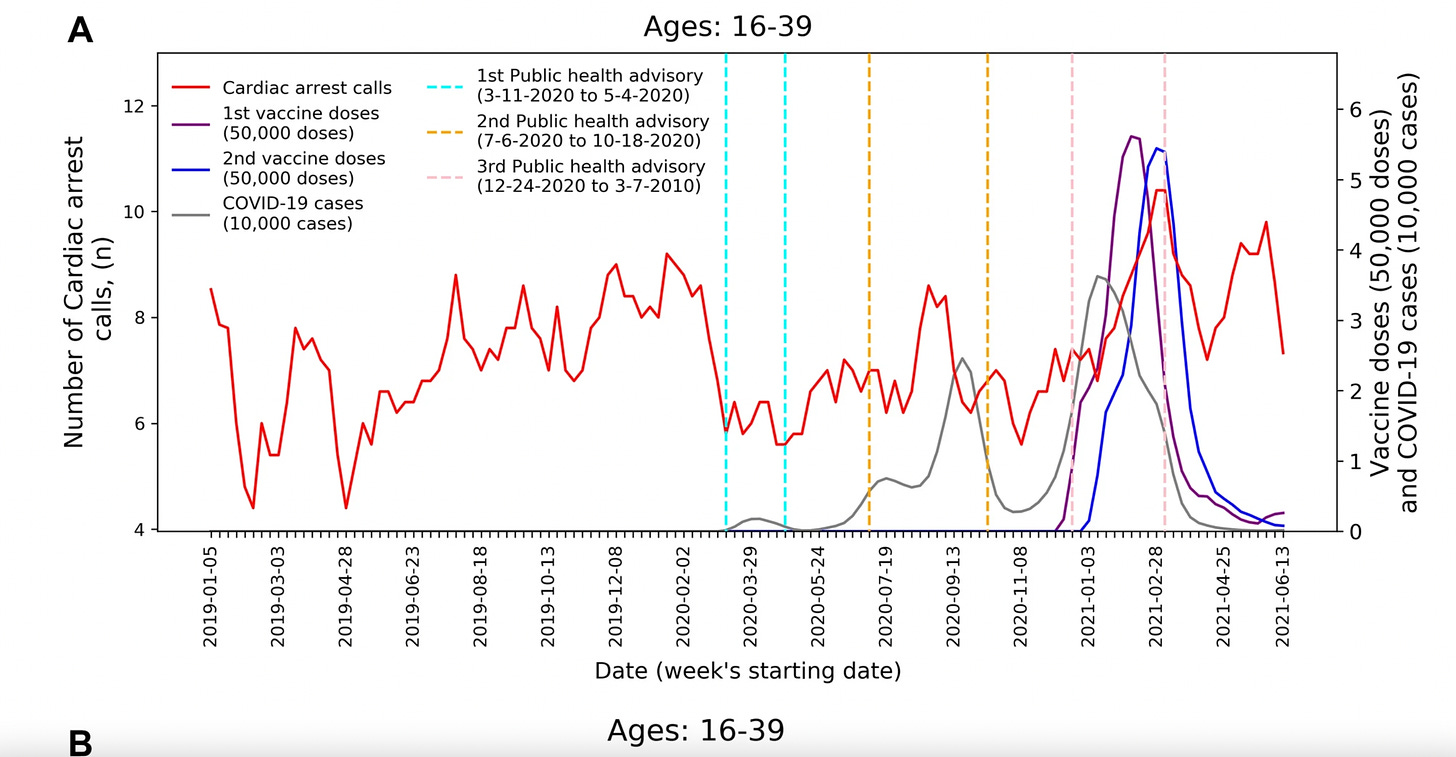
Figure 1: Number of cardiac arrest calls (red line) from January 2019 to June 2021. Screen shot taken from IEMS call study (2022).
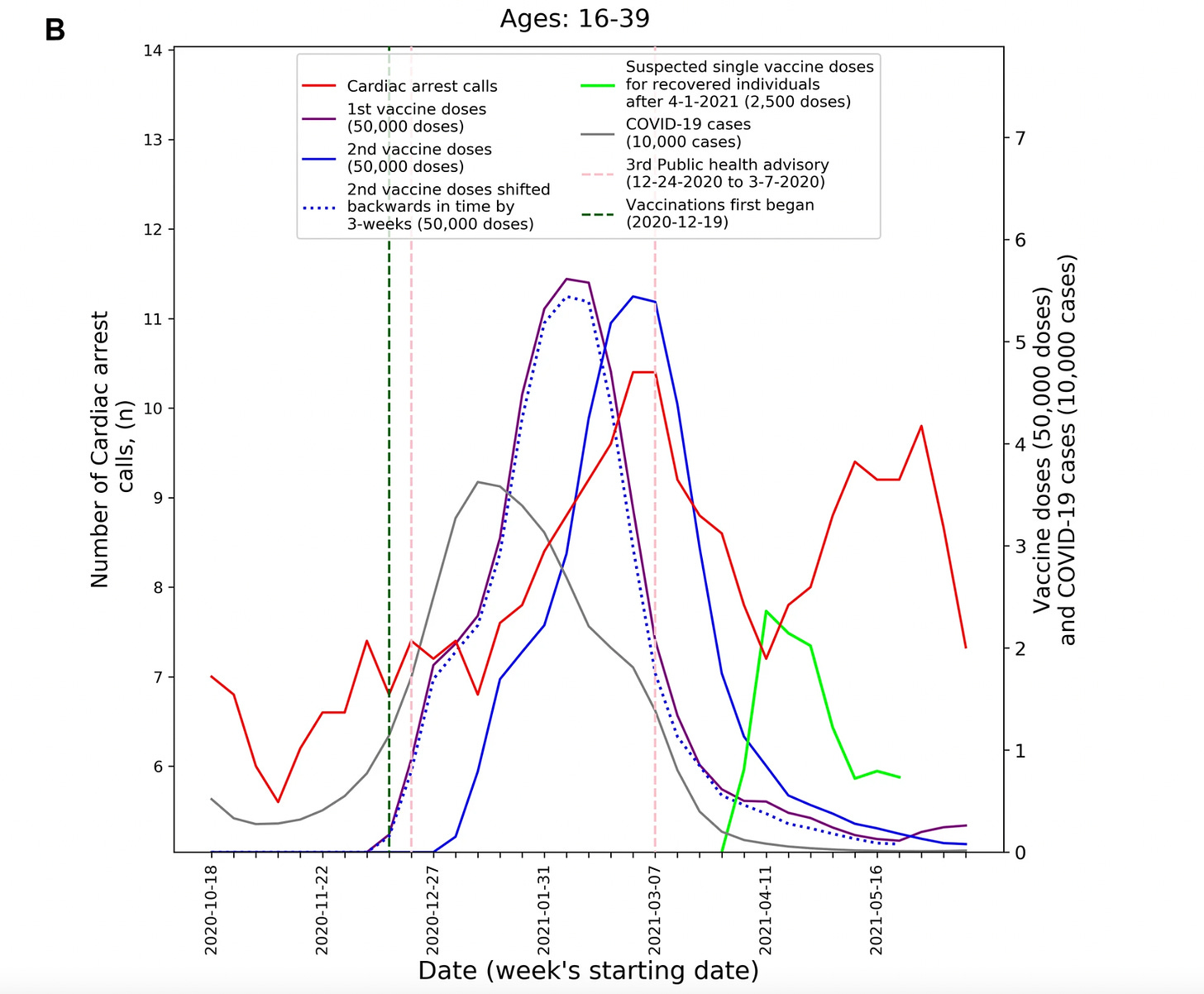
Figure 2: Number of cardiac arrest calls (red line) during the “pandemic and vaccination” period only. Screen shot taken from IEMS call study (2022).
Read the whole story on CoolBeens Cafe.
Did This Cause the SCOTUS Leak?
I’d like to take a moment to tease a bit of a conspiracy theory I’m working on right now. News of Roe v. Wade likely being overturned is wonderful, but the leak of the draft majority opinion is conspicuously timed. Many have had access to it for a while. Why did it pop up now?
My theory (or rather the seed of a burgeoning theory) is that over the last two or three months, there have been so many damning reports about the jabs that the powers-that-be have needed new bombshells to keep focus off of them. The floodgates have been opening with news of major risks surrounding the jabs, news that is often so striking that even corporate media would look foolish to ignore. But they’ve been able to ignore it and keep people in the dark because of a string of blockbuster stories that have been hitting since the beginning of the year.
By no means am I suggesting that ALL of these stories, from Ukraine to Hunter Biden to Elon Musk to Roe v. Wade, were timed to be released in succession to keep the news cycle off the jabs, but I believe there’s a solid chance that some of them definitely were. The NY Times revelation about Hunter’s laptop and the leak of Roe v. Wade were both “evergreen” bombshells. In other words, they could have been dropped at any moment but were conspicuously released at times when previous big stories were fading.
The other anecdotal evidence I have of this is the nature of the news drops. All of these stories aren’t just big news to the public, but specifically they offered endless fodder for conservative and alternative media. Sites like mine, The Gateway Pundit, Infowars, and other “fringe” sites that regularly talk about jabs had to give tons of attention to the bombshells that have been dropped recently.
This theory isn’t mine alone. It was sparked by a Tweet that got me thinking. The Tweeter (I forgot to note who it was because at the time I didn’t appreciate the significance) asked whether the SCOTUS leak was timed to cover-up the release of 2000 Mules. I dismissed the Tweet at the time because I knew the powers-that-be weren’t really concerned about suppressing the movie… which they’ve done. But after randomly rehashing the idea in my brain a few hours later, I started making connections to the bombshell vaccine data that isn’t getting any attention. Could all of these various bombshells be noise to cover-up the jab risks?
Again, I’m not suggesting that the news was faked. I’m looking at the timing. The NY Times laptop from hell piece could have dropped anytime, as could the SCOTUS leak. Both were dropped at the proper moment if the goal was to distract from the jabs. I’ll flesh this out more in the near future. In the meantime, listen to the latest episode of The Midnight Sentinel.
Testing out our new Odysee Channel’s embeds:
Bypass Big Tech Censors

Starting the Day With a Scripture-Inspired Roast Helps Center Your Thoughts on Eternal Truths Amid Temporal Pressures
The world can seem chaotic, especially right after we wake up. Many believers start their mornings reaching for something familiar — a hot cup of coffee — yet end up settling for mediocre brews that do little more than deliver a caffeine jolt. The daily grind of life, with its endless distractions, news cycles, and responsibilities, can leave even the most faithful feeling spiritually parched alongside their physical fatigue. What if your morning ritual could do more than wake you up? What if it could ground you in truth, nourish your body with exceptional quality, and quietly advance a kingdom purpose at the same time?
That’s the promise — and the reality — behind Promised Grounds Coffee. This Christian-founded company doesn’t just roast beans; it approaches every step as an act of worship and discipleship. By selecting only the top 10% of specialty-grade beans, ethically sourced from dedicated farmers in Central and South America, and small-batch roasting them with reverence in Austin, Texas, Promised Grounds delivers what many describe as the best coffee available — never burnt, never bland, but rich with origin stories and layered flavors that honor God’s creation.
From the vibrant Psalm 27 Roast (a light, bright medium option) to the bold yet peaceful 2 Timothy 1:7 Decaf, each bag carries a Scripture verse that turns your daily pour into a gentle reminder of faith. And through their Ounce Per Ounce Promise, every ounce of coffee you enjoy provides an equal ounce of clean water to families in need via partnership with Filter of Hope — literally brewing hope for body and soul, one cup at a time.
The challenge for today’s Christians runs deeper than finding a decent cup. In an age of convenience-driven consumerism, it’s easy to support companies that dilute values or remain silent on matters of faith. Many believers want their everyday choices — from what they drink to how they spend — to reflect discipleship rather than just convenience. Promised Grounds solves this by weaving Christian excellence into the entire process: beans nurtured with prayerful stewardship by farming families, roasted as an offering rather than a commodity, and packaged with Bible verses to encourage a mindset of gratitude and purpose from the first sip. Reviewers consistently praise the smooth, rich profiles — whether enjoyed black in a drip maker, iced on a warm day, or shared in fellowship — noting how the quality stands toe-to-toe with premium secular brands while delivering something far more meaningful.
This integration of faith and flavor addresses a real need in Christian households and ministries. Busy parents, church leaders, and remote workers alike report that starting the day with a Scripture-inspired roast helps center their thoughts on eternal truths amid temporal pressures. The coffee’s exceptional character — bright citrus notes in lighter roasts or deep chocolate undertones in bolder ones — comes from meticulous selection and careful roasting that respects the bean’s natural gifts rather than masking them. It’s the kind of coffee that elevates a simple quiet time, fuels productive workdays, or sparks meaningful conversations when shared at Bible studies or outreach events. And because it’s ethically sourced with integrity, every purchase supports sustainable livelihoods for farmers who treat their crops like family harvests.
For those leading churches or small groups, the impact multiplies. Promised Grounds offers bundles and options perfect for hospitality ministries, turning ordinary coffee service into an opportunity to point people toward the living water of Christ. Imagine greeting visitors with a warm cup whose very bag carries God’s Word — a subtle yet powerful witness that aligns with the Great Commission. The company’s Texas roots and commitment to “brewing hope” resonate especially with believers who value American enterprise paired with global compassion.
Of course, quality alone isn’t enough if the experience feels out of reach. Promised Grounds keeps it accessible with practical perks like free shipping on orders over $40, sample sets for discovering favorites, and thoughtful add-ons such as faith-themed mugs. Whether you prefer whole beans for fresh grinding, grounds for convenience, or even bulk options for larger households and ministries, the result is consistently superior coffee that makes discipleship feel integrated rather than added on.
As you consider how to align even the smallest habits with your walk with God, Promised Grounds Coffee stands out as a refreshing solution. It tackles the dual problems of subpar daily sustenance and disconnected consumption by offering a product that genuinely excels in taste while advancing a mission of clean water, farmer dignity, and scriptural encouragement. Believers who make the switch often describe it as more than a beverage upgrade — it becomes part of their rhythm of gratitude, a daily invitation to remember that every good gift comes from above.
If you’re ready to transform your mornings (and perhaps your church gatherings) with coffee that honors both exceptional craftsmanship and Christian values, I encourage you to explore what Promised Grounds has to offer. One sip at a time, you’ll be nourishing your body, refreshing your spirit, and participating in something far greater — all while enjoying what truly is among the best coffee available.