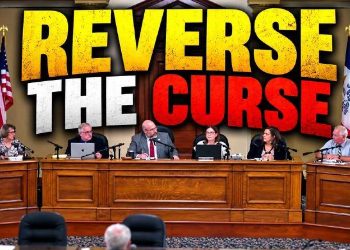
In the wake of the devastating Palisades fire that claimed 12 lives and razed more than 6,000 homes and structures across Los Angeles last year, fresh allegations have emerged that Mayor Karen Bass personally intervened to soften a critical after-action report. Sources with direct knowledge of her office’s operations claim Bass instructed fire department leaders to remove or dilute findings that exposed serious lapses in the city’s response, fearing legal repercussions.
This revelation, detailed in a Los Angeles Times investigation, contradicts Bass’s public denials and raises profound questions about transparency in a city still reeling from one of its worst disasters.
The fire ignited on January 7, 2025, when embers from the earlier Lachman blaze—thought to be extinguished on January 1—rekindled amid ferocious winds. Forecasters had warned of catastrophic conditions, yet Los Angeles Fire Department officials opted not to fully staff shifts or pre-deploy all available resources to high-risk areas like Pacific Palisades.
This decision, later scrutinized by journalists, left firefighters scrambling as flames engulfed neighborhoods. Bass, who had recently faced criticism for budget decisions affecting the department, dismissed then-Fire Chief Kristin Crowley in February 2025, citing failures in maintaining extended shifts during the crisis.
An after-action report, intended to dissect these missteps and recommend fixes, became the focal point of controversy. Early drafts, as uncovered by The Times through review of seven versions, bluntly stated that pre-deployment choices “did not align” with established policy. Battalion Chief Kenneth Cook, the report’s primary author, highlighted how the department fell short in mobilizing engines and crews despite clear warnings.
However, by the time the final version was released on October 8, 2025, that language had vanished. Instead, the document praised the response for going “above and beyond the standard LAFD pre-deployment matrix,” effectively shielding top commanders from blame.
Sources told The Times that Bass, upon reviewing an initial draft, contacted interim Fire Chief Ronnie Villanueva directly. She expressed concerns that the unvarnished account could invite lawsuits against the city for its handling of the blaze. According to these insiders—two individuals briefed by Bass confidants—the mayor demanded key sections be scrubbed or toned down.
One confidant reportedly admitted to a source that “the mayor didn’t tell the truth when she said she had nothing to do with changing the report,” adding that the alterations were “a bad idea” with potential to damage her politically. These same confidants claimed Bass retained the draft until revisions were complete and are willing to testify if subpoenaed.

Bass has steadfastly denied any role in the edits. In statements to The Times and other outlets, her office insisted the report was solely the fire department’s work, with her input limited to fact-checking on budget matters and wind forecasts.
“The Mayor has been clear about her concerns regarding pre-deployment and the LAFD’s response to the fire,” a spokesperson stated, pointing to her push for new leadership and an independent probe into the Lachman fire’s mop-up.
Bass herself, in a brief December 2025 interview, emphasized: “The only thing that I told them to do was I told them to talk to Matt Szabo about the budget and the funding, and that was it. That’s a technical report. I’m not a firefighter.” Her team dismissed the allegations as “muckraking journalism” reliant on “third-hand unsourced information.”
Yet the discrepancies between drafts and the final product are undeniable. Fire Commission President Genethia Hudley Hayes confirmed Villanueva informed her in mid-August 2025 that a draft had gone to the mayor’s office for “refinements.” Hayes, after consulting legal counsel and examining versions, concluded no “material findings” were changed—but critics disagree.
New LAFD Chief Jaime Moore, appointed by Bass in November 2025, acknowledged during a January 2026 commission meeting that edits were made to avoid reflecting poorly on leadership. Moore vowed such interference won’t happen under his watch, stating flatly that if a mayor requested alterations, “That’s very easy, I’d just say absolutely not. We don’t do that.”
The episode has fueled outrage among Palisades survivors and former fire officials, who see it as a deliberate cover-up eroding the department’s capacity to learn from tragedy. One resident group, in a social media post following the revelations, accused Bass and state leaders of lying to protect their reputations while victims rebuild from ashes.
The LAFD’s decision to involve a crisis management team and public relations firm during the report’s preparation further muddies the waters, though their exact influence remains unclear. With most of the report’s 42 recommendations now implemented—including enhanced training for wind-driven fires and mandatory staffing on red-flag days—the focus shifts to whether these changes suffice without full accountability for past errors.
At its core, this scandal underscores a troubling pattern in government responses to crises: the temptation to rewrite history rather than confront it. Bass’s actions, if proven, not only betray public trust but jeopardize future safety by prioritizing liability over lessons learned. As Los Angeles braces for another fire season, residents deserve leaders who value truth over self-preservation, ensuring that the Palisades fire’s horrors prompt real reform, not sanitized narratives.
Comments About This Story Through X:
We are switching to using X as our comment “system.” Our hope is that by using that public forum, more of our readers will be willing to share their thoughts. Be sure to like and repost to spread the news.
Bypass Big Tech Censors

Two Storms, One Harvest

Every food crisis in living memory has been a one-shock event. The 2008 price spike was a commodity bubble. The 2020 shortages were a logistics failure. The 2022 grain scare was a war on one exporter’s ports. Each time, the system bent, adjusted, and recovered, and each time the experts assured us afterward that global markets are simply too big and too diversified to fail.
What nobody in Washington seems eager to discuss is that 2026 is shaping up to be something the modern food system has never actually faced. Two independent shocks, one climatic and one geopolitical, are converging on the same harvest cycle at the same time. Not sequentially. Simultaneously.
Start with the weather. The Pacific Ocean is currently building toward what forecasters now openly call a record event. NOAA’s Climate Prediction Center puts the odds of at least a strong El Niño near 88 percent, with roughly two in three odds it reaches “very strong” status, the tier reserved for perhaps three or four events in the entire satellite era. Every major global model now projects a median peak in Super El Niño territory, and most of them project it exceeding the 2015-16 event, which until now held the modern record. Sea surface anomalies were already brushing the super threshold in mid-July, months before these events normally peak. The atmosphere has already shifted into El Niño mode, and the event is forecast to crest in late fall and early winter.
This is not about “climate change.” It’s about the standard cycles of weather, and the cycle we’re currently in is one that has likely devastated societies in the past. We’re better prepared as a society today, but not all Americans are equally prepared.
Serious households have started doing the quiet math on their own. Grocery bills tell part of the story, and the forecast maps tell the rest, which is why long-term food storage has moved from fringe hobby to mainstream line item in the family budget, with established suppliers like Heaven’s Harvest seeing demand from people who five years ago would have rolled their eyes at the idea. That instinct is not paranoia. It is pattern recognition, and the pattern is worth walking through carefully.
Editor’s Note: Heaven’s Harvest IS a sponsor, but the warnings of this article are real and would be written even if we didn’t have a survival food sponsor. With that said, those who take advantage of what they offer can use promo code “Patriot” for 15% off.
The Fertilizer Clock Is Already Running
While the Pacific warms, the second shock has been unfolding in the Strait of Hormuz. The conflict with Iran turned the world’s most important energy chokepoint into a contested waterway, and the consequences reach far beyond the gas pump. Roughly a third of global fertilizer trade moves through Hormuz, and the disruption sent urea prices up 86 percent year over year by March, with a 53 percent jump in a single month.
The World Bank projects energy prices rising about 24 percent in 2026 and fertilizer about 31 percent. By its own accounting, fertilizer prices ran 35 percent higher in the first five months of this year than the same period last year.
Here is the mechanism the nightly news will not explain. Fertilizer is not a grocery item. It is a time-delayed input. The nitrogen a farmer in Iowa or Punjab could not afford to apply this spring does not show up as a problem this spring. It shows up as a thinner harvest six to twelve months later.
The World Bank’s own food security brief concedes that the effects of reduced applications earlier this season “are likely to become visible only later in harvest outcomes.” Translate that from institutional language into plain English and it means this. The damage is already done, it is already in the ground, and we are simply waiting for it to arrive on the shelf.
Now check the calendar. Six to twelve months from the spring planting season lands us squarely in late 2026 and early 2027. Which is precisely when the strongest El Niño in the instrumental record is forecast to peak, bringing its signature droughts to Southeast Asia, Australia, southern Africa, northern Brazil, and South Asia, the very regions that grow the world’s rice, sugar, and oilseeds.
The World Bank warns openly that a strong El Niño “could disrupt multiple crop belts simultaneously” on top of the conflict-driven input costs. Their baseline projection assumes the Middle East disruptions ease by autumn. What in the last two years of Middle East history suggests that assumption is safe?
The System Has No Slack Left
The comfortable answer is that global markets always adjust. But adjustment requires slack, and the slack is gone. Global cereal production is expected to decline from last year’s records even before El Niño does its work. The UN World Food Programme, hardly a den of right-wing preppers, is calling this the most significant disruption to its supply chains since Covid and the invasion of Ukraine, and its supply chain director put the stakes bluntly.
Today’s supply chain challenges are tomorrow’s hunger crisis.
There is also a political dimension that markets cannot price. When food gets scarce, governments do not behave like economists. They behave like politicians. Export bans, hoarding mandates, and panic buying at the national level turned the modest rice shortfall of 2008 into a global crisis, and analysts are already warning that import-dependent nations are the first dominoes.
The 2015-16 Super El Niño, a far weaker event than what is now forecast, threw tens of millions into food stress across Africa and Asia. This one is projected to be stronger, and it arrives with fertilizer already rationed by price and shipping lanes already contested by missiles.
What Joseph Knew
Scripture does not treat preparation for lean years as faithlessness. It treats it as wisdom delivered in advance to those willing to act on it.
Behold, there come seven years of great plenty throughout all the land of Egypt: And there shall arise after them seven years of famine; and all the plenty shall be forgotten in the land of Egypt.
Joseph did not respond to that warning with a hashtag or a committee. He stored grain during the years of abundance, and when the famine came, Egypt stood while its neighbors begged. The lesson is not that famine is certain. It is that the time to prepare is precisely when preparation still looks optional.
Nobody who filled a pantry in a year of plenty has ever regretted it, and nobody standing in an empty aisle has ever been glad he waited for certainty.
None of this calls for panic, and panic is the enemy of sound judgment anyway. It calls for the same unglamorous prudence our grandparents considered ordinary. Keep some cash margin, know your local growers, and put real food in deep storage while it is cheap and available, because the entire arc of this story is that cheap and available is a closing window.
Families looking for a straightforward place to start can visit Heaven’s Harvest and use promo code Patriot for 15 percent off long-term storable food. The forecasts may yet soften, the strait may yet reopen, and we should pray they do. But hope is a fine thing to hold and a foolish thing to eat.