- Senator Alex Padilla (D-CA) and Representative Joe Morelle (D-NY) have called for the reinstatement of officials at CISA placed on administrative leave by the Trump administration, citing threats to election security.
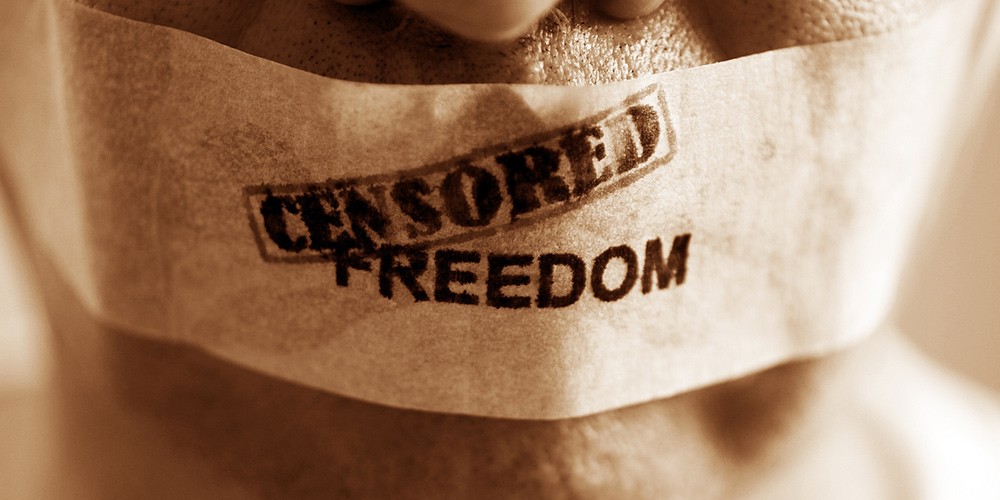
- Critics argue that CISA’s involvement in monitoring and flagging speech for suppression raises concerns about free speech, with some viewing it as necessary to prevent government overreach in online discourse.
- The debate over CISA’s role is part of a broader trend where government agencies and social media companies have collaborated to monitor and control online speech, particularly during the 2020 election.
- Meta has announced changes to its content moderation policies, moving away from third-party fact-checking and towards a community-based notes system, which is seen as a step towards protecting free speech online.
- Congress is encouraged to pass the Protecting Speech from Government Interference Act to prevent politically motivated censorship and reinforce First Amendment protections, ensuring a balance between election security and free expression.
(Natural News)—In a controversial move, Senator Alex Padilla (D-CA) and Representative Joe Morelle (D-NY) are demanding the reinstatement of officials within the Cybersecurity and Infrastructure Security Agency (CISA) who were placed on administrative leave by the Trump administration. These lawmakers, known for their strong advocacy of government intervention in online discourse, argue that the removal of these employees threatens election security. However, their push to restore these officials has raised significant concerns among free speech advocates and conservative critics.
CISA’s role in election security: A double-edged sword
In a formal letter to CISA, Senator Padilla and Representative Morelle expressed their alarm over the removal of employees who were involved in monitoring and flagging speech for suppression. They wrote, “Election-related mis- and disinformation from domestic and foreign actors continues to threaten the strength and integrity of our democracy by weakening trust in our elections and promoting falsehoods about election officials that have resulted in threats against them and their families.”
While the lawmakers frame their concerns in the context of election security, critics argue that this rhetoric is a familiar justification for empowering government agencies to police online speech. The Trump administration’s decision to sideline these officials is seen by some as a necessary course correction to prevent federal agencies from overstepping their bounds in surveilling and controlling public discourse.
Historical context: A pattern of censorship
The current debate over CISA’s role is not isolated. It is part of a broader trend where government agencies and social media platforms have increasingly collaborated to monitor and control online speech. This collaboration reached a peak during the 2020 presidential election, when Twitter, under the leadership of former executives Vijaya Gadde, James Baker and Yoel Roth, worked closely with the FBI to censor content, particularly the New York Post’s story about the Biden family’s business dealings.
In a recent hearing of the House Committee on Oversight and Accountability, former Twitter executives admitted that the New York Post’s Hunter Biden laptop story did not violate any of the company’s policies but was censored nonetheless. Chairman James Comer (R-Ky.) emphasized, “Isn’t it correct that the Biden campaign had contact with Twitter in the run-up to the 2020 election… And you’re telling this committee that you didn’t ask any Biden representative if the laptop was real or for Hunter Biden’s attorney’s phone number to confirm its authenticity?”
Rep. Andy Biggs (R-Ariz.) echoed this sentiment, noting that Twitter executives were openly hostile towards conservative voices and specifically targeted the New York Post’s Hunter Biden laptop story. “Within mere minutes or hours after the New York Post published its story on the Hunter Biden laptop, at 8:51 am, you sent a message to a team, part of your team I assume. You said, ‘It isn’t clearly violative of our hacked materials policy,’ referring to the story, ‘nor is it clearly in violation of anything else.’ Do you remember sending that message?” Mr. Roth responded, “I don’t recall that message specifically, but that does sound like my judgment on that day, yes.”
Meta’s reset: A beacon of hope for free speech
While the Democrats push to restore government control over online speech, a significant counter-movement is emerging. Meta, the parent company of Facebook, Instagram and WhatsApp, has announced a major reform in its content moderation policies. CEO Mark Zuckerberg acknowledged that the pendulum of content control had swung too far, leading to excessive censorship and mistakes.
Zuckerberg’s decision to abandon the third-party fact-checking system in the U.S. and move toward a community-based notes system, similar to what Elon Musk implemented at X (formerly Twitter), represents a more democratic approach to content contextualization. This move is seen as a crucial step in restoring balance and protecting free speech online.

Amy Bos, Director of State and Federal Affairs, praised Meta’s reforms, stating, “This kind of innovation in content moderation would be impossible without America’s unique environment of free enterprise and free expression. Meta’s reset offers hope that we can maintain vibrant online spaces without sacrificing our commitment to free expression.”
The need for legislative action
To protect these gains and prevent future government overreach, Congress should reintroduce and pass the Protecting Speech from Government Interference Act. This legislation, championed by Chairs James Comer, Jim Jordan and Cathy McMorris Rodgers, would prevent politically motivated bureaucrats from coercing private businesses to suppress lawful speech. By reinforcing the First Amendment’s protections and preventing covert censorship, this act is essential for preserving a marketplace of ideas where speech can be freely exchanged.
As we navigate the complexities of the digital age, it is crucial to strike a balance between maintaining election security and upholding the principles of free speech. The ongoing debate over CISA’s role and Meta’s recent reforms highlight the importance of vigilance and proactive legislation to ensure that government control over online speech does not undermine the very foundations of American democracy.
Sources include:
Bypass Big Tech Censors

Starting the Day With a Scripture-Inspired Roast Helps Center Your Thoughts on Eternal Truths Amid Temporal Pressures
The world can seem chaotic, especially right after we wake up. Many believers start their mornings reaching for something familiar — a hot cup of coffee — yet end up settling for mediocre brews that do little more than deliver a caffeine jolt. The daily grind of life, with its endless distractions, news cycles, and responsibilities, can leave even the most faithful feeling spiritually parched alongside their physical fatigue. What if your morning ritual could do more than wake you up? What if it could ground you in truth, nourish your body with exceptional quality, and quietly advance a kingdom purpose at the same time?
That’s the promise — and the reality — behind Promised Grounds Coffee. This Christian-founded company doesn’t just roast beans; it approaches every step as an act of worship and discipleship. By selecting only the top 10% of specialty-grade beans, ethically sourced from dedicated farmers in Central and South America, and small-batch roasting them with reverence in Austin, Texas, Promised Grounds delivers what many describe as the best coffee available — never burnt, never bland, but rich with origin stories and layered flavors that honor God’s creation.
From the vibrant Psalm 27 Roast (a light, bright medium option) to the bold yet peaceful 2 Timothy 1:7 Decaf, each bag carries a Scripture verse that turns your daily pour into a gentle reminder of faith. And through their Ounce Per Ounce Promise, every ounce of coffee you enjoy provides an equal ounce of clean water to families in need via partnership with Filter of Hope — literally brewing hope for body and soul, one cup at a time.
The challenge for today’s Christians runs deeper than finding a decent cup. In an age of convenience-driven consumerism, it’s easy to support companies that dilute values or remain silent on matters of faith. Many believers want their everyday choices — from what they drink to how they spend — to reflect discipleship rather than just convenience. Promised Grounds solves this by weaving Christian excellence into the entire process: beans nurtured with prayerful stewardship by farming families, roasted as an offering rather than a commodity, and packaged with Bible verses to encourage a mindset of gratitude and purpose from the first sip. Reviewers consistently praise the smooth, rich profiles — whether enjoyed black in a drip maker, iced on a warm day, or shared in fellowship — noting how the quality stands toe-to-toe with premium secular brands while delivering something far more meaningful.
This integration of faith and flavor addresses a real need in Christian households and ministries. Busy parents, church leaders, and remote workers alike report that starting the day with a Scripture-inspired roast helps center their thoughts on eternal truths amid temporal pressures. The coffee’s exceptional character — bright citrus notes in lighter roasts or deep chocolate undertones in bolder ones — comes from meticulous selection and careful roasting that respects the bean’s natural gifts rather than masking them. It’s the kind of coffee that elevates a simple quiet time, fuels productive workdays, or sparks meaningful conversations when shared at Bible studies or outreach events. And because it’s ethically sourced with integrity, every purchase supports sustainable livelihoods for farmers who treat their crops like family harvests.
For those leading churches or small groups, the impact multiplies. Promised Grounds offers bundles and options perfect for hospitality ministries, turning ordinary coffee service into an opportunity to point people toward the living water of Christ. Imagine greeting visitors with a warm cup whose very bag carries God’s Word — a subtle yet powerful witness that aligns with the Great Commission. The company’s Texas roots and commitment to “brewing hope” resonate especially with believers who value American enterprise paired with global compassion.
Of course, quality alone isn’t enough if the experience feels out of reach. Promised Grounds keeps it accessible with practical perks like free shipping on orders over $40, sample sets for discovering favorites, and thoughtful add-ons such as faith-themed mugs. Whether you prefer whole beans for fresh grinding, grounds for convenience, or even bulk options for larger households and ministries, the result is consistently superior coffee that makes discipleship feel integrated rather than added on.
As you consider how to align even the smallest habits with your walk with God, Promised Grounds Coffee stands out as a refreshing solution. It tackles the dual problems of subpar daily sustenance and disconnected consumption by offering a product that genuinely excels in taste while advancing a mission of clean water, farmer dignity, and scriptural encouragement. Believers who make the switch often describe it as more than a beverage upgrade — it becomes part of their rhythm of gratitude, a daily invitation to remember that every good gift comes from above.
If you’re ready to transform your mornings (and perhaps your church gatherings) with coffee that honors both exceptional craftsmanship and Christian values, I encourage you to explore what Promised Grounds has to offer. One sip at a time, you’ll be nourishing your body, refreshing your spirit, and participating in something far greater — all while enjoying what truly is among the best coffee available.