Editor’s Note: Everything in the article below is accurate, but the lede was buried at the bottom. While there are many out there on both sides of the political aisle who are calling for digital surveillance and censorship to stop assassinations, it’s imperative that we do NOT let the fear of tragedy take us down a draconian path. The last thing we need is another version of the Patriot Act that would supposedly prevent attacks. They won’t, and even if they did the endowment of government power would not be worth it.
The assassination of Charlie Kirk in Utah this September sent shockwaves through the nation, revealing a disturbing pattern of violence fueled by hidden corners of the internet. Kirk, the founder of Turning Point USA, was gunned down during his “American Comeback Tour” event at Utah Valley University in Orem on September 10, 2025.
The suspect, 22-year-old Tyler James Robinson from Washington, Utah, faces charges of aggravated murder, felony discharge of a firearm, and obstruction of justice. Federal investigators quickly zeroed in on Robinson’s online activity, including recovered Discord messages that point to a mix of personal grievances and digital influences rather than a clear ideological motive.
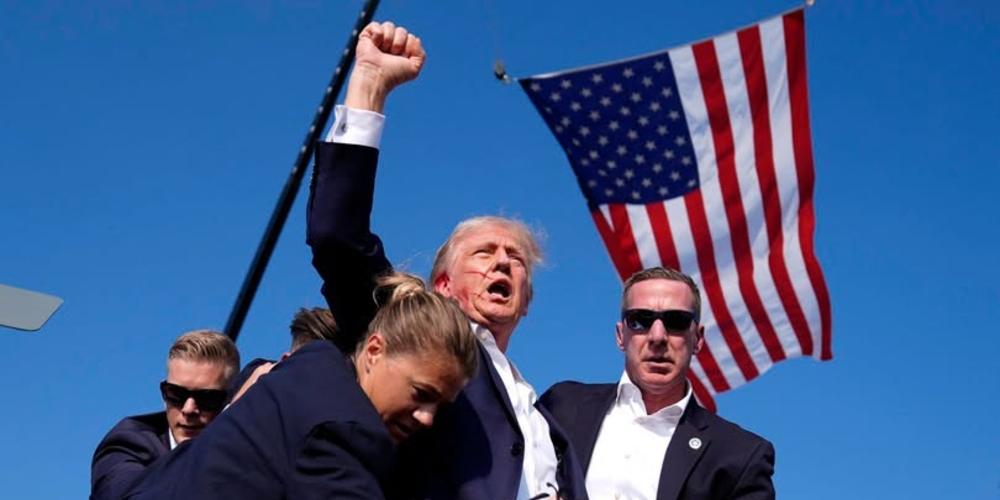
This tragedy echoes the attempted assassination of President Donald Trump at his rally in Butler, Pennsylvania, on July 13, 2024. Trump was grazed by a bullet from shooter Thomas Crooks, yet defiantly raised his fist as Secret Service agents escorted him to safety. Both cases expose a growing threat: isolated individuals radicalized in online echo chambers, turning personal despair into deadly action against public figures.
Experts point to a surge in such lone-wolf attacks over the past decade, no longer confined to politicians but extending to activists and media personalities. “We’re seeing activists and media figures targeted,” said former New York homeland security advisor Michael Balboni. “These are people who feel aggrieved or insignificant and believe they’ll commit a heroic act. The Charlie Kirk case shows how the threat landscape has widened.”
The digital trail in these incidents mirrors past horrors. The Buffalo supermarket shooter maintained a private “Discord diary” for community and tactical guidance, according to a New York Attorney General report. The Uvalde gunman sent alarming messages via the teen app Yubo and Instagram DMs. Shooters in El Paso and Christchurch posted manifestos on 8chan before livestreaming their crimes. Today, platforms like Reddit, Discord, and encrypted chats provide anonymity and validation, drawing in those already on edge.
“People on the pathway to violence drift into places like Discord or niche forums because those spaces give them anonymity, validation and a sense of belonging they don’t have in real life,” noted retired FBI Supervisory Special Agent Jason Pack. “Those corners of the internet can run like an open sewer, and folks already in a dark place tend to drink from the wrong end of the pipe.”
The Department of Homeland Security’s 2025 Homeland Threat Assessment warns of a persistently high terrorism risk in the U.S., with lone actors responsible for 93% of fatal terrorist attacks in the West over the last five years, according to a report from Vision of Humanity. Mass shootings often share these traits, amplified by years of societal strain—from the pandemic and economic fallout to fears over AI and political division.

“We’ve lived through years of anxiety — the pandemic, job loss, now fears about AI. Add deep political polarization, and you get people online being told they’re worthless and dismissed by society. Some decide to act,” Balboni added.
Former FBI investigator Bill Daly draws parallels to ISIS recruitment: “Their reasons for being radicalized are often very similar to what we saw with ISIS recruits — a mix of ideology, personal grievance and a search for belonging. It doesn’t always happen overnight. There are breadcrumbs, small behavioral changes, that build over time as they find validation in online communities.”
In the wake of Kirk’s death, the FBI offered a $100,000 reward for information leading to justice, while a broader crackdown ensued. Over 600 Americans faced firings, suspensions, or investigations for online comments praising the attack or criticizing Kirk, sparking debates over free speech. President Trump declared a National Day of Remembrance for Kirk on October 14, 2025, calling the act “pure evil.”
A viral post from Libs of TikTok on X highlighted several recent shooters identified as transgender or nonbinary, labeling it “an epidemic of trans violence.”
Trump shooter: Nonbinary
Minnesota School Shooter: Trans
Nashville Shooter: Trans
Colorado Springs shooter: Nonbinary
Aberdeen shooter: Trans
Denver school shooter: Trans
Iowa school shooter: Trans/genderfluid
Charie Kirk kiIIer: Did it on behalf of trans boyfriendIt’s time to…
— Libs of TikTok (@libsoftiktok) November 17, 2025
While experts caution against profiling based on identity—”Identity does not predict violence,” Pack said—the pattern raises questions about how certain online communities might incubate hatred toward conservative voices. Libs of TikTok’s Chaya Raichik has long documented what she sees as radical left influences, though her posts have been linked to real-world threats like school bomb hoaxes.
These platforms, often hosted overseas and shielded by encryption, pose a nightmare for law enforcement. “People move to encrypted sites that are difficult, if not sometimes impossible, to penetrate,” Daly explained. “Even with today’s technology, it can be extraordinarily hard for law enforcement to see what’s happening behind those walls.”
Solutions lie in vigilance and human connection. Balboni urges: “Don’t glorify the shooter. Don’t even use the name. And if families see behavior change or access to weapons, report it. That’s where intervention starts.” Pack emphasizes rebuilding ties: “What helps someone step back from the edge is connection. Sometimes that’s family, sometimes it’s friends, sometimes it’s faith that reminds them they’re not walking alone.”
As attacks like these multiply, the role of big tech in moderating content comes under scrutiny. Critics argue that while conservative speech faces swift censorship, vitriol against figures like Trump and Kirk proliferates unchecked, potentially emboldening assassins. The CSIS report on anti-government domestic terrorism notes a near-tripling of plots motivated by partisan beliefs in recent years, suggesting deeper forces at play in a polarized landscape.
But therein lies the Catch-22. To say that any form of online censorship or monitoring for “suspicious” activities is a slippery slope would be a tremendous understatement. As important as it is to use tools to prevent assassinations, the detrimental effects of doing so at the expense of privacy would be immense. Just as tens of millions have been surveilled over the decades for the so-called “war on terror,” so too would any online censorship or spying be abused.
We must remain diligent, but we must do so without letting our freedoms slip away.
Bypass Big Tech Censors
Starting the Day With a Scripture-Inspired Roast Helps Center Your Thoughts on Eternal Truths Amid Temporal Pressures
The world can seem chaotic, especially right after we wake up. Many believers start their mornings reaching for something familiar — a hot cup of coffee — yet end up settling for mediocre brews that do little more than deliver a caffeine jolt. The daily grind of life, with its endless distractions, news cycles, and responsibilities, can leave even the most faithful feeling spiritually parched alongside their physical fatigue. What if your morning ritual could do more than wake you up? What if it could ground you in truth, nourish your body with exceptional quality, and quietly advance a kingdom purpose at the same time?
That’s the promise — and the reality — behind Promised Grounds Coffee. This Christian-founded company doesn’t just roast beans; it approaches every step as an act of worship and discipleship. By selecting only the top 10% of specialty-grade beans, ethically sourced from dedicated farmers in Central and South America, and small-batch roasting them with reverence in Austin, Texas, Promised Grounds delivers what many describe as the best coffee available — never burnt, never bland, but rich with origin stories and layered flavors that honor God’s creation.
From the vibrant Psalm 27 Roast (a light, bright medium option) to the bold yet peaceful 2 Timothy 1:7 Decaf, each bag carries a Scripture verse that turns your daily pour into a gentle reminder of faith. And through their Ounce Per Ounce Promise, every ounce of coffee you enjoy provides an equal ounce of clean water to families in need via partnership with Filter of Hope — literally brewing hope for body and soul, one cup at a time.
The challenge for today’s Christians runs deeper than finding a decent cup. In an age of convenience-driven consumerism, it’s easy to support companies that dilute values or remain silent on matters of faith. Many believers want their everyday choices — from what they drink to how they spend — to reflect discipleship rather than just convenience. Promised Grounds solves this by weaving Christian excellence into the entire process: beans nurtured with prayerful stewardship by farming families, roasted as an offering rather than a commodity, and packaged with Bible verses to encourage a mindset of gratitude and purpose from the first sip. Reviewers consistently praise the smooth, rich profiles — whether enjoyed black in a drip maker, iced on a warm day, or shared in fellowship — noting how the quality stands toe-to-toe with premium secular brands while delivering something far more meaningful.
This integration of faith and flavor addresses a real need in Christian households and ministries. Busy parents, church leaders, and remote workers alike report that starting the day with a Scripture-inspired roast helps center their thoughts on eternal truths amid temporal pressures. The coffee’s exceptional character — bright citrus notes in lighter roasts or deep chocolate undertones in bolder ones — comes from meticulous selection and careful roasting that respects the bean’s natural gifts rather than masking them. It’s the kind of coffee that elevates a simple quiet time, fuels productive workdays, or sparks meaningful conversations when shared at Bible studies or outreach events. And because it’s ethically sourced with integrity, every purchase supports sustainable livelihoods for farmers who treat their crops like family harvests.
For those leading churches or small groups, the impact multiplies. Promised Grounds offers bundles and options perfect for hospitality ministries, turning ordinary coffee service into an opportunity to point people toward the living water of Christ. Imagine greeting visitors with a warm cup whose very bag carries God’s Word — a subtle yet powerful witness that aligns with the Great Commission. The company’s Texas roots and commitment to “brewing hope” resonate especially with believers who value American enterprise paired with global compassion.
Of course, quality alone isn’t enough if the experience feels out of reach. Promised Grounds keeps it accessible with practical perks like free shipping on orders over $40, sample sets for discovering favorites, and thoughtful add-ons such as faith-themed mugs. Whether you prefer whole beans for fresh grinding, grounds for convenience, or even bulk options for larger households and ministries, the result is consistently superior coffee that makes discipleship feel integrated rather than added on.
As you consider how to align even the smallest habits with your walk with God, Promised Grounds Coffee stands out as a refreshing solution. It tackles the dual problems of subpar daily sustenance and disconnected consumption by offering a product that genuinely excels in taste while advancing a mission of clean water, farmer dignity, and scriptural encouragement. Believers who make the switch often describe it as more than a beverage upgrade — it becomes part of their rhythm of gratitude, a daily invitation to remember that every good gift comes from above.
If you’re ready to transform your mornings (and perhaps your church gatherings) with coffee that honors both exceptional craftsmanship and Christian values, I encourage you to explore what Promised Grounds has to offer. One sip at a time, you’ll be nourishing your body, refreshing your spirit, and participating in something far greater — all while enjoying what truly is among the best coffee available.