
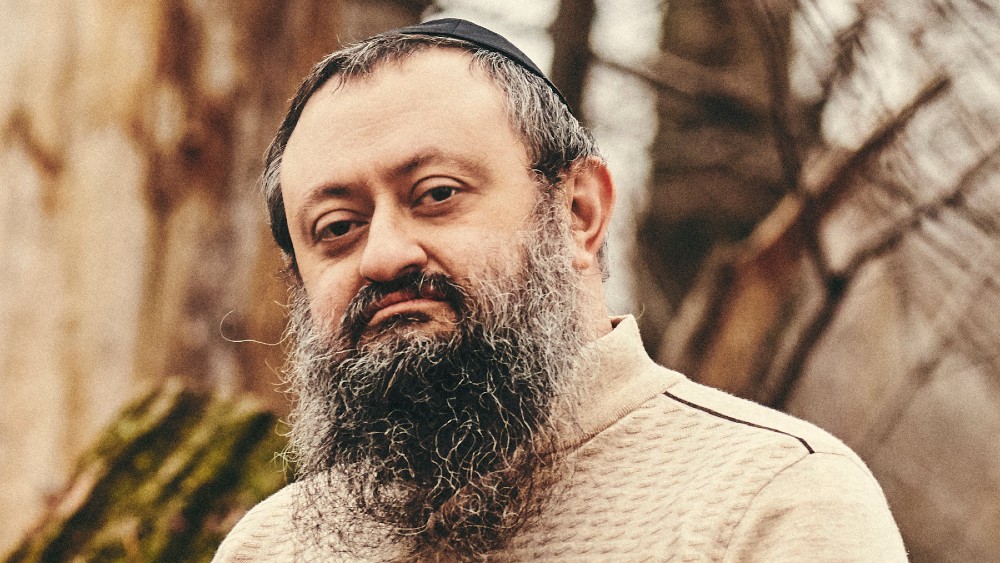
Dr. Vladimir “Zev” Zelenko has died after a four-year bout with cancer. I did a short show about my experience with the Doctor.
Here is the statement from his company followed by his obituary.
It is with immense sorrow that we announce the passing of our founder Dr. Vladimir “Zev” Zelenko. Dr. Zelenko was a physician, scientist, and activist for medical rights who touched the lives of millions of people. Some were saved as his role as a doctor, and even more were inspired by his words. His “Zelenko Protocol” saved millions and earned him a Nobel Prize nomination and the admiration of a U.S. President among other prominent world leaders.
Born in socialist slavery, and then immigrating to the United States, Dr. Zelenko was the embodiment of the American dream. The child of poor immigrants who rose to success as a physician and a businessman. But Dr. Zelenko was more than a physician. As an activist and a businessman, he was also a man of deep faith, incredible love for his family, and a tireless inspiration to the company. But, perhaps most of all, Zev was our friend. The world knows the dynamic firebrand who never feared speaking the truth to power or about issues he cared deeply about. Dr. Zelenko was a man of great, subtle humor and deep intellect. For every verbal jab he threw at the tired and incompetent establishment, a dozen more light-hearted laughs were spent with him and the team. Dr. Zelenko could laugh at himself as easily as others, and was always in great spirits, no matter the darkness that surrounded him – something that’s easily overlooked in today’s climate of hypersensitivity.
Some have already asked us what is next for Zelenko Labs. Though we have lost a leader, a friend, and inspiration, the answer is simple: Keep Fighting.
This is not only what Dr. Zelenko would want, it is what he told us to do. And it is exactly what we will do. We will fight for his legacy. We will fight for the company that sustains his eight children and dozens of employees, and we will fight for you, our loyal customers and friends. Zelenko Labs will continue to deliver high-quality products and we will protect Dr. Zelenko’s legacy with the creation of the Z-Freedom Foundation, which will support the causes that matter most to our beloved Zev.
Though Zev’s chapters in the Book of Life have closed, his legacy is yet to be written. Join us and help write those next powerful and impactful chapters by helping us keep Zev’s main mission of helping every single American live a healthier, happier, and more informed life, front and center. Help us keep that honorable vision a vibrant one in our hearts and woven into the very fabric of this great nation.
We look forward to standing shoulder to shoulder with you in the coming days, months and years ahead.

Obituary of Dr. Vladimir “Zev” Zelenko
Dr. Vladimir “Zev” Zelenko, the man who discovered and implemented the treatment for Covid-19 that over the past two years has been responsible for saving millions of lives worldwide, has passed away after a long battle with cancer. He was 48.
Born in Kiev, Ukraine in 1973, Zev’s family immigrated the United States in 1977 and settled in Sheepshead Bay, Brooklyn, New York.
He attended Hofstra University where he earned with a B.S. in chemistry with high honors. He then went on to the Buffalo School of Medicine where he earned his M.D. in 2000.
Zev had a family medical practice in Monroe, New York in 2020 during the onset of what would become the Covid-19 pandemic. As a physician who masterfully combined the skills of both critical thinking and the scientific method, and who shaped their application out of his love for both God and patients, Zev was not content to sit back and wait for politicians or public health officials to settle upon a prescribed treatment path. People were dying. He began searching almost immediately for a method of treatment.
Aided by initiative, good fortune, and from his account divine intervention, he discovered such a treatment in combining Hydroxychloroquine (HCQ), zinc, azithromycin, and other various drugs, especially steroids, and creating what has come to be known as the “Zelenko protocol.” The key to the protocol was very early intervention to treat the virus inside the cellular level before it could break loose and develop into a full-blown respiratory disease.
Up to the time of his death, Zev had overseen the treatment of approximately 7,500 patients using his protocol and experienced only three patient deaths. The use of the Zelenko protocol has spread worldwide.
While he was nominated along with other courageous doctors for a Nobel Prize in recognition of his groundbreaking treatment and outspoken advocacy on behalf of patients, for the most part Zev faced censorship and condemnation for his taking a bold stand against prevailing orthodoxy. For whatever their motives, politicians and health officials worldwide attempted to either downplay or outright deny the efficacy of the Zelenko protocol and its simple, low-cost treatment path. Numerous studies were constructed to deliberately hide the effectives of using HCQ (later ivermectin) in conjunction with other drugs.
There were even steps taken by politicians like then New York Governor Andrew Cuomo to forbid the use of HCQ in treating patients. Social media platforms joined in the effort to silence Zev, with Twitter having famously banned him from the platform in late 2020.
As Voltaire said, “It is dangerous to be right in matters where established men are wrong.”
Despite numerous studies over the past two years that have supported the effectiveness of his protocol, access to the treatment remains denied to significant portions of the population and is simply ignored by many physicians.
Undeterred, Zev went in search of another method to treat patients that could circumvent government restrictions. HE discovered that the natural supplement Quercetin could serve the same function as did HCQ in assisting zinc to attack the still developing virus inside the cell. It was not as effective, but as Zev was fond of saying, “You don’t go to war with the army you wish you had. You go to war with the army you’ve got.” He discovery of Quercetin, which he likened to being a .22 caliber compared to HCQ’s .50 caliber ultimately led to the development of his Z-Stack supplement.
Over the past year-and-a-half, Zev has been an outspoken critic of the mRNA vaccine pointing to both its serious side-effects and its alteration of genetic code. He has been especially critical of the use of the vaccine in children who are not old enough to give their own informed consent and who face virtually no risk of serious illness from Covid-19. He has shared his views over a broad spectrum of web-based podcast interviews and at numerous live appearances across the country. He has been routinely greeted with applause interruptions and standing ovations.

As to the rare form of cancer with which he was diagnosed in early 2018 and told of its 100 percent terminal prognosis, Zev repeatedly referred to it as having been a gift from God. “My cancer is what prepared me for the Covid-19 pandemic,” He would say. “Without it, I would not have developed my passion for searching for answers that others said couldn’t be found, and without it I could not have held to the persecution and ridicule I received for daring to treat patients. I have looked death in the eye and I have been made ready to meet God. I fear nothing on this earth.”
A man of profound faith, he believed until the end that God had created a special mission for him on this earth, and that the prayers of millions had kept him alive long enough to fulfill that mission.
Zev recently announced the formation of his new Z Freedom Foundation, dedicated to continuing his critical work. He also announced the release of his memoirs, titled simply Zelenko, that will be available in late-summer to early fall 2022.
He is survived by his wife, Rinat, their two children, Shira and Liba, and six children from his previous marriage, Levi Yitzchok, Esther Tova, Eta Devorah, Nochum Dovid, Shmuel Nosson Yaakov, Menachem Mendel. Also his parents, Alex (Aaron) and Larisa (Leah) and his brother Ephraim (w. Chany).
In his simple and beautiful poem, High Flight, WWII Canadian Air Force pilot John Gillespie Magee said that he put out his hand, “and touched the face of God. For those who were blessed with having had a chance to cross paths, if even for a fleeting moment, with the remarkable man who was Vladimir “Zev” Zelenko, there is a sense of knowing that in this instance and with this soul, God simply could no longer wait to touch the face of the man who gave so much hope and so much life to so many during his time on His earth.
Memoriam can be given in Zev’s name to the Z Freedom Foundation at www.zfreedomfoundation.com

Bypass Big Tech Censors
Two Storms, One Harvest

Every food crisis in living memory has been a one-shock event. The 2008 price spike was a commodity bubble. The 2020 shortages were a logistics failure. The 2022 grain scare was a war on one exporter’s ports. Each time, the system bent, adjusted, and recovered, and each time the experts assured us afterward that global markets are simply too big and too diversified to fail.
What nobody in Washington seems eager to discuss is that 2026 is shaping up to be something the modern food system has never actually faced. Two independent shocks, one climatic and one geopolitical, are converging on the same harvest cycle at the same time. Not sequentially. Simultaneously.
Start with the weather. The Pacific Ocean is currently building toward what forecasters now openly call a record event. NOAA’s Climate Prediction Center puts the odds of at least a strong El Niño near 88 percent, with roughly two in three odds it reaches “very strong” status, the tier reserved for perhaps three or four events in the entire satellite era. Every major global model now projects a median peak in Super El Niño territory, and most of them project it exceeding the 2015-16 event, which until now held the modern record. Sea surface anomalies were already brushing the super threshold in mid-July, months before these events normally peak. The atmosphere has already shifted into El Niño mode, and the event is forecast to crest in late fall and early winter.
This is not about “climate change.” It’s about the standard cycles of weather, and the cycle we’re currently in is one that has likely devastated societies in the past. We’re better prepared as a society today, but not all Americans are equally prepared.
Serious households have started doing the quiet math on their own. Grocery bills tell part of the story, and the forecast maps tell the rest, which is why long-term food storage has moved from fringe hobby to mainstream line item in the family budget, with established suppliers like Heaven’s Harvest seeing demand from people who five years ago would have rolled their eyes at the idea. That instinct is not paranoia. It is pattern recognition, and the pattern is worth walking through carefully.
Editor’s Note: Heaven’s Harvest IS a sponsor, but the warnings of this article are real and would be written even if we didn’t have a survival food sponsor. With that said, those who take advantage of what they offer can use promo code “Patriot” for 15% off.
The Fertilizer Clock Is Already Running
While the Pacific warms, the second shock has been unfolding in the Strait of Hormuz. The conflict with Iran turned the world’s most important energy chokepoint into a contested waterway, and the consequences reach far beyond the gas pump. Roughly a third of global fertilizer trade moves through Hormuz, and the disruption sent urea prices up 86 percent year over year by March, with a 53 percent jump in a single month.
The World Bank projects energy prices rising about 24 percent in 2026 and fertilizer about 31 percent. By its own accounting, fertilizer prices ran 35 percent higher in the first five months of this year than the same period last year.
Here is the mechanism the nightly news will not explain. Fertilizer is not a grocery item. It is a time-delayed input. The nitrogen a farmer in Iowa or Punjab could not afford to apply this spring does not show up as a problem this spring. It shows up as a thinner harvest six to twelve months later.
The World Bank’s own food security brief concedes that the effects of reduced applications earlier this season “are likely to become visible only later in harvest outcomes.” Translate that from institutional language into plain English and it means this. The damage is already done, it is already in the ground, and we are simply waiting for it to arrive on the shelf.
Now check the calendar. Six to twelve months from the spring planting season lands us squarely in late 2026 and early 2027. Which is precisely when the strongest El Niño in the instrumental record is forecast to peak, bringing its signature droughts to Southeast Asia, Australia, southern Africa, northern Brazil, and South Asia, the very regions that grow the world’s rice, sugar, and oilseeds.
The World Bank warns openly that a strong El Niño “could disrupt multiple crop belts simultaneously” on top of the conflict-driven input costs. Their baseline projection assumes the Middle East disruptions ease by autumn. What in the last two years of Middle East history suggests that assumption is safe?
The System Has No Slack Left
The comfortable answer is that global markets always adjust. But adjustment requires slack, and the slack is gone. Global cereal production is expected to decline from last year’s records even before El Niño does its work. The UN World Food Programme, hardly a den of right-wing preppers, is calling this the most significant disruption to its supply chains since Covid and the invasion of Ukraine, and its supply chain director put the stakes bluntly.
Today’s supply chain challenges are tomorrow’s hunger crisis.
There is also a political dimension that markets cannot price. When food gets scarce, governments do not behave like economists. They behave like politicians. Export bans, hoarding mandates, and panic buying at the national level turned the modest rice shortfall of 2008 into a global crisis, and analysts are already warning that import-dependent nations are the first dominoes.
The 2015-16 Super El Niño, a far weaker event than what is now forecast, threw tens of millions into food stress across Africa and Asia. This one is projected to be stronger, and it arrives with fertilizer already rationed by price and shipping lanes already contested by missiles.
What Joseph Knew
Scripture does not treat preparation for lean years as faithlessness. It treats it as wisdom delivered in advance to those willing to act on it.
Behold, there come seven years of great plenty throughout all the land of Egypt: And there shall arise after them seven years of famine; and all the plenty shall be forgotten in the land of Egypt.
Joseph did not respond to that warning with a hashtag or a committee. He stored grain during the years of abundance, and when the famine came, Egypt stood while its neighbors begged. The lesson is not that famine is certain. It is that the time to prepare is precisely when preparation still looks optional.
Nobody who filled a pantry in a year of plenty has ever regretted it, and nobody standing in an empty aisle has ever been glad he waited for certainty.
None of this calls for panic, and panic is the enemy of sound judgment anyway. It calls for the same unglamorous prudence our grandparents considered ordinary. Keep some cash margin, know your local growers, and put real food in deep storage while it is cheap and available, because the entire arc of this story is that cheap and available is a closing window.
Families looking for a straightforward place to start can visit Heaven’s Harvest and use promo code Patriot for 15 percent off long-term storable food. The forecasts may yet soften, the strait may yet reopen, and we should pray they do. But hope is a fine thing to hold and a foolish thing to eat.


