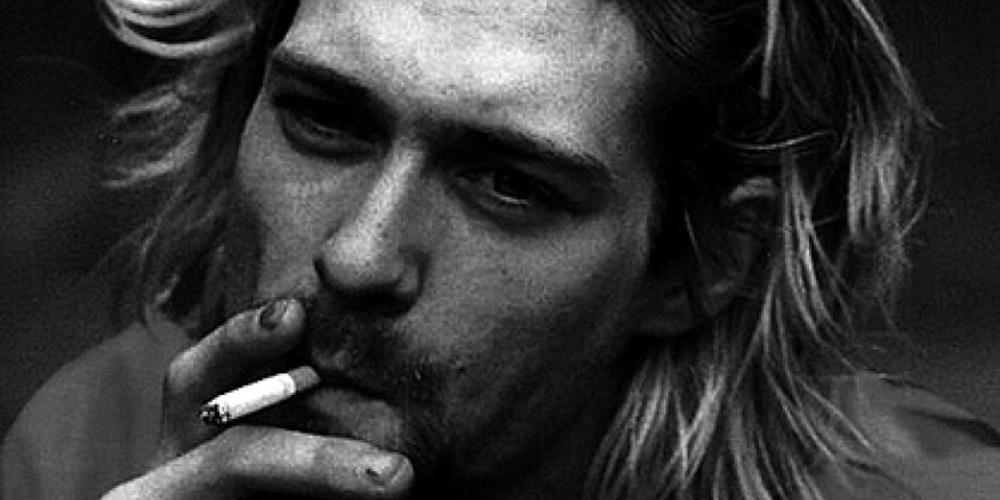
For more than thirty years the official story has been simple. Kurt Cobain shot himself in the head inside a greenhouse above his Seattle garage in April 1994. Investigators called it suicide within hours. The file stayed closed. Now Seattle’s own Office of Police Accountability is examining a claim that former Police Chief Shon Barnes privately acknowledged something very different last year.
According to people involved with the investigation who spoke to the New York Post, Barnes told researchers from the group “Who Killed Kurt?” that key evidence did not match what the original police report concluded.
The meeting took place in November 2025 at police headquarters. Barnes sat with the group’s lead investigator Michelle Wilkins and its legal adviser, former King County senior prosecutor Mark Larson. They walked him through a peer-reviewed paper published in the International Journal of Forensic Sciences that argued Cobain was murdered and the scene staged.
The detail that keeps coming up is the blood. Cobain was found with a shotgun wound to the head. The official account has him holding the barrel near his mouth with his left hand. Yet researchers say photographs show no blood on that hand. Larson reportedly suggested the implication was straightforward: the hand was placed on the gun after the shot. Barnes allegedly answered, “So that’s the explanation — the hand is placed after the blood-spatter event.”
That is not a small concession. Bloodstain pattern analysis is one of the more reliable tools investigators have. Absence of expected backspatter on the hand that supposedly fired the weapon is the kind of observation that normally forces a second look.
Barnes, a trained investigator, would have known that. He also reportedly told the group that every death is investigated as a possible homicide before a determination is made. The 1994 case, by every public account, was closed almost immediately.
In January of this year the Seattle Police Department announced it would not reopen the file. It stood by a 2014 cold-case review that reached the same suicide conclusion. Barnes resigned in July after public criticism over his handling of a mass shooting at a food festival. The Office of Police Accountability opened its probe after receiving a complaint on June 28.
Wilkins has told the watchdog that the researchers handed over new forensic analysis that should have been tested. She has said the group’s position is not that they proved homicide in the meeting. It is that the issues demanded a thorough examination and, from what they can see, did not receive one.

The paper itself, led by forensic specialist Bryan R. Burnett, draws on scene photographs released years later, the autopsy report that became public in 2023, and a 2025 Washington State Patrol firearms examination. Among the points raised are morphine levels high enough that researchers argue Cobain would have been unconscious before he could position and fire the shotgun, organ damage patterns they say fit prolonged overdose better than an instantaneous gunshot death, and the clean left hand.
The authors concluded Cobain was a homicide victim whose body was moved and arranged to look like suicide. Seattle police and the King County Medical Examiner’s Office have repeatedly said none of this meets the threshold for reopening. Additional chain-of-custody records for the shotgun were released in September. The ruling did not change.
Courtney Love, Cobain’s widow, has long maintained that her husband killed himself. In 1995 she demanded the entire police file be turned over to her with no copies left at the department. She argued that ghouls were trying to profit from the records. The request was refused.
Three decades later the department is still defending the original determination while a former chief is alleged to have sat in a meeting and acknowledged that one of the most basic pieces of physical evidence did not fit the story the report told.
Institutions protect their first conclusions. Once a high-profile death is labeled suicide and the cameras leave, the incentive to keep looking drops. Volunteer researchers with a peer-reviewed paper and a former senior prosecutor can force a conversation. They cannot force testing.
The Office of Police Accountability’s review is narrow. It is looking at whether the department properly handled the new material after the November meeting. It is not reopening the death investigation itself. Still, the fact that an official watchdog is even examining the claim is more movement than the case has seen in years.
For nothing is secret, that shall not be made manifest; neither any thing hid, that shall not be known and come abroad.
Whether that verse applies to the physical evidence in a Seattle greenhouse or only to the larger pattern of closed files is for readers to decide. What is clear is that a former chief of police is alleged to have recognized a contradiction that the department has refused to test. The public is still waiting for someone with the actual authority to say whether that contradiction matters.
Bypass Big Tech Censors

Starting the Day With a Scripture-Inspired Roast Helps Center Your Thoughts on Eternal Truths Amid Temporal Pressures
The world can seem chaotic, especially right after we wake up. Many believers start their mornings reaching for something familiar — a hot cup of coffee — yet end up settling for mediocre brews that do little more than deliver a caffeine jolt. The daily grind of life, with its endless distractions, news cycles, and responsibilities, can leave even the most faithful feeling spiritually parched alongside their physical fatigue. What if your morning ritual could do more than wake you up? What if it could ground you in truth, nourish your body with exceptional quality, and quietly advance a kingdom purpose at the same time?
That’s the promise — and the reality — behind Promised Grounds Coffee. This Christian-founded company doesn’t just roast beans; it approaches every step as an act of worship and discipleship. By selecting only the top 10% of specialty-grade beans, ethically sourced from dedicated farmers in Central and South America, and small-batch roasting them with reverence in Austin, Texas, Promised Grounds delivers what many describe as the best coffee available — never burnt, never bland, but rich with origin stories and layered flavors that honor God’s creation.
From the vibrant Psalm 27 Roast (a light, bright medium option) to the bold yet peaceful 2 Timothy 1:7 Decaf, each bag carries a Scripture verse that turns your daily pour into a gentle reminder of faith. And through their Ounce Per Ounce Promise, every ounce of coffee you enjoy provides an equal ounce of clean water to families in need via partnership with Filter of Hope — literally brewing hope for body and soul, one cup at a time.
The challenge for today’s Christians runs deeper than finding a decent cup. In an age of convenience-driven consumerism, it’s easy to support companies that dilute values or remain silent on matters of faith. Many believers want their everyday choices — from what they drink to how they spend — to reflect discipleship rather than just convenience. Promised Grounds solves this by weaving Christian excellence into the entire process: beans nurtured with prayerful stewardship by farming families, roasted as an offering rather than a commodity, and packaged with Bible verses to encourage a mindset of gratitude and purpose from the first sip. Reviewers consistently praise the smooth, rich profiles — whether enjoyed black in a drip maker, iced on a warm day, or shared in fellowship — noting how the quality stands toe-to-toe with premium secular brands while delivering something far more meaningful.
This integration of faith and flavor addresses a real need in Christian households and ministries. Busy parents, church leaders, and remote workers alike report that starting the day with a Scripture-inspired roast helps center their thoughts on eternal truths amid temporal pressures. The coffee’s exceptional character — bright citrus notes in lighter roasts or deep chocolate undertones in bolder ones — comes from meticulous selection and careful roasting that respects the bean’s natural gifts rather than masking them. It’s the kind of coffee that elevates a simple quiet time, fuels productive workdays, or sparks meaningful conversations when shared at Bible studies or outreach events. And because it’s ethically sourced with integrity, every purchase supports sustainable livelihoods for farmers who treat their crops like family harvests.
For those leading churches or small groups, the impact multiplies. Promised Grounds offers bundles and options perfect for hospitality ministries, turning ordinary coffee service into an opportunity to point people toward the living water of Christ. Imagine greeting visitors with a warm cup whose very bag carries God’s Word — a subtle yet powerful witness that aligns with the Great Commission. The company’s Texas roots and commitment to “brewing hope” resonate especially with believers who value American enterprise paired with global compassion.
Of course, quality alone isn’t enough if the experience feels out of reach. Promised Grounds keeps it accessible with practical perks like free shipping on orders over $40, sample sets for discovering favorites, and thoughtful add-ons such as faith-themed mugs. Whether you prefer whole beans for fresh grinding, grounds for convenience, or even bulk options for larger households and ministries, the result is consistently superior coffee that makes discipleship feel integrated rather than added on.
As you consider how to align even the smallest habits with your walk with God, Promised Grounds Coffee stands out as a refreshing solution. It tackles the dual problems of subpar daily sustenance and disconnected consumption by offering a product that genuinely excels in taste while advancing a mission of clean water, farmer dignity, and scriptural encouragement. Believers who make the switch often describe it as more than a beverage upgrade — it becomes part of their rhythm of gratitude, a daily invitation to remember that every good gift comes from above.
If you’re ready to transform your mornings (and perhaps your church gatherings) with coffee that honors both exceptional craftsmanship and Christian values, I encourage you to explore what Promised Grounds has to offer. One sip at a time, you’ll be nourishing your body, refreshing your spirit, and participating in something far greater — all while enjoying what truly is among the best coffee available.