Ever since I was a young lad all those decades ago, I’ve heard different variations of the common priority list for a good life. My earliest recollection of it was from my uncle who said, “God, family, country, in that order, kid.”
Unfortunately, it has become a cliché in many ways as people who clearly are not putting faith or family first use the priority list as a way to virtue signal on the social media bios. By no means am I suggesting people shouldn’t declare their priorities if they’re real, but let’s make sure our reality matches our claims.
As our nation and the people within it are diving headlong into possible oblivion with multiple existential threats surrounding us, these common priorities have gone from being a cool t-shirt slogan to an imperative guiding principle. If we are to survive as both a nation and individuals, we have to embrace this philosophical framework in all that we do.
First, let me address those who do not share my Biblical faith. As someone who believes in the entirety of the Bible, my worldview is driven by the knowledge that Jesus Christ is my Lord and Savior. I know that there are readers who embrace other faiths. It would be easy and political correct for me to say, “Hey, you can apply this to whatever faith you hold,” but that would be a lie. This article is squarely rooted in end times eschatology from the Old and New Testament. Therefore, Judeo-Christian beliefs are necessary for an appropriate understand of what’s happening around us as well as what we must do to fight the good fight.
I’m not going to be preaching or quoting a bunch of Bible verses. But those who do not share a Biblical worldview will not be able to draw much from this article.
With that said, we are either in the end times or we’re in a foreshadowing echo of them. Either way, it means we must sharpen our tools and take the framework of “Faith, Family, Nation” more seriously than we ever have before. Everything from our day-to-day actions to plans for the distant future should be determined based on framing within this philosophy. It should drive how we act today and it should guide what we plan to do tomorrow.
Faith
Again, we can’t just assume any ol’ faith can apply in this article. This paradigm won’t work with Islam, for example, because as a religion it deters from the other two components. The Quran puts the good of the nation ahead of the good of the family. It also demands theocratic rule, whereas the Bible claims the only theocracy that can work is one led by Jesus Christ during His millennial reign.
It is imperative that we lead with faith in all we do, or to be more accurate, that we are led by our faith. We cannot properly guide our families in these tumultuous times if we relegate faith to an hour on Sundays.

The obvious reason to lead with faith as our top priority is salvation. If that’s even a question, it may be time to put down this article and pick up your Bible. But even with salvation secured, faith is necessary if we are to be able to protect our family and lift up our nation.
Faith gives us emotional strength. It contends with the impulses we may have to take the wrong path. Most importantly, it gives us, our families, and our nation the hope that is becoming increasingly necessary. The people are understandably losing hope for their families and this nation. We see a dark path being paved for everyone other than the elites. With faith, we can persevere through the tumult knowing that God wins now and always. Even as we go through hardships, the faithful can sense the literal light at the end of the figurative tunnel.
Family
Prioritizing family seems like a no-brainer for many. If you are one of those, consider yourself blessed. There are plenty of Americans who struggle to put family above their own interests. This is why divorce rates are so high, why fathers are often absent in the lives of their children, and why infidelity is practically expected, even if “only” in the form of engaging with pornography.
Only faithfully living under a Biblical worldview can solve these challenges. Laws, self-help guides, and marriage counselors can only offer band-aids. Embracing the Biblical interpretation of marriage and family must surge in America again, or we will be lost.
For those who are firmly set with prioritizing family, we must continue to work harder. That’s not just about being good parents, spouses, and children. It’s about defending ourselves and our family members spiritually and physically. There’s a reason why nearly all of my sponsors are geared toward some form of preparedness. I could make 10X more revenue by taking on non-essential sponsors, but I believe in making every family and individual who reads or hears my content to be as unbeholden to government as possible.
If we are truly to defend this nation, we need to be able to defend it against the enemies within. That means working with like-minded people, but even that is secondary to making sure our own families are secure. If and when things get really bad, there will be those who can take care of their families and those who cannot. That second group will, unfortunately, be much larger. They will be herded into 15-minute cities, forced to get jabbed to qualify for their universal basic income checks, and will likely own nothing while being told they’re happy.
Whether we’re going to stop the forces of evil or if we’re going to be here to rebuild later, we will need as many self-reliant individuals and families as possible. If we’re not in the end times, then we will either save this nation or be forced to rebel against the forces that take it over. If we are in the end times, then we’ll need to resist as long as we can so we can do as we’re charged to spread the Gospel. Either way, building our families’ self-reliance is paramount.
Nation
This third priority is not about sheer patriotism. Preserving America isn’t about “saving democracy” or “empowering capitalism,” as many believe. Those may or may not have been important aspects of our nation’s role in geopolitics in the past, but we are no longer a representative nation of freedom or economic opportunity. Maybe we never were. Maybe it was always an illusion.
What’s NOT an illusion is the biggest reason we must defend our Constitution and do everything we can to prevent our nation from falling. Religious freedom is a uniquely American thing. Sure, there are religious liberties allowed in most countries, but those liberties are always secondary to the whims of the state. Until the last few decades, it can be argued that religious freedom was the most important differentiator between America and the rest of the world. Today, we are becoming much more like Europe and other western nations where religion is tolerated… barely.
Every evil that is at our doorsteps in the world today can be directly or peripherally attached to destroying the faith. The climate change cult adheres to the religion of Gaia worship. Trans-supremacy is about declaring that God either made a mistake by putting people in the wrong bodies or God doesn’t exist at all. The banking crisis, food crisis, energy crisis, and all other worldly manufactured crises are designed to make people dependent on a government as supreme over faith and everything else. Don’t even get me started on Artificial General Intelligence, Transhumanism, sex trafficking, or any of the other demonic threats we’re facing as a nation.
We need our nation to be strong in order for our nation to preserve our religious liberties. But strength guided by evil will be no better (and possibly worse) than weakness that allows outside forces to control us. In other words, saving our nation from threats is not enough. We have to save this nation from its greatest enemy… itself.
The endgame for those plotting the downfall of America is to wipe religious liberties from the Constitution. If that takes dissolving the Constitution altogether, they’ll try to do just that.

Practical Use of These Priorities
Hopefully you either appreciated the importance of Faith-Family-Nation before or you now understand why these three priorities are required as guidance for everything we do in this world. If not, ask questions in the comments on my Substack and I will do what I generally avoid. This time, I’m going to read all of the comments and reply to some of them.
Assuming you had or now have an understanding of what we face, how can we apply it to our lives? Let’s start with faith. The popular bumper sticky from the 90s asked, “What would Jesus do?” The real question we should be asking ourselves pretty much non-stop is, “What would Jesus want me to do?”
The Bible lays out a simple plan. Pray, repent, immerse yourself in the Bible as much as possible, share the Gospel, rinse, repeat. If we can do these things and teach our family to do the same, we’re well on our way to surviving our challenges today. But don’t think that just because you’re faithful that you won’t go through hardship. In fact, your faith may be the death of you in a not-too-distant future iteration of America. Stay faithful nonetheless. Stay faithful to the end. Just as Daniel’s friends Hananiah, Mishael, and Azariah declared when facing death at the hands of King Nebuchadnezzar II, God is able to deliver us. That means that whether by allowing us to overcome or by bringing us through death to our salvation, we will be delivered.
Their wording in Daniel 3:17-18 is powerful:
If it be so, our God whom we serve is able to deliver us from the burning fiery furnace, and he will deliver us out of thine hand, O king.
But if not, be it known unto thee, O king, that we will not serve thy gods, nor worship the golden image which thou hast set up.
We need that type of courage as many of us will face persecution unlike anything we’ve experienced in our lives. We must be prepared.
We must also make our families prepared. I’ve had the most uncomfortable conversation of my life with all of my children. I’ve explained to them that no matter what the situation, they cannot comply with demands to renounce Jesus Christ. The example I used was if terrorists had swords at our throats and they told my children they would behead us unless they renounced Christ, they are to tell us goodbye and let our heads roll. It’s a harsh illustration, but it may be tame compared to what we may face. Keeping them spiritually prepared is the most important gift you can give to anyone in your family.
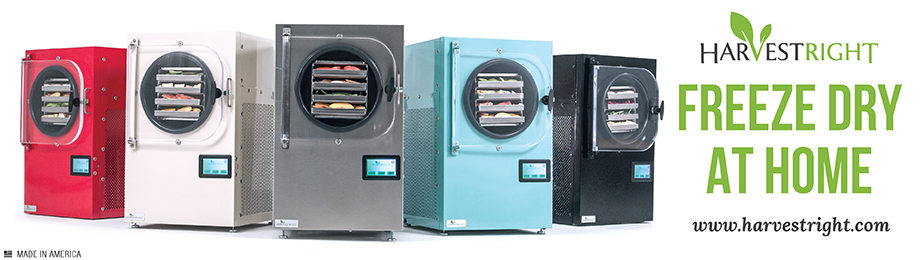
With that said, there’s nothing wrong with being physically prepared as well. Food, water, ammunition, shelter away from the cities, precious metals, medicines, extra supplies… there is nothing anti-Biblical about preparedness. God didn’t tell Joseph to let the people starve during the seven years of famine. He used it as a way to deliver the future Israel, albeit through a very long ordeal that lasted centuries. Thankfully, our preparedness does not have to last that long.
To save the nation, we need the previous two priorities to be firmly in place so we can fight the good fight. Despite this being the third priority, it’s also the most complex so I will not go into details in this already-too-long article.
Here are the bullets:
- We must be able and willing to protest
- We must file lawsuits
- We must be discerning with our votes
- We must not give up on stopping voter fraud
- We must localize our lives as much as possible
- We must stop the various attacks by Cultural Marxists (trans-supremacy et al)
The list can actually go on and on… and it will in a future article.
It all comes back to not giving up hope. This is only possible, in my humble opinion, when we know that our God is supreme and will deliver us, whether in this life or the next. Stay frosty, folks.
Bypass Big Tech Censors

Two Storms, One Harvest

Every food crisis in living memory has been a one-shock event. The 2008 price spike was a commodity bubble. The 2020 shortages were a logistics failure. The 2022 grain scare was a war on one exporter’s ports. Each time, the system bent, adjusted, and recovered, and each time the experts assured us afterward that global markets are simply too big and too diversified to fail.
What nobody in Washington seems eager to discuss is that 2026 is shaping up to be something the modern food system has never actually faced. Two independent shocks, one climatic and one geopolitical, are converging on the same harvest cycle at the same time. Not sequentially. Simultaneously.
Start with the weather. The Pacific Ocean is currently building toward what forecasters now openly call a record event. NOAA’s Climate Prediction Center puts the odds of at least a strong El Niño near 88 percent, with roughly two in three odds it reaches “very strong” status, the tier reserved for perhaps three or four events in the entire satellite era. Every major global model now projects a median peak in Super El Niño territory, and most of them project it exceeding the 2015-16 event, which until now held the modern record. Sea surface anomalies were already brushing the super threshold in mid-July, months before these events normally peak. The atmosphere has already shifted into El Niño mode, and the event is forecast to crest in late fall and early winter.
This is not about “climate change.” It’s about the standard cycles of weather, and the cycle we’re currently in is one that has likely devastated societies in the past. We’re better prepared as a society today, but not all Americans are equally prepared.
Serious households have started doing the quiet math on their own. Grocery bills tell part of the story, and the forecast maps tell the rest, which is why long-term food storage has moved from fringe hobby to mainstream line item in the family budget, with established suppliers like Heaven’s Harvest seeing demand from people who five years ago would have rolled their eyes at the idea. That instinct is not paranoia. It is pattern recognition, and the pattern is worth walking through carefully.
Editor’s Note: Heaven’s Harvest IS a sponsor, but the warnings of this article are real and would be written even if we didn’t have a survival food sponsor. With that said, those who take advantage of what they offer can use promo code “Patriot” for 15% off.
The Fertilizer Clock Is Already Running
While the Pacific warms, the second shock has been unfolding in the Strait of Hormuz. The conflict with Iran turned the world’s most important energy chokepoint into a contested waterway, and the consequences reach far beyond the gas pump. Roughly a third of global fertilizer trade moves through Hormuz, and the disruption sent urea prices up 86 percent year over year by March, with a 53 percent jump in a single month.
The World Bank projects energy prices rising about 24 percent in 2026 and fertilizer about 31 percent. By its own accounting, fertilizer prices ran 35 percent higher in the first five months of this year than the same period last year.
Here is the mechanism the nightly news will not explain. Fertilizer is not a grocery item. It is a time-delayed input. The nitrogen a farmer in Iowa or Punjab could not afford to apply this spring does not show up as a problem this spring. It shows up as a thinner harvest six to twelve months later.
The World Bank’s own food security brief concedes that the effects of reduced applications earlier this season “are likely to become visible only later in harvest outcomes.” Translate that from institutional language into plain English and it means this. The damage is already done, it is already in the ground, and we are simply waiting for it to arrive on the shelf.
Now check the calendar. Six to twelve months from the spring planting season lands us squarely in late 2026 and early 2027. Which is precisely when the strongest El Niño in the instrumental record is forecast to peak, bringing its signature droughts to Southeast Asia, Australia, southern Africa, northern Brazil, and South Asia, the very regions that grow the world’s rice, sugar, and oilseeds.
The World Bank warns openly that a strong El Niño “could disrupt multiple crop belts simultaneously” on top of the conflict-driven input costs. Their baseline projection assumes the Middle East disruptions ease by autumn. What in the last two years of Middle East history suggests that assumption is safe?
The System Has No Slack Left
The comfortable answer is that global markets always adjust. But adjustment requires slack, and the slack is gone. Global cereal production is expected to decline from last year’s records even before El Niño does its work. The UN World Food Programme, hardly a den of right-wing preppers, is calling this the most significant disruption to its supply chains since Covid and the invasion of Ukraine, and its supply chain director put the stakes bluntly.
Today’s supply chain challenges are tomorrow’s hunger crisis.
There is also a political dimension that markets cannot price. When food gets scarce, governments do not behave like economists. They behave like politicians. Export bans, hoarding mandates, and panic buying at the national level turned the modest rice shortfall of 2008 into a global crisis, and analysts are already warning that import-dependent nations are the first dominoes.
The 2015-16 Super El Niño, a far weaker event than what is now forecast, threw tens of millions into food stress across Africa and Asia. This one is projected to be stronger, and it arrives with fertilizer already rationed by price and shipping lanes already contested by missiles.
What Joseph Knew
Scripture does not treat preparation for lean years as faithlessness. It treats it as wisdom delivered in advance to those willing to act on it.
Behold, there come seven years of great plenty throughout all the land of Egypt: And there shall arise after them seven years of famine; and all the plenty shall be forgotten in the land of Egypt.
Joseph did not respond to that warning with a hashtag or a committee. He stored grain during the years of abundance, and when the famine came, Egypt stood while its neighbors begged. The lesson is not that famine is certain. It is that the time to prepare is precisely when preparation still looks optional.
Nobody who filled a pantry in a year of plenty has ever regretted it, and nobody standing in an empty aisle has ever been glad he waited for certainty.
None of this calls for panic, and panic is the enemy of sound judgment anyway. It calls for the same unglamorous prudence our grandparents considered ordinary. Keep some cash margin, know your local growers, and put real food in deep storage while it is cheap and available, because the entire arc of this story is that cheap and available is a closing window.
Families looking for a straightforward place to start can visit Heaven’s Harvest and use promo code Patriot for 15 percent off long-term storable food. The forecasts may yet soften, the strait may yet reopen, and we should pray they do. But hope is a fine thing to hold and a foolish thing to eat.