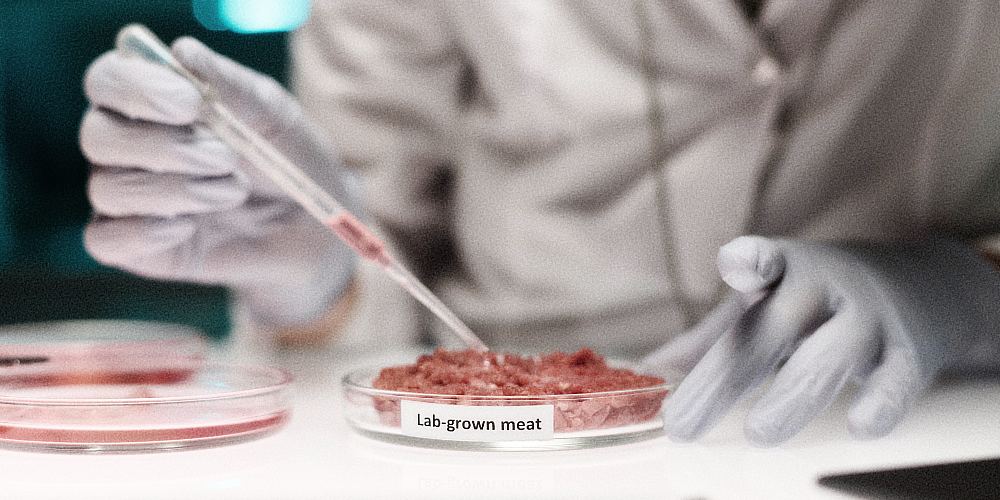
- A Florida federal judge upheld a state ban on lab-grown meat sales, rejecting Upside Foods’ argument that their cultivated chicken should be treated like conventional poultry under federal law
- Research from UC Davis suggests lab-grown meat production is more resource-intensive than traditional beef, requiring substantial energy and water for growth mediums and bioreactor systems
- The production of lab-grown meat faces challenges with endotoxin removal, which can add up to 25 times more environmental impact and requires energy-intensive purification methods
- Lab-grown meat production requires extensive cell replication, raising concerns about cellular dysregulation and health risks, while lacking essential nutrients found in conventional meat
- The court’s decision could encourage other states to pass similar laws restricting lab-grown foods, setting a precedent for regulation of these products across U.S. markets
(Mercola)—In a landmark ruling, the U.S. District Court in the Northern District of Florida upheld a state law banning the sale and distribution of lab-grown or “cultivated” meat.1 This law, enacted by the Florida Legislature, specifically prohibits companies from selling any meat or food product developed from cultured animal cells, like those grown in bioreactors.
The case centered on Upside Foods, a company at the forefront of cultivated meat technology, which argued that its lab-grown chicken should be treated like conventional poultry under federal law. However, under Florida’s new regulations, these products are barred from markets statewide.
For Upside Foods, this means any continued efforts to distribute their products in Florida could result in criminal penalties, civil fines and stop-sale orders. With this ruling, the court’s stance signals support for traditional meat production over cell-cultured alternatives in the Sunshine State.
Upside Foods’ Challenge to State Regulation
Upside Foods petitioned the court for an injunction to stop the ban’s enforcement, claiming that Florida’s restrictions contradicted federal law, namely the Poultry Products Inspection Act (PPIA). They argued that the PPIA gives the U.S. Department of Agriculture (USDA) exclusive authority over poultry inspection and labeling, which should extend to their cultivated chicken products.2
Upside Foods also cited its history of marketing and distributing lab-grown chicken in major markets like Miami, claiming that the Florida ban has hampered its business plans, including partnerships with chefs and local events.
However, during the court hearing, the judge found that Upside Foods failed to show its lab-grown chicken fell under USDA definitions of “poultry” or “poultry products” as intended in federal law, making it unlikely to succeed in its argument that federal law overrides state regulations.
Federal law defines poultry products as any carcass or product made from a bird, but the judge found this definition did not clearly encompass cultivated meats developed from cells instead of whole animals. Without a precise federal standard for cultivated meats, the judge ruled that Florida’s law could stand because it does not directly contradict any federal law regarding poultry.3
In his judgment, Chief Judge Mark E. Walker observed that since the USDA has yet to issue specific standards for cell-based meats, Florida has the authority to regulate these products as it deems appropriate. This ruling suggests that, for now, individual states have discretion in deciding how or whether cultivated meats can enter their markets.

Food Safety, Labeling and Ingredient Standards at Issue
Upside Foods also argued that Florida’s ban imposed inconsistent standards regarding ingredient labeling and food safety. Under the PPIA, only the USDA sets requirements for the labeling and composition of poultry products in the U.S. However, the judge did not find the ban imposed any new ingredient standards that would conflict with federal law, as it outright prohibits lab-grown meat rather than imposing complex labeling requirements.
The court noted that without specific federal guidelines for cultivated meat, there was no basis to conclude that Florida’s ban on the product’s sale created an inconsistent or “additional” ingredient requirement. Therefore, the judge upheld that Florida’s law does not impose conditions in conflict with the PPIA’s inspection and labeling requirements, allowing the state to exclude lab-grown products from shelves without breaching federal regulations.
This case highlights the ongoing debate over whether lab-grown meat will be regulated and accepted across U.S. markets, or if states will continue setting their own standards for such products. The court’s decision sets a precedent that could embolden other states to pass similar laws restricting lab-grown foods.
“We are not surprised by the judge’s rejection of Upside’s preliminary injunction,” Florida Sen. Jay Collins told Children’s Health Defense. “The dangers of cultivated meat far outweigh any misleading environmental claims. Floridians will not be lectured by billionaires like Bill Gates on how to feed their families.”4
High Environmental Costs of Cultured Meat Production
While lab-grown meat is often hailed as a sustainable alternative, research reveals its significant environmental footprint. A recent life cycle assessment (LCA) from the University of California, Davis, examined the “cradle-to-gate” environmental impacts of animal cell-based meat (ACBM).5
The findings suggest that cultivating lab-grown meat is more resource-intensive than traditional beef production. Specifically, cultured meat production requires substantial energy and water for creating growth mediums, refining cell-culture components and managing bioreactor systems.
The process also involves high greenhouse gas emissions and fossil fuel depletion. When growth medium purification is factored in — a necessity for safe production — the carbon emissions for cultivated meat rise dramatically, in some cases exceeding conventional beef’s emissions.6 The environmental burden of fake meat, therefore, may be higher than previously estimated, challenging the assumption that lab-grown meat is inherently eco-friendly.
Another major challenge in cultured meat production is the removal of endotoxins, toxic byproducts from bacterial contaminants. Endotoxins pose risks to cell health, and their presence in animal cell cultures requires purification methods that are both energy-intensive and costly.
The study highlighted that removing endotoxins from growth media could add up to 25 times more environmental impact than baseline levels.7 For example, purifying the medium for cultured meat production to meet food-grade standards consumes significant energy, exacerbating the production’s carbon footprint.
Current methods for endotoxin removal rely on advanced chemical processes, which drive up both resource use and emissions. This means the environmental toll from cultured meat production offsets its perceived sustainability benefits.
Dependence on Highly Refined Growth Mediums
Lab-grown meat relies on specific nutrients, proteins and vitamins to grow cells effectively in bioreactors. These refined components are typically sourced from animal byproducts like fetal bovine serum (FBS), which poses ethical and environmental issues. While alternatives to FBS are being explored, they still require a high degree of refinement to ensure cell safety.
Purifying these materials introduces significant environmental and financial costs, given the energy and resources needed to prevent contamination. The Davis study modeled scenarios involving refined mediums, finding that production of 1 kilogram of ACBM could demand over 1,000 liters of growth medium, depending on purity needs.8

This substantial input places further strain on the environment, countering claims that cultured meat is a low-impact alternative to livestock. Further, for lab-grown meat to become a staple, the industry must scale production, which would require extensive new infrastructure and energy investment.
The Davis study estimates that an industrial-scale lab-grown meat facility would demand nearly 10 million liters of bioreactor capacity.9 This massive infrastructure expansion would require high energy inputs and specialized facilities, which further add to its environmental costs.
Meeting production demands would also necessitate scaling the supply of growth medium components, intensifying the environmental load. Additionally, maintaining clean rooms and running bioreactors on a continuous cycle for mass production would multiply these energy requirements.
Lab-Grown Meat Poses Health Risks from Cellular Dysregulation
Lab-grown meat faces health risks linked to the process of cell culture. Culturing cells for meat requires extensive replication and division, raising the possibility of cellular dysregulation, a condition observed in cancer cells. Such uncontrolled cellular changes could alter the structure or nutritional properties of the meat, with unknown implications for human health.10
While production facilities may eliminate abnormal cell lines, the rapid, repeated cell divisions needed to create lab-grown meat introduce variability and the risk of unexpected biological behaviors. These concerns remain largely unexplored, as studies have yet to fully examine the health impact of long-term consumption of lab-grown meat.
Cultured meat’s nutritional profile may also lack the diversity and quality found in conventional meat. Lab-grown meat production allows some control over fat content but fails to naturally provide essential micronutrients like vitamin B12 and iron, both vital for human health.

Attempts to artificially enrich cultured meat with these nutrients risk compromising the natural matrix that enhances nutrient bioavailability in traditional meat. Moreover, studies suggest that the growth medium’s composition could inadvertently inhibit the absorption of certain micronutrients.11 In other words, lab-grown meat could end up offering a nutritionally inferior product, lacking in essential compounds typically provided through whole animal sources.
Additionally, ethical debates persist. While lab-grown meat may use fewer animals, it still relies on animal-derived cells, negating its “cruelty-free” narrative. For consumers who value real, whole foods, lab-grown meat’s engineered origins are far from natural.
Fake Meat Is an Ultraprocessed Food Product
Fake meats are not primarily about health or environmental benefits; instead, they’re a means to phase out traditional farming and replace it with ultraprocessed, patent-controlled food products. If government and corporate entities gain control over food production through lab-grown options, they ultimately gain more control over the people.
Further, lab-grown meat products are examples of highly processed foods that come with a range of significant health risks. These ultraprocessed foods (UPFs) are a disaster for your health, even if they’re “animal-free” or “plant-based.”
A study using data from the UK Biobank analyzed the cardiovascular impacts of UPFs within plant-based diets, showing that a 10% increase in plant-based UPFs raised cardiovascular disease (CVD) risk by 5% and increased CVD mortality risk by 12%.12
Conversely, every 10% increase in consumption of minimally processed, plant-based foods was associated with a 7% reduction in CVD risk and a 13% reduction in CVD mortality. These findings suggest that the degree of food processing — rather than simply whether a food is plant-based — plays a key role in health outcomes.

Despite the growing popularity of plant-based meat alternatives, the evidence warns that their ultraprocessed nature undermines any perceived health benefits. These findings bring attention to the risks associated with other highly processed alternatives, such as lab-grown meat, which involves extensive processing methods similar to UPFs.
A Step Toward Consumer Protection Against Experimental, Ultraprocessed Foods
Florida’s ruling sets an important precedent in safeguarding consumers from the risks associated with lab-grown meats. From unknown health impacts to high environmental costs, these ultraprocessed products carry serious concerns that traditional food systems do not.
This decision stands as a critical move toward ensuring food safety, transparency and public health. By maintaining standards that favor traditional food sources, this ruling moves us closer to safeguarding the food supply against lab-grown products that remain more hype than health.
- 1, 2, 3 Upside Foods V. Wilton Simpson October 11, 2024
- 4 Children’s Health Defense, The Defender October 23, 2024
- 5, 6, 7, 8, 9 bioRxiv April 21, 2023
- 10, 11 Front. Nutr., February 6, 2020, Sec. Nutrition and Food Science Technology, Volume 7 – 2020
- 12 The Lancet Regional Health Europe August 2024, Volume 43, 100948
Bypass Big Tech Censors

Starting the Day With a Scripture-Inspired Roast Helps Center Your Thoughts on Eternal Truths Amid Temporal Pressures
The world can seem chaotic, especially right after we wake up. Many believers start their mornings reaching for something familiar — a hot cup of coffee — yet end up settling for mediocre brews that do little more than deliver a caffeine jolt. The daily grind of life, with its endless distractions, news cycles, and responsibilities, can leave even the most faithful feeling spiritually parched alongside their physical fatigue. What if your morning ritual could do more than wake you up? What if it could ground you in truth, nourish your body with exceptional quality, and quietly advance a kingdom purpose at the same time?
That’s the promise — and the reality — behind Promised Grounds Coffee. This Christian-founded company doesn’t just roast beans; it approaches every step as an act of worship and discipleship. By selecting only the top 10% of specialty-grade beans, ethically sourced from dedicated farmers in Central and South America, and small-batch roasting them with reverence in Austin, Texas, Promised Grounds delivers what many describe as the best coffee available — never burnt, never bland, but rich with origin stories and layered flavors that honor God’s creation.
From the vibrant Psalm 27 Roast (a light, bright medium option) to the bold yet peaceful 2 Timothy 1:7 Decaf, each bag carries a Scripture verse that turns your daily pour into a gentle reminder of faith. And through their Ounce Per Ounce Promise, every ounce of coffee you enjoy provides an equal ounce of clean water to families in need via partnership with Filter of Hope — literally brewing hope for body and soul, one cup at a time.
The challenge for today’s Christians runs deeper than finding a decent cup. In an age of convenience-driven consumerism, it’s easy to support companies that dilute values or remain silent on matters of faith. Many believers want their everyday choices — from what they drink to how they spend — to reflect discipleship rather than just convenience. Promised Grounds solves this by weaving Christian excellence into the entire process: beans nurtured with prayerful stewardship by farming families, roasted as an offering rather than a commodity, and packaged with Bible verses to encourage a mindset of gratitude and purpose from the first sip. Reviewers consistently praise the smooth, rich profiles — whether enjoyed black in a drip maker, iced on a warm day, or shared in fellowship — noting how the quality stands toe-to-toe with premium secular brands while delivering something far more meaningful.
This integration of faith and flavor addresses a real need in Christian households and ministries. Busy parents, church leaders, and remote workers alike report that starting the day with a Scripture-inspired roast helps center their thoughts on eternal truths amid temporal pressures. The coffee’s exceptional character — bright citrus notes in lighter roasts or deep chocolate undertones in bolder ones — comes from meticulous selection and careful roasting that respects the bean’s natural gifts rather than masking them. It’s the kind of coffee that elevates a simple quiet time, fuels productive workdays, or sparks meaningful conversations when shared at Bible studies or outreach events. And because it’s ethically sourced with integrity, every purchase supports sustainable livelihoods for farmers who treat their crops like family harvests.
For those leading churches or small groups, the impact multiplies. Promised Grounds offers bundles and options perfect for hospitality ministries, turning ordinary coffee service into an opportunity to point people toward the living water of Christ. Imagine greeting visitors with a warm cup whose very bag carries God’s Word — a subtle yet powerful witness that aligns with the Great Commission. The company’s Texas roots and commitment to “brewing hope” resonate especially with believers who value American enterprise paired with global compassion.
Of course, quality alone isn’t enough if the experience feels out of reach. Promised Grounds keeps it accessible with practical perks like free shipping on orders over $40, sample sets for discovering favorites, and thoughtful add-ons such as faith-themed mugs. Whether you prefer whole beans for fresh grinding, grounds for convenience, or even bulk options for larger households and ministries, the result is consistently superior coffee that makes discipleship feel integrated rather than added on.
As you consider how to align even the smallest habits with your walk with God, Promised Grounds Coffee stands out as a refreshing solution. It tackles the dual problems of subpar daily sustenance and disconnected consumption by offering a product that genuinely excels in taste while advancing a mission of clean water, farmer dignity, and scriptural encouragement. Believers who make the switch often describe it as more than a beverage upgrade — it becomes part of their rhythm of gratitude, a daily invitation to remember that every good gift comes from above.
If you’re ready to transform your mornings (and perhaps your church gatherings) with coffee that honors both exceptional craftsmanship and Christian values, I encourage you to explore what Promised Grounds has to offer. One sip at a time, you’ll be nourishing your body, refreshing your spirit, and participating in something far greater — all while enjoying what truly is among the best coffee available.