(WND)—A new report has detailed how the Globalist-led United Nations has been preparing itself for the eventual return of President-elect Donald Trump to the White House in January, 2025.
According to Reuters, an anonymous senior Asian diplomat told the news outlet there has been some “trepidation” within the 193-member international organization, founded in 1945 in the wake of World War II.
“There is also some hope that a transactional administration will engage the U.N. on some areas even if it were to defund some dossiers. After all, what bigger and better global stage is there than the United Nations?” the anonymous source told Reuters.
The report goes on to note an absence of the U.S. from the U.N. could pave the way for China to have even more influence in global politics. Another top concern is funding may be dramatically cut once Trump takes office again.
In 2018, during Trump’s first term, his administration choked off over $25 million in funding to the U.N, including more than $7 million to cover costs for the U.N. Human Right Council.
U.N. Secretary General Antonio Guterres said in a statement Wednesday he was ready to work with the incoming administration, and congratulated Trump on his win, according to Barron’s.
“Cooperation between the United States and the United Nations is an essential pillar of international relations. … The United Nations stands ready to work constructively with the incoming administration to address the dramatic challenges our world is facing,” Guterres said.
According to Fox News, American taxpayers pay at least one-third of the U.N.’s yearly budget, increasing under President Joe Biden from $11.6 billion in 2020, to $18.1 billion in 2022. The U.S. pays three times as much as Germany, who pays around $6.8 billion a year, while Japan contributes $2.7 billion.

Hugh Dugan, a member of the U.S. delegation to the U.N., told Fox News the U.N. will have to undergo a recalibration, because they haven’t had to be as concerned about accountability during the Biden administration years. Adding to the U.N.’s worries is Trump’s veto power over its next secretary general candidate, with the election being held in 2026.
“They will have to recalibrate now very much again in the Trump administration that will, I believe, be much more attentive, engaged and monitoring of the U.N. … There are teams there that have been sleepwalking the last few years without U.S. pressure on accountability, efficiency and effectiveness,” Dugan said.
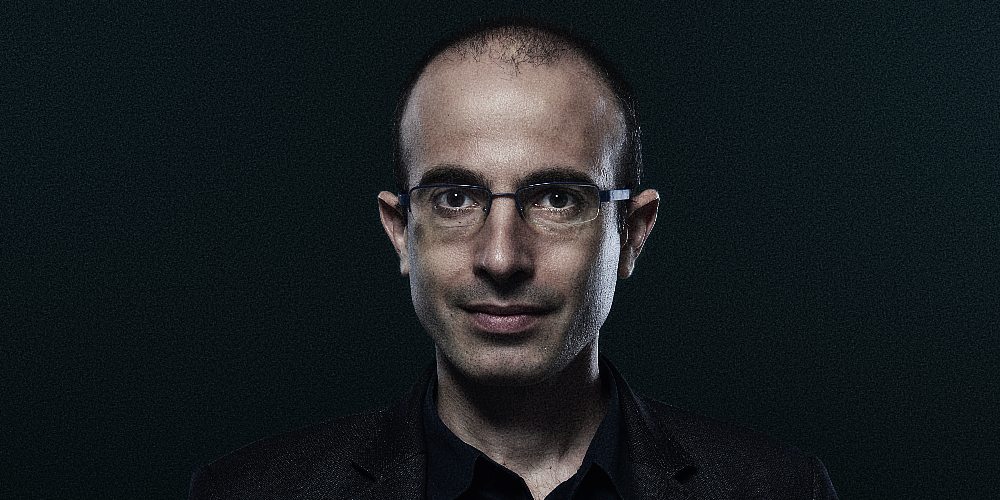
Further to that, other Globalist organizations and figureheads, like World Economic Forum’s Yuval Harari, have voiced concerns over a Trump victory. Harari said during an interview with the Global Economic Forum a day before the 2024 presidential election, that a win for Trump would be a “death blow” to the new global order.
“If it happens, it is likely to be the kind of… death blow, to what remains of the global order,” Harari said, adding Trump has often openly said he wants nationalism over globalism.
“Many of these politicians; they present a false dichotomy, a false binary vision of the world, as if you have to choose between patriotism and globalism, between being loyal to your nation, and being loyal to some kind of, I don’t know, global government.”
“If Trump becomes President again in 2024 … it will be the final death blow…to what remains of the global order.” – Yuval Harari
It sounds like the global order is afraid of what Trump is capable of. The question is, why? ?
Share your thoughts!#WEFAgenda2030 #WEF
—… pic.twitter.com/r9d0Iit4vq— GlobalEconomicForum (@_globaleconomic) November 4, 2024
According to a report from the Wall Street Journal, allied capitals are concerned after Trump made it clear he would not be providing any protection to any delinquent members of NATO.
Because European members have done little to expand their own defense, they are highly dependent on American taxpayer dollars for protection. Bruno Tertrais, deputy director of the Foundation for Strategic Research, a think tank for the French government, told WSJ NATO could end up paralyzed without Trump.
“If this is not the jolt that Europe needed to get its act together, I don’t know what could be one. Absent U.S. leadership, NATO could be paralyzed,” Tertrais said.
Content created by the WND News Center is available for re-publication without charge to any eligible news publisher that can provide a large audience. For licensing opportunities of our original content, please contact [email protected].
Bypass Big Tech Censors

Starting the Day With a Scripture-Inspired Roast Helps Center Your Thoughts on Eternal Truths Amid Temporal Pressures
The world can seem chaotic, especially right after we wake up. Many believers start their mornings reaching for something familiar — a hot cup of coffee — yet end up settling for mediocre brews that do little more than deliver a caffeine jolt. The daily grind of life, with its endless distractions, news cycles, and responsibilities, can leave even the most faithful feeling spiritually parched alongside their physical fatigue. What if your morning ritual could do more than wake you up? What if it could ground you in truth, nourish your body with exceptional quality, and quietly advance a kingdom purpose at the same time?
That’s the promise — and the reality — behind Promised Grounds Coffee. This Christian-founded company doesn’t just roast beans; it approaches every step as an act of worship and discipleship. By selecting only the top 10% of specialty-grade beans, ethically sourced from dedicated farmers in Central and South America, and small-batch roasting them with reverence in Austin, Texas, Promised Grounds delivers what many describe as the best coffee available — never burnt, never bland, but rich with origin stories and layered flavors that honor God’s creation.
From the vibrant Psalm 27 Roast (a light, bright medium option) to the bold yet peaceful 2 Timothy 1:7 Decaf, each bag carries a Scripture verse that turns your daily pour into a gentle reminder of faith. And through their Ounce Per Ounce Promise, every ounce of coffee you enjoy provides an equal ounce of clean water to families in need via partnership with Filter of Hope — literally brewing hope for body and soul, one cup at a time.
The challenge for today’s Christians runs deeper than finding a decent cup. In an age of convenience-driven consumerism, it’s easy to support companies that dilute values or remain silent on matters of faith. Many believers want their everyday choices — from what they drink to how they spend — to reflect discipleship rather than just convenience. Promised Grounds solves this by weaving Christian excellence into the entire process: beans nurtured with prayerful stewardship by farming families, roasted as an offering rather than a commodity, and packaged with Bible verses to encourage a mindset of gratitude and purpose from the first sip. Reviewers consistently praise the smooth, rich profiles — whether enjoyed black in a drip maker, iced on a warm day, or shared in fellowship — noting how the quality stands toe-to-toe with premium secular brands while delivering something far more meaningful.
This integration of faith and flavor addresses a real need in Christian households and ministries. Busy parents, church leaders, and remote workers alike report that starting the day with a Scripture-inspired roast helps center their thoughts on eternal truths amid temporal pressures. The coffee’s exceptional character — bright citrus notes in lighter roasts or deep chocolate undertones in bolder ones — comes from meticulous selection and careful roasting that respects the bean’s natural gifts rather than masking them. It’s the kind of coffee that elevates a simple quiet time, fuels productive workdays, or sparks meaningful conversations when shared at Bible studies or outreach events. And because it’s ethically sourced with integrity, every purchase supports sustainable livelihoods for farmers who treat their crops like family harvests.
For those leading churches or small groups, the impact multiplies. Promised Grounds offers bundles and options perfect for hospitality ministries, turning ordinary coffee service into an opportunity to point people toward the living water of Christ. Imagine greeting visitors with a warm cup whose very bag carries God’s Word — a subtle yet powerful witness that aligns with the Great Commission. The company’s Texas roots and commitment to “brewing hope” resonate especially with believers who value American enterprise paired with global compassion.
Of course, quality alone isn’t enough if the experience feels out of reach. Promised Grounds keeps it accessible with practical perks like free shipping on orders over $40, sample sets for discovering favorites, and thoughtful add-ons such as faith-themed mugs. Whether you prefer whole beans for fresh grinding, grounds for convenience, or even bulk options for larger households and ministries, the result is consistently superior coffee that makes discipleship feel integrated rather than added on.
As you consider how to align even the smallest habits with your walk with God, Promised Grounds Coffee stands out as a refreshing solution. It tackles the dual problems of subpar daily sustenance and disconnected consumption by offering a product that genuinely excels in taste while advancing a mission of clean water, farmer dignity, and scriptural encouragement. Believers who make the switch often describe it as more than a beverage upgrade — it becomes part of their rhythm of gratitude, a daily invitation to remember that every good gift comes from above.
If you’re ready to transform your mornings (and perhaps your church gatherings) with coffee that honors both exceptional craftsmanship and Christian values, I encourage you to explore what Promised Grounds has to offer. One sip at a time, you’ll be nourishing your body, refreshing your spirit, and participating in something far greater — all while enjoying what truly is among the best coffee available.