(The Epoch Times)—The Pentagon needs to relocate the manufacturing of all critical components to the United States. That’s what Secretary of War Pete Hegseth said in a Sept. 30 speech in Quantico, Virginia.
“The moment requires restoring and refocusing our defense industrial base, our shipbuilding industry, and onshoring all critical components,” said Hegseth.
Rebuilding what Hegseth calls the “arsenal of freedom” comes hand-in-hand with ensuring the United States’ industrial base is no longer reliant on China, other hostile actors, and vulnerable supply chains.
‘Deterrence Fails When Delivery Slips’
“Deterrence fails when delivery slips,” Steve Aberle, CEO of Rohirrim, a Washington-based company that makes procurement software for the aerospace and defense industry, told The Epoch Times. “What we intend to do is make delivery the default for America and its allies.”
“War starts when gaps appear, so we close those gaps via acquisition before they matter, so no adversary should wake up to an advantage,” Aberle said.
The present situation has come as a direct result of the rise of Chinese manufacturing, which saw its global share grow from 9 percent to 23 percent between 2004 and 2023. Meanwhile, fewer and fewer products are made in the United States.
A case in point would be Magnequench, a company founded by General Motors (GM) in 1986 to manufacture neodymium-iron-boron magnets used in precision-guided munitions, mainly for the Pentagon.
In 1995, GM sold Magnequench for $56 million to a consortium backed by Chinese investors, who later closed down two magnet manufacturing plants in Indiana.

As a result, “America now cannot build a single guided missile without permission from Beijing,” Michael Dunne wrote in a June 2025 report in The Dunne Insights Newsletter. “America’s defense industrial base had been hollowed out for $56 million: the cost of a single F-35 fighter jet.”
On Feb. 24, 2021, President Joe Biden signed Executive Order 14017, which ordered the Department of Defense and other branches of government to review critical supply chains.
Biden said at the time, “The United States needs resilient, diverse, and secure supply chains to ensure our economic prosperity and national security.”
The Manufacturing Capability Expansion & Investment Prioritization (MCEIP) program, which seeks to address “vulnerabilities” in the supply chain of the U.S. industrial base, was launched, and in April 2023, it awarded contracts to “strengthen supply chains for hypersonic and strategic systems.”
In February 2024, the U.S. Department of Defense handed out seven contracts worth $192.5 million to restore manufacturing of certain critical chemicals within the United States.
As a result, hundreds of new jobs are being created in Colorado, Louisiana, Ohio, Oregon, and California.
For example, METSS Corporation—based in Westerville, Ohio—was given a $14 million contract to produce various chemicals, including potassium sulfate, which is used as a muzzle flash suppressant in artillery and firearms.
“Our objective is simple: transform the entire acquisition system to operate on a wartime footing,” Hegseth said in a speech on Nov. 7, “To rapidly accelerate the fielding of capabilities and focus on results, our objective is to build, rebuild the arsenal of freedom.”
Acquisition Transformation Strategy
He also unveiled a new acquisition transformation strategy, which will put the industrial base on a wartime footing and “transition from a culture of compliance to one of speed and execution.”
Hegseth’s speeches do not “come out of nowhere,” said Aberle, who said reforming the acquisition strategy had been a key priority of the incoming Trump administration.
Aberle said the importance of correctly sourcing technology, weapons, and services had been clear from the moment Trump returned to the White House for his second term in January.
“Even on the first day there was White House guidance on how each individual agency should approach acquisition,” Aberle said.

On Jan. 23, Trump said he wanted the United States to have a “level playing field” with China on trade.
Beijing had gained its trade advantages by not playing fair with the West, Iain Duncan Smith, a British member of Parliament and former leader of the Conservative Party, told The Epoch Times.
“China has disobeyed every World Trade Organization rule on fair trade,” Duncan Smith said, and pointed out they had deliberately chosen not to become a full member of the WTO, which meant they had been given the status of a “developing country.”
In September, Chinese leader Xi Jinping announced Beijing would no longer seek the special treatment accorded to developing countries.
Bending WTO Rules
Duncan Smith said China had been allowed to “bend the rules” and that had led to them becoming dominant in a whole series of markets.
“They trash the WTO rules about free markets, they subsidize huge amounts of money into businesses that they think might not succeed. … China has broken the investment rules, it’s broken slave labor rules, and they’re using forced labor,” Duncan Smith said.

He said that as a result, they produce a huge range of products much cheaper than the West, driving competitors in the United States and Europe out of business.
Keith Norman, chief marketing officer with California-based Lyten, told The Epoch Times that globalization was not entirely a bad strategy and still “made sense” for some of the most profitable companies in the United States and Europe, like Apple and Nvidia.
He said the formula of outsourcing manufacturing to China and other low-cost countries was “generating enormous economic benefit” for the United States and Europe.
Geopolitical Risk Poses ‘Challenge’
“Where that starts to become a challenge when you move into a period where there’s more geopolitical risk,” Norman said.
Norman said when products—such as chips, batteries, solar panels, and wind turbines—are critical to energy security and national security, that is when the risk starts to ramp up.
The issue was thrown into stark relief on Nov. 5, when Dutch chipmaker Nexperia gave a statement saying that it can no longer guarantee the quality or authenticity of chips made at its Chinese facilities, saying its subsidiaries in China have disregarded management directives.
Lyten, a Silicon Valley startup, said on Aug. 7 that it had entered a binding agreement to acquire bankrupt Scandinavian electric vehicle (EV) battery maker Northvolt’s plants in Sweden and Germany—to add to a site in Poland they had already acquired—to expand its lithium-sulfur battery technology into Europe.
“We are building a battery which is a lighter weight than lithium-ion, that is also sourced with industrial by-product from the U.S. and Europe, and so we’re able to entirely eliminate supply chain through China, and at the same time actually deliver better performing batteries,” Norman said.
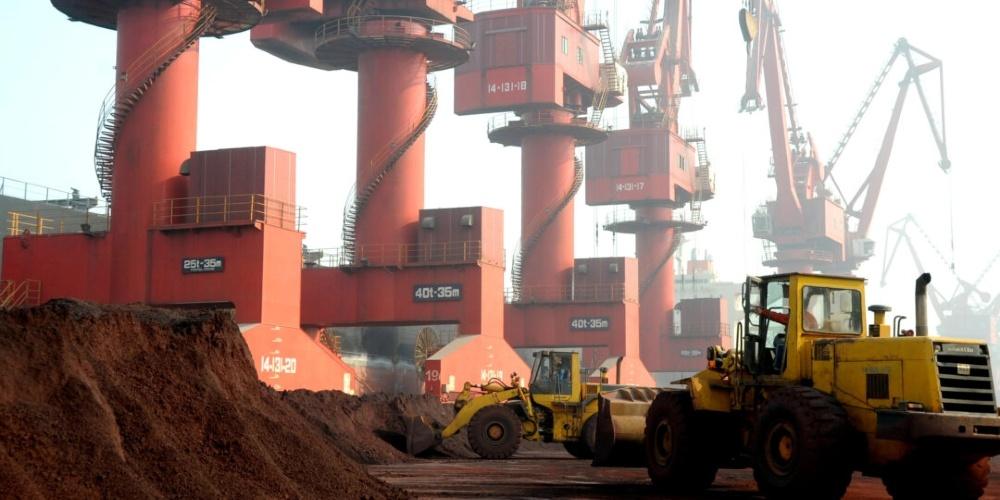
On April 26, 2021, Sen. Marco Rubio (R-Fla.) and Rep. David McKinley (R-W.Va.) led a bipartisan group of lawmakers who called on the Biden administration to establish a “rare-earth metallurgical cooperative” to reduce the nation’s reliance on Beijing for the specialized minerals used to build electronics and military weapons.
Little was done until the advent of the second Trump administration.
On April 4, the Chinese communist regime imposed export controls on certain rare earth elements, which Interior Secretary Doug Burgum said were “within weeks” of closing down U.S. plants manufacturing everything from cars to fighter jets.
On Oct. 9, 2025, Beijing expanded these export controls.
Trump met Chinese leader Xi Jinping on Oct. 30, and agreed to drop some tariffs in exchange for Beijing resuming exports of rare earths, such as holmium, erbium, thulium, europium, and ytterbium.
He also said he would visit China in April 2026.
A few days later, on Nov. 5, the Chinese navy unveiled its latest aircraft carrier, the Fujian, as it looks to flex its military muscles in the Pacific.
In a Nov. 2 interview on CBS’s “60 Minutes,” Trump said the United States would end its dependence on China for rare-earth minerals within 18 months under an “emergency program” to build domestic and allied supply chains, describing the initiative as a key national security priority following Beijing’s recent export restrictions.
On Oct. 21, when Northrop Grumman reported its earnings for the third quarter of 2025, its CEO, Kathy Warden, commented on the supply chain issue.
“Fortunately, our team has the two foundries in the United States where we design, produce, and package microelectronics. So our dependency there on rare earths has been mitigated by looking through our supply chain and getting well ahead of our sources of supply to ensure that we can produce those electronics,” Warden said.
Bypass Big Tech Censors
“We are very pleased that the U.S. government is actively working to set up additional sources of supply, including in the U.S., and working partnerships with our allies for them to also invest in these capabilities in their country,” Warden said.
Risk mitigation is going to be a priority for the United States going forward, Aberle said.
China expert Cheryl Yu testified before the Wisconsin Legislature on Oct. 21, warning that several Chinese-owned industrial and agricultural properties in Wisconsin have ties to the United Front Work Department, a branch of the Chinese Communist Party (CCP).
The Epoch Times reached out, through the Department of War, to get a response from John Shultz, of the Office of the Assistant Secretary for War for Industrial Base Policy, regarding MCEIP. It has not received a response.
Bypass Big Tech Censors

Starting the Day With a Scripture-Inspired Roast Helps Center Your Thoughts on Eternal Truths Amid Temporal Pressures
The world can seem chaotic, especially right after we wake up. Many believers start their mornings reaching for something familiar — a hot cup of coffee — yet end up settling for mediocre brews that do little more than deliver a caffeine jolt. The daily grind of life, with its endless distractions, news cycles, and responsibilities, can leave even the most faithful feeling spiritually parched alongside their physical fatigue. What if your morning ritual could do more than wake you up? What if it could ground you in truth, nourish your body with exceptional quality, and quietly advance a kingdom purpose at the same time?
That’s the promise — and the reality — behind Promised Grounds Coffee. This Christian-founded company doesn’t just roast beans; it approaches every step as an act of worship and discipleship. By selecting only the top 10% of specialty-grade beans, ethically sourced from dedicated farmers in Central and South America, and small-batch roasting them with reverence in Austin, Texas, Promised Grounds delivers what many describe as the best coffee available — never burnt, never bland, but rich with origin stories and layered flavors that honor God’s creation.
From the vibrant Psalm 27 Roast (a light, bright medium option) to the bold yet peaceful 2 Timothy 1:7 Decaf, each bag carries a Scripture verse that turns your daily pour into a gentle reminder of faith. And through their Ounce Per Ounce Promise, every ounce of coffee you enjoy provides an equal ounce of clean water to families in need via partnership with Filter of Hope — literally brewing hope for body and soul, one cup at a time.
The challenge for today’s Christians runs deeper than finding a decent cup. In an age of convenience-driven consumerism, it’s easy to support companies that dilute values or remain silent on matters of faith. Many believers want their everyday choices — from what they drink to how they spend — to reflect discipleship rather than just convenience. Promised Grounds solves this by weaving Christian excellence into the entire process: beans nurtured with prayerful stewardship by farming families, roasted as an offering rather than a commodity, and packaged with Bible verses to encourage a mindset of gratitude and purpose from the first sip. Reviewers consistently praise the smooth, rich profiles — whether enjoyed black in a drip maker, iced on a warm day, or shared in fellowship — noting how the quality stands toe-to-toe with premium secular brands while delivering something far more meaningful.
This integration of faith and flavor addresses a real need in Christian households and ministries. Busy parents, church leaders, and remote workers alike report that starting the day with a Scripture-inspired roast helps center their thoughts on eternal truths amid temporal pressures. The coffee’s exceptional character — bright citrus notes in lighter roasts or deep chocolate undertones in bolder ones — comes from meticulous selection and careful roasting that respects the bean’s natural gifts rather than masking them. It’s the kind of coffee that elevates a simple quiet time, fuels productive workdays, or sparks meaningful conversations when shared at Bible studies or outreach events. And because it’s ethically sourced with integrity, every purchase supports sustainable livelihoods for farmers who treat their crops like family harvests.
For those leading churches or small groups, the impact multiplies. Promised Grounds offers bundles and options perfect for hospitality ministries, turning ordinary coffee service into an opportunity to point people toward the living water of Christ. Imagine greeting visitors with a warm cup whose very bag carries God’s Word — a subtle yet powerful witness that aligns with the Great Commission. The company’s Texas roots and commitment to “brewing hope” resonate especially with believers who value American enterprise paired with global compassion.
Of course, quality alone isn’t enough if the experience feels out of reach. Promised Grounds keeps it accessible with practical perks like free shipping on orders over $40, sample sets for discovering favorites, and thoughtful add-ons such as faith-themed mugs. Whether you prefer whole beans for fresh grinding, grounds for convenience, or even bulk options for larger households and ministries, the result is consistently superior coffee that makes discipleship feel integrated rather than added on.
As you consider how to align even the smallest habits with your walk with God, Promised Grounds Coffee stands out as a refreshing solution. It tackles the dual problems of subpar daily sustenance and disconnected consumption by offering a product that genuinely excels in taste while advancing a mission of clean water, farmer dignity, and scriptural encouragement. Believers who make the switch often describe it as more than a beverage upgrade — it becomes part of their rhythm of gratitude, a daily invitation to remember that every good gift comes from above.
If you’re ready to transform your mornings (and perhaps your church gatherings) with coffee that honors both exceptional craftsmanship and Christian values, I encourage you to explore what Promised Grounds has to offer. One sip at a time, you’ll be nourishing your body, refreshing your spirit, and participating in something far greater — all while enjoying what truly is among the best coffee available.