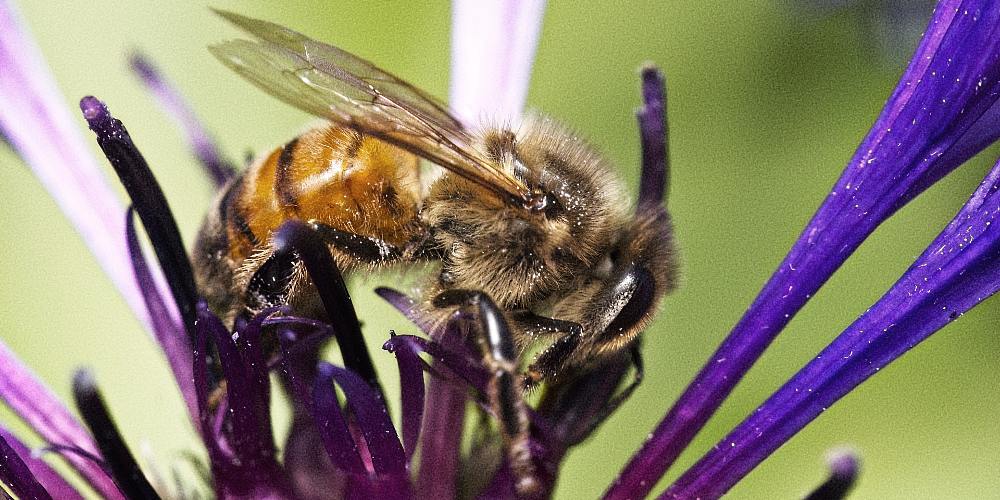
- Varroa mites are devastating honeybee populations, affecting 54.8% of colonies and making bees more susceptible to diseases and harsh conditions
- Colony collapse disorder remains a significant threat, with 70,650 colonies lost in just three months, despite a 34% decrease from the previous year
- Neonicotinoid pesticides, particularly thiacloprid, have long-lasting effects on honeybees, disrupting their energy metabolism and gut microbiome even when exposed as larvae
- Industrial agriculture practices force bees to mature too quickly, shortening their lifespans, while areas with more natural habitats help bees live longer and healthier lives
- You can help protect bees by avoiding neonicotinoids, supporting organic farming, creating pollinator-friendly spaces and choosing untreated plants for your garden
A U.S. Department of Agriculture (USDA) report on honeybee colonies reveals a troubling trend that could have far-reaching consequences for your food supply and the environment.1 Varroa mites have emerged as the primary threat to honeybee populations, affecting a staggering 54.8% of colonies during April through June 2024.
These parasitic mites weaken bees, making them more susceptible to diseases and reducing their ability to survive harsh conditions. The impact of varroa mites on your local ecosystem cannot be overstated, as they contribute significantly to colony losses and pose a severe challenge to beekeepers nationwide. Understanding the severity of this problem and others facing honeybees is crucial, as it directly affects pollination services essential for many crops you rely on daily.
Colony Collapse Disorder: A Persistent Threat
While there’s a glimmer of hope with a 34% decrease in colonies lost to colony collapse disorder (CCD) symptoms from January through March 2024 compared to the same period in 2023, the issue remains a significant concern.2 CCD, characterized by the sudden disappearance of adult bees from the hive, continues to puzzle researchers and beekeepers alike.
The loss of 70,650 colonies to CCD symptoms in just three months highlights the ongoing struggle to maintain healthy bee populations.3 This mysterious phenomenon not only impacts honey production but also threatens the pollination of countless plants in your garden and local ecosystem. The reduction in CCD cases is encouraging, but it’s clear that more research and preventive measures are needed to protect your food security and biodiversity.
The USDA report paints a picture of constant flux in honeybee populations, with significant losses and additions throughout the year. From January through March 2024, beekeepers lost 396,820 colonies, representing a 15% decline. However, they also added 404,100 colonies during the same period, barely offsetting the losses.
This cycle of loss and renewal underscores the challenges faced by beekeepers in maintaining stable populations. The highest number of colonies lost in 2023 was during April through June, with 378,190 colonies lost.4 Pesticides were also named as a leading stressor in about 10% of colonies from January through June.5
These fluctuations have a direct impact on your local agriculture and ecosystems, as they affect the availability of pollinators for crops and wild plants alike. Understanding this dynamic is crucial for appreciating the efforts required to sustain honeybee populations and the vital services they provide.
Neonicotinoids: A Silent Killer in Your Garden
Common pesticides in your garden are contributing to the alarming decline in honeybee populations. One study shed light on how neonicotinoids, particularly thiacloprid, have long-lasting effects on honeybees even when exposed during their larval stage.6 Thiacloprid, once considered less toxic to bees than other neonicotinoids, is now under scrutiny for its significant impact on bee health.

The research reveals that exposure to sublethal concentrations of thiacloprid during the larval phase leads to reduced survival rates in adult bees. The exposed bees showed increased sugar-water consumption without corresponding weight gain, suggesting a disruption in their energy metabolism.7
This means that bees exposed to thiacloprid as larvae struggle to maintain their energy balance as adults, impacting their ability to forage and contribute to the colony’s survival.
Gut Microbiome Is a Key Player in Bee Health
Your gut health is crucial for your overall well-being, and the same is true for honeybees. The study uncovered that early-life exposure to thiacloprid significantly alters the gut microbiota of adult honeybees.8 On the first day after emergence, bees exposed to thiacloprid showed a dramatic reduction in gut microbial diversity. This disruption in the delicate balance of beneficial bacteria could have far-reaching consequences for bee health.
A healthy gut microbiome plays vital roles in digestion, nutrient absorption, metabolism and immunity. By disturbing this ecosystem, thiacloprid indirectly weakens bees’ defenses against pathogens and reduces their ability to extract nutrients from their food efficiently.
While the study found that the microbial diversity seemed to stabilize by the sixth day after emergence, the initial disruption during a critical period of development could have lasting effects on the bees’ overall health and resilience.9
From Hive to Human: The Ripple Effect of Pesticide Use
You might wonder why the health of honeybees should matter to you. The answer lies in the intricate web of ecological relationships that sustain our food systems. Honeybees are primary pollinators, playing a crucial role in global ecosystems and agricultural biodiversity. Their decline doesn’t just mean less honey; it threatens the very foundations of our food security.
Even pesticides considered “less toxic” have long-term effects that disrupt the delicate balance of nature. When you use neonicotinoids in your garden or purchase produce grown with these pesticides, you’re unknowingly contributing to a chain reaction that weakens bee colonies.
This, in turn, affects crop yields and the overall health of our ecosystems. So, your individual actions, even at the level of choosing garden products, have far-reaching consequences for the environment and, ultimately, your own well-being.
The Hidden Toll of Industrial Agriculture on Honeybees
In intensive agricultural areas, honeybees also face a rollercoaster of feast and famine as crops bloom and wither. During food shortages between mass flowerings, researchers found that worker bees start foraging at a younger age — essentially growing up too fast.10 This premature maturation comes at a steep cost, shortening the bees’ overall lifespan.
By analyzing the life histories of over 1,035 individual bees across different landscapes, scientists uncovered how food scarcity pushes young bees to become foragers earlier than normal.11 While this helps the colony gather resources in the short-term, it means each worker bee lives a shorter life.
Over time, this accelerated life cycle threatens the survival of entire colonies. The findings reveal an invisible toll that modern farming practices take on bee populations, even when the effects aren’t immediately obvious. Understanding these hidden stressors and embracing alternatives like regenerative agriculture are crucial for protecting the pollinators your food supply depends on.
A Lifeline in the Agricultural Desert
Amid the sea of cropland, patches of wilderness provide a vital refuge for bees. The study, published in Science of The Total Environment, found that areas with more semi-natural habitats like meadows, hedgerows and woodlands helped buffer honeybees against the harsh effects of food shortages.12 In landscapes with abundant natural areas, bees were able to delay foraging and live longer lives overall.

This protective effect was especially pronounced during times of scarcity between crop blooms. Bees with access to diverse wild plants maintained more normal life cycles, avoiding the premature aging seen in more barren agricultural zones.
These oases of biodiversity are critical for supporting pollinator health. Even small increases in natural habitat around farms could make a big difference for bee populations. By preserving and restoring these areas, you can help create a more hospitable environment for the bees that your food system relies on.
The Delicate Balance of a Bee’s Lifespan
The researchers uncovered an intriguing trade-off in bee development: workers that start foraging too early or too late tend to have shorter foraging careers overall. The sweet spot appears to be around 14 days old — bees that began foraging at this age had the longest productive lifespans as foragers.13
This delicate balance likely relates to the bees’ physiology. Those pushed to forage too young may not be physically ready for the demanding job. On the flip side, bees that delay foraging for too long may have limited time left in their natural lifespan. Understanding this optimal timing could help beekeepers and farmers better support healthy colonies.
The presence of diverse natural habitats seems to help bees hit this developmental “sweet spot” more often. By creating and supporting an environment that allows for more normal bee development, you can support more robust and resilient pollinator populations in your area.
Hope for Reversing Honeybee Decline
While the findings paint a sobering picture of honeybee health in many industrial agriculture landscapes, they also point to achievable solutions. The study showed that even modest increases in semi-natural habitat around crops have significant benefits for bee populations.14

Simple changes like planting hedgerows, establishing wildflower meadows or leaving some land fallow can make a big difference. These practices not only support bees but also provide habitat for other beneficial insects and wildlife. As a consumer, you can support these efforts by choosing products from small farms that prioritize biodiversity.
You can also create pollinator-friendly spaces in your own yard or community. By advocating for and implementing these changes, you have the power to help reverse the decline of bees and other crucial pollinators.
Take Action to Protect Bees and Your Health
Armed with this knowledge, you have the ability to make a difference. Start by avoiding the use of neonicotinoids and other synthetic pesticides in your own garden. Opt for organic, regenerative gardening methods and support small farmers who practice bee-friendly agriculture. When shopping for plants, ask nurseries if their plants have been treated with neonicotinoids and choose untreated options.
Remember, protecting bee health is ultimately about protecting your own health and the health of future generations. By making conscious choices, you’re not just helping to preserve bee populations; you’re also reducing your exposure to potentially harmful chemicals.
The research on how thiacloprid affects bee metabolism and gut health serves as a warning sign for human health as well. As you work to create a safer environment for bees, you’re also creating a healthier world for yourself and your loved ones. Every small action counts in the fight to preserve our pollinators and ensure a truly sustainable future for all.
Colony Renovation and Conservation Efforts
Meanwhile, despite the challenges, there are signs of proactive measures being taken to strengthen honeybee populations. Colony renovation is a one technique used by beekeepers to maintain and improve the health and productivity of their honeybee colonies.

This process typically involves one of two main approaches: requeening or introducing new bees. Requeening is the practice of replacing an existing queen bee with a new, often younger and more vigorous queen. This helps improve the colony’s genetics, increase egg-laying rates and enhance disease resistance.
Alternatively, beekeepers may introduce new bees through nucleus colonies (small, starter colonies) or packages (boxes containing worker bees and a queen). These methods allow beekeepers to strengthen weak colonies, replace lost bees or start entirely new hives.
By regularly renovating their colonies, beekeepers address issues such as declining populations, poor queen performance or genetic weaknesses, ultimately ensuring the long-term viability and productivity of their apiaries.
According to the USDA report, from April through June 2024, 521,790 colonies were renovated, representing 19% of the total.15 This process helps maintain genetic diversity and colony health, important factors in building resilience against threats like varroa mites and diseases.
As a consumer and member of your local community, supporting these conservation efforts through informed choices and advocacy makes a significant difference. By understanding the importance of these renovation efforts, you contribute to the long-term sustainability of honeybee populations and the ecosystems they support.
- 1, 2, 3, 4, 15 USDA, Honey Bee Colonies August 1, 2024
- 5 U.S. Right to Know August 1, 2024
- 6, 7, 8, 9 Genes (Basel). 2024 Aug; 15(8): 1001
- 10, 11, 12, 13, 14 Science of The Total Environment November 10, 2024, Volume 950, 175309
Bypass Big Tech Censors

Two Storms, One Harvest

Every food crisis in living memory has been a one-shock event. The 2008 price spike was a commodity bubble. The 2020 shortages were a logistics failure. The 2022 grain scare was a war on one exporter’s ports. Each time, the system bent, adjusted, and recovered, and each time the experts assured us afterward that global markets are simply too big and too diversified to fail.
What nobody in Washington seems eager to discuss is that 2026 is shaping up to be something the modern food system has never actually faced. Two independent shocks, one climatic and one geopolitical, are converging on the same harvest cycle at the same time. Not sequentially. Simultaneously.
Start with the weather. The Pacific Ocean is currently building toward what forecasters now openly call a record event. NOAA’s Climate Prediction Center puts the odds of at least a strong El Niño near 88 percent, with roughly two in three odds it reaches “very strong” status, the tier reserved for perhaps three or four events in the entire satellite era. Every major global model now projects a median peak in Super El Niño territory, and most of them project it exceeding the 2015-16 event, which until now held the modern record. Sea surface anomalies were already brushing the super threshold in mid-July, months before these events normally peak. The atmosphere has already shifted into El Niño mode, and the event is forecast to crest in late fall and early winter.
This is not about “climate change.” It’s about the standard cycles of weather, and the cycle we’re currently in is one that has likely devastated societies in the past. We’re better prepared as a society today, but not all Americans are equally prepared.
Serious households have started doing the quiet math on their own. Grocery bills tell part of the story, and the forecast maps tell the rest, which is why long-term food storage has moved from fringe hobby to mainstream line item in the family budget, with established suppliers like Heaven’s Harvest seeing demand from people who five years ago would have rolled their eyes at the idea. That instinct is not paranoia. It is pattern recognition, and the pattern is worth walking through carefully.
Editor’s Note: Heaven’s Harvest IS a sponsor, but the warnings of this article are real and would be written even if we didn’t have a survival food sponsor. With that said, those who take advantage of what they offer can use promo code “Patriot” for 15% off.
The Fertilizer Clock Is Already Running
While the Pacific warms, the second shock has been unfolding in the Strait of Hormuz. The conflict with Iran turned the world’s most important energy chokepoint into a contested waterway, and the consequences reach far beyond the gas pump. Roughly a third of global fertilizer trade moves through Hormuz, and the disruption sent urea prices up 86 percent year over year by March, with a 53 percent jump in a single month.
The World Bank projects energy prices rising about 24 percent in 2026 and fertilizer about 31 percent. By its own accounting, fertilizer prices ran 35 percent higher in the first five months of this year than the same period last year.
Here is the mechanism the nightly news will not explain. Fertilizer is not a grocery item. It is a time-delayed input. The nitrogen a farmer in Iowa or Punjab could not afford to apply this spring does not show up as a problem this spring. It shows up as a thinner harvest six to twelve months later.
The World Bank’s own food security brief concedes that the effects of reduced applications earlier this season “are likely to become visible only later in harvest outcomes.” Translate that from institutional language into plain English and it means this. The damage is already done, it is already in the ground, and we are simply waiting for it to arrive on the shelf.
Now check the calendar. Six to twelve months from the spring planting season lands us squarely in late 2026 and early 2027. Which is precisely when the strongest El Niño in the instrumental record is forecast to peak, bringing its signature droughts to Southeast Asia, Australia, southern Africa, northern Brazil, and South Asia, the very regions that grow the world’s rice, sugar, and oilseeds.
The World Bank warns openly that a strong El Niño “could disrupt multiple crop belts simultaneously” on top of the conflict-driven input costs. Their baseline projection assumes the Middle East disruptions ease by autumn. What in the last two years of Middle East history suggests that assumption is safe?
The System Has No Slack Left
The comfortable answer is that global markets always adjust. But adjustment requires slack, and the slack is gone. Global cereal production is expected to decline from last year’s records even before El Niño does its work. The UN World Food Programme, hardly a den of right-wing preppers, is calling this the most significant disruption to its supply chains since Covid and the invasion of Ukraine, and its supply chain director put the stakes bluntly.
Today’s supply chain challenges are tomorrow’s hunger crisis.
There is also a political dimension that markets cannot price. When food gets scarce, governments do not behave like economists. They behave like politicians. Export bans, hoarding mandates, and panic buying at the national level turned the modest rice shortfall of 2008 into a global crisis, and analysts are already warning that import-dependent nations are the first dominoes.
The 2015-16 Super El Niño, a far weaker event than what is now forecast, threw tens of millions into food stress across Africa and Asia. This one is projected to be stronger, and it arrives with fertilizer already rationed by price and shipping lanes already contested by missiles.
What Joseph Knew
Scripture does not treat preparation for lean years as faithlessness. It treats it as wisdom delivered in advance to those willing to act on it.
Behold, there come seven years of great plenty throughout all the land of Egypt: And there shall arise after them seven years of famine; and all the plenty shall be forgotten in the land of Egypt.
Joseph did not respond to that warning with a hashtag or a committee. He stored grain during the years of abundance, and when the famine came, Egypt stood while its neighbors begged. The lesson is not that famine is certain. It is that the time to prepare is precisely when preparation still looks optional.
Nobody who filled a pantry in a year of plenty has ever regretted it, and nobody standing in an empty aisle has ever been glad he waited for certainty.
None of this calls for panic, and panic is the enemy of sound judgment anyway. It calls for the same unglamorous prudence our grandparents considered ordinary. Keep some cash margin, know your local growers, and put real food in deep storage while it is cheap and available, because the entire arc of this story is that cheap and available is a closing window.
Families looking for a straightforward place to start can visit Heaven’s Harvest and use promo code Patriot for 15 percent off long-term storable food. The forecasts may yet soften, the strait may yet reopen, and we should pray they do. But hope is a fine thing to hold and a foolish thing to eat.