
Ken Burns, the man who has spent decades painting America’s story in soft-focus documentaries, just told a prestigious writers’ conference in Idaho that he could not make it in person. Personal reasons, they said. Then two people who were actually at the event whispered the real reason.
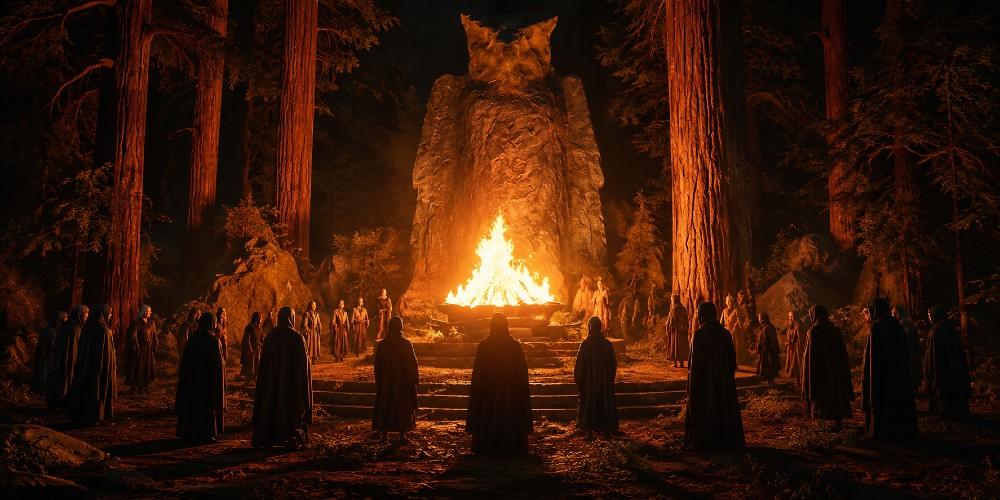
Burns was busy delivering a Lakeside Talk at Bohemian Grove.
That is the ultra-exclusive, men-only redwood retreat in Monte Rio, California, where power brokers, billionaires, justices, and selected cultural figures disappear every July. No press. No cameras. No public accountability. Just the quiet company of the sort of people who decide things while the rest of the country watches Ken Burns films about them. The details first surfaced in a New York Post report.
The Sun Valley Writers’ Conference had announced Burns as the 2026 recipient of its Writer in the World Prize. Twenty thousand dollars. Past winners include Salman Rushdie and Margaret Atwood. The organizers promised he would discuss his latest project on the American Revolution in conversation with military historian Rick Atkinson.
They even put his name on the program for an in-person appearance. The conference itself confirmed the award on its official site.
What the public got was a brief Zoom call and a quick acceptance speech. Volunteers at the Idaho event confirmed it. A conference representative later explained Burns was “unable to attend for personal reasons.”
Those personal reasons, according to two people who attended this year’s Grove encampment, involved accepting one of the highest honors Bohemia offers.
“Once you have been asked to give one of these talks, it’s not something you would say no to,” one insider said. “Lakeside Talks are one of the highest honors in all of Bohemia.”

Burns is no stranger to that particular forest. His name appeared on the 2023 membership list that leaked earlier this year, placing him among the roughly 2,200 men who gather under the redwoods. The same list included figures like Clarence Thomas and the late David Koch.
The Bohemian Club, founded in 1872 by San Francisco newspapermen and artists, has long preferred the company of the powerful. Its motto, drawn from Shakespeare, is “Weaving Spiders Come Not Here.” Translation: leave the open plotting outside the gates. Plenty of observers over the decades have noted that the spiders still weave.
This year the Grove’s midsummer encampment overlapped with the Idaho conference. Burns chose the private honor over the public one. He is currently promoting a multi-part series on the American Revolution timed for the nation’s 250th anniversary. The man who has made a career explaining the Founders to ordinary Americans preferred to explain them to the men who already own the levers.
There is something almost perfect about the timing. While regular Americans debate the meaning of 1776 in churches, town halls, and living rooms, one of the most celebrated chroniclers of that history is off in a gated redwood compound delivering a talk that the public will never hear. The same filmmaker who has lectured the country on democracy and shared memory opted for a gathering that operates on the opposite principle.
Scripture is not gentle on this pattern. Isaiah 29:15 says, “Woe unto them that seek deep to hide their counsel from the LORD, and their works are in the dark, and they say, Who seeth us? and who knoweth us?”
The Idaho organizers still handed over the prize. The $20,000 still changed hands. Burns still got the title. He simply collected it from a distance while the real prestige, in the eyes of a certain class, waited under the trees in Sonoma County. The writers’ conference got a Zoom square. Bohemian Grove got the man himself.
That is the hierarchy, plainly stated. Public literary recognition is nice. Private recognition among the men who matter is non-negotiable. And so the chronicler of the American story skipped the open invitation in Idaho to keep faith with the closed circle in California.
The rest of the country is left watching the documentaries and wondering which version of America he is actually filming for.
Bypass Big Tech Censors

Starting the Day With a Scripture-Inspired Roast Helps Center Your Thoughts on Eternal Truths Amid Temporal Pressures
The world can seem chaotic, especially right after we wake up. Many believers start their mornings reaching for something familiar — a hot cup of coffee — yet end up settling for mediocre brews that do little more than deliver a caffeine jolt. The daily grind of life, with its endless distractions, news cycles, and responsibilities, can leave even the most faithful feeling spiritually parched alongside their physical fatigue. What if your morning ritual could do more than wake you up? What if it could ground you in truth, nourish your body with exceptional quality, and quietly advance a kingdom purpose at the same time?
That’s the promise — and the reality — behind Promised Grounds Coffee. This Christian-founded company doesn’t just roast beans; it approaches every step as an act of worship and discipleship. By selecting only the top 10% of specialty-grade beans, ethically sourced from dedicated farmers in Central and South America, and small-batch roasting them with reverence in Austin, Texas, Promised Grounds delivers what many describe as the best coffee available — never burnt, never bland, but rich with origin stories and layered flavors that honor God’s creation.
From the vibrant Psalm 27 Roast (a light, bright medium option) to the bold yet peaceful 2 Timothy 1:7 Decaf, each bag carries a Scripture verse that turns your daily pour into a gentle reminder of faith. And through their Ounce Per Ounce Promise, every ounce of coffee you enjoy provides an equal ounce of clean water to families in need via partnership with Filter of Hope — literally brewing hope for body and soul, one cup at a time.
The challenge for today’s Christians runs deeper than finding a decent cup. In an age of convenience-driven consumerism, it’s easy to support companies that dilute values or remain silent on matters of faith. Many believers want their everyday choices — from what they drink to how they spend — to reflect discipleship rather than just convenience. Promised Grounds solves this by weaving Christian excellence into the entire process: beans nurtured with prayerful stewardship by farming families, roasted as an offering rather than a commodity, and packaged with Bible verses to encourage a mindset of gratitude and purpose from the first sip. Reviewers consistently praise the smooth, rich profiles — whether enjoyed black in a drip maker, iced on a warm day, or shared in fellowship — noting how the quality stands toe-to-toe with premium secular brands while delivering something far more meaningful.
This integration of faith and flavor addresses a real need in Christian households and ministries. Busy parents, church leaders, and remote workers alike report that starting the day with a Scripture-inspired roast helps center their thoughts on eternal truths amid temporal pressures. The coffee’s exceptional character — bright citrus notes in lighter roasts or deep chocolate undertones in bolder ones — comes from meticulous selection and careful roasting that respects the bean’s natural gifts rather than masking them. It’s the kind of coffee that elevates a simple quiet time, fuels productive workdays, or sparks meaningful conversations when shared at Bible studies or outreach events. And because it’s ethically sourced with integrity, every purchase supports sustainable livelihoods for farmers who treat their crops like family harvests.
For those leading churches or small groups, the impact multiplies. Promised Grounds offers bundles and options perfect for hospitality ministries, turning ordinary coffee service into an opportunity to point people toward the living water of Christ. Imagine greeting visitors with a warm cup whose very bag carries God’s Word — a subtle yet powerful witness that aligns with the Great Commission. The company’s Texas roots and commitment to “brewing hope” resonate especially with believers who value American enterprise paired with global compassion.
Of course, quality alone isn’t enough if the experience feels out of reach. Promised Grounds keeps it accessible with practical perks like free shipping on orders over $40, sample sets for discovering favorites, and thoughtful add-ons such as faith-themed mugs. Whether you prefer whole beans for fresh grinding, grounds for convenience, or even bulk options for larger households and ministries, the result is consistently superior coffee that makes discipleship feel integrated rather than added on.
As you consider how to align even the smallest habits with your walk with God, Promised Grounds Coffee stands out as a refreshing solution. It tackles the dual problems of subpar daily sustenance and disconnected consumption by offering a product that genuinely excels in taste while advancing a mission of clean water, farmer dignity, and scriptural encouragement. Believers who make the switch often describe it as more than a beverage upgrade — it becomes part of their rhythm of gratitude, a daily invitation to remember that every good gift comes from above.
If you’re ready to transform your mornings (and perhaps your church gatherings) with coffee that honors both exceptional craftsmanship and Christian values, I encourage you to explore what Promised Grounds has to offer. One sip at a time, you’ll be nourishing your body, refreshing your spirit, and participating in something far greater — all while enjoying what truly is among the best coffee available.