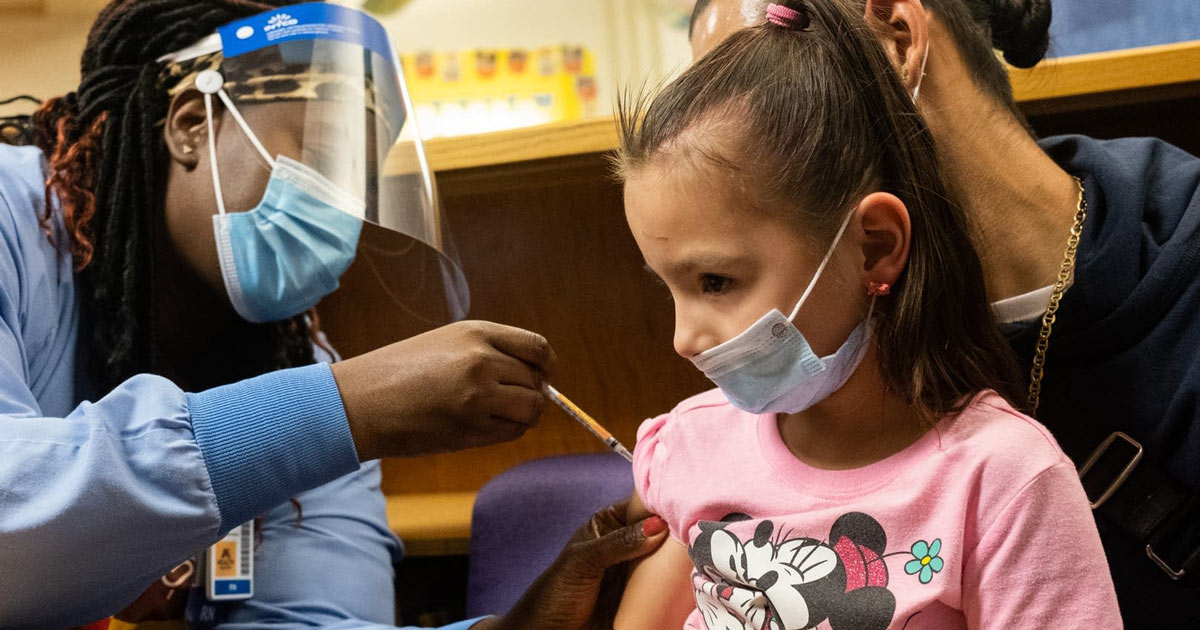
- Vaccine exemptions among kindergartners have risen from 3% to 3.3%, according to recent data from the U.S. Centers for Disease Control and Prevention (CDC), indicating a shift in parental attitudes towards vaccinations
- The decline in vaccination rates is attributed to parents’ growing concerns about the increasing number of recommended vaccines as well as their side effects
- The decline in vaccination rates has sparked fear-inducing reports and comments from health officials. But many studies have long questioned the vaccines’ efficacy
- Numerous serious adverse events have been associated with the scheduled vaccines, resulting in heightened safety concerns among parents
- Protecting the right to obtain vaccine exemptions is essential for making informed choices. We should have the freedom to decline certain vaccines for ourselves and our children if we feel the risks outweigh the benefits
(Mercola)—In this country, we’re often led to believe that vaccines are backed by solid science and have unquestionable safety. However, when you start to dig deeper, you’ll find that the evidence supporting their safety and effectiveness is often quite weak.
Since the rapid development of mRNA shots during the pandemic, many parents have been more proactive in making decisions about their children’s vaccinations. Recent data from the U.S. Centers for Disease Control and Prevention (CDC)1 reflect this shift, revealing that more parents of kindergarteners are becoming selective about which vaccines their child receives, or are choosing to delay certain vaccinations.
This change is driven by an increase in the number of recommended vaccines for children, coupled with rising concerns about their adverse effects. While mainstream media portrays this development as concerning, I believe it reflects a positive shift toward greater awareness and a desire among parents to make informed decisions about their children’s health care.
Fewer Parents Are Blindly Accepting the Scheduled Vaccines
According to the CDC,2 for the 2023 to 2024 school year, vaccination coverage among kindergartners decreased for all reported vaccines, with the percentage for the measles, mumps and rubella vaccine (MMR) at 92.7% and the diphtheria, tetanus and acellular pertussis vaccine (DTaP) at 92.3%.
These numbers fall below the 95% threshold recommended by the U.S. Department of Health and Human Services.3 The CDC has also noted a record increase in vaccine exemptions among kindergartners, with the percentage of children exempt from one or more required vaccines rising from 3% to 3.3% over the past year. This increase equates to approximately 80,000 to 127,000 children.4
The majority of these exemptions are non-medical, indicating that parents are increasingly making conscious decisions to opt out of certain vaccinations for reasons other than health contraindications. This decline continues a trend that began in the 2019 to 2020 school year, with over 30 states reporting lower vaccination rates compared to the previous year.5
State-by-state data shows variations in vaccination coverage across the country. Idaho reported the lowest vaccination coverage at 79.5%, while West Virginia maintained the highest at 98.4%. Fourteen states reported exemption rates exceeding 5%, indicating that in some regions, a substantial number of parents are choosing alternative approaches to vaccination.6
Unsurprisingly, this decline in vaccination rates has prompted fear-inducing reports from various news outlets and comments from health officials. For instance, in a report by AP News, Dr. Raynard Washington, chair of the Big Cities Health Coalition representing 35 major metropolitan public health departments, noted that the decline in vaccination rates “explains a worrisome creep in cases of whooping cough, measles and other vaccine-preventable diseases.”7

Previous Research Has Questioned the Effectiveness of the Vaccines
While declining vaccination rates are being linked to the resurgence of certain diseases, numerous studies have raised doubts about the efficacy of vaccines in preventing these illnesses from the outset. This raises valid concerns for parents who are wary of exposing their children to substances they believe carry more risks than benefits.
For instance, a paper published in the journal Science Translational Medicine8 back in 2018 revealed that 25% of individuals vaccinated against mumps lose their immunity within eight years, while half lose it within 19 years. This decline in immunity helps explain the resurgence of mumps among college-age populations.
Moreover, virologist Stanley Plotkin stated in a Science report9 that research indicates the MMR vaccine produces a weaker immune response against current mumps strains compared to those from 50 years ago. Health officials subsequently recommended a third dose of MMR for 18-year-olds, further increasing the number of vaccines administered per individual. Another study published in Current Opinion in Virology showed similar findings. According to the authors:10
“Vaccine-preventable diseases (VPD) including measles and mumps have been re-emerging in countries with sustained high vaccine coverage. For mumps, waning immunity has been recognized as a major contributor to recent outbreaks … Accumulating serological and epidemiological evidence suggests that natural immunity induced by infection may be more durable compared to vaccine-induced immunity.”
When it comes to DTaP vaccines, previous research has also raised concerns regarding their long-term effectiveness and safety profile. For example, a 2021 study published in the journal Vaccine11 found that its effectiveness against pertussis (whooping cough) declines rapidly over time. This finding corroborates earlier studies that similarly indicated waning immunity associated with the DTaP vaccine.12,13,14
Vaccines Have a History of Causing Adverse Events
If a vaccine is highly effective and the risk of the disease is significant, parents would likely feel that the vaccine’s benefits outweigh its side effects. They might even support getting an extra dose.
However, if the vaccine is ineffective or if the disease is not a serious threat, the risks do not seem justified, especially if it’s been associated with serious side effects. Unfortunately, that’s the case with many of the scheduled vaccines, which have been associated with thousands of serious adverse events and hundreds of deaths.
Unofficial surveys15,16 suggest that highly vaccinated children have more chronic health problems than unvaccinated children, and that unvaccinated children have a far lower incidence rate of autism. There’s also a growing body of research suggesting that vaccines are associated with a variety of brain and immune system disorders, including an increased risk for:
- Learning and developmental disabilities
- Brain damage
- Allergies, asthma and gut problems
- Autoimmune diseases
- Chronic infections
A study published in the Journal of Public Health and Epidemiology17 examined the correlation between autism and three specific vaccines — MMR, varicella (chickenpox) and hepatitis-A vaccines. The authors of the study suggest that the introduction of vaccines derived from human fetal cell lines, specifically the WI-38 cell line, which may harbor fetal and retroviral contaminants, could be linked to rising autism rates.
They noted a sharp increase in autism prevalence coinciding with the release of these vaccines. While this hypothesis provides one avenue for exploring the rising incidence of autism among children, it highlights a broader issue — there are many questions about vaccine science and policy that must be answered quickly before more are added to the government-recommended and mandated list for children and adults. As noted by Children’s Health Defense:18
“The truth is none of those vaccines have ever been studied or considered for their relationship to autism, so no one has any idea. This would be like trying to identify the source of a plane crash, suspecting mechanical failure, solely analyzing one of the wings, and then declaring the entire airplane free of culpability.”
What Parents Need to Know About Aluminum in Vaccines
One important aspect of vaccine safety is the presence of aluminum, a neurotoxic substance linked to increasing rates of autism and Alzheimer’s disease. For years, I have cautioned that vaccines are a significant source of aluminum exposure.
Vaccines contain a variety of components, each playing a specific role in the product’s intended function. The primary ingredient is the antigen, typically a weakened or inactivated form of the target pathogen. Adjuvants are included to supposedly enhance the immune response, with aluminum being one of the most common. Preservatives, stabilizers and residual components from the manufacturing process may also be present in the final product.19
Aluminum adjuvants have been used in vaccines for nearly a century, and were approved based on their efficacy rather than safety data. The assumption of safety, rather than rigorous testing, has led to growing concerns about long-term effects. This is particularly worrisome given that injected aluminum bypasses the body’s natural filtration systems, making it more bioavailable than ingested aluminum.20,21

The presence of aluminum in vaccines is especially concerning for infants and young children who receive multiple doses according to recommended schedules. Studies have shown that when adjusted for body weight, the current CDC childhood vaccine schedule exposes children to aluminum levels far exceeding estimated safe limits. This raises questions about aluminum accumulation in various organs, including the brain.
Research has demonstrated aluminum’s ability to cross the blood-brain barrier and accumulate in brain tissue.22 Studies have found significant amounts of aluminum in the brains of individuals with Alzheimer’s disease, often co-located with amyloid-beta protein plaques. Some researchers have even suggested that without aluminum exposure, Alzheimer’s disease might not occur within the normal human lifespan.23
The biological effects of aluminum are wide-ranging and impact multiple bodily systems. Aluminum has been shown to adversely affect neuronal function, disrupt cellular signaling, worsen the effects of other heavy metals and influence gene expression. It also causes mitochondrial dysfunction and ATP depletion, setting the stage for various chronic diseases.24
Why Protecting Vaccine Exemptions Is Important
These known side effects of vaccines remind us why it’s so important to protect our right to make informed choices about vaccinations and to obtain vaccine exemptions in the U.S. Every individual needs to have the freedom to choose what’s best for themselves and their children, including the option to decline certain vaccines if they believe the risks are too high.
Voluntary consent is a foundation of ethical health care. It allows families to consider the risks and benefits of vaccines based on their unique health conditions. Given the lack of the science behind vaccine safety, maintaining vaccine exemption is a necessary protective measure. This is not anti-science, but a call for more thorough, independent research and greater transparency.
When it comes to protecting your family’s health, staying informed is your best strategy. Take the time to do your own research, ask questions and trust your instincts instead of simply following mandates or giving in to societal pressure. By actively seeking out information, you’re ensuring that your family’s health is in your own hands — not dictated by fear or powers that be.

VAERS — An Important Resource for Vaccine Safety Monitoring
The Vaccine Adverse Event Reporting System (VAERS) serves as an important tool for monitoring the safety of vaccines in the U.S. Established in 1990, VAERS is a national early warning system, co-managed by the CDC and the U.S. Food and Drug Administration (FDA), to detect possible safety issues with vaccines.25
The system allows healthcare providers, vaccine manufacturers and the general public to submit reports of adverse events that occur after vaccination. Anyone can access and search the VAERS database, which includes information such as the type of vaccine administered, the timing of the adverse event and a description of the reported symptoms.
For parents considering whether to vaccinate their child, reviewing VAERS data can be part of the process of making an informed decision. For easy access, see OpenVaers.com.26
- 1, 2, 4, 5, 6 CDC, New Findings on Vaccination Coverage and Exemptions Among Kindergartners (2023-2024 School Year)
- 3 U.S. Department of Health and Human Services, Healthy People 2030 – Vaccination Objectives
- 7 AP News, October 3, 2024
- 8 Sci Transl Med. 2018 Mar 21;10(433):eaao5945
- 9 Science, March 21, 2018
- 10 Current Opinion in Virology Volume 40, February 2020, Pages 48-54
- 11 Vaccine. 2021 May 27;39(23):3120-3130
- 12 American Academy of Pediatrics, June 10, 2019
- 13 Pediatrics (2016) 137 (3): e20153326
- 14 CMAJ November 01, 2016 188 (16) E399-E406
- 15 SAGE Open Med. 2020 May 27;8:2050312120925344
- 16 NewportRI.com March 21, 2019
- 17 Journal of Public Health and Epidemiology September 2014: 6(9); 271-286 (PDF)
- 18 Children’s Health Defense, August 11, 2020
- 19 Australian Academy of Science, What Is in a Vaccine?
- 20 Dtsch Arztebl Int. 2017 Sep 29;114(39):653–659
- 21 EFSA J. 2008 Jul 15;6(7):754
- 22 Int. J. Mol. Sci. 2023, 24(8), 7228
- 23 SciTechDaily.com, January 21, 2020
- 24 Toxics. 2021 Jun 17;9(6):142
- 25 CDC, August 7, 2024
- 26 OpenVaers
Bypass Big Tech Censors

Two Storms, One Harvest

Every food crisis in living memory has been a one-shock event. The 2008 price spike was a commodity bubble. The 2020 shortages were a logistics failure. The 2022 grain scare was a war on one exporter’s ports. Each time, the system bent, adjusted, and recovered, and each time the experts assured us afterward that global markets are simply too big and too diversified to fail.
What nobody in Washington seems eager to discuss is that 2026 is shaping up to be something the modern food system has never actually faced. Two independent shocks, one climatic and one geopolitical, are converging on the same harvest cycle at the same time. Not sequentially. Simultaneously.
Start with the weather. The Pacific Ocean is currently building toward what forecasters now openly call a record event. NOAA’s Climate Prediction Center puts the odds of at least a strong El Niño near 88 percent, with roughly two in three odds it reaches “very strong” status, the tier reserved for perhaps three or four events in the entire satellite era. Every major global model now projects a median peak in Super El Niño territory, and most of them project it exceeding the 2015-16 event, which until now held the modern record. Sea surface anomalies were already brushing the super threshold in mid-July, months before these events normally peak. The atmosphere has already shifted into El Niño mode, and the event is forecast to crest in late fall and early winter.
This is not about “climate change.” It’s about the standard cycles of weather, and the cycle we’re currently in is one that has likely devastated societies in the past. We’re better prepared as a society today, but not all Americans are equally prepared.
Serious households have started doing the quiet math on their own. Grocery bills tell part of the story, and the forecast maps tell the rest, which is why long-term food storage has moved from fringe hobby to mainstream line item in the family budget, with established suppliers like Heaven’s Harvest seeing demand from people who five years ago would have rolled their eyes at the idea. That instinct is not paranoia. It is pattern recognition, and the pattern is worth walking through carefully.
Editor’s Note: Heaven’s Harvest IS a sponsor, but the warnings of this article are real and would be written even if we didn’t have a survival food sponsor. With that said, those who take advantage of what they offer can use promo code “Patriot” for 15% off.
The Fertilizer Clock Is Already Running
While the Pacific warms, the second shock has been unfolding in the Strait of Hormuz. The conflict with Iran turned the world’s most important energy chokepoint into a contested waterway, and the consequences reach far beyond the gas pump. Roughly a third of global fertilizer trade moves through Hormuz, and the disruption sent urea prices up 86 percent year over year by March, with a 53 percent jump in a single month.
The World Bank projects energy prices rising about 24 percent in 2026 and fertilizer about 31 percent. By its own accounting, fertilizer prices ran 35 percent higher in the first five months of this year than the same period last year.
Here is the mechanism the nightly news will not explain. Fertilizer is not a grocery item. It is a time-delayed input. The nitrogen a farmer in Iowa or Punjab could not afford to apply this spring does not show up as a problem this spring. It shows up as a thinner harvest six to twelve months later.
The World Bank’s own food security brief concedes that the effects of reduced applications earlier this season “are likely to become visible only later in harvest outcomes.” Translate that from institutional language into plain English and it means this. The damage is already done, it is already in the ground, and we are simply waiting for it to arrive on the shelf.
Now check the calendar. Six to twelve months from the spring planting season lands us squarely in late 2026 and early 2027. Which is precisely when the strongest El Niño in the instrumental record is forecast to peak, bringing its signature droughts to Southeast Asia, Australia, southern Africa, northern Brazil, and South Asia, the very regions that grow the world’s rice, sugar, and oilseeds.
The World Bank warns openly that a strong El Niño “could disrupt multiple crop belts simultaneously” on top of the conflict-driven input costs. Their baseline projection assumes the Middle East disruptions ease by autumn. What in the last two years of Middle East history suggests that assumption is safe?
The System Has No Slack Left
The comfortable answer is that global markets always adjust. But adjustment requires slack, and the slack is gone. Global cereal production is expected to decline from last year’s records even before El Niño does its work. The UN World Food Programme, hardly a den of right-wing preppers, is calling this the most significant disruption to its supply chains since Covid and the invasion of Ukraine, and its supply chain director put the stakes bluntly.
Today’s supply chain challenges are tomorrow’s hunger crisis.
There is also a political dimension that markets cannot price. When food gets scarce, governments do not behave like economists. They behave like politicians. Export bans, hoarding mandates, and panic buying at the national level turned the modest rice shortfall of 2008 into a global crisis, and analysts are already warning that import-dependent nations are the first dominoes.
The 2015-16 Super El Niño, a far weaker event than what is now forecast, threw tens of millions into food stress across Africa and Asia. This one is projected to be stronger, and it arrives with fertilizer already rationed by price and shipping lanes already contested by missiles.
What Joseph Knew
Scripture does not treat preparation for lean years as faithlessness. It treats it as wisdom delivered in advance to those willing to act on it.
Behold, there come seven years of great plenty throughout all the land of Egypt: And there shall arise after them seven years of famine; and all the plenty shall be forgotten in the land of Egypt.
Joseph did not respond to that warning with a hashtag or a committee. He stored grain during the years of abundance, and when the famine came, Egypt stood while its neighbors begged. The lesson is not that famine is certain. It is that the time to prepare is precisely when preparation still looks optional.
Nobody who filled a pantry in a year of plenty has ever regretted it, and nobody standing in an empty aisle has ever been glad he waited for certainty.
None of this calls for panic, and panic is the enemy of sound judgment anyway. It calls for the same unglamorous prudence our grandparents considered ordinary. Keep some cash margin, know your local growers, and put real food in deep storage while it is cheap and available, because the entire arc of this story is that cheap and available is a closing window.
Families looking for a straightforward place to start can visit Heaven’s Harvest and use promo code Patriot for 15 percent off long-term storable food. The forecasts may yet soften, the strait may yet reopen, and we should pray they do. But hope is a fine thing to hold and a foolish thing to eat.