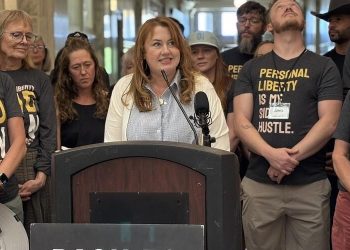
Hell has essentially frozen over. Billionaire Democrat hedge fund manager Bill Ackman has officially taken a stance on the suppression of scientific debate regarding vaccines. He offered his support for the stances (though likely not the candidacy) of Robert F. Kennedy, Jr. He even had something nice to say about Tucker Carlson.
Keep in mind, this is the same man who last year said the best way to fix inflation was to open the southern border MORE. His hedge fund is one of the biggest proponents of woke ESG investments. He was one of the biggest donors to Andrew Cuomo and his then-Lieutenant Kathy Hochul. But reading his latest Twitter post, which includes Carlson’s latest show, is a sign that he may be getting red-pilled, at least on the jabs.
Here’s his post:
For context, I am pro-science (it is sad to say that I have to declare this upfront) and our family foundation, the @PershingSqFdn, is a major funder ( ~$100m to date with more to come) of scientific research, but something has gone really wrong with science and our country when anyone who challenges currently accepted science is branded a conspiracy theorist and is censored by major media companies.
The scientific method is about constantly challenging our assumptions. It is about skepticism and deep research to understand and explain new data that are inconsistent with initial observations or conclusions.
Science is an unending search for the truth, and this ongoing search is critical, as what was once deemed to be settled science is often revised or reversed with the passage of time. For example, consider how the science of human nutrition has changed dramatically over time, or hypotheses about the causes for Alzheimer’s. And it wasn’t that long ago that doctors were quoted in ads recommending cigarettes as good for your health.
We should value those critics who challenge the status quo and continue to ask the hard questions. It is particularly important to do so when the economics of the current scientific understanding provide rewards to industry that are in the hundreds of billions of dollars, with the associated unavoidable perverse incentives.
We should seek to answer the concerns of those who challenge the current scientific wisdom. We should not simply dismiss them as conspiracy theorists. Doing so impedes the progress of scientific knowledge, and may cause us to miss opportunities to correct mistakes that continue to cause harm.

@RobertKennedyJr and others have raised important questions about the safety of some vaccines and have sought explanations for the dramatic increases in the incidence of childhood allergies, autism, and other health issues. These are good questions that have not been adequately answered. And I say this from the perspective of someone who is fully vaccinated along with my kids.
RFK may be right or wrong in his theories. That said, his concerns are ones shared by millions of parents and others. Rather than censor RFK and the skeptics, shouldn’t we instead seek to understand the causes for the massive increase in autism and allergic diseases in our children over the last 30 or so years? If vaccines are not the cause for increased autism and other allergenic conditions, then what is the cause or causes?
I think we would all greatly benefit by dropping the words ‘conspiracy theory’ from our lexicon and opening our minds to the possibility of improbable alternative explanations. When one hears something labeled a conspiracy theory, the natural reaction is to dismiss the theory. That is not a good way to get the truth. Conspiracy theories are actually just theories that are labeled as such to discourage further investigation.
I have had my own serious issues with @TuckerCarlson over the years and disagree with him on many subjects, but I have to say he gets its right in this evening’s episode which is worth a watch.
I recommend the Tucker segment at the risk of discrediting everything I have said above for certain audiences. That said, I am a strong believer in seeking the truth from a wide spectrum of observers and media participants.
I encourage you to give this approach a try. When even your worst enemy has an insight you agree with, I have often found it has a higher probability of being true. I think you will find this approach will make it easier to get closer to the truth in an uncertain world.
For context, I am pro-science (it is sad to say that I have to declare this upfront) and our family foundation, the @PershingSqFdn, is a major funder ( ~$100m to date with more to come) of scientific research, but something has gone really wrong with science and our country when… https://t.co/hDnaVnuOar
— Bill Ackman (@BillAckman) June 23, 2023
It seems hell has, indeed, frozen over. Are more lucid Democrats starting to wake up to what their ideology is doing to this nation?
Bypass Big Tech Censors

Starting the Day With a Scripture-Inspired Roast Helps Center Your Thoughts on Eternal Truths Amid Temporal Pressures
The world can seem chaotic, especially right after we wake up. Many believers start their mornings reaching for something familiar — a hot cup of coffee — yet end up settling for mediocre brews that do little more than deliver a caffeine jolt. The daily grind of life, with its endless distractions, news cycles, and responsibilities, can leave even the most faithful feeling spiritually parched alongside their physical fatigue. What if your morning ritual could do more than wake you up? What if it could ground you in truth, nourish your body with exceptional quality, and quietly advance a kingdom purpose at the same time?
That’s the promise — and the reality — behind Promised Grounds Coffee. This Christian-founded company doesn’t just roast beans; it approaches every step as an act of worship and discipleship. By selecting only the top 10% of specialty-grade beans, ethically sourced from dedicated farmers in Central and South America, and small-batch roasting them with reverence in Austin, Texas, Promised Grounds delivers what many describe as the best coffee available — never burnt, never bland, but rich with origin stories and layered flavors that honor God’s creation.
From the vibrant Psalm 27 Roast (a light, bright medium option) to the bold yet peaceful 2 Timothy 1:7 Decaf, each bag carries a Scripture verse that turns your daily pour into a gentle reminder of faith. And through their Ounce Per Ounce Promise, every ounce of coffee you enjoy provides an equal ounce of clean water to families in need via partnership with Filter of Hope — literally brewing hope for body and soul, one cup at a time.
The challenge for today’s Christians runs deeper than finding a decent cup. In an age of convenience-driven consumerism, it’s easy to support companies that dilute values or remain silent on matters of faith. Many believers want their everyday choices — from what they drink to how they spend — to reflect discipleship rather than just convenience. Promised Grounds solves this by weaving Christian excellence into the entire process: beans nurtured with prayerful stewardship by farming families, roasted as an offering rather than a commodity, and packaged with Bible verses to encourage a mindset of gratitude and purpose from the first sip. Reviewers consistently praise the smooth, rich profiles — whether enjoyed black in a drip maker, iced on a warm day, or shared in fellowship — noting how the quality stands toe-to-toe with premium secular brands while delivering something far more meaningful.
This integration of faith and flavor addresses a real need in Christian households and ministries. Busy parents, church leaders, and remote workers alike report that starting the day with a Scripture-inspired roast helps center their thoughts on eternal truths amid temporal pressures. The coffee’s exceptional character — bright citrus notes in lighter roasts or deep chocolate undertones in bolder ones — comes from meticulous selection and careful roasting that respects the bean’s natural gifts rather than masking them. It’s the kind of coffee that elevates a simple quiet time, fuels productive workdays, or sparks meaningful conversations when shared at Bible studies or outreach events. And because it’s ethically sourced with integrity, every purchase supports sustainable livelihoods for farmers who treat their crops like family harvests.
For those leading churches or small groups, the impact multiplies. Promised Grounds offers bundles and options perfect for hospitality ministries, turning ordinary coffee service into an opportunity to point people toward the living water of Christ. Imagine greeting visitors with a warm cup whose very bag carries God’s Word — a subtle yet powerful witness that aligns with the Great Commission. The company’s Texas roots and commitment to “brewing hope” resonate especially with believers who value American enterprise paired with global compassion.
Of course, quality alone isn’t enough if the experience feels out of reach. Promised Grounds keeps it accessible with practical perks like free shipping on orders over $40, sample sets for discovering favorites, and thoughtful add-ons such as faith-themed mugs. Whether you prefer whole beans for fresh grinding, grounds for convenience, or even bulk options for larger households and ministries, the result is consistently superior coffee that makes discipleship feel integrated rather than added on.
As you consider how to align even the smallest habits with your walk with God, Promised Grounds Coffee stands out as a refreshing solution. It tackles the dual problems of subpar daily sustenance and disconnected consumption by offering a product that genuinely excels in taste while advancing a mission of clean water, farmer dignity, and scriptural encouragement. Believers who make the switch often describe it as more than a beverage upgrade — it becomes part of their rhythm of gratitude, a daily invitation to remember that every good gift comes from above.
If you’re ready to transform your mornings (and perhaps your church gatherings) with coffee that honors both exceptional craftsmanship and Christian values, I encourage you to explore what Promised Grounds has to offer. One sip at a time, you’ll be nourishing your body, refreshing your spirit, and participating in something far greater — all while enjoying what truly is among the best coffee available.