Perhaps the most discouraging condition of the modern age is the absolute breakdown in communication among members of society. It once seemed reasonable to expect that the Internet and social media might aid in our understanding of each other. Instead, online forums are filled with people who speak the same language but interpret words entirely differently.
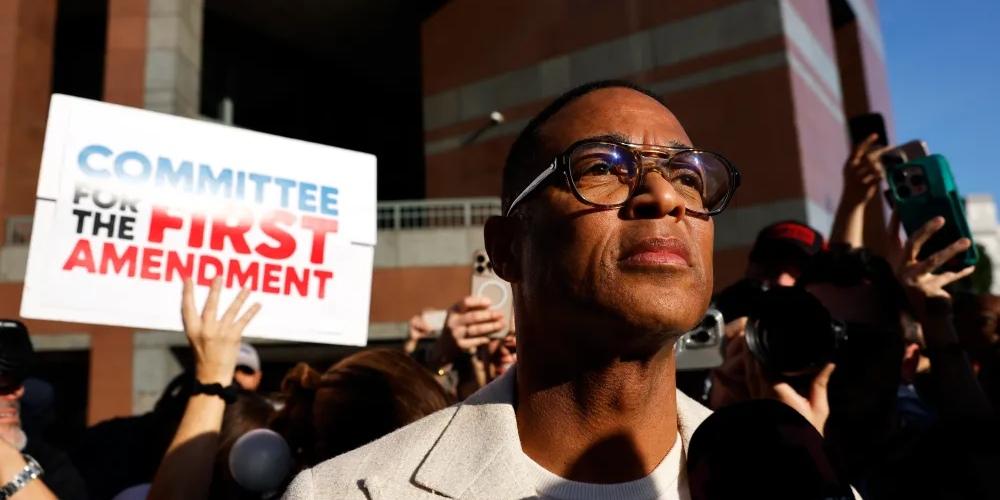
With the arrest of former CNN commentator Don Lemon for allegedly violating the religious rights of worshipers in Minneapolis, Democrats and the corporate news media have universally condemned Attorney General Pam Bondi for somehow “infringing” upon Lemon’s First Amendment rights as a so-called “journalist.”
They intentionally ignore how Lemon joined others in storming a church, intimidating congregants, and causing emotional harm to those worshipers (including children) who understandably felt as if they were under attack. Lemon and his apologists continue to defend the organized raid of a Christian service as some kind of “protest” and describe the unwanted intruders as “protesters.” For those who were made to suffer through the invasion, however, their ordeal felt like an act of terrorism perpetrated by terrorists whose intent was to scare those assembled to worship.
When society can’t agree upon the difference between “protest” and “terrorism,” we have a serious problem. We have seen this dilemma play out all over the Minneapolis area recently. Democrat officials describe federal agents conducting lawful arrests as “terrorists” and “Nazis” and defend criminal illegal aliens as “victims.”
Trained mobs of leftist agitators who intentionally obstruct the professional duties of law enforcement officers insist on calling themselves “legal observers” and “peaceful protesters.” When Democrat officials and members of the corporate news media describe people who commit crimes as “legal” and “peaceful,” it is impossible for society to share any common respect for the law.
As a society, we have been debating government attacks on free speech and government-engineered censorship with increased frequency at least since the presidency of Barack Obama. Obama was the first modern American president to really go on offense against what he called “fake news,” “misinformation,” and “disinformation.”
He started the pressure campaign on Silicon Valley’s tech titans to “police” their social media sites for “false” information. While many of us vocally objected to this incipient collective of government and industry “experts” deciding for the rest of us what is “true,” Obama and his supporters insisted that “incorrect” information constituted an unacceptable national security threat.
But how can a society that disagrees about the distinctions between “protest” and “terrorism” or “criminal obstruction” and “legal observation” possibly decipher what is “correct” and “incorrect” information? When people with power accord themselves the additional power to declare what is “true,” a viewpoint monopoly inevitably rises to crush dissent. For free speech to function in any authentic form, the public sphere must remain a space where all information — whether true or false — is vigorously debated.

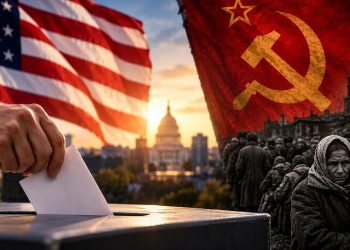
Otherwise, all we have is State-sanctioned dogma — or what the quietly dissenting members of communist societies once derisively referred to as “political correctness.” In a distressing sign of collapsing respect for free speech across the West, too many nations today actually police citizens’ speech in order to ensure that their thoughts and words comply with narratives constructed and deemed “correct” by the government. They do this despite having emerged victorious from a twentieth-century Cold War that routinely distinguished Western respect for freedom of speech from the suffocating Iron Curtain of the Soviet Union’s speech police.
The divisions within society have become so great that Democrats and Republicans in the United States can’t even agree about what should be protected as inviolable free speech. Conservatives and other non-leftists have felt the sting of censorship since Obama’s presidency.
Without explicit warnings or explanations, Big Tech companies began removing online advertisers and other sources of revenue from conservative websites. Social media companies covertly limited the visibility (and therefore influence) of conservative writers. Search engines relegated popular conservative publications to obscurity by burying their keyword matches many pages back in relevant hits. Without any official announcements from government or corporate authorities, it became clear that conservative voices were being targeted for elimination.
Since Obama’s presidency, that cancerous viewpoint discrimination metastasized in many directions: Banks closed the accounts of conservative publications and institutions. Web hosts refused to support conservative websites.
After the 2020 election, the titans of Big Tech conspired to censor any Americans who argued that various forms of electoral fraud had handed Joe Biden the presidency. The Biden administration piggybacked on Silicon Valley’s embrace of censorship by working with social media companies to censor anyone who disagreed with the government’s COVID policies. That censorship became so pronounced that even medical research was targeted for deletion under the pretense that concerns for “public health” and “national security” justified the censorship of scientific debate.
As censorship of the 2020 election and COVID became more widespread, those who were doing the censoring kept pushing the envelope. For a while, it really looked as if Democrat-embraced narratives concerning everything from man-made “global warming” to “transgenderism” would be declared sacrosanct and too “politically correct” for Americans to debate. Feeling emboldened to declare “public truths,” the Biden administration turbocharged Obama’s initial directive for social media censorship by building the architecture for a “Disinformation Governance Board” whose purpose was unapologetically directed toward limiting conservative points of view.
For Republicans, conservatives, and other non-leftists, Democrats’ collusion with Silicon Valley to censor information deemed “untrue” constituted an unparalleled attack on Americans’ free speech. As with so many other conflicts in society today, ordinary Democrats didn’t recognize this threat at all. When they did acknowledge that conservative voices were being silenced, many immediately justified those infringements on Americans’ natural rights by repeating Obama’s original propaganda that “fake news,” “misinformation,” “disinformation,” and even simply information that fellow leftists judged as “harmful” to society deserved no First Amendment protections.
Perhaps more troubling, even as Democrats argue for mass censorship, they portray themselves as victims of censorship. When parents insist on protecting their children from “transgender” indoctrination, sexually explicit guides encouraging minors to engage in adult activities, and outright pornography, Democrats pretend that parental supervision violates free speech.
When the FCC reprimands Jimmy Kimmel for lying to the American public by falsely blaming Charlie Kirk’s assassination on President Trump’s MAGA movement (instead of a leftist in a gay relationship with a “trans” furry and someone who allegedly disparaged Charlie’s Christian faith as a form of “hate”), Democrats pretend that Kimmel (who enjoys more free speech than almost anyone in America) is being censored.
When Don Lemon joins a gang of leftist agitators to trespass inside a church, disrupt worship services, and terrorize those assembled to commune with God, the corporate news media pretend that the person doing the terrorizing is somehow a “victim” of government attacks on the First Amendment.
Right now in America censorship of non-leftists is justified, while any pushback against leftist orthodoxy is falsely portrayed as censorship. If this corrosive double standard weren’t already obvious, “comedians” such as Stephen Colbert make it more glaringly so each day. Just last week Colbert “joked” that federal agents who enforce America’s immigration laws are worse than Nazi Germany’s SS troops. Unlike members of that Nazi paramilitary organization, who would have surely imprisoned or murdered Colbert before he even had a chance to speak, ICE and Border Patrol agents put their lives on the line every day to arrest pedophiles, rapists, and murderers illegally residing in the United States. Colbert calls those law enforcement officers “Nazis,” and he will continue to enjoy the privilege of expressing his vile viewpoints on television.
However, when ordinary conservatives are censored online, Colbert says nothing. The powerful play “victim,” while the powerless are targeted and silenced. We may speak the same language, but our words don’t mean the same things.

Bypass Big Tech Censors
Two Storms, One Harvest

Every food crisis in living memory has been a one-shock event. The 2008 price spike was a commodity bubble. The 2020 shortages were a logistics failure. The 2022 grain scare was a war on one exporter’s ports. Each time, the system bent, adjusted, and recovered, and each time the experts assured us afterward that global markets are simply too big and too diversified to fail.
What nobody in Washington seems eager to discuss is that 2026 is shaping up to be something the modern food system has never actually faced. Two independent shocks, one climatic and one geopolitical, are converging on the same harvest cycle at the same time. Not sequentially. Simultaneously.
Start with the weather. The Pacific Ocean is currently building toward what forecasters now openly call a record event. NOAA’s Climate Prediction Center puts the odds of at least a strong El Niño near 88 percent, with roughly two in three odds it reaches “very strong” status, the tier reserved for perhaps three or four events in the entire satellite era. Every major global model now projects a median peak in Super El Niño territory, and most of them project it exceeding the 2015-16 event, which until now held the modern record. Sea surface anomalies were already brushing the super threshold in mid-July, months before these events normally peak. The atmosphere has already shifted into El Niño mode, and the event is forecast to crest in late fall and early winter.
This is not about “climate change.” It’s about the standard cycles of weather, and the cycle we’re currently in is one that has likely devastated societies in the past. We’re better prepared as a society today, but not all Americans are equally prepared.
Serious households have started doing the quiet math on their own. Grocery bills tell part of the story, and the forecast maps tell the rest, which is why long-term food storage has moved from fringe hobby to mainstream line item in the family budget, with established suppliers like Heaven’s Harvest seeing demand from people who five years ago would have rolled their eyes at the idea. That instinct is not paranoia. It is pattern recognition, and the pattern is worth walking through carefully.
Editor’s Note: Heaven’s Harvest IS a sponsor, but the warnings of this article are real and would be written even if we didn’t have a survival food sponsor. With that said, those who take advantage of what they offer can use promo code “Patriot” for 15% off.
The Fertilizer Clock Is Already Running
While the Pacific warms, the second shock has been unfolding in the Strait of Hormuz. The conflict with Iran turned the world’s most important energy chokepoint into a contested waterway, and the consequences reach far beyond the gas pump. Roughly a third of global fertilizer trade moves through Hormuz, and the disruption sent urea prices up 86 percent year over year by March, with a 53 percent jump in a single month.
The World Bank projects energy prices rising about 24 percent in 2026 and fertilizer about 31 percent. By its own accounting, fertilizer prices ran 35 percent higher in the first five months of this year than the same period last year.
Here is the mechanism the nightly news will not explain. Fertilizer is not a grocery item. It is a time-delayed input. The nitrogen a farmer in Iowa or Punjab could not afford to apply this spring does not show up as a problem this spring. It shows up as a thinner harvest six to twelve months later.
The World Bank’s own food security brief concedes that the effects of reduced applications earlier this season “are likely to become visible only later in harvest outcomes.” Translate that from institutional language into plain English and it means this. The damage is already done, it is already in the ground, and we are simply waiting for it to arrive on the shelf.
Now check the calendar. Six to twelve months from the spring planting season lands us squarely in late 2026 and early 2027. Which is precisely when the strongest El Niño in the instrumental record is forecast to peak, bringing its signature droughts to Southeast Asia, Australia, southern Africa, northern Brazil, and South Asia, the very regions that grow the world’s rice, sugar, and oilseeds.
The World Bank warns openly that a strong El Niño “could disrupt multiple crop belts simultaneously” on top of the conflict-driven input costs. Their baseline projection assumes the Middle East disruptions ease by autumn. What in the last two years of Middle East history suggests that assumption is safe?
The System Has No Slack Left
The comfortable answer is that global markets always adjust. But adjustment requires slack, and the slack is gone. Global cereal production is expected to decline from last year’s records even before El Niño does its work. The UN World Food Programme, hardly a den of right-wing preppers, is calling this the most significant disruption to its supply chains since Covid and the invasion of Ukraine, and its supply chain director put the stakes bluntly.
Today’s supply chain challenges are tomorrow’s hunger crisis.
There is also a political dimension that markets cannot price. When food gets scarce, governments do not behave like economists. They behave like politicians. Export bans, hoarding mandates, and panic buying at the national level turned the modest rice shortfall of 2008 into a global crisis, and analysts are already warning that import-dependent nations are the first dominoes.
The 2015-16 Super El Niño, a far weaker event than what is now forecast, threw tens of millions into food stress across Africa and Asia. This one is projected to be stronger, and it arrives with fertilizer already rationed by price and shipping lanes already contested by missiles.
What Joseph Knew
Scripture does not treat preparation for lean years as faithlessness. It treats it as wisdom delivered in advance to those willing to act on it.
Behold, there come seven years of great plenty throughout all the land of Egypt: And there shall arise after them seven years of famine; and all the plenty shall be forgotten in the land of Egypt.
Joseph did not respond to that warning with a hashtag or a committee. He stored grain during the years of abundance, and when the famine came, Egypt stood while its neighbors begged. The lesson is not that famine is certain. It is that the time to prepare is precisely when preparation still looks optional.
Nobody who filled a pantry in a year of plenty has ever regretted it, and nobody standing in an empty aisle has ever been glad he waited for certainty.
None of this calls for panic, and panic is the enemy of sound judgment anyway. It calls for the same unglamorous prudence our grandparents considered ordinary. Keep some cash margin, know your local growers, and put real food in deep storage while it is cheap and available, because the entire arc of this story is that cheap and available is a closing window.
Families looking for a straightforward place to start can visit Heaven’s Harvest and use promo code Patriot for 15 percent off long-term storable food. The forecasts may yet soften, the strait may yet reopen, and we should pray they do. But hope is a fine thing to hold and a foolish thing to eat.