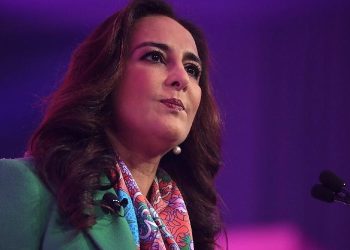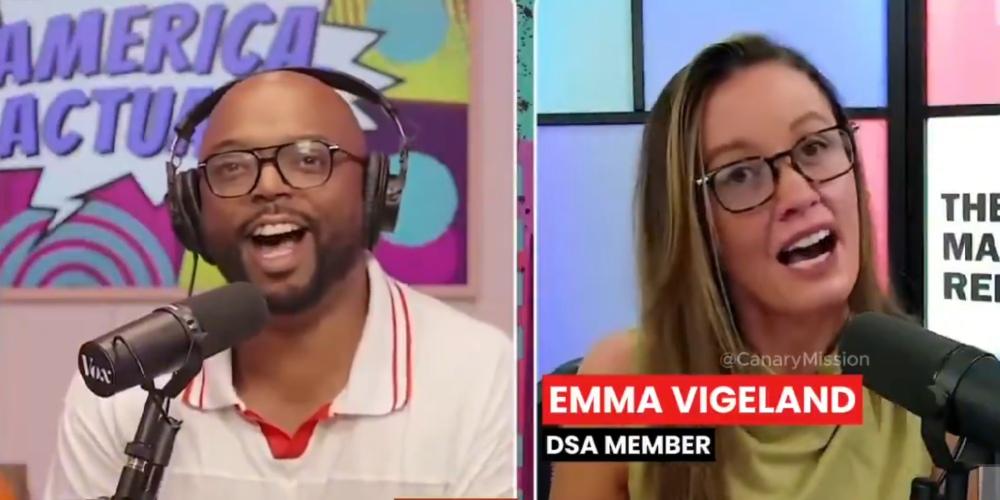
Emma Vigeland, co-host of the far-left Majority Report podcast, has laid bare a disturbing truth about modern progressive politics. In a recent Vox interview, the Democratic Socialists of America-aligned commentator declared she has “no problem” backing candidates who might be “secret Nazis” in private, provided they advance the correct policy agenda in public.
This is not mere rhetorical excess from a fringe voice. It is the logical endpoint of an ideology that subordinates character, truth, and basic human decency to raw political power.
The remarks came amid reflection on Graham Platner, the Maine Democratic Senate candidate whose campaign imploded under the weight of scandals. Platner, a Marine veteran and oyster farmer, carried a chest tattoo long recognized as echoing Nazi SS symbolism—a Totenkopf skull and crossbones.
He claimed ignorance of its meaning, later covering it up, but reports surfaced of him joking about its Nazi connotations with an ex-girlfriend. Further allegations of sexual misconduct, including a rape claim, ultimately forced his exit. Yet for Vigeland and her ideological cohort, the tattoo alone warranted no disqualification. Policy alignment trumped all.
“I am wary of over-focusing on an individual’s personal character over their platform,” Vigeland stated. She doubled down: even if figures like Bernie Sanders or Alexandria Ocasio-Cortez harbored secret Nazi sympathies at home, their public votes for the “right things” would suffice.
When pressed by the Vox host, who sounded taken aback, she persisted, questioning why private beliefs should matter for public officials advancing socialist priorities. This exchange exposes the hollow core of identity-obsessed leftism. Character is irrelevant unless it serves the narrative.
Platner’s case was no anomaly. The left rallied around him despite red flags that would have ended any conservative candidacy in minutes. Bernie Sanders himself defended the candidate early on. Vigeland and DSA allies dismissed concerns over the tattoo as overblown, prioritizing anti-establishment fervor and economic radicalism.
Only the sexual assault allegation—ironically, a topic progressives often weaponize against opponents—proved too much. The selective outrage speaks volumes.
This mindset reveals a profound moral inversion. For decades, the left has positioned itself as the bulwark against fascism, invoking “Nazi” as the ultimate slur against traditional values, border security, or limited government. Yet here, an actual flirtation with Nazi iconography elicits shrugs—so long as the bearer pledges fealty to wealth redistribution, identity politics, and cultural upheaval. The contradiction is glaring. What does it say about their “anti-fascism” when symbolism of history’s greatest evil becomes negotiable for electoral gain?

History offers sobering warnings. Totalitarian movements of the last century thrived precisely because ideologues overlooked—or embraced—monstrous personal failings in service of the cause. Whether in Stalin’s purges or Hitler’s inner circle, loyalty to the party eclipsed decency.
Today’s left, in its rush toward centralized power and suppression of dissent, echoes those patterns in subtler form. Cancel culture targets the insufficiently woke, while real moral compromise among allies is excused. Vigeland’s candor strips away the pretense.
Conservatives have long argued that politics flows from culture, and culture from character. The Founders understood virtue as essential to self-government. When leaders abandon personal integrity, institutions rot. The left’s transactional ethics—ends justify the means—undermines the very republic they claim to defend. It normalizes evil for convenience, eroding trust and inviting greater darkness.
As Scripture warns in Ephesians 5:11, “And have no fellowship with the unfruitful works of darkness, but rather reprove them.”
This principle cuts against any alliance with hidden wickedness, regardless of partisan utility. Christians and clear-thinking Americans must reject such pragmatism that excuses symbols of genocide for policy wins.
Vigeland’s admission is a gift, in a sense. It forces a reckoning. The public deserves leaders whose private lives reflect the principles they espouse—or at least do not contradict them so violently. When “secret Nazis” become acceptable allies, the radical left has confessed its priorities: power above all, even above the graves of history’s victims.
Americans should take note and demand better. The alternative is a future where ideology devours conscience entirely.
Bypass Big Tech Censors

Starting the Day With a Scripture-Inspired Roast Helps Center Your Thoughts on Eternal Truths Amid Temporal Pressures
The world can seem chaotic, especially right after we wake up. Many believers start their mornings reaching for something familiar — a hot cup of coffee — yet end up settling for mediocre brews that do little more than deliver a caffeine jolt. The daily grind of life, with its endless distractions, news cycles, and responsibilities, can leave even the most faithful feeling spiritually parched alongside their physical fatigue. What if your morning ritual could do more than wake you up? What if it could ground you in truth, nourish your body with exceptional quality, and quietly advance a kingdom purpose at the same time?
That’s the promise — and the reality — behind Promised Grounds Coffee. This Christian-founded company doesn’t just roast beans; it approaches every step as an act of worship and discipleship. By selecting only the top 10% of specialty-grade beans, ethically sourced from dedicated farmers in Central and South America, and small-batch roasting them with reverence in Austin, Texas, Promised Grounds delivers what many describe as the best coffee available — never burnt, never bland, but rich with origin stories and layered flavors that honor God’s creation.
From the vibrant Psalm 27 Roast (a light, bright medium option) to the bold yet peaceful 2 Timothy 1:7 Decaf, each bag carries a Scripture verse that turns your daily pour into a gentle reminder of faith. And through their Ounce Per Ounce Promise, every ounce of coffee you enjoy provides an equal ounce of clean water to families in need via partnership with Filter of Hope — literally brewing hope for body and soul, one cup at a time.
The challenge for today’s Christians runs deeper than finding a decent cup. In an age of convenience-driven consumerism, it’s easy to support companies that dilute values or remain silent on matters of faith. Many believers want their everyday choices — from what they drink to how they spend — to reflect discipleship rather than just convenience. Promised Grounds solves this by weaving Christian excellence into the entire process: beans nurtured with prayerful stewardship by farming families, roasted as an offering rather than a commodity, and packaged with Bible verses to encourage a mindset of gratitude and purpose from the first sip. Reviewers consistently praise the smooth, rich profiles — whether enjoyed black in a drip maker, iced on a warm day, or shared in fellowship — noting how the quality stands toe-to-toe with premium secular brands while delivering something far more meaningful.
This integration of faith and flavor addresses a real need in Christian households and ministries. Busy parents, church leaders, and remote workers alike report that starting the day with a Scripture-inspired roast helps center their thoughts on eternal truths amid temporal pressures. The coffee’s exceptional character — bright citrus notes in lighter roasts or deep chocolate undertones in bolder ones — comes from meticulous selection and careful roasting that respects the bean’s natural gifts rather than masking them. It’s the kind of coffee that elevates a simple quiet time, fuels productive workdays, or sparks meaningful conversations when shared at Bible studies or outreach events. And because it’s ethically sourced with integrity, every purchase supports sustainable livelihoods for farmers who treat their crops like family harvests.
For those leading churches or small groups, the impact multiplies. Promised Grounds offers bundles and options perfect for hospitality ministries, turning ordinary coffee service into an opportunity to point people toward the living water of Christ. Imagine greeting visitors with a warm cup whose very bag carries God’s Word — a subtle yet powerful witness that aligns with the Great Commission. The company’s Texas roots and commitment to “brewing hope” resonate especially with believers who value American enterprise paired with global compassion.
Of course, quality alone isn’t enough if the experience feels out of reach. Promised Grounds keeps it accessible with practical perks like free shipping on orders over $40, sample sets for discovering favorites, and thoughtful add-ons such as faith-themed mugs. Whether you prefer whole beans for fresh grinding, grounds for convenience, or even bulk options for larger households and ministries, the result is consistently superior coffee that makes discipleship feel integrated rather than added on.
As you consider how to align even the smallest habits with your walk with God, Promised Grounds Coffee stands out as a refreshing solution. It tackles the dual problems of subpar daily sustenance and disconnected consumption by offering a product that genuinely excels in taste while advancing a mission of clean water, farmer dignity, and scriptural encouragement. Believers who make the switch often describe it as more than a beverage upgrade — it becomes part of their rhythm of gratitude, a daily invitation to remember that every good gift comes from above.
If you’re ready to transform your mornings (and perhaps your church gatherings) with coffee that honors both exceptional craftsmanship and Christian values, I encourage you to explore what Promised Grounds has to offer. One sip at a time, you’ll be nourishing your body, refreshing your spirit, and participating in something far greater — all while enjoying what truly is among the best coffee available.