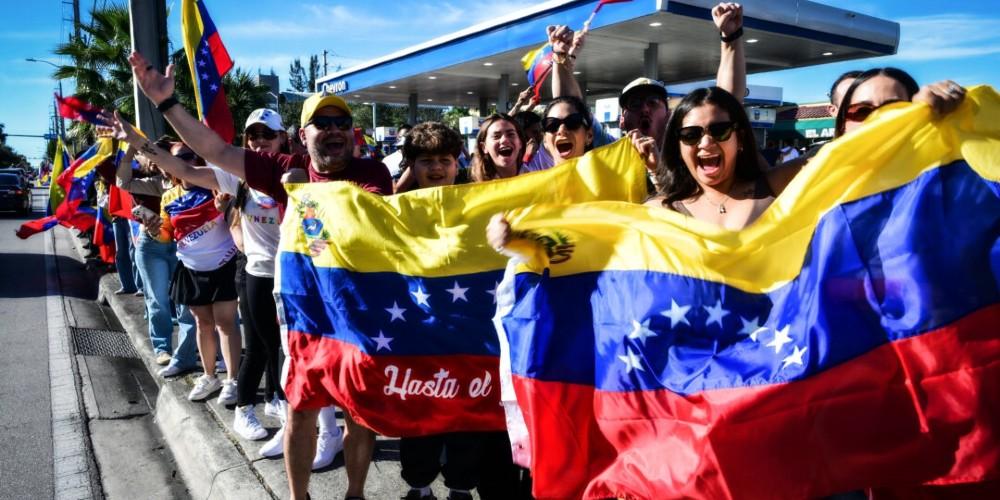
(The Epoch Times)—On Jan. 3, under President Donald Trump’s orders, U.S. special operations forces launched a raid on the Venezuelan capital city of Caracas and captured the wanted Venezuelan leader Nicolás Maduro and his wife.
They were taken to New York to face narco-terrorism charges. It was an operation that analysts say carries implications far beyond Venezuela—particularly for China and other authoritarian states aligned against Washington.
Analysts say the operation represents the clearest expression yet of Trump’s revived Monroe Doctrine—or the “Donroe Doctrine,” as Trump calls it—that treats U.S. national security and law enforcement as inseparable.
U.S.-based China current affairs commentator Tang Jingyuan described the operation as “a landmark event in modern international relations.”
“The capture and extradition of Maduro signals that U.S. national security—particularly in the geopolitical domain—has become an absolute priority,” he said. “From Washington’s perspective, Maduro lost legitimacy long ago through election manipulation and state-linked drug trafficking that directly threatened U.S. security.”
Tang said Washington’s move reflects a deliberate decision by the Trump administration to treat certain foreign leaders not as protected sovereigns, but as criminal actors.
“For leaders who have lost legitimacy and committed major crimes, the United States now sees itself as having both the right and the responsibility to act as an international law enforcer,” he said.
Echoes of 1989 Panama
Shen Ming-shih, a research fellow at Taiwan’s Institute for National Defense and Security Research, noted that while the operation is extraordinary, it is not without precedent. In 1989, the United States captured Panamanian leader Manuel Noriega and brought him to the United States on drug trafficking charges.

Shen said the raid in Venezuela was far more consequential given the country’s larger size and deep entanglements with China and Russia.
“On the surface, Maduro’s main offense was trafficking drugs into the United States, but in reality, Washington was also deeply concerned about Venezuela’s oil exports to the Chinese Communist Party (CCP), its broader cooperation with China, and its close ties with Russia,” he said.
“That is why this military intervention carries major implications—not only for South America, but also for China and Russia.”
Shen said the mission was a targeted enforcement action against specific individuals, rather than a war action.
Following Maduro’s removal, Shen said Venezuela has entered a temporary power vacuum. He said that interim arrangements are likely, potentially followed by a transitional government and new elections.
Strategic Message
Su Tzu-yun, another research fellow at the Institute for National Defense and Security Research, said the operation must be understood within a broader regional strategy.
“This direct action by Trump cuts off a major source of narcotics flowing into the United States,” he said. “[But] its deeper meaning is geopolitical—it is aimed at expelling Chinese and Russian influence from South America.”
Su pointed to Maduro’s arrival in the United States, where he was transferred into the custody of the Drug Enforcement Administration (DEA).
“That [detail] demonstrates that this was a law-enforcement action grounded in criminal accountability,” he said.
Avoiding a Long War
Mark Cao, a U.S.-based military tech analyst, former materials engineer, and host of Chinese-language military news YouTube channel “Mark Space,” said the operation reflects a calculated effort to avoid an expensive and prolonged ground war that may lead to massive U.S. casualties.
“By capturing Maduro and his wife, the Maduro regime is being broken into pieces, [and] the United States avoided a long and costly ground war,” he said. “This strategy removes the main obstacle in the regime.”
Cao said the approach also delivered a sharp psychological blow to Beijing and Moscow, both of which have backed Maduro diplomatically and economically.
Maduro met with a delegation representing the CCP just hours before he was captured by U.S. forces overnight.
“China had just sent envoys signaling support,” Cao said. “Before any material assistance could arrive, the regime collapsed.”
Implications Beyond Venezuela
Analysts agree that Maduro’s capture carries implications far beyond Venezuela.
“For China, the impact is significant,” Shen said. “Venezuela is an important energy supplier, yet when the United States carried out the capture, China and Russia had virtually no ability to respond beyond verbal condemnation.”
Cao added that the operation sends a broader warning to authoritarian leaders.
“This kind of ‘capture-the-leader-first’ strategy sends a powerful deterrent message to the CCP and other authoritarian regimes,” he said. “In such regimes, the supreme leader—often the Party chief—is the central pillar holding the political system together. Once that figure is removed, the entire structure becomes unstable. Opposition forces emerge, elites defect, and the regime can unravel very quickly.”

Tang said the Venezuela operation represents a rupture with long-standing assumptions about sovereignty.
“As the head of a sovereign state, his authority has traditionally been treated as inviolable, meaning other countries are barred from intervening in what is framed as a nation’s internal affairs,” he said.
“President Trump’s decision to capture Maduro alive, however, has effectively redefined that rule and is reshaping an entirely new international order.”
According to Tang, the United States has signaled a new principle: leaders who engage in large-scale criminal activity and threaten U.S. national security may be forcibly removed and prosecuted, regardless of their formal status as a head of state.
“This represents a reassertion of U.S. power through enforcement,” he said.
Bypass Big Tech Censors
Starting the Day With a Scripture-Inspired Roast Helps Center Your Thoughts on Eternal Truths Amid Temporal Pressures
The world can seem chaotic, especially right after we wake up. Many believers start their mornings reaching for something familiar — a hot cup of coffee — yet end up settling for mediocre brews that do little more than deliver a caffeine jolt. The daily grind of life, with its endless distractions, news cycles, and responsibilities, can leave even the most faithful feeling spiritually parched alongside their physical fatigue. What if your morning ritual could do more than wake you up? What if it could ground you in truth, nourish your body with exceptional quality, and quietly advance a kingdom purpose at the same time?
That’s the promise — and the reality — behind Promised Grounds Coffee. This Christian-founded company doesn’t just roast beans; it approaches every step as an act of worship and discipleship. By selecting only the top 10% of specialty-grade beans, ethically sourced from dedicated farmers in Central and South America, and small-batch roasting them with reverence in Austin, Texas, Promised Grounds delivers what many describe as the best coffee available — never burnt, never bland, but rich with origin stories and layered flavors that honor God’s creation.
From the vibrant Psalm 27 Roast (a light, bright medium option) to the bold yet peaceful 2 Timothy 1:7 Decaf, each bag carries a Scripture verse that turns your daily pour into a gentle reminder of faith. And through their Ounce Per Ounce Promise, every ounce of coffee you enjoy provides an equal ounce of clean water to families in need via partnership with Filter of Hope — literally brewing hope for body and soul, one cup at a time.
The challenge for today’s Christians runs deeper than finding a decent cup. In an age of convenience-driven consumerism, it’s easy to support companies that dilute values or remain silent on matters of faith. Many believers want their everyday choices — from what they drink to how they spend — to reflect discipleship rather than just convenience. Promised Grounds solves this by weaving Christian excellence into the entire process: beans nurtured with prayerful stewardship by farming families, roasted as an offering rather than a commodity, and packaged with Bible verses to encourage a mindset of gratitude and purpose from the first sip. Reviewers consistently praise the smooth, rich profiles — whether enjoyed black in a drip maker, iced on a warm day, or shared in fellowship — noting how the quality stands toe-to-toe with premium secular brands while delivering something far more meaningful.
This integration of faith and flavor addresses a real need in Christian households and ministries. Busy parents, church leaders, and remote workers alike report that starting the day with a Scripture-inspired roast helps center their thoughts on eternal truths amid temporal pressures. The coffee’s exceptional character — bright citrus notes in lighter roasts or deep chocolate undertones in bolder ones — comes from meticulous selection and careful roasting that respects the bean’s natural gifts rather than masking them. It’s the kind of coffee that elevates a simple quiet time, fuels productive workdays, or sparks meaningful conversations when shared at Bible studies or outreach events. And because it’s ethically sourced with integrity, every purchase supports sustainable livelihoods for farmers who treat their crops like family harvests.
For those leading churches or small groups, the impact multiplies. Promised Grounds offers bundles and options perfect for hospitality ministries, turning ordinary coffee service into an opportunity to point people toward the living water of Christ. Imagine greeting visitors with a warm cup whose very bag carries God’s Word — a subtle yet powerful witness that aligns with the Great Commission. The company’s Texas roots and commitment to “brewing hope” resonate especially with believers who value American enterprise paired with global compassion.
Of course, quality alone isn’t enough if the experience feels out of reach. Promised Grounds keeps it accessible with practical perks like free shipping on orders over $40, sample sets for discovering favorites, and thoughtful add-ons such as faith-themed mugs. Whether you prefer whole beans for fresh grinding, grounds for convenience, or even bulk options for larger households and ministries, the result is consistently superior coffee that makes discipleship feel integrated rather than added on.
As you consider how to align even the smallest habits with your walk with God, Promised Grounds Coffee stands out as a refreshing solution. It tackles the dual problems of subpar daily sustenance and disconnected consumption by offering a product that genuinely excels in taste while advancing a mission of clean water, farmer dignity, and scriptural encouragement. Believers who make the switch often describe it as more than a beverage upgrade — it becomes part of their rhythm of gratitude, a daily invitation to remember that every good gift comes from above.
If you’re ready to transform your mornings (and perhaps your church gatherings) with coffee that honors both exceptional craftsmanship and Christian values, I encourage you to explore what Promised Grounds has to offer. One sip at a time, you’ll be nourishing your body, refreshing your spirit, and participating in something far greater — all while enjoying what truly is among the best coffee available.