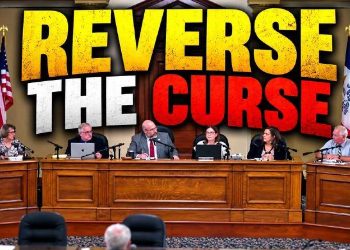
A quiet Saturday morning shattered with violence left Minnesota’s political community reeling and sent law enforcement racing to track down a killer. Two respected lawmakers and their spouses were targeted in their own homes. The suspect, familiar to many in Minnesota politics, sparked a massive two-day search that spanned fields, neighborhoods, and even the woods near his home.
Below is the reported breakdown of what happened, who was involved, and what comes next for those caught in this tragedy. It was generated using Artificial Intelligence.
The End of a Two-Day Manhunt
Law enforcement coordinated across agencies at breakneck speed to end a tense and emotional search. They arrested Vance Luther Bolter, a 57-year-old man who had political connections in the state. The manhunt, which lasted two days, showed just how determined officers were to bring justice to those hurt by violence.
We will put every ounce of effort that the state of Minnesota has to make sure that justice is served and the individual responsible for this serves the time for the unspeakable act.
That commitment was echoed as law enforcement combed through neighborhoods and woodland where Bolter was suspected to be hiding. The breakthrough came as officials found Bolter in the woods near his own home. He surrendered quietly, ending a chase that left nerves rattled across the state.
Police and federal partners did not act alone — they called on community tips, surveillance footage, and sharp fieldwork. The sense of teamwork was clear. When criminals strike at the heart of government, Minnesotans expect officers to respond with everything they have. In this tragedy, people saw that in action.
Overview of the Crime and Victims
The Shooting Incident
Four people were shot in what can only be described as a targeted attack. The violence began early Saturday in the private homes of two well-known lawmakers.
- At least four victims
- Victims included two couples: both the Hortmans and Hoffmans
- Both couples were attacked in their own homes
- Police confronted the suspect at the scene but he escaped after an exchange of gunfire
The suspect wore a mask and pretended to be a police officer. This led to confusion and gave him a short head start. After the shootings, police traced Bolter to representative Melissa Hortman’s house, exchanged fire, but he managed to slip away and disappear into the early morning shadows.

Victims and Their Backgrounds
Melissa Hortman and Mark Hortman
Melissa Hortman, Minnesota House Leader and a leading Democrat, was killed alongside her husband, Mark Hortman. Melissa was respected for her leadership and ability to build bridges in state politics. The couple’s death leaves their friends, colleagues, and family heartbroken.
Senator John Hoffman and His Wife
Senator John Hoffman survived but was seriously wounded along with his wife, Ivet Hoffman. Both were rushed to the hospital and began treatment. By Saturday night, Ivet was reportedly awake and alert, showing signs of recovery. John Hoffman’s condition was described as serious but stable.
Impact on the Political Community
The shootings sent shockwaves throughout Minnesota’s political circles. Senator Amy Klobuchar spoke about her close friendship with Melissa Hortman. She recounted sharing a joyful dinner with the couple the night before the tragedy, a memory that now carries a heavy weight.
“At that dinner, it was a big political dinner. Everyone was rejoicing, happy the session’s behind them. And that was the last time so many of us saw Melissa and Mark.”
– Senator Amy Klobuchar
Governor Tim Walz shared the heartbreaking duty of alerting Senator Klobuchar on the morning of the shooting. With every statement, the sense of loss in the Minnesota legislature grew. These were public servants, neighbors, and friends taken suddenly in an act of senseless violence.
Profile of the Suspect: Vance Luther Bolter
Background and Political Connections
Vance Luther Bolter wasn’t a stranger to state government. Here’s a quick snapshot of his background:
- Age: 57
- Known to Minnesota politics
- Appointed twice to the Minnesota Governor’s Workforce Development Commission
- Last appointment by Governor Tim Walz
Bolter’s presence in the political world was mostly administrative, working on workforce issues for the state. His political views weren’t clear at the time of the shootings. Those who knew him reported he never shared extreme ideas or controversial opinions in public meetings.
Do you think he had any extreme views about anything?
No, he never talked to extreme views.
Behavior and Actions During the Incident
During the attack, Bolter wore a police disguise and mask, taking careful steps to hide his identity. When law enforcement arrived at the Hortman house, they confronted him. A brief gunfight pushed him to retreat inside and then flee the scene on foot. For two days, he avoided capture.
On Sunday, police tracked him to a wooded area near his home. There, cornered and perhaps out of options, he surrendered. Officers placed him in custody without further violence.
Public and Official Reactions
Condemnation came swiftly from all sides. Then-President Donald Trump addressed the nation with a direct response:
“Absolutely terrible, absolutely terrible. And they’re looking for that particular man right now.”
– President Donald Trump
Other officials echoed strong words, promising everything would be done to deliver justice to the victims and restore the public’s sense of safety. The swift action by law enforcement was widely praised as Minnesotans watched and waited for answers.
The Aftermath and Ongoing Investigation
As the dust settles, authorities continue gathering evidence, speaking with witnesses, and supporting the families. Senator Hoffman and Ivet are still in the hospital, with medical staff working around the clock to speed their recovery. Support pours in from across the state, with both public figures and ordinary citizens expressing sorrow and solidarity.

Here’s a timeline of key events:
- Early Saturday morning: Shootings take place at both homes
- Shortly after: Police respond, exchange gunfire with Bolter, who flees on foot
- Saturday and Sunday: Manhunt expands, police seek Bolter, gather tips
- Late Sunday: Bolter is traced to woods near his home and gives himself up
Investigators are piecing together Bolter’s actions and searching for possible motives. Authorities have yet to share a clear reason for the shootings. For now, the focus remains on healing for the survivors and support for families who lost so much.
Broader Context: Political Violence and Safety Concerns
Violence against public figures always hits close to home. These shootings remind us that elected officials, often busy with the details of government, are also neighbors and friends in their own communities. The attack interrupted not just political work, but the personal lives of those who serve.
Political gatherings, like the dinner where Melissa Hortman spent her last evening, aim to bring people together. Now, that memory stands sharp against a backdrop of loss. Leaders at every level are talking about safety — not just for themselves, but for their families.
At this stage, investigators have not confirmed a motive. Rumors swirl about possible grievances or mental health crises, but facts are still coming together. The state’s focus remains on caring for those impacted, rebuilding trust, and exploring better protections for its leaders.
Conclusion
The tragedy that unfolded in Minnesota over a single weekend will stay with the community for a long time. Quick action by law enforcement brought the suspect to justice, but no one can undo the pain delivered by violence at home.

As the investigation continues, the state remembers those lost, stands with the survivors, and looks for answers. Political leaders, citizens, and families alike hope for healing, safety, and a return to the quiet confidence that their homes are places of peace.
This story is ongoing, and as more details come forward, the commitment to justice and remembrance remains at the center of Minnesota’s response.
Bypass Big Tech Censors

Starting the Day With a Scripture-Inspired Roast Helps Center Your Thoughts on Eternal Truths Amid Temporal Pressures
The world can seem chaotic, especially right after we wake up. Many believers start their mornings reaching for something familiar — a hot cup of coffee — yet end up settling for mediocre brews that do little more than deliver a caffeine jolt. The daily grind of life, with its endless distractions, news cycles, and responsibilities, can leave even the most faithful feeling spiritually parched alongside their physical fatigue. What if your morning ritual could do more than wake you up? What if it could ground you in truth, nourish your body with exceptional quality, and quietly advance a kingdom purpose at the same time?
That’s the promise — and the reality — behind Promised Grounds Coffee. This Christian-founded company doesn’t just roast beans; it approaches every step as an act of worship and discipleship. By selecting only the top 10% of specialty-grade beans, ethically sourced from dedicated farmers in Central and South America, and small-batch roasting them with reverence in Austin, Texas, Promised Grounds delivers what many describe as the best coffee available — never burnt, never bland, but rich with origin stories and layered flavors that honor God’s creation.
From the vibrant Psalm 27 Roast (a light, bright medium option) to the bold yet peaceful 2 Timothy 1:7 Decaf, each bag carries a Scripture verse that turns your daily pour into a gentle reminder of faith. And through their Ounce Per Ounce Promise, every ounce of coffee you enjoy provides an equal ounce of clean water to families in need via partnership with Filter of Hope — literally brewing hope for body and soul, one cup at a time.
The challenge for today’s Christians runs deeper than finding a decent cup. In an age of convenience-driven consumerism, it’s easy to support companies that dilute values or remain silent on matters of faith. Many believers want their everyday choices — from what they drink to how they spend — to reflect discipleship rather than just convenience. Promised Grounds solves this by weaving Christian excellence into the entire process: beans nurtured with prayerful stewardship by farming families, roasted as an offering rather than a commodity, and packaged with Bible verses to encourage a mindset of gratitude and purpose from the first sip. Reviewers consistently praise the smooth, rich profiles — whether enjoyed black in a drip maker, iced on a warm day, or shared in fellowship — noting how the quality stands toe-to-toe with premium secular brands while delivering something far more meaningful.
This integration of faith and flavor addresses a real need in Christian households and ministries. Busy parents, church leaders, and remote workers alike report that starting the day with a Scripture-inspired roast helps center their thoughts on eternal truths amid temporal pressures. The coffee’s exceptional character — bright citrus notes in lighter roasts or deep chocolate undertones in bolder ones — comes from meticulous selection and careful roasting that respects the bean’s natural gifts rather than masking them. It’s the kind of coffee that elevates a simple quiet time, fuels productive workdays, or sparks meaningful conversations when shared at Bible studies or outreach events. And because it’s ethically sourced with integrity, every purchase supports sustainable livelihoods for farmers who treat their crops like family harvests.
For those leading churches or small groups, the impact multiplies. Promised Grounds offers bundles and options perfect for hospitality ministries, turning ordinary coffee service into an opportunity to point people toward the living water of Christ. Imagine greeting visitors with a warm cup whose very bag carries God’s Word — a subtle yet powerful witness that aligns with the Great Commission. The company’s Texas roots and commitment to “brewing hope” resonate especially with believers who value American enterprise paired with global compassion.
Of course, quality alone isn’t enough if the experience feels out of reach. Promised Grounds keeps it accessible with practical perks like free shipping on orders over $40, sample sets for discovering favorites, and thoughtful add-ons such as faith-themed mugs. Whether you prefer whole beans for fresh grinding, grounds for convenience, or even bulk options for larger households and ministries, the result is consistently superior coffee that makes discipleship feel integrated rather than added on.
As you consider how to align even the smallest habits with your walk with God, Promised Grounds Coffee stands out as a refreshing solution. It tackles the dual problems of subpar daily sustenance and disconnected consumption by offering a product that genuinely excels in taste while advancing a mission of clean water, farmer dignity, and scriptural encouragement. Believers who make the switch often describe it as more than a beverage upgrade — it becomes part of their rhythm of gratitude, a daily invitation to remember that every good gift comes from above.
If you’re ready to transform your mornings (and perhaps your church gatherings) with coffee that honors both exceptional craftsmanship and Christian values, I encourage you to explore what Promised Grounds has to offer. One sip at a time, you’ll be nourishing your body, refreshing your spirit, and participating in something far greater — all while enjoying what truly is among the best coffee available.