When a Twitter DM came in from someone at a corporate media juggernaut, I knew what the topic would be before even reading it. For the last couple of weeks, we’ve been hit hard for exposing the inexplicable number of “coincidences” happening to our food infrastructure. From late-night food processing plant fires and explosions to bird flu that keeps popping up hundreds of miles from the last outbreaks to decisions made by food companies that make no sense, the series of events keep happening.
Or, as Jeff Thompson at The Organic Prepper noted in the article below, the hits keep coming.
The journalist I spoke to claimed to be “investigating” the string of events, but just as “fact-checkers” and other corporate journalists have continuously reported over the last couple of weeks, I knew that this was going to be another attempt to debunk the notion that the powers-that-be are manufacturing the food crisis in America and across the globe. But even this journalist was noticeably surprised at the coincidences that I laid out for her, claiming that she would have to verify certain things that she didn’t know before. These things included the properly placed explosions and fires that seem indicative of sabotage rather than coincidence, the fact that they seem to only happen at night when the most damage can be done, or the demonstrable truth that we have had more “accidents” in the last few weeks than the previous decade combined.
Corporate media is selling the idea that we are just more aware of the industrial accidents today in light of inflation but that they’ve been happening all along. This is a bald-faced lie. Corporate and local media will report on industrial accidents whether there’s an inflation issue or not, so either the accidents in the past were oddly ignored or they didn’t happen at the frequency we’re seeing today.
On the latest episode of The Midnight Sentinel, I discussed the story below by Thompson. I then brought on my lovely, brilliant, and talented co-host and wife to discuss some of the things we’re doing with dehydrated food to prepare for massive food shortages. The final segment I went over a recent admission by mainstream scientists about vaccine shedding. We were called conspiracy theorists last year for discussing it. Now university scientists are proving that we were correct.
Here’s the article by Thompson:
And the Hits Against the American Food Supply System Keep On Coming
Continuing the discussion on the current happenings within the American food supply chain, we have a series of strange events that have taken place over the course of the past week or two that you may want to catch up on.
Perdue Farms catches fire in Chesapeake, Virginia.
April 30 at 8:30 PM, a fire was reported at the Perdue Farms grain processing and storage facility in Chesapeake, Virginia. When firemen reported to the scene, they found a large soybean processing tank that was on fire. Crews were able to get the fire under control within an hour, and no injuries to employees of the facility were reported.

According to the plant manager, the damage from the fire will have a “minimal impact” on the facility’s production or operation capacities.
Spokane Seed Co catches fire in Spokane, Washington
Early on April 29, the Spokane Seed Co in Spokane, Washington, reported a fire just after midnight. The fire was in a multi-story seed storage silo. The company is known for its processing of chickpeas, peas, and lentils. Firemen responded to the scene and were able to contain the fire in two hours but apparently had a difficult time in doing so.
According to the fire department, “The difficulty involving the fire was that it was located in multiple locations as the origin was the auger unit that moved material from ground level and delivers it to the top of the silo; therefore, there was smoldering material located at the bottom of the auger and burning material that had been delivered to the top of the silo.”
(For the record, Powder Bulk and Solids published two pieces of late on April 26 and April 28 claiming that the uptick in fires at food processing facilities was a myth. They then reported the Spokane Fire on April 29 and the Chesapeake fire on May 2. They appear to have largely used Snopes to determine that the uptick in food processing fires was a myth and declared that “the continued spread of the rumor in the news media and on social media is perhaps attributable to a lack of awareness of industrial fire safety issues among the general public.”)
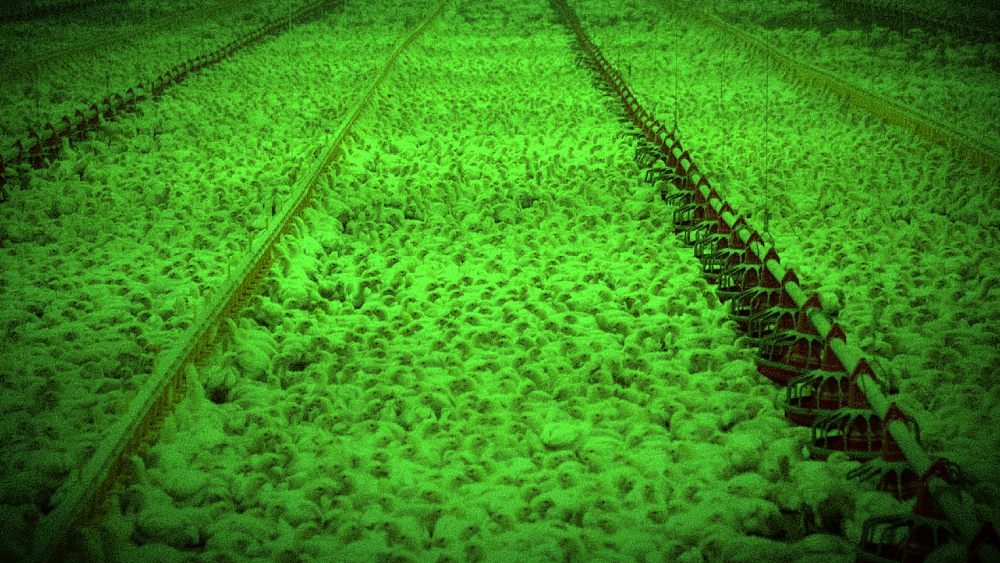
Oklahoma reports highly pathogenic avian influenza and will now monitor backyard chicken flocks.
According to the Oklahoma Department of Agriculture, Food and Forestry, as well as the US Department of Agriculture Animal and Plant Health Inspection Service (APHIS), a case of HPAI was found in Sequoyah County, Oklahoma, at a commercially run chicken farm.
As of this past Sunday, all chicken swaps, sales, and exhibits have now been declared by these two agencies to be illegal in the state of Oklahoma until July 30. Oklahoma says that it is “working diligently with federal partners to prevent further spread of the virus.”
Both state and federal officials will now begin to conduct surveillance of all poultry flocks in the area around the Sequoyah County case – both commercial and backyard flocks.
Officials are asking chicken owners to alert them if their birds produce strange eggs, don’t produce eggs, have diarrhea, cough, sneeze, have low energy, die, or show signs of respiratory distress.
(The time is now to start putting food away in a larder if you haven’t already. Check out our free QUICKSTART Guide for more information on building a 3-layer food storage system.)
A Colorado inmate has been diagnosed with a human case of H5N1.
The highly pathogenic avian influenza strain talked about at the moment is H5N1. A Colorado inmate was recently diagnosed as the first case of H5N1 in a human in recent times. The man was in a pre-release program and had been involved in moving chickens from an infected farm prior to his diagnosis.
Lisa Wiley, the spokeswoman for the Colorado Department of Corrections, said, “When bird flu was detected at the farm in Montrose County, the inmates were asked to help in the process of killing and removing the birds.”
To be infected with H5N1, one needs close contact with infected birds. The man reported fatigue for a few days before recovering. According to the CDC, “it was possible the man only had the virus present in his nose but that his body was not infected.” In other words, the man may have just been fatigued.

What will we see next?
Food is likely to become more scarce in the very near future. Numerous voices are openly stating that outright global famine is on the way, and it would be prudent to take these warnings seriously. Food is only going to grow more expensive six months from now. Do you have the ability to feed your family for an extended period of time? Do you have the ability to grow your own food? Have you figured out ways to boost your current food production?
If you haven’t accomplished or thought of any of these of late, it is now high time.
What are your thoughts? Let us know in the comments below.
About Jeff
Jeff Thompson is an avid fisherman who likes to spend time sailing on his boat and reading while at sea.
Bypass Big Tech Censors

Starting the Day With a Scripture-Inspired Roast Helps Center Your Thoughts on Eternal Truths Amid Temporal Pressures
The world can seem chaotic, especially right after we wake up. Many believers start their mornings reaching for something familiar — a hot cup of coffee — yet end up settling for mediocre brews that do little more than deliver a caffeine jolt. The daily grind of life, with its endless distractions, news cycles, and responsibilities, can leave even the most faithful feeling spiritually parched alongside their physical fatigue. What if your morning ritual could do more than wake you up? What if it could ground you in truth, nourish your body with exceptional quality, and quietly advance a kingdom purpose at the same time?
That’s the promise — and the reality — behind Promised Grounds Coffee. This Christian-founded company doesn’t just roast beans; it approaches every step as an act of worship and discipleship. By selecting only the top 10% of specialty-grade beans, ethically sourced from dedicated farmers in Central and South America, and small-batch roasting them with reverence in Austin, Texas, Promised Grounds delivers what many describe as the best coffee available — never burnt, never bland, but rich with origin stories and layered flavors that honor God’s creation.
From the vibrant Psalm 27 Roast (a light, bright medium option) to the bold yet peaceful 2 Timothy 1:7 Decaf, each bag carries a Scripture verse that turns your daily pour into a gentle reminder of faith. And through their Ounce Per Ounce Promise, every ounce of coffee you enjoy provides an equal ounce of clean water to families in need via partnership with Filter of Hope — literally brewing hope for body and soul, one cup at a time.
The challenge for today’s Christians runs deeper than finding a decent cup. In an age of convenience-driven consumerism, it’s easy to support companies that dilute values or remain silent on matters of faith. Many believers want their everyday choices — from what they drink to how they spend — to reflect discipleship rather than just convenience. Promised Grounds solves this by weaving Christian excellence into the entire process: beans nurtured with prayerful stewardship by farming families, roasted as an offering rather than a commodity, and packaged with Bible verses to encourage a mindset of gratitude and purpose from the first sip. Reviewers consistently praise the smooth, rich profiles — whether enjoyed black in a drip maker, iced on a warm day, or shared in fellowship — noting how the quality stands toe-to-toe with premium secular brands while delivering something far more meaningful.
This integration of faith and flavor addresses a real need in Christian households and ministries. Busy parents, church leaders, and remote workers alike report that starting the day with a Scripture-inspired roast helps center their thoughts on eternal truths amid temporal pressures. The coffee’s exceptional character — bright citrus notes in lighter roasts or deep chocolate undertones in bolder ones — comes from meticulous selection and careful roasting that respects the bean’s natural gifts rather than masking them. It’s the kind of coffee that elevates a simple quiet time, fuels productive workdays, or sparks meaningful conversations when shared at Bible studies or outreach events. And because it’s ethically sourced with integrity, every purchase supports sustainable livelihoods for farmers who treat their crops like family harvests.
For those leading churches or small groups, the impact multiplies. Promised Grounds offers bundles and options perfect for hospitality ministries, turning ordinary coffee service into an opportunity to point people toward the living water of Christ. Imagine greeting visitors with a warm cup whose very bag carries God’s Word — a subtle yet powerful witness that aligns with the Great Commission. The company’s Texas roots and commitment to “brewing hope” resonate especially with believers who value American enterprise paired with global compassion.
Of course, quality alone isn’t enough if the experience feels out of reach. Promised Grounds keeps it accessible with practical perks like free shipping on orders over $40, sample sets for discovering favorites, and thoughtful add-ons such as faith-themed mugs. Whether you prefer whole beans for fresh grinding, grounds for convenience, or even bulk options for larger households and ministries, the result is consistently superior coffee that makes discipleship feel integrated rather than added on.
As you consider how to align even the smallest habits with your walk with God, Promised Grounds Coffee stands out as a refreshing solution. It tackles the dual problems of subpar daily sustenance and disconnected consumption by offering a product that genuinely excels in taste while advancing a mission of clean water, farmer dignity, and scriptural encouragement. Believers who make the switch often describe it as more than a beverage upgrade — it becomes part of their rhythm of gratitude, a daily invitation to remember that every good gift comes from above.
If you’re ready to transform your mornings (and perhaps your church gatherings) with coffee that honors both exceptional craftsmanship and Christian values, I encourage you to explore what Promised Grounds has to offer. One sip at a time, you’ll be nourishing your body, refreshing your spirit, and participating in something far greater — all while enjoying what truly is among the best coffee available.