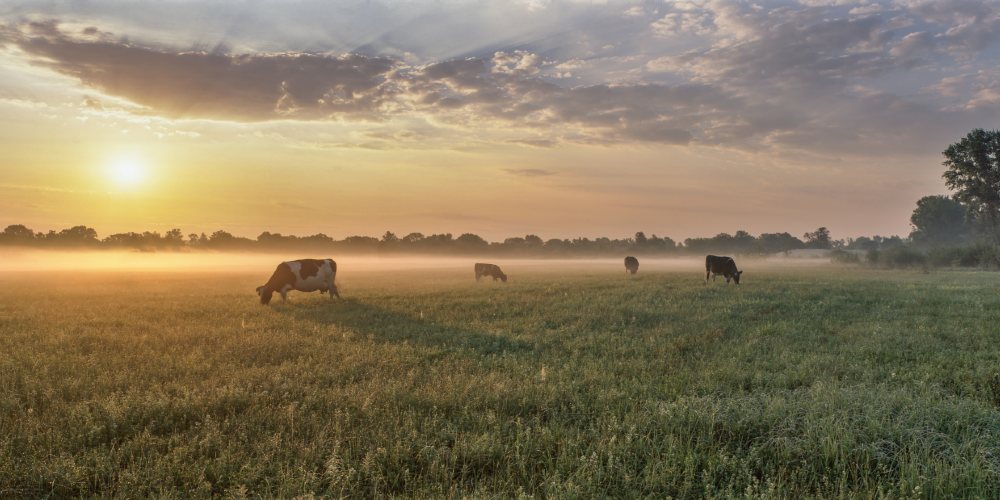
- Governments worldwide are imposing strict regulations on farmers to reduce methane emissions from livestock, using supplements like Bovaer.
- A study from the CO2 Coalition argues that methane’s warming potential is negligible compared to CO2.
- Methane concentrations are increasing 300 times slower than CO2, and its warming effect is minimal due to saturation at higher concentrations.
- Recent research indicates that microbial sources, not fossil fuels, are the primary contributors to rising methane levels.
- Policies targeting methane from agriculture are based on shaky science and threaten farmers’ livelihoods and food affordability.
As climate alarmism continues to take over headlines in the mainstream media, methane emissions from cows have become the latest target of overzealous policymakers. Governments worldwide, from the Netherlands to the United Kingdom, are imposing draconian regulations on farmers, forcing them to feed their livestock methane-reducing supplements like Bovaer. But is this war on methane justified? A growing body of scientific evidence suggests that the climate impact of methane has been grossly exaggerated, and the policies targeting agriculture are based on shaky, if not outright pseudoscientific, foundations.
The “Methane and Climate” study, authored by physicists William Happer and W. A. van Wijngaarden, has emerged as a critical rebuttal to the prevailing narrative. Published by the CO2 Coalition, the study meticulously dismantles the claim that methane from agriculture poses a significant threat to the planet. By analyzing the radiative properties of methane, the authors conclude that its warming potential is negligible compared to carbon dioxide (CO2). Despite this, climate activists and policymakers continue to push for costly and disruptive measures that threaten the livelihoods of farmers and the affordability of food for consumers.
The science behind methane’s limited impact
At the heart of the debate is the concept of radiative forcing, which measures how greenhouse gases trap heat in the atmosphere. While methane is often labeled a “super pollutant,” Happer and van Wijngaarden’s research reveals that its warming effect is minimal. Methane molecules are far less abundant than CO2, and their warming potential is heavily “saturated” at higher concentrations. In other words, adding more methane to the atmosphere has a diminishing effect on global temperatures.
Research also highlights that methane concentrations are increasing at a rate 300 times slower than CO2, making its annual contribution to warming roughly one-tenth that of CO2. This stands in stark contrast to the apocalyptic rhetoric often used by climate activists, who portray methane as a dire threat to the planet.
Methane’s true sources are microbes, not fossil fuels
Adding to the growing skepticism of methane alarmism is a recent study published in PNAS, which found that the surge in atmospheric methane is primarily driven by microbial sources, not fossil fuels. Using isotopic analysis, researchers determined that wetlands, agriculture, and waste—not oil and gas production—are the main contributors to rising methane levels. This finding undermines the narrative that targeting fossil fuels is the key to reducing methane emissions.
Moreover, a study published in Nature Geoscience revealed that methane’s warming effect has been overstated. The research found that methane’s absorption of solar radiation actually reduces its overall warming impact by about 30 percent. This counterintuitive discovery challenges the simplistic view of methane as a major driver of climate change and raises questions about the validity of current climate models.
Climate alarmism is costing farmers
Despite the mounting evidence, governments are doubling down on policies that punish farmers. In the U.K., major supermarkets like Tesco and Aldi are already sourcing milk from cows fed Bovaer, a supplement that inhibits methane production. While some consumers have boycotted these products, many have no choice but to purchase them as alternatives become scarce.
The British government has gone a step further, mandating that all suitable cattle be given Bovaer by 2030. This decision has sparked widespread concern about the long-term health effects of consuming dairy products from medicated cows. Critics argue that the safety of Bovaer has not been sufficiently studied, and its potential risks to human health remain unknown.

The war on methane is a prime example of how climate alarmism is driving irrational and harmful policies. Farmers, who are essential to feeding the world, are being scapegoated for a problem that is largely exaggerated. The scientific evidence clearly shows that methane’s impact on global warming is minimal, and its sources are more natural than anthropogenic.
It is time for policymakers to reject the pseudoscience fueling the methane panic and embrace a more balanced approach to climate policy. Instead of punishing farmers, governments should focus on supporting agricultural innovation and ensuring food security. The public must demand greater transparency and rigor in climate science, and resist the fearmongering that has come to dominate the debate.
The methane myth is just one example of how climate alarmism is being used to advance a radical agenda. It is time to push back against these false narratives and restore common sense to the climate conversation.
Sources for this article include:
Bypass Big Tech Censors

Starting the Day With a Scripture-Inspired Roast Helps Center Your Thoughts on Eternal Truths Amid Temporal Pressures
The world can seem chaotic, especially right after we wake up. Many believers start their mornings reaching for something familiar — a hot cup of coffee — yet end up settling for mediocre brews that do little more than deliver a caffeine jolt. The daily grind of life, with its endless distractions, news cycles, and responsibilities, can leave even the most faithful feeling spiritually parched alongside their physical fatigue. What if your morning ritual could do more than wake you up? What if it could ground you in truth, nourish your body with exceptional quality, and quietly advance a kingdom purpose at the same time?
That’s the promise — and the reality — behind Promised Grounds Coffee. This Christian-founded company doesn’t just roast beans; it approaches every step as an act of worship and discipleship. By selecting only the top 10% of specialty-grade beans, ethically sourced from dedicated farmers in Central and South America, and small-batch roasting them with reverence in Austin, Texas, Promised Grounds delivers what many describe as the best coffee available — never burnt, never bland, but rich with origin stories and layered flavors that honor God’s creation.
From the vibrant Psalm 27 Roast (a light, bright medium option) to the bold yet peaceful 2 Timothy 1:7 Decaf, each bag carries a Scripture verse that turns your daily pour into a gentle reminder of faith. And through their Ounce Per Ounce Promise, every ounce of coffee you enjoy provides an equal ounce of clean water to families in need via partnership with Filter of Hope — literally brewing hope for body and soul, one cup at a time.
The challenge for today’s Christians runs deeper than finding a decent cup. In an age of convenience-driven consumerism, it’s easy to support companies that dilute values or remain silent on matters of faith. Many believers want their everyday choices — from what they drink to how they spend — to reflect discipleship rather than just convenience. Promised Grounds solves this by weaving Christian excellence into the entire process: beans nurtured with prayerful stewardship by farming families, roasted as an offering rather than a commodity, and packaged with Bible verses to encourage a mindset of gratitude and purpose from the first sip. Reviewers consistently praise the smooth, rich profiles — whether enjoyed black in a drip maker, iced on a warm day, or shared in fellowship — noting how the quality stands toe-to-toe with premium secular brands while delivering something far more meaningful.
This integration of faith and flavor addresses a real need in Christian households and ministries. Busy parents, church leaders, and remote workers alike report that starting the day with a Scripture-inspired roast helps center their thoughts on eternal truths amid temporal pressures. The coffee’s exceptional character — bright citrus notes in lighter roasts or deep chocolate undertones in bolder ones — comes from meticulous selection and careful roasting that respects the bean’s natural gifts rather than masking them. It’s the kind of coffee that elevates a simple quiet time, fuels productive workdays, or sparks meaningful conversations when shared at Bible studies or outreach events. And because it’s ethically sourced with integrity, every purchase supports sustainable livelihoods for farmers who treat their crops like family harvests.
For those leading churches or small groups, the impact multiplies. Promised Grounds offers bundles and options perfect for hospitality ministries, turning ordinary coffee service into an opportunity to point people toward the living water of Christ. Imagine greeting visitors with a warm cup whose very bag carries God’s Word — a subtle yet powerful witness that aligns with the Great Commission. The company’s Texas roots and commitment to “brewing hope” resonate especially with believers who value American enterprise paired with global compassion.
Of course, quality alone isn’t enough if the experience feels out of reach. Promised Grounds keeps it accessible with practical perks like free shipping on orders over $40, sample sets for discovering favorites, and thoughtful add-ons such as faith-themed mugs. Whether you prefer whole beans for fresh grinding, grounds for convenience, or even bulk options for larger households and ministries, the result is consistently superior coffee that makes discipleship feel integrated rather than added on.
As you consider how to align even the smallest habits with your walk with God, Promised Grounds Coffee stands out as a refreshing solution. It tackles the dual problems of subpar daily sustenance and disconnected consumption by offering a product that genuinely excels in taste while advancing a mission of clean water, farmer dignity, and scriptural encouragement. Believers who make the switch often describe it as more than a beverage upgrade — it becomes part of their rhythm of gratitude, a daily invitation to remember that every good gift comes from above.
If you’re ready to transform your mornings (and perhaps your church gatherings) with coffee that honors both exceptional craftsmanship and Christian values, I encourage you to explore what Promised Grounds has to offer. One sip at a time, you’ll be nourishing your body, refreshing your spirit, and participating in something far greater — all while enjoying what truly is among the best coffee available.