As more people question official narratives regarding pretty much everything that’s happening in the world, it has been seen as a variation of “red-pilling” unlike anything we’ve seen in modern history. It’s a worldwide event that some have called the “great awakening.” Whether intentionally or not, Scottish commentator Neil Oliver has been one of the most outspoken when it comes to questioning everything.
His weekly monologues have been must-watch television that many have seen in replay right here. This week’s version is another winner, and that’s unfortunate because most of Oliver’s monologues bode ill for society. When he delivers these winners, it’s because he’s commenting on the bad and predicting even worse.
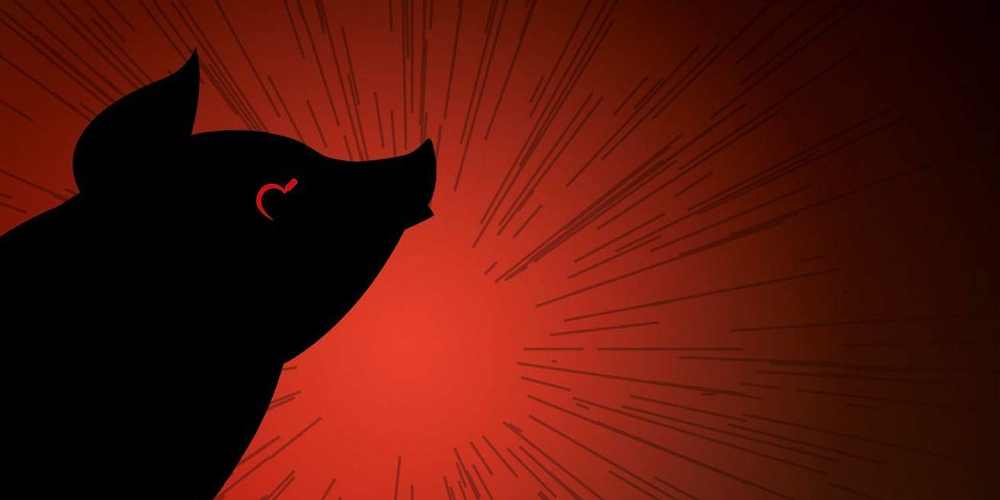
The topic today was about freedom, as it often is, and how we are acting like multiple characters in the dystopian works of George Orwell. Of particular interest was his connection between what we’re seeing manifest today and what was fictionalized by Orwell in Animal Farm. The pigs are becoming indistinguishable from the powerful men, meaning the very people we empowered to protect us from the forces of evil are colluding with them at the dinner table while we watch helplessly from outside.
By no means am I feeling sorry for humanity, nor was Oliver in his monologue. The state of society is directly tied to our own unwillingness to accept the truth and foresee the results of our horrible actions. In America, we can point to the mass acceptance of Joe Biden as president. A strong majority of Americans are either in denial about his 2020 “victory” or they’ve decided to move on from it and focus on other issues. The latter is a tremendous mistake, as I noted in an article about the movie 2000 Mules.
Here’s Oliver’s monologue followed by the transcript:
Given all that’s happened, I might have expected overwhelming anger in the country by now, loud calls for answers and apologies. Promises that mistakes made in the recent past, liberties taken, would not be repeated in the future. Also maybe demands for change.
Many are the dissenting voices – I know because I hear them every day – but the silencing and ridiculing still goes on.
What I sense around me most of all now, however, is weariness. Council elections have been held up and down Great Britain and apart from anything else, I think we can agree that turnout was low.

In some polling stations in Hull, for example, turnout was down at 12 per cent apparently. In terms of numbers taking part, exercising their democratic right, it was a damp squib all over.
As so often happens in these plebiscites, the day-to-day rule of the many has been decided by the relatively few who could even be bothered to vote. Among that minority are fervently committed activists, of course, those who see and know that power belongs to those who can be bothered.
Most people are not activists though. Most people have more than enough to do just keeping their heads above water. This depressing state of affairs is hardly surprising. In spite of the media’s attempts to whip up excitement about the results, local council elections have been a lacklustre non-event.
I think it’s getting worse, however. I trotted along to my local polling station and made my marks on the paper. It took some effort though. Along with so many people, I’m sure, I looked at the list of names and parties and thought, “What’s the point? What difference will it make?” I looked at the names and knew what the results would be even as I went through the motions of completing my vote.
We hear a lot of use now of the word, Orwellian. It refers to the English journalist and author George Orwell, of course – he of The Road to Wigan Pier, Animal Farm and 1984 and much else besides. I have a podcast in which, for the fun of it, I invite listeners to imagine that reading history is as close to time travel as a person might get. As the years go by, I wonder more and more if George Orwell wasn’t actually a time traveller for real – so right has he proven to be about where decisions made, and actions taken, in the 20th century would lead future generations.
In Animal Farm, his fable about Communism, he predicted the abuse of trust and the exploitation of power. Once the pigs have control of the farm, they immediately set about taking advantage of their situation. When the other animals notice, for instance, that the pigs are taking all the milk and apples for themselves, while everyone else must eat tasteless slop, the pigs’ PR spokesman – called Squealer – explains the move is backed by science:
“Comrades,” he tells them, “You do not imagine, I hope, that we pigs are doing this in a spirit of selfishness and privilege? Many of us actually dislike apples. I dislike them myself. Our sole object in taking these things is to preserve our health. Milk and apples – this has been proved by science, comrades – contain substances absolutely necessary to the wellbeing of a pig. We are brainworkers. The whole management and organisation of the farm depends on us.”
I read those lines again and think about the Science we have heard so much about recently. I think too about all the news stories about how good it will be for us as well to eat bugs and lab-grown meat, instead of the good stuff. That’s science too, don’t you know. Then I read about Bill Gates being the biggest owner of farmland in the US and wonder if it will be bugs and lab-grown meat he will produce from all those acres, or maybe cattle for sirloins and corn on the cob for the barbecue. Who could say?
Energy giant E.ON recently sent pairs of polyester socks to customers with the message:
“Energy down – CO2 down”. Those literally in control of the power have been telling people to wear more clothes to fend off the cold, rather than have heating in their homes.
All the while this is going on, oil and gas companies report record profits and bountiful dividends for shareholders.
Follow the science … or follow the money. You choose.

In Animal Farm, before the revolution, the pigs promised the animals that in future they would have electric light in their stalls, hot water as well as cold. Later on, once the pigs have control of the farm, such ideas are silenced. Napoleon, the leader of the pigs, says such notions are contrary to the spirit of Animalism, which is their ideology. He tells them the truest happiness lies in working hard and living frugal lives.
You will own nothing, a person might hear, and you will be happy.
I read about socks in the mail from energy companies. I read about MPs awarding themselves a pay rise in excess of £2,000 a year.
I listen to Boris Johnson justifying tax hikes and the rest.
Asked by a reporter: “What would you say to families trying to make ends meet? Buy cheaper food? Don’t replace clothes? Turn down the thermostat or turn it off altogether? What should people do?”
Boris Johnson answered: “People are obviously going to face choices that they are going to have to make.”

Frugal lives. Napoleon the pig would be proud.
I don’t know about you, but I don’t expect to see Boris Johnson, or Sir Keir Starmer or the rest of them waiting until the end of the day to hit the supermarkets in search of foods reduced to clear. I don’t expect to hear about them choosing between eating and heating.
In 1984, Orwell’s novel about a dystopian future in which the population is kept in a state of perpetual fear, on account of perpetual war with an enemy they never see, he wrote about how inconvenient facts and truth are “memory holed” which is to say, made to disappear. The protagonist is Winston Smith, who works in the Ministry of Truth. Among other state departments there is a Ministry of Plenty, which is actually a ministry of starvation, dedicated to keeping the people in a state of perpetual poverty, scarcity, and food shortage.
In his booth in the Ministry of Truth there is a slot in the wall into which Winston must post any document featuring information that is inconvenient to the government. Such data disappears at that point, as though it had never been – unless of course there comes a time in the future when the information is actually useful to the government again, at which point it miraculously reappears.
Big pharma giant Pfizer have just released the next 80 thousand pages of data related to the trial of their vaccine. 80 thousand pages. Before barely a word of it is read, many are the voices insisting it’s time anyway to move on and forget. It turns out you don’t even need memory holes when information can hide in plain sight among a population too wearied and distracted by other, more recent problems and fears, to pay enough attention.
The very people who would have us move on unquestioningly – politicians, journalists and others – those who demanded lockdowns – longer and harder – are now in the habit of lamenting the harm done by such measures. All of a sudden those that were ardent cheerleaders for the measures that have done so much harm have the unmitigated gall to fret publicly about the economy, about damage to physical and mental health, to the education and physical and emotional development of children. That they were the ones shouting loudest that we should “suck it up” and “cancel Christmas” to save Granny and the NHS, is information that seems to have been shoveled by the barrow load into the nearest memory hole.

I won’t forget, though. And neither will millions of others.
And in among all of this, ordinary tax-paying law-abiding people are simply and understandably exhausted. After two years of fear and anxiety and obeying rules that made no sense to them, many are on their knees. Into this climate of exhaustion came the local elections and, surprise, surprise, most people had energy only for going to work and feeding their families. And in this way, enervating patterns are repeated.
Another writer, Elena Ghorokova, wrote a memoir about life in the Soviet Union called A Mountain of Crumbs. In it she described how the population was ground down by fear, want, and hardship until people found they could cope best by pretending.
The joke about their relationship with the state boiled down to: “They pretend to pay us, and we pretend to work.”
The state was lying to the people. The people knew they were being lied to. The state knew the people knew they were being lied to. And still the state lied. It was all a great pretence played by people with power against those with none. And just in order to survive, the mass of the population played their part by joining in the pretence.
Many people are simply at the ends of their tethers – and why wouldn’t they be? We look at our politicians and would-be councillors – at Conservatives, and then at Labour, and then at Lib Dems and the rest. We look from one to the other – at those who called for lockdowns – which is to say prominent members of every party – at those who wanted them in place quicker and harder and for longer. Now we see them clamour for more control, more censorship, more compliance. We look at each in turn and in our hearts and stomachs we wonder if it makes any difference who we choose because in truth they are all the same now.
By the end of Animal Farm, the pigs are walking upright on two legs and wearing human clothes. They carry whips in their trotters. In the final scene, they host a meeting with neighbouring human farmers – the same that they had once claimed to hate as the enemies of all animals. Four legs good, two legs bad, they had once said. The pigs live in the farmhouse now. The other animals, left on the outside, in the farmyard, watch the pigs and human farmers sitting around the table, toasting each other and making plans to cooperate in the future.
“The creatures outside looked from pig to man, and from man to pig, and from pig to man again,” wrote Orwell. “But already it was impossible to say which was which.”
Is it just me, or does it feel like someone out there is using Orwell’s work not as a warning, but as an owner’s manual?
Bypass Big Tech Censors
Two Storms, One Harvest

Every food crisis in living memory has been a one-shock event. The 2008 price spike was a commodity bubble. The 2020 shortages were a logistics failure. The 2022 grain scare was a war on one exporter’s ports. Each time, the system bent, adjusted, and recovered, and each time the experts assured us afterward that global markets are simply too big and too diversified to fail.
What nobody in Washington seems eager to discuss is that 2026 is shaping up to be something the modern food system has never actually faced. Two independent shocks, one climatic and one geopolitical, are converging on the same harvest cycle at the same time. Not sequentially. Simultaneously.
Start with the weather. The Pacific Ocean is currently building toward what forecasters now openly call a record event. NOAA’s Climate Prediction Center puts the odds of at least a strong El Niño near 88 percent, with roughly two in three odds it reaches “very strong” status, the tier reserved for perhaps three or four events in the entire satellite era. Every major global model now projects a median peak in Super El Niño territory, and most of them project it exceeding the 2015-16 event, which until now held the modern record. Sea surface anomalies were already brushing the super threshold in mid-July, months before these events normally peak. The atmosphere has already shifted into El Niño mode, and the event is forecast to crest in late fall and early winter.
This is not about “climate change.” It’s about the standard cycles of weather, and the cycle we’re currently in is one that has likely devastated societies in the past. We’re better prepared as a society today, but not all Americans are equally prepared.
Serious households have started doing the quiet math on their own. Grocery bills tell part of the story, and the forecast maps tell the rest, which is why long-term food storage has moved from fringe hobby to mainstream line item in the family budget, with established suppliers like Heaven’s Harvest seeing demand from people who five years ago would have rolled their eyes at the idea. That instinct is not paranoia. It is pattern recognition, and the pattern is worth walking through carefully.
Editor’s Note: Heaven’s Harvest IS a sponsor, but the warnings of this article are real and would be written even if we didn’t have a survival food sponsor. With that said, those who take advantage of what they offer can use promo code “Patriot” for 15% off.
The Fertilizer Clock Is Already Running
While the Pacific warms, the second shock has been unfolding in the Strait of Hormuz. The conflict with Iran turned the world’s most important energy chokepoint into a contested waterway, and the consequences reach far beyond the gas pump. Roughly a third of global fertilizer trade moves through Hormuz, and the disruption sent urea prices up 86 percent year over year by March, with a 53 percent jump in a single month.
The World Bank projects energy prices rising about 24 percent in 2026 and fertilizer about 31 percent. By its own accounting, fertilizer prices ran 35 percent higher in the first five months of this year than the same period last year.
Here is the mechanism the nightly news will not explain. Fertilizer is not a grocery item. It is a time-delayed input. The nitrogen a farmer in Iowa or Punjab could not afford to apply this spring does not show up as a problem this spring. It shows up as a thinner harvest six to twelve months later.
The World Bank’s own food security brief concedes that the effects of reduced applications earlier this season “are likely to become visible only later in harvest outcomes.” Translate that from institutional language into plain English and it means this. The damage is already done, it is already in the ground, and we are simply waiting for it to arrive on the shelf.
Now check the calendar. Six to twelve months from the spring planting season lands us squarely in late 2026 and early 2027. Which is precisely when the strongest El Niño in the instrumental record is forecast to peak, bringing its signature droughts to Southeast Asia, Australia, southern Africa, northern Brazil, and South Asia, the very regions that grow the world’s rice, sugar, and oilseeds.
The World Bank warns openly that a strong El Niño “could disrupt multiple crop belts simultaneously” on top of the conflict-driven input costs. Their baseline projection assumes the Middle East disruptions ease by autumn. What in the last two years of Middle East history suggests that assumption is safe?
The System Has No Slack Left
The comfortable answer is that global markets always adjust. But adjustment requires slack, and the slack is gone. Global cereal production is expected to decline from last year’s records even before El Niño does its work. The UN World Food Programme, hardly a den of right-wing preppers, is calling this the most significant disruption to its supply chains since Covid and the invasion of Ukraine, and its supply chain director put the stakes bluntly.
Today’s supply chain challenges are tomorrow’s hunger crisis.
There is also a political dimension that markets cannot price. When food gets scarce, governments do not behave like economists. They behave like politicians. Export bans, hoarding mandates, and panic buying at the national level turned the modest rice shortfall of 2008 into a global crisis, and analysts are already warning that import-dependent nations are the first dominoes.
The 2015-16 Super El Niño, a far weaker event than what is now forecast, threw tens of millions into food stress across Africa and Asia. This one is projected to be stronger, and it arrives with fertilizer already rationed by price and shipping lanes already contested by missiles.
What Joseph Knew
Scripture does not treat preparation for lean years as faithlessness. It treats it as wisdom delivered in advance to those willing to act on it.
Behold, there come seven years of great plenty throughout all the land of Egypt: And there shall arise after them seven years of famine; and all the plenty shall be forgotten in the land of Egypt.
Joseph did not respond to that warning with a hashtag or a committee. He stored grain during the years of abundance, and when the famine came, Egypt stood while its neighbors begged. The lesson is not that famine is certain. It is that the time to prepare is precisely when preparation still looks optional.
Nobody who filled a pantry in a year of plenty has ever regretted it, and nobody standing in an empty aisle has ever been glad he waited for certainty.
None of this calls for panic, and panic is the enemy of sound judgment anyway. It calls for the same unglamorous prudence our grandparents considered ordinary. Keep some cash margin, know your local growers, and put real food in deep storage while it is cheap and available, because the entire arc of this story is that cheap and available is a closing window.
Families looking for a straightforward place to start can visit Heaven’s Harvest and use promo code Patriot for 15 percent off long-term storable food. The forecasts may yet soften, the strait may yet reopen, and we should pray they do. But hope is a fine thing to hold and a foolish thing to eat.