(The Economic Collapse Blog)—After years of heading in the wrong direction, nobody can deny that the United States is facing overwhelming problems. So why don’t we focus on fixing those problems first? The truth is that we can’t do everything because our resources are very limited. U.S. households are more than 18 trillion dollars in debt, and the federal government is more than 38 trillion dollars in debt. Even though we have literally stolen trillions upon trillions of dollars from future generations, our major cities are rapidly decaying, our infrastructure is crumbling, corruption is rampant, the middle class is shrinking, most of the population is struggling to even afford the basics each month, mass layoffs are happening all over the nation, our streets are teeming with hordes of drug addicts and homeless people, large numbers of Americans are selling images of themselves online just to make ends meet, and millions of others are living in their vehicles.
So why don’t we use what limited resources we have to fix our own problems?
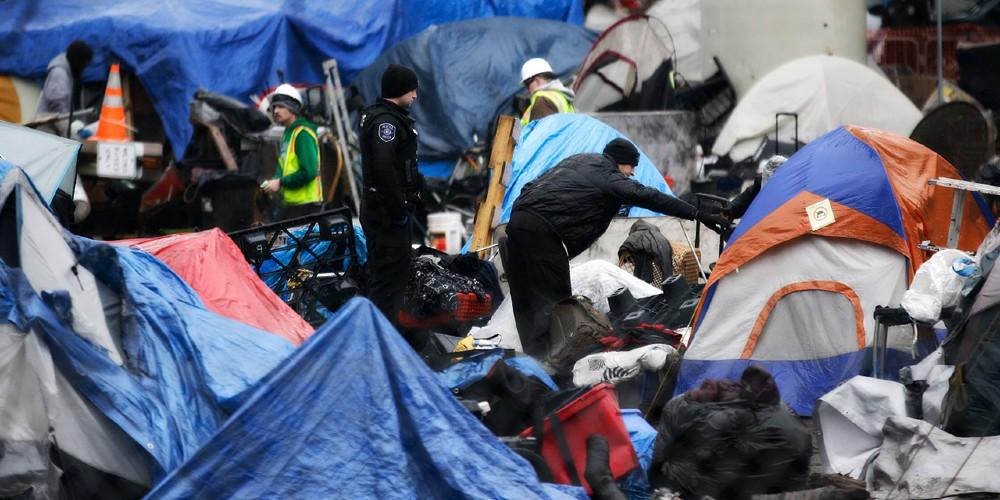
If you don’t understand the point that I am trying to make, just go take a stroll through downtown Seattle.
The new mayor has decided that it will be her policy to allow people to openly do drugs in the streets…
Seattle’s new ultra-woke mayor has triggered chaos by ordering police not to arrest people doing drugs on the streets of the city plagued by crime and homelessness.
Democratic socialist Katie Wilson, 43, was sworn in as the city’s 58th mayor on Friday.
The progressive politician who co-founded the Transit Riders Union has already taken steps that concerned residents and law enforcement officials say will destroy Seattle.
The president of the Seattle Police Officers Guild, Mike Solan, is warning that this will make the lawlessness in the streets of Seattle even worse…
‘We’ve all seen how our streets can be filled with death, decay, blight and crime when ideology like this infects our city, Solan continued in his statement.
‘Now with this resurrected insane direction, death, destruction and more human suffering will be supercharged.’
Lawmakers and residents have reacted to this news in horror, as the city already has a raging homelessness epidemic that they believe this lax drug policy will only amplify.
Once upon a time, Seattle was one of the most beautiful cities on the entire planet. So what in the world happened?
Of course it isn’t just Seattle that has been transformed into a crime-ridden, drug-infested hellhole.
All over the nation, chaos reigns in the streets of major American cities.

In fact, last night a “hammer-wielding maniac” destroyed a bunch of windows at the Cincinnati home of Vice President J.D. Vance…
A hammer-wielding maniac who smashed four windows at JD Vance’s Cincinnati home has been arrested by the Secret Service after an overnight break-in.
William DeFoor, 26, was charged early Monday morning with one count each of obstructing official business, criminal damaging or endangering, criminal trespass and vandalism.
Secret Service agents heard a loud noise at the home around midnight and spotted DeFoor running from the home, which is the secondary residence for Vance, his wife Usha and their three young children, who were out of town at the time.
Meanwhile, lawlessness also continues to run rampant in high places all over the country. So what is being done about it?
After all this time, how many corrupt members of past administrations have been arrested and put in prison? After all this time, how many corrupt corporate executives have been arrested and put in prison? After all this time, how many of Jeffrey Epstein’s associates that also sexually abused young girls have been arrested and put in prison?
How can we tell the rest of the world how they should be doing things when we can’t even get our own house in order?
We have been getting hit by crisis after crisis, and economic conditions are steadily deteriorating. In fact, we just learned that U.S. manufacturing activity has contracted for a 10th consecutive month…
US manufacturing activity contracted for a 10th straight month in December, a survey indicated Monday, pointing to a continued drag in sentiment from tariffs and trade policy uncertainty.
The Institute for Supply Management’s (ISM) manufacturing index fell to 47.9 from November’s 48.2 reading, the lowest of 2025 despite modest improvements in employment and some other categories.
Our artificially-inflated stock market continues to hover near record highs, but at the same time the number of large corporations that are going bankrupt just continues to rise…
Between January and November 2025, at least 717 companies filed for Chapter 7 or Chapter 11 bankruptcy, according to data from S&P reviewed by The Washington Post.
That marks a 14% jump compared to the same period in 2024, and the most filings seen since 2010, the tail end of the Great Recession.
According to the Daily Mail, we are also seeing a very alarming surge in bankruptcies among small businesses too…
A frightening recession indicator is flashing red — and Americans can see it all over Main Street.
Experts told the Daily Mail that a sudden surge in bankruptcies and store closures — hitting mom-and-pop shops, small restaurants, and local retailers — could be an early warning sign that the economy is starting to crack.
One expert that was interviewed by the Daily Mail is warning that this surge in bankruptcies is a clear indication that a recession is coming…
‘The little guys are going to start falling first,’ Joe Barsalona, a Delaware-based bankruptcy lawyer at Pashman Stein Walder Hayden, said.
‘A recession is coming. I agree with economists that the increase in small business bankruptcies is a canary in a coal mine.’
Of course many would argue that a recession is already here.
In recent months, I have written a lot about the mass layoffs that have been occurring all over the country.
Well, now Newsweek is reporting that over 100 companies have filed WARN notices for mass layoffs that will be taking place in January…
More than 100 companies have filed WARN notices indicating plans to lay off workers in January 2026, according to WARNTracker.com. The following companies have filed a notice.
I tried to warn my readers that a tsunami of layoffs was coming.

Now it is here.
The following is the full list of 119 companies that have filed WARN notices for this month…
- AARP
- AbbVie
- Adams County Public Hospital
- AeroFarms1526 Cane Creek
- Amazon
- Amentum
- American Signature, Inc.
- Apogee Architectural Metals
- Archer Daniels Midland Company
- Atkore Plastics Southeast
- Augusta Sportswear, Inc.
- Bechtel National Inc.
- Best Dressed Chicken, Inc.
- Blue Plate Oysterette LLC
- Blue Shield of California
- Bond 45 National Harbor Restaurant
- Braga Fresh Foods, LLC
- Building Materials Manufacturing LLC
- BWW Law Group, LLC
- Catalent, Maryland, Inc.
- Charles River Laboratories
- Clari Inc.
- CNO Financial Group
- Colonial Savings, F.A.
- ColWyo Coal Company LP
- CommUnify
- Consolidated Hospitality Supplies
- Corteva
- CoStar Group
- Couchbase, Inc.
- CRST Expedited, Inc.
- Dental Benefit Management, Inc.
- Dillard’s Inc.
- Dometic Corporation
- DRT, LLC
- DSV Air & Sea Inc.
- enDevelopment Logistics, LLC
- FedEx
- FreshRealm
- Fresno Economic Opportunities Commission
- Galleher LLC
- General Motors
- Giesecke + Devrient ePayments America Inc
- Gilead Sciences
- Grand Lux Café, LLC
- Great Floors
- H&M Fashion USA, Inc.
- HD Supply
- Heibar Installations Inc.
- Henkel Corporation
- HRL Laboratories
- Hudson
- Huntington National Bank
- Illumina
- ImmunityBio
- Inline Plastics
- Institute of International Education
- International Paper
- Invincible Boat Company
- Kloeckner Meals
- Lakeshore Learning Materials, LLC
- Louis Vuitton USA Inc.
- Lumileds
- Maritime Applied Physics Corporation
- Marshalls of CA, LLC
- Mattel
- McDonald’s
- MDWise
- Meteorcomm LLC
- Mettler-Toledo Rainin, LLC
- Michigan Sugar Company
- Middlebury Institute of International Studies at Monterey
- Nationstar Mortgage, LLC
- NIKE Retail Services, Inc.
- Nordstrom Portland Rack
- Ojai Valley Inn
- Palo Verde Hospital
- Panasonic Well LLC
- Peraton’s Environmental Integration Services III
- Post Consumer Brands, LLC
- Presbyterian Home for Central New York, Inc.
- Providence Health & Services
- Rad Power Bikes, Inc.
- RATP Dev and Midtown Group
- Raytheon Technologies
- Rebel Restaurants, Inc.
- Red Run Corporation T/A Food Depot
- Regional Medical Center of Central Alabama
- Retail Services WIS Corporation
- Revity, Inc.
- Roads Express, LLC
- Saddle Creek Logistics Service
- SC Industrial Holdings, LLC
- SDH Education West, LLC
- SDH Service East, LLC
- Shell Recharge Solutions
- SLO Brewing Co. LLC
- Smokin Bear LLC
- Smurfit Westrock
- Sodexo
- Spirit Airlines, LLC.
- Synopsys, Inc.
- Takeda Development Center Americas Inc.
- Terzo Enterprises Incorporated
- The Cheesecake Factory
- The French Gourmet, Inc.
- The Taubman Company
- TJX Companies, Inc.
- TransAlta
- United Supermarkets
- Van Law Food Products, Inc.
- Verizon
- Virginia Mason Franciscan
- Warner Music Group
- Wells Fargo
- West Fraser, Inc.
- White Coffee Corporation
- WIS International
- WWL Vehicle Services America, Inc.
That is quite a long list, isn’t it?
The American people are not stupid.
They can see what is happening, and one recent survey found that 52 percent of U.S. adults actually believe that a recession has already started…
According to the ARG data, 52% of Americans believe the economy is already in a recession, and 64% say it’s getting worse.
These numbers suggest that many Americans are feeling the squeeze, even if official metrics don’t yet reflect a recession.
Only 11% think the economy is improving. Just 22% rate it as excellent, very good, or good, while 73% call it bad, very bad, or terrible, showing a clear gap between public sentiment and political narratives about economic strength.
Looking ahead, 60% believe the national economy will be worse a year from now, and just 16% say it will be better.
Yes, things are certainly bad now.

But they are not even worth comparing to what is further down the road.
So why don’t we use our limited resources to address the historic challenges that we are facing in our own nation?
If we love this country, we should try to fix it.
Michael’s new book entitled “10 Prophetic Events That Are Coming Next” is available in paperback and for the Kindle on Amazon.com, and you can subscribe to his Substack newsletter at michaeltsnyder.substack.com.
Bypass Big Tech Censors

Two Storms, One Harvest

Every food crisis in living memory has been a one-shock event. The 2008 price spike was a commodity bubble. The 2020 shortages were a logistics failure. The 2022 grain scare was a war on one exporter’s ports. Each time, the system bent, adjusted, and recovered, and each time the experts assured us afterward that global markets are simply too big and too diversified to fail.
What nobody in Washington seems eager to discuss is that 2026 is shaping up to be something the modern food system has never actually faced. Two independent shocks, one climatic and one geopolitical, are converging on the same harvest cycle at the same time. Not sequentially. Simultaneously.
Start with the weather. The Pacific Ocean is currently building toward what forecasters now openly call a record event. NOAA’s Climate Prediction Center puts the odds of at least a strong El Niño near 88 percent, with roughly two in three odds it reaches “very strong” status, the tier reserved for perhaps three or four events in the entire satellite era. Every major global model now projects a median peak in Super El Niño territory, and most of them project it exceeding the 2015-16 event, which until now held the modern record. Sea surface anomalies were already brushing the super threshold in mid-July, months before these events normally peak. The atmosphere has already shifted into El Niño mode, and the event is forecast to crest in late fall and early winter.
This is not about “climate change.” It’s about the standard cycles of weather, and the cycle we’re currently in is one that has likely devastated societies in the past. We’re better prepared as a society today, but not all Americans are equally prepared.
Serious households have started doing the quiet math on their own. Grocery bills tell part of the story, and the forecast maps tell the rest, which is why long-term food storage has moved from fringe hobby to mainstream line item in the family budget, with established suppliers like Heaven’s Harvest seeing demand from people who five years ago would have rolled their eyes at the idea. That instinct is not paranoia. It is pattern recognition, and the pattern is worth walking through carefully.
Editor’s Note: Heaven’s Harvest IS a sponsor, but the warnings of this article are real and would be written even if we didn’t have a survival food sponsor. With that said, those who take advantage of what they offer can use promo code “Patriot” for 15% off.
The Fertilizer Clock Is Already Running
While the Pacific warms, the second shock has been unfolding in the Strait of Hormuz. The conflict with Iran turned the world’s most important energy chokepoint into a contested waterway, and the consequences reach far beyond the gas pump. Roughly a third of global fertilizer trade moves through Hormuz, and the disruption sent urea prices up 86 percent year over year by March, with a 53 percent jump in a single month.
The World Bank projects energy prices rising about 24 percent in 2026 and fertilizer about 31 percent. By its own accounting, fertilizer prices ran 35 percent higher in the first five months of this year than the same period last year.
Here is the mechanism the nightly news will not explain. Fertilizer is not a grocery item. It is a time-delayed input. The nitrogen a farmer in Iowa or Punjab could not afford to apply this spring does not show up as a problem this spring. It shows up as a thinner harvest six to twelve months later.
The World Bank’s own food security brief concedes that the effects of reduced applications earlier this season “are likely to become visible only later in harvest outcomes.” Translate that from institutional language into plain English and it means this. The damage is already done, it is already in the ground, and we are simply waiting for it to arrive on the shelf.
Now check the calendar. Six to twelve months from the spring planting season lands us squarely in late 2026 and early 2027. Which is precisely when the strongest El Niño in the instrumental record is forecast to peak, bringing its signature droughts to Southeast Asia, Australia, southern Africa, northern Brazil, and South Asia, the very regions that grow the world’s rice, sugar, and oilseeds.
The World Bank warns openly that a strong El Niño “could disrupt multiple crop belts simultaneously” on top of the conflict-driven input costs. Their baseline projection assumes the Middle East disruptions ease by autumn. What in the last two years of Middle East history suggests that assumption is safe?
The System Has No Slack Left
The comfortable answer is that global markets always adjust. But adjustment requires slack, and the slack is gone. Global cereal production is expected to decline from last year’s records even before El Niño does its work. The UN World Food Programme, hardly a den of right-wing preppers, is calling this the most significant disruption to its supply chains since Covid and the invasion of Ukraine, and its supply chain director put the stakes bluntly.
Today’s supply chain challenges are tomorrow’s hunger crisis.
There is also a political dimension that markets cannot price. When food gets scarce, governments do not behave like economists. They behave like politicians. Export bans, hoarding mandates, and panic buying at the national level turned the modest rice shortfall of 2008 into a global crisis, and analysts are already warning that import-dependent nations are the first dominoes.
The 2015-16 Super El Niño, a far weaker event than what is now forecast, threw tens of millions into food stress across Africa and Asia. This one is projected to be stronger, and it arrives with fertilizer already rationed by price and shipping lanes already contested by missiles.
What Joseph Knew
Scripture does not treat preparation for lean years as faithlessness. It treats it as wisdom delivered in advance to those willing to act on it.
Behold, there come seven years of great plenty throughout all the land of Egypt: And there shall arise after them seven years of famine; and all the plenty shall be forgotten in the land of Egypt.
Joseph did not respond to that warning with a hashtag or a committee. He stored grain during the years of abundance, and when the famine came, Egypt stood while its neighbors begged. The lesson is not that famine is certain. It is that the time to prepare is precisely when preparation still looks optional.
Nobody who filled a pantry in a year of plenty has ever regretted it, and nobody standing in an empty aisle has ever been glad he waited for certainty.
None of this calls for panic, and panic is the enemy of sound judgment anyway. It calls for the same unglamorous prudence our grandparents considered ordinary. Keep some cash margin, know your local growers, and put real food in deep storage while it is cheap and available, because the entire arc of this story is that cheap and available is a closing window.
Families looking for a straightforward place to start can visit Heaven’s Harvest and use promo code Patriot for 15 percent off long-term storable food. The forecasts may yet soften, the strait may yet reopen, and we should pray they do. But hope is a fine thing to hold and a foolish thing to eat.