(Substack)—The Senate’s confirmation battles have reached a boiling point, with Republicans signaling a willingness to overhaul longstanding rules to push through President Donald Trump’s long-delayed nominees. At the center of this escalating tension is Senate Majority Leader John Thune, who has grown increasingly frustrated with what he describes as unprecedented Democratic obstruction led by Minority Leader Chuck Schumer.
After months of procedural roadblocks that have left over 100 executive branch positions in limbo, Thune is poised to invoke the so-called “nuclear option,” a dramatic rules change that could allow for batch confirmations and bypass the Democrats’ filibuster tactics.
This move comes on the heels of a contentious summer where Trump’s administration struggled to staff key roles essential for implementing his policy priorities. Back in July, Trump himself took to Truth Social to urge Thune to act decisively, posting, “Hopefully the very talented John Thune, fresh off our many victories over the past two weeks and, indeed, 6 months, will cancel August recess (and long weekends!), in order to get my incredible nominees confirmed. We need them badly!!! DJT.”
Trump’s plea underscored the urgency felt within the White House, where delays in confirming appointees have hampered everything from regulatory reforms to national security initiatives. Yet Thune opted not to disrupt the recess, instead maneuvering behind the scenes to maintain a skeletal Senate schedule that effectively neutralized Trump’s attempts at recess appointments—a tactic that further irked the president and his supporters.
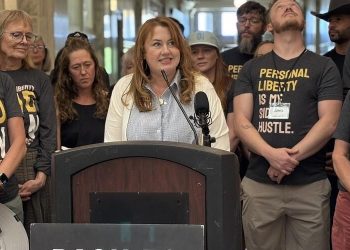
Thune’s recent rhetoric has sharpened, reflecting a shift toward confrontation. During a Senate GOP leadership press conference, he laid bare the extent of the Democrats’ strategy: “We have never seen a time where the opposition party has literally blocked and forced the president and his team and us here as the majority in the Senate to go through all the machinations of trying to get a nominee across the finish line.”
This statement highlights how Schumer’s playbook has transformed routine confirmations into exhaustive ordeals, requiring full roll-call votes for even uncontroversial lower-level positions. Under current rules, clearing the backlog would demand around 600 additional votes, a grueling process that Republicans argue is designed purely to grind the administration to a halt.
Thune didn’t mince words on the origins of the impasse, adding, “So this is of the Democrats’ making.
His comments point to Schumer’s directive since February 2025 to oppose every Trump nominee outright, a stark departure from bipartisan norms that has left Trump as the first president since Herbert Hoover without a single voice-vote or unanimous-consent confirmation at this stage in his term.

The nuclear option, if deployed, would mark a significant escalation in Senate warfare, echoing past rule tweaks that have reshaped the chamber’s power dynamics. Historically, Democrats under then-Majority Leader Harry Reid pulled the trigger in 2013 to eliminate the filibuster for most executive and lower-court judicial nominees, a move Republicans decried at the time but now see as precedent for their own reforms.
More recently, in 2017, then-Majority Leader Mitch McConnell extended it to Supreme Court justices, clearing the path for Trump’s appointments like Neil Gorsuch and Brett Kavanaugh. Thune’s plan, drawn from a 2023 proposal by Democratic Sen. Amy Klobuchar for grouping up to ten similar nominees, could go further by allowing en bloc votes without a strict cap—potentially bundling nominees from multiple committees while sparing Cabinet secretaries and judges from the overhaul.
Republican senators have rallied around the idea, forming a working group that includes Sens. Katie Britt, James Lankford, Ron Johnson, Eric Schmitt, and Ted Budd to hammer out the details. Britt has been vocal about the stakes, warning on X that “By the end of the 119th Congress (1/2/2027), the Senate is on track to confirm just 426 nominees, the fewest in history, and less than half of what other Presidents have averaged since 2000.”
Her projection paints a dire picture: without changes, Trump’s team would operate at a fraction of capacity, undermining his mandate from the 2024 election. This backlog isn’t just bureaucratic red tape—it’s a direct barrier to advancing conservative priorities like border security and economic deregulation, where experienced appointees are crucial for execution.
Schumer’s resistance has only intensified the pushback. As Axios reported earlier this summer, negotiations between Thune, Schumer, and the White House collapsed before the August recess, leaving the nuclear option as the lingering threat. The New York Democrat has framed the delays as a check on what he calls unqualified picks, but Republicans counter that the blockade is politically motivated obstruction, especially since only Secretary of State Marco Rubio has been confirmed without a full fight so far. Trump amplified this sentiment in a recent Truth Social outburst, declaring, “The Democrats have gone CRAZY,” in reference to the ongoing stalls.
As the Senate returns from recess, Thune remains resolute about breaking the logjam. “There isn’t anything right now that they want to vote for that he has his fingerprints on, and getting his team in place is absolutely essential. It’s part of governing this country, and we’re going to move forward,” he stated firmly during the press conference.
With a potential vote on the rules change as early as this week, the stage is set for a showdown that could reshape how future administrations staff their ranks. For Trump, whose first term saw 65% of nominees sail through by voice vote, restoring that efficiency is non-negotiable—and Republicans appear ready to make it happen, nuclear fallout be damned.
Bypass Big Tech Censors

Starting the Day With a Scripture-Inspired Roast Helps Center Your Thoughts on Eternal Truths Amid Temporal Pressures
The world can seem chaotic, especially right after we wake up. Many believers start their mornings reaching for something familiar — a hot cup of coffee — yet end up settling for mediocre brews that do little more than deliver a caffeine jolt. The daily grind of life, with its endless distractions, news cycles, and responsibilities, can leave even the most faithful feeling spiritually parched alongside their physical fatigue. What if your morning ritual could do more than wake you up? What if it could ground you in truth, nourish your body with exceptional quality, and quietly advance a kingdom purpose at the same time?
That’s the promise — and the reality — behind Promised Grounds Coffee. This Christian-founded company doesn’t just roast beans; it approaches every step as an act of worship and discipleship. By selecting only the top 10% of specialty-grade beans, ethically sourced from dedicated farmers in Central and South America, and small-batch roasting them with reverence in Austin, Texas, Promised Grounds delivers what many describe as the best coffee available — never burnt, never bland, but rich with origin stories and layered flavors that honor God’s creation.
From the vibrant Psalm 27 Roast (a light, bright medium option) to the bold yet peaceful 2 Timothy 1:7 Decaf, each bag carries a Scripture verse that turns your daily pour into a gentle reminder of faith. And through their Ounce Per Ounce Promise, every ounce of coffee you enjoy provides an equal ounce of clean water to families in need via partnership with Filter of Hope — literally brewing hope for body and soul, one cup at a time.
The challenge for today’s Christians runs deeper than finding a decent cup. In an age of convenience-driven consumerism, it’s easy to support companies that dilute values or remain silent on matters of faith. Many believers want their everyday choices — from what they drink to how they spend — to reflect discipleship rather than just convenience. Promised Grounds solves this by weaving Christian excellence into the entire process: beans nurtured with prayerful stewardship by farming families, roasted as an offering rather than a commodity, and packaged with Bible verses to encourage a mindset of gratitude and purpose from the first sip. Reviewers consistently praise the smooth, rich profiles — whether enjoyed black in a drip maker, iced on a warm day, or shared in fellowship — noting how the quality stands toe-to-toe with premium secular brands while delivering something far more meaningful.
This integration of faith and flavor addresses a real need in Christian households and ministries. Busy parents, church leaders, and remote workers alike report that starting the day with a Scripture-inspired roast helps center their thoughts on eternal truths amid temporal pressures. The coffee’s exceptional character — bright citrus notes in lighter roasts or deep chocolate undertones in bolder ones — comes from meticulous selection and careful roasting that respects the bean’s natural gifts rather than masking them. It’s the kind of coffee that elevates a simple quiet time, fuels productive workdays, or sparks meaningful conversations when shared at Bible studies or outreach events. And because it’s ethically sourced with integrity, every purchase supports sustainable livelihoods for farmers who treat their crops like family harvests.
For those leading churches or small groups, the impact multiplies. Promised Grounds offers bundles and options perfect for hospitality ministries, turning ordinary coffee service into an opportunity to point people toward the living water of Christ. Imagine greeting visitors with a warm cup whose very bag carries God’s Word — a subtle yet powerful witness that aligns with the Great Commission. The company’s Texas roots and commitment to “brewing hope” resonate especially with believers who value American enterprise paired with global compassion.
Of course, quality alone isn’t enough if the experience feels out of reach. Promised Grounds keeps it accessible with practical perks like free shipping on orders over $40, sample sets for discovering favorites, and thoughtful add-ons such as faith-themed mugs. Whether you prefer whole beans for fresh grinding, grounds for convenience, or even bulk options for larger households and ministries, the result is consistently superior coffee that makes discipleship feel integrated rather than added on.
As you consider how to align even the smallest habits with your walk with God, Promised Grounds Coffee stands out as a refreshing solution. It tackles the dual problems of subpar daily sustenance and disconnected consumption by offering a product that genuinely excels in taste while advancing a mission of clean water, farmer dignity, and scriptural encouragement. Believers who make the switch often describe it as more than a beverage upgrade — it becomes part of their rhythm of gratitude, a daily invitation to remember that every good gift comes from above.
If you’re ready to transform your mornings (and perhaps your church gatherings) with coffee that honors both exceptional craftsmanship and Christian values, I encourage you to explore what Promised Grounds has to offer. One sip at a time, you’ll be nourishing your body, refreshing your spirit, and participating in something far greater — all while enjoying what truly is among the best coffee available.